Loading...
Done
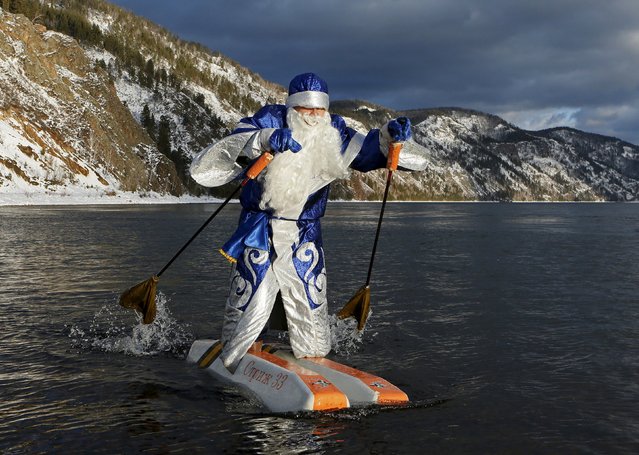
Nikolai Vasilyev, 62, dressed as Father Frost, Russian equivalent of Santa Claus, water-skis along the Yenisei River outside Siberian city of Krasnoyarsk, Russia, December 10, 2015. Vasilyev, a teacher of the Krasnoyarsk Aerospace Academy, constructed the self-made water skis to travel on the water surface. The skis are made of plastic foam and the sticks are designed to propel him forward. (Photo by Ilya Naymushin/Reuters)

Nikolai Vasilyev, 62, dressed as Father Frost, Russian equivalent of Santa Claus, water-skis along the Yenisei River outside Siberian city of Krasnoyarsk, Russia, December 10, 2015. Vasilyev, a teacher of the Krasnoyarsk Aerospace Academy, constructed the self-made water skis to travel on the water surface. The skis are made of plastic foam and the sticks are designed to propel him forward. (Photo by Ilya Naymushin/Reuters)
Details
12 Dec 2015 08:04:00
Nikolai Vasilyev, 64, dressed as Father Frost, the Russian equivalent of Santa Claus, water-skis along the Yenisei River outside the Siberian city of Krasnoyarsk, Russia December 19, 2017. Vasilyev, former teacher of the Siberian State Aerospace University, constructed the water skis out of plastic foam and designed the sticks to propel him forward, while travelling on the water surface. (Photo by Ilya Naymushin/Reuters)

Nikolai Vasilyev, 64, dressed as Father Frost, the Russian equivalent of Santa Claus, water-skis along the Yenisei River outside the Siberian city of Krasnoyarsk, Russia December 19, 2017. Vasilyev, former teacher of the Siberian State Aerospace University, constructed the water skis out of plastic foam and designed the sticks to propel him forward, while travelling on the water surface. (Photo by Ilya Naymushin/Reuters)
Details
23 Dec 2017 07:31:00
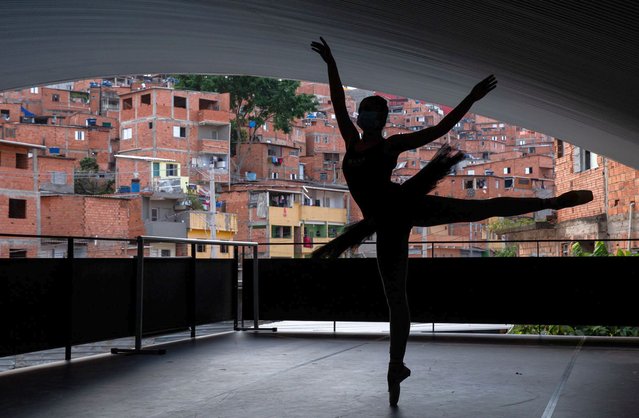
A Ballet Paraisópolis student wearing a face mask rehearses amidst the coronavirus (COVID-19) pandemic on August 13, 2020 in Sao Paulo, Brazil. The Ballet Paraisópolis is a project that teaches dance to children and young people in the Paraisópolis community in order to encourage them to seek better life opportunities. Founded in 2012 by ballerina, teacher and choreographer, Monica Tarragó, Ballet Paraisópolis has a total of 200 students and another 2,000 on the waiting list. (Photo by Alexandre Schneider/Getty Images)

A Ballet Paraisópolis student wearing a face mask rehearses amidst the coronavirus (COVID-19) pandemic on August 13, 2020 in Sao Paulo, Brazil. The Ballet Paraisópolis is a project that teaches dance to children and young people in the Paraisópolis community in order to encourage them to seek better life opportunities. Founded in 2012 by ballerina, teacher and choreographer, Monica Tarragó, Ballet Paraisópolis has a total of 200 students and another 2,000 on the waiting list. (Photo by Alexandre Schneider/Getty Images)
Details
02 Sep 2020 00:01:00
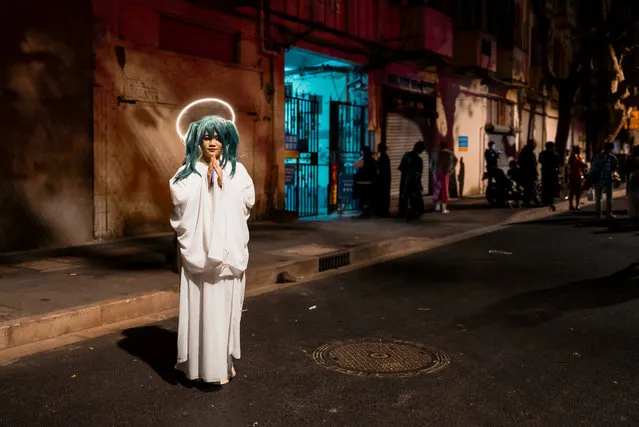
A woman in costume stands on the street during pre-Halloween weekend party in Shanghai, China on October 28, 2023. During the last weekend before Halloween, which comes on Tuesday, 31 October 2023, hundreds of youngsters dressed in costumes overwhelmed the streets of Shanghai. Halloween in China become popular due to the influences of Western expats and foreign teachers. (Photo by Alex Plavevski/EPA/EFE)

A woman in costume stands on the street during pre-Halloween weekend party in Shanghai, China on October 28, 2023. During the last weekend before Halloween, which comes on Tuesday, 31 October 2023, hundreds of youngsters dressed in costumes overwhelmed the streets of Shanghai. Halloween in China become popular due to the influences of Western expats and foreign teachers. (Photo by Alex Plavevski/EPA/EFE)
Details
08 Nov 2023 05:19:00
Ohio Amish Barn Raising

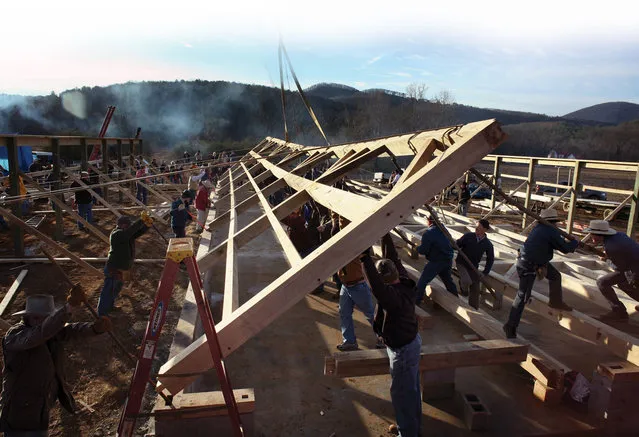
Teacher Scott Miller recently helped his Amish neighbors with a barn raising. Along with lending a hand in the process, Miller set up his camera to photograph the event. From 7 a.m. until 5 p.m., Miller's camera snapped away as the community created their newest building from the ground up.
Details
09 Sep 2014 09:54:00
We Build Tomorrow – Sagrada Familia 2026 ( VIDEO )

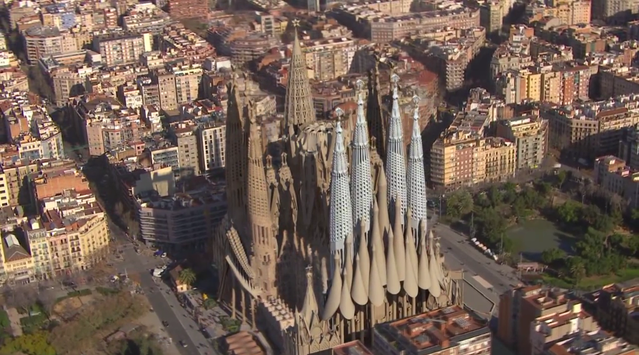
For more than a century, the Barcelona skyline has been graced (or marred, depending on who’s talking) by the spectacle of the Basilica designed by Anton Gaudi, first started in 1882. If you want to know what it’ll look like when finished, don’t fret — 2026 is right around the corner. Or you can watch this video, released last week on YouTube by Basílica de la Sagrada Família and titled simply “2026 We Build Tomorrow,” a 3-D artists’ rendering of the building stages through completion.
(If 144 years sounds like a long time to finish a cathedral, keep in mind that there were decades that they didn’t work on it — and that Notre Dame de Paris took 182 years, although the 13th century Parisians didn’t have diesel-powered industrial cranes.) Now, if only the video could show us what the admission and hours will be in 2026 (and how to avoid the inevitable long lines).
Details
11 Jan 2014 10:59:00
An aerial view shows the Amazon rainforest at the Bom Futuro National Forest near Rio Pardo in Porto Velho, Rondonia State, Brazil, September 3, 2015. The town of Rio Pardo, a settlement of about 4,000 people in the Amazon rainforest, rises where only jungle stood less than a quarter of a century ago. Loggers first cleared the forest followed by ranchers and farmers, then small merchants and prospectors. (Photo by Nacho Doce/Reuters)

An aerial view shows the Amazon rainforest at the Bom Futuro National Forest near Rio Pardo in Porto Velho, Rondonia State, Brazil, September 3, 2015. The town of Rio Pardo, a settlement of about 4,000 people in the Amazon rainforest, rises where only jungle stood less than a quarter of a century ago. Loggers first cleared the forest followed by ranchers and farmers, then small merchants and prospectors. Brazil's government has stated a goal of eliminating illegal deforestation, but enforcing the law in remote corners like Rio Pardo is far from easy. (Photo by Nacho Doce/Reuters)
Details
08 Nov 2015 08:00:00
A view of traditional bolinhos de bacalhau (fried codfish balls) in Rio de Janeiro, Brazil, May 7, 2016. (Photo by Sergio Moraes/Reuters)

If the most popular foods of Rio de Janeiro have one thing in common, it is their informality. You can find fine restaurants in the city, but they do not set Rio apart from other places. What does set it apart, and what invariably brings its residents, known as "Cariocas," together is the unpretentious food they eat in bright, loud, crowded bars and restaurants, on busy street corners, or after a day at the beach. Here: A view of traditional bolinhos de bacalhau (fried codfish balls) in Rio de Janeiro, Brazil, May 7, 2016. (Photo by Sergio Moraes/Reuters)
Details
05 Aug 2016 13:20:00