Loading...
Done
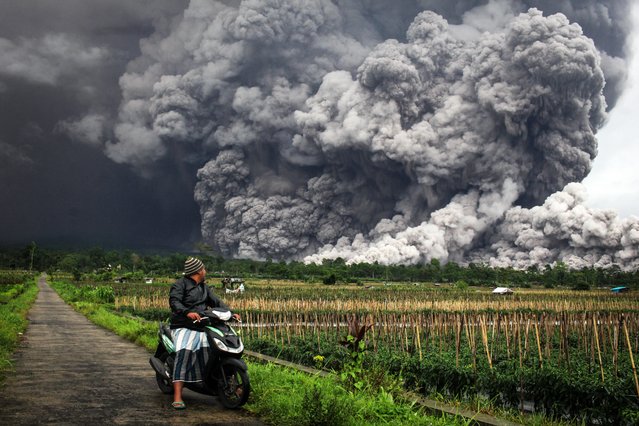
A man looks at a pyroclastic flow during the eruption of Mount Semeru in Lumajang, East Java, on November 19, 2025. (Photo by Agus Harianto/AFP Photo)

A man looks at a pyroclastic flow during the eruption of Mount Semeru in Lumajang, East Java, on November 19, 2025. (Photo by Agus Harianto/AFP Photo)
Details
11 Dec 2025 06:21:00
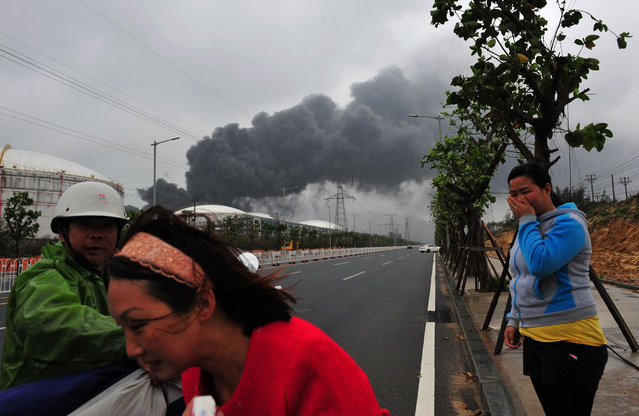
In this photo released by Xhinhua News Agency, a rescuer evacuates residents near the site of a chemical plant blast in Zhangzhou, southeast China's Fujian Province Tuesday, April 7, 2015. Six people have been hospitalized and hundreds of firefighters deployed to battle a blaze sparked by an explosion at Goure PX Plant that produces the toxic chemical paraxylene, officials said Tuesday. (Photo by Wei Peiquan/AP Photo/Xinhua)

In this photo released by Xhinhua News Agency, a rescuer evacuates residents near the site of a chemical plant blast in Zhangzhou, southeast China's Fujian Province Tuesday, April 7, 2015. Six people have been hospitalized and hundreds of firefighters deployed to battle a blaze sparked by an explosion at Goure PX Plant that produces the toxic chemical paraxylene, officials said Tuesday. (Photo by Wei Peiquan/AP Photo/Xinhua)
Details
10 Apr 2015 06:49:00
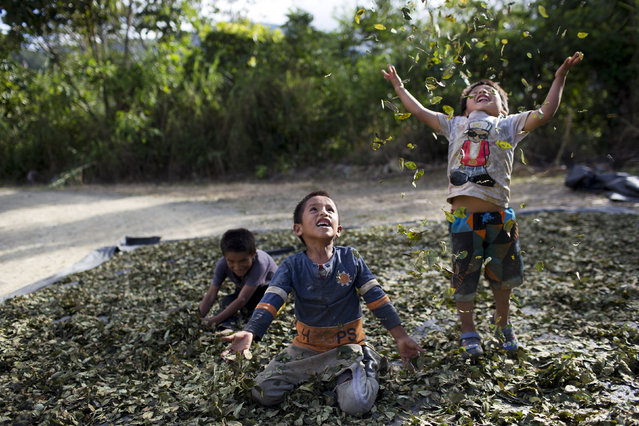
In this March 13, 2015 photo,  Yohan, 4, from left, Cristian, 7, and Angelo, 6, playfully toss coca leaves into the air, singing: “I have a lot of money, look at all the money I have”, in La Mar, province of Ayacucho, Peru. Hauling cocaine out of the remote valley is about the only way to earn decent cash in this region where a farmhand earns less than $10 a day. Beyond extinguishing young lives, the practice has packed Peru's highland prisons with cocaine backpackers while their bosses evade incarceration. (Photo by Rodrigo Abd/AP Photo)

In this March 13, 2015 photo, Yohan, 4, from left, Cristian, 7, and Angelo, 6, playfully toss coca leaves into the air, singing: “I have a lot of money, look at all the money I have”, in La Mar, province of Ayacucho, Peru. Hauling cocaine out of the remote valley is about the only way to earn decent cash in this region where a farmhand earns less than $10 a day. Beyond extinguishing young lives, the practice has packed Peru's highland prisons with cocaine backpackers while their bosses evade incarceration. (Photo by Rodrigo Abd/AP Photo)
Details
12 May 2015 12:40:00
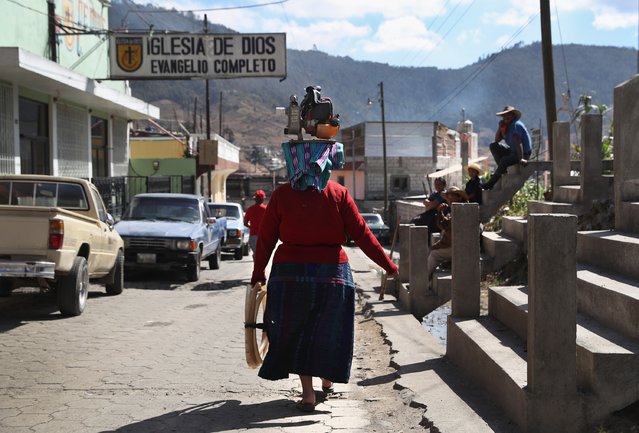
A woman carries a water pump to work on February 11, 2017 in Almolonga, Guatemala. (Photo by John Moore/Getty Images)

A woman carries a water pump to work on February 11, 2017 in Almolonga, Guatemala. The Mayan town in the western highlands district of Quetzaltenango has surged in prosperity in recent years with high-productivity vegetable farming, exporting much of its excess crops to neighborning El Salvador. (Photo by John Moore/Getty Images)
Details
25 Feb 2017 00:00:00
Ocean voyage

Do you think that history is a science? Well, not exactly. First, and foremost, history is the state's “legend of wars”, it’s official regalia. Of course, public historians are not interested in scientific truth – quite the opposite. In this respect, any attempt to present a state’s history as altruistic and benevolent as possible is welcomed and encouraged – as opposed to any revisionism attempts that may be more accurate. In this matter, Chinese have surpassed us all – they revised in highly creative manner (but rather shamelessly) the technology already invented by Europeans, a process that resulted in oldest state on the planet. Here is an interesting paradox: ask any sinologist about the Middle Kingdom during second century B.C., and he will describe it to you in such a vivid manner as if he has been living there all his life – but as soon as you will ask him to describe Chinese history in the 19-20th centuries… let's say, his eagerness will be greatly diminished. However, we will discuss China in a different article, and in the meantime we will try to understand how exactly historic “legend of wars” is formed and functions – based on a specific and well-known example. A great example is Ferdinand Magellan's first voyage around the world.
Details
14 Nov 2011 09:11:00
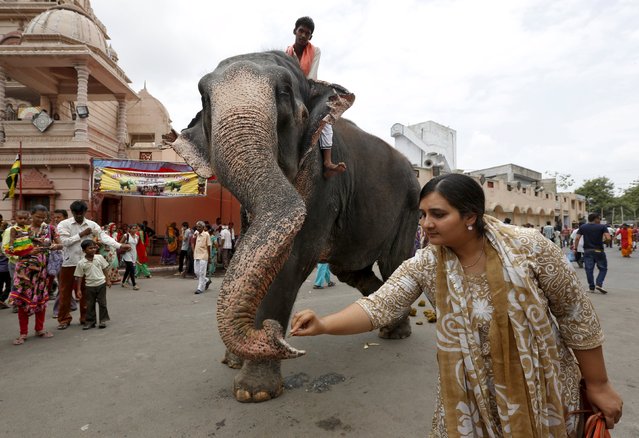
A Hindu woman gives money to an elephant outside the Lord Jagannath temple ahead of the annual Rath Yatra, or chariot procession, in Ahmedabad, India, July 16, 2015. The annual religious procession commemorates a journey by Hindu god Jagannath, his brother Balabhadra and sister Subhadra, in specially made chariots. The annual Rath Yatra is celebrated on July 18. (Photo by Amit Dave/Reuters)

A Hindu woman gives money to an elephant outside the Lord Jagannath temple ahead of the annual Rath Yatra, or chariot procession, in Ahmedabad, India, July 16, 2015. The annual religious procession commemorates a journey by Hindu god Jagannath, his brother Balabhadra and sister Subhadra, in specially made chariots. The annual Rath Yatra is celebrated on July 18. (Photo by Amit Dave/Reuters)
Details
19 Jul 2015 09:33:00
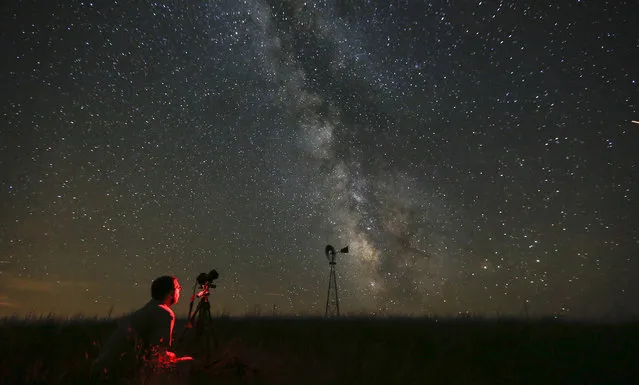
In this Wednesday, July 23, 2014 file photo, Omaha photographer Lane Hickenbottom photographs the night sky in a pasture near Callaway, Neb. With no moon in the sky, the Milky Way was visible to the naked eye. More than one-third of the world’s population can no longer see the Milky Way because of man-made lights, according to a scientific paper by Light Pollution Science and Technology Institute's Fabio Falchi and his team members, published on Friday, June 10, 2016. (Photo by Travis Heying/The Wichita Eagle via AP Photo)

In this Wednesday, July 23, 2014 file photo, Omaha photographer Lane Hickenbottom photographs the night sky in a pasture near Callaway, Neb. With no moon in the sky, the Milky Way was visible to the naked eye. More than one-third of the world’s population can no longer see the Milky Way because of man-made lights, according to a scientific paper by Light Pollution Science and Technology Institute's Fabio Falchi and his team members, published on Friday, June 10, 2016. (Photo by Travis Heying/The Wichita Eagle via AP Photo)
Details
11 Jun 2016 12:37:00
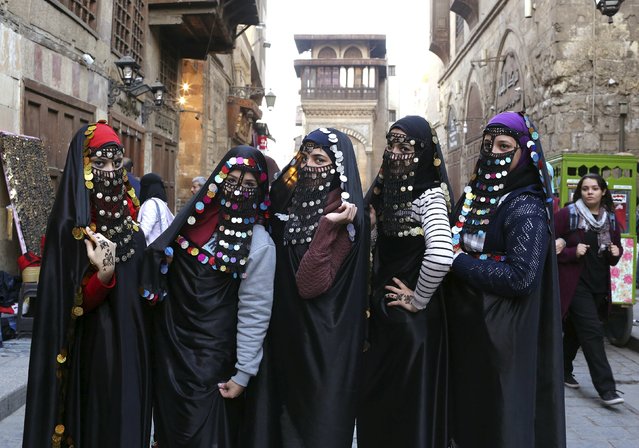
Girls dressed up in traditional Egyptian clothes from the early 20th century pose for a picture before they get their photos taken on the historical Al-Moez street of Islamic Cairo, Egypt, January 17, 2016. (Photo by Asmaa Waguih/Reuters)

Girls dressed up in traditional Egyptian clothes from the early 20th century pose for a picture before they get their photos taken on the historical Al-Moez street of Islamic Cairo, Egypt, January 17, 2016. (Photo by Asmaa Waguih/Reuters)
Details
20 Feb 2016 10:25:00