Loading...
Done
In this Wednesday, July 23, 2014 file photo, Omaha photographer Lane Hickenbottom photographs the night sky in a pasture near Callaway, Neb. With no moon in the sky, the Milky Way was visible to the naked eye. More than one-third of the world’s population can no longer see the Milky Way because of man-made lights, according to a scientific paper by Light Pollution Science and Technology Institute's Fabio Falchi and his team members, published on Friday, June 10, 2016. (Photo by Travis Heying/The Wichita Eagle via AP Photo)

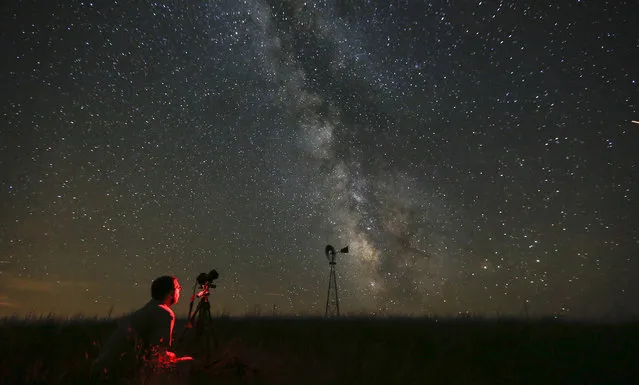
In this Wednesday, July 23, 2014 file photo, Omaha photographer Lane Hickenbottom photographs the night sky in a pasture near Callaway, Neb. With no moon in the sky, the Milky Way was visible to the naked eye. More than one-third of the world’s population can no longer see the Milky Way because of man-made lights, according to a scientific paper by Light Pollution Science and Technology Institute's Fabio Falchi and his team members, published on Friday, June 10, 2016. (Photo by Travis Heying/The Wichita Eagle via AP Photo)
Details
11 Jun 2016 12:37:00
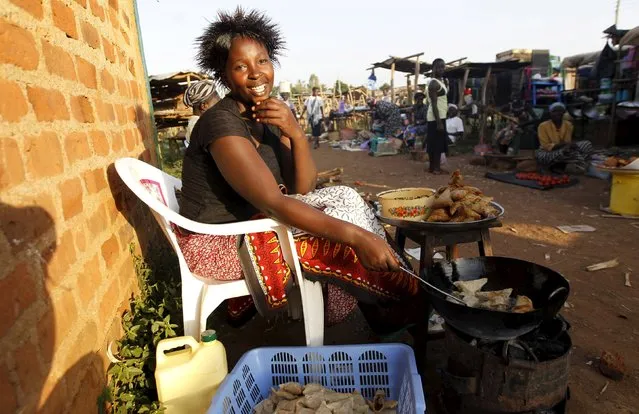
Vivian Odhiambo, 24, frys samosas in the trading centre of Kogelo, west of Kenya's capital Nairobi, July 14, 2015. Odhiambo said, “Obama is our hero and we wait to welcome him back home again. We in Kogelo have witnessed general growth and we are proud of being associated with the Obamas”, she added. (Photo by Thomas Mukoya/Reuters)

Vivian Odhiambo, 24, frys samosas in the trading centre of Kogelo, west of Kenya's capital Nairobi, July 14, 2015. Odhiambo said, “Obama is our hero and we wait to welcome him back home again. We in Kogelo have witnessed general growth and we are proud of being associated with the Obamas”, she added. As U.S. President Barack Obama visits Kenya, a personal connection to his father's birthplace of Kogelo dominates a trip that Kenyans view as a native son returning home. Residents from a herdsman to a housewife share their views on what Obama has achieved and what they would like to see next. (Photo by Thomas Mukoya/Reuters)
Details
26 Jul 2015 10:52:00
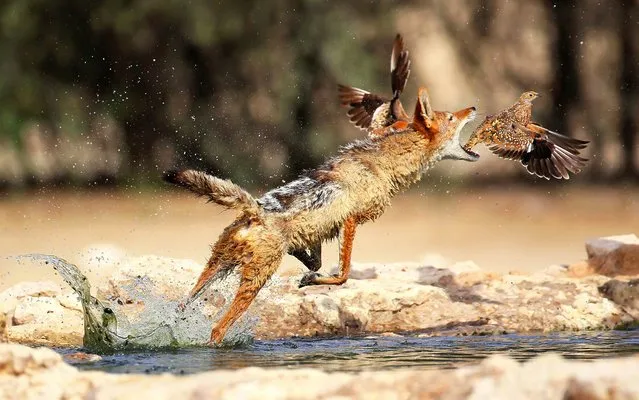
Against the scorching sun, a hungry jackal chases a flock of birds looking for a quick morning snack. Taken in South Africa's Kgalagadi Transfrontier National Park, these images capture the moment a lone hunter tries, and then succeeds, in his pursuit. (Photo by John Mullineux/Solent News)

Against the scorching sun, a hungry jackal chases a flock of birds looking for a quick morning snack. Taken in South Africa's Kgalagadi Transfrontier National Park, these images capture the moment a lone hunter tries, and then succeeds, in his pursuit. (Photo by John Mullineux/Solent News)
Details
15 Mar 2014 11:03:00
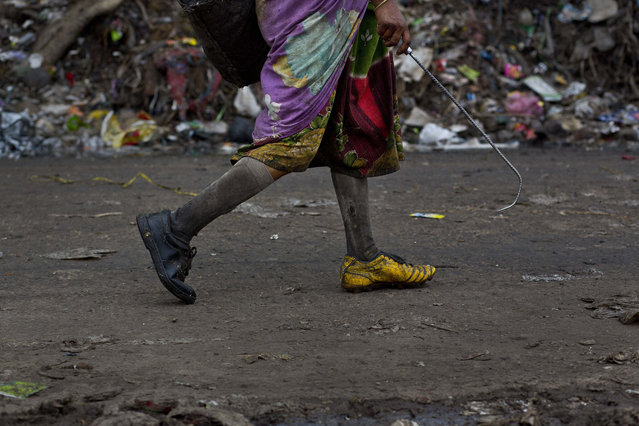
In this Monday, June 5, 2017, file photo, an Indian woman walks as se searches for recyclable materials at a garbage dumping site on the outskirts of Gauhati, Assam state, India. (Photo by Anupam Nath/AP Photo)

In this Monday, June 5, 2017, file photo, an Indian woman walks as se searches for recyclable materials at a garbage dumping site on the outskirts of Gauhati, Assam state, India. (Photo by Anupam Nath/AP Photo)
Details
12 Jun 2017 09:21:00
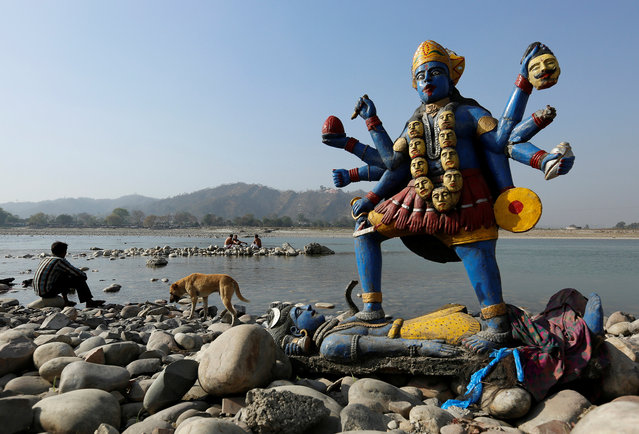
A man sits next to a damaged idol of Hindu goddess Kali which was taken out after its immersion in the river Ganges in Haridwar, India, March 29, 2017. (Photo by Danish Siddiqui/Reuters)

A man sits next to a damaged idol of Hindu goddess Kali which was taken out after its immersion in the river Ganges in Haridwar, India, March 29, 2017. (Photo by Danish Siddiqui/Reuters)
Details
20 Jul 2017 08:46:00
People watch a crocodile with a used motorcycle tyre around its neck on a river in Palu, Central Sulawesi province, Indonesia September 20, 2016 in this picture taken by Antara Foto. Residents suspect the tyre was garbage thrown into the river before it became trapped around the crocodile's neck, reported Antara. (Photo by Mohamad Hamzah/Reuters/Antara Foto)

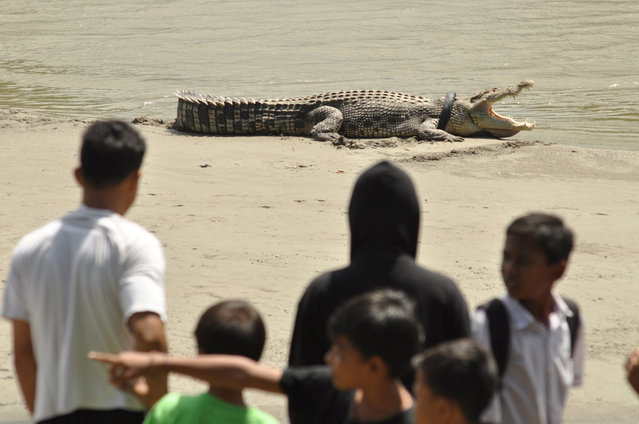
People watch a crocodile with a used motorcycle tyre around its neck on a river in Palu, Central Sulawesi province, Indonesia September 20, 2016 in this picture taken by Antara Foto. Residents suspect the tyre was garbage thrown into the river before it became trapped around the crocodile's neck, reported Antara. (Photo by Mohamad Hamzah/Reuters/Antara Foto)
Details
29 Oct 2016 11:28:00
In this Tuesday, December 20, 2016 photo, Mohammad Ramzan, right, reacts while talking to The Associated Press with his young bride Saima in Jampur, Pakistan. Saima was given as a bride to the older man by her father so he could marry the groom’s sister, a practice of exchanging girls that is entrenched in conservative regions of Pakistan. It even has its own name in Urdu: Watta Satta, “give and take”. A mix of interests – family obligations, desire for sons, a wish to hand off a girl to a husband – can lead to a young teen in an a marriage she never sought. (Photo by K.M. Chaudhry/AP Photo)

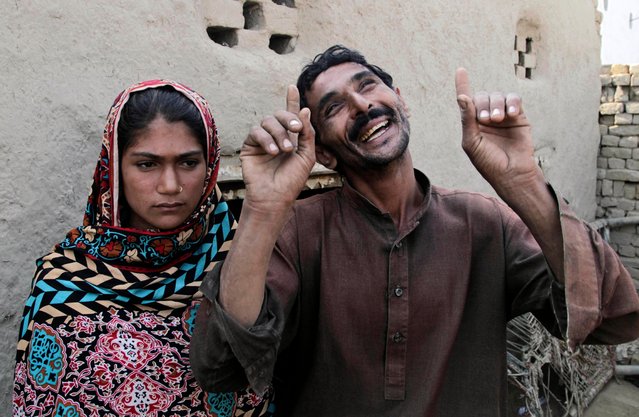
In this Tuesday, December 20, 2016 photo, Mohammad Ramzan, right, reacts while talking to The Associated Press with his young bride Saima in Jampur, Pakistan. Saima was given as a bride to the older man by her father so he could marry the groom’s sister, a practice of exchanging girls that is entrenched in conservative regions of Pakistan. It even has its own name in Urdu: Watta Satta, “give and take”. A mix of interests – family obligations, desire for sons, a wish to hand off a girl to a husband – can lead to a young teen in an a marriage she never sought. (Photo by K.M. Chaudhry/AP Photo)
Details
31 Dec 2016 10:08:00
Little owl chicks in Northumberland, UK on August 19, 2018. Strutting up and down and barrelling through the air, these Little Owl chicks will soon be fending for themselves. The intense little birds were snapped by wildlife photographer Bill Doherty in his native Northumberland. The chicks have about seven or eight weeks to learn their survival skills before their parents drive them away to fend for themselves. (Photo by Bill Doherty/South West News Service)

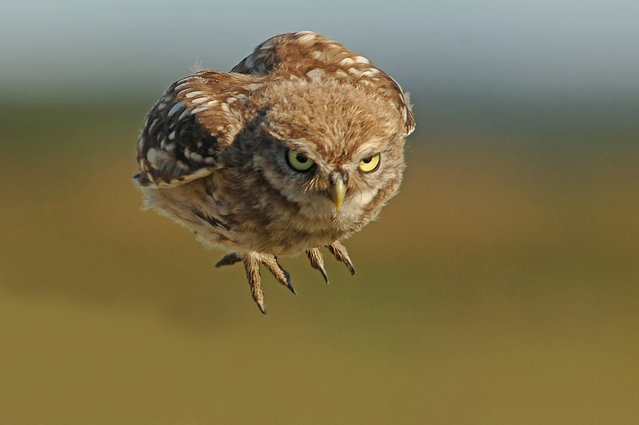
Little owl chicks in Northumberland, UK on August 19, 2018. Strutting up and down and barrelling through the air, these Little Owl chicks will soon be fending for themselves. The intense little birds were snapped by wildlife photographer Bill Doherty in his native Northumberland. The chicks have about seven or eight weeks to learn their survival skills before their parents drive them away to fend for themselves. (Photo by Bill Doherty/South West News Service)
Details
26 Aug 2018 00:03:00