Loading...
Done
An American Marine readies to land on Guadalcanal during the five-month struggle for the island between late 1942 and early 1943. Three thousand miles south of Tokyo, Guadalcanal was a major shipping point for military supplies. The Allied victory there in February, 1943, marked a major turning point in the war after a string of Japanese victories in the Pacific. (Photo by Joe Scherschel/Time & Life Pictures)

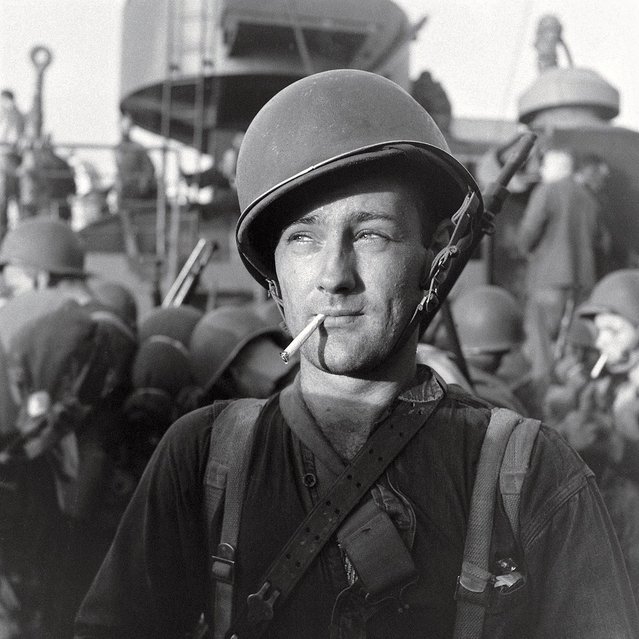
An American Marine readies to land on Guadalcanal during the five-month struggle for the island between late 1942 and early 1943. Three thousand miles south of Tokyo, Guadalcanal was a major shipping point for military supplies. The Allied victory there in February, 1943, marked a major turning point in the war after a string of Japanese victories in the Pacific. (Photo by Joe Scherschel/Time & Life Pictures)
Details
10 Mar 2013 12:50:00
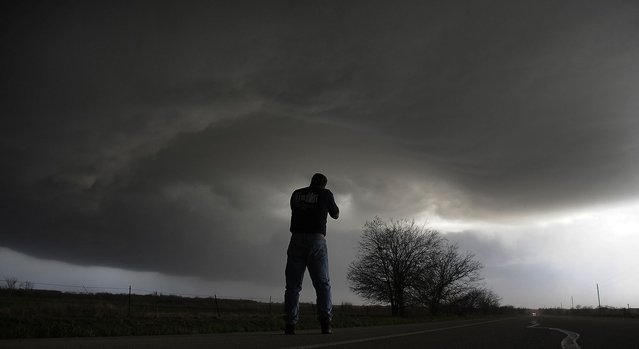
Storm chaser Brad Mack from Buena Park California videotapes a rotating supercell storm west of Newcastle, Texas April 9, 2013. Many of the storms in Tornado Alley that were forecast to be severe this week were taken out by a cold front from Canada. Picture taken April 9, 2013. (Photo by Gene Blevins/Reuters)

Storm chaser Brad Mack from Buena Park California videotapes a rotating supercell storm west of Newcastle, Texas April 9, 2013. Many of the storms in Tornado Alley that were forecast to be severe this week were taken out by a cold front from Canada. Picture taken April 9, 2013. (Photo by Gene Blevins/Reuters)
Details
15 Apr 2013 10:53:00
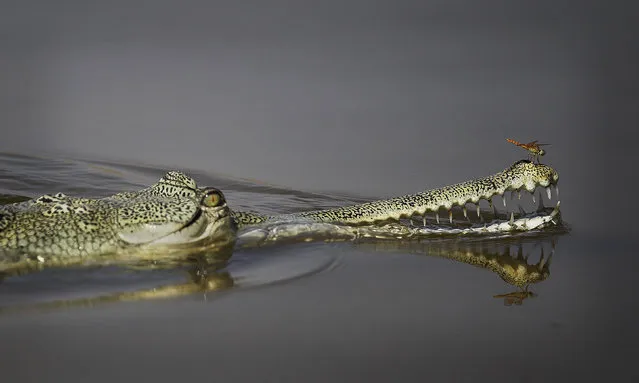
In this photo taken Wednesday, April 30, 2014, a dragonfly sits on the nose of a Gharial, rare crocodile-like creatures, in the River Chambal near Bhopepura village in the northern Indian state of Uttar Pradesh. The narrow 250-mile stretch of the Chambal is a place of crocodiles and jackals, of river dolphins and the occasional wolf. Hundreds of species of birds, storks, geese, babblers, larks, falcons and so many more, nest along the river. (Photo by Altaf Qadri/AP Photo)

In this photo taken Wednesday, April 30, 2014, a dragonfly sits on the nose of a Gharial, rare crocodile-like creatures, in the River Chambal near Bhopepura village in the northern Indian state of Uttar Pradesh. The narrow 250-mile stretch of the Chambal is a place of crocodiles and jackals, of river dolphins and the occasional wolf. Hundreds of species of birds, storks, geese, babblers, larks, falcons and so many more, nest along the river. Endangered birds lay small speckled eggs in tiny pits they dig in the sandbars. Gharials, rare crocodile-like creatures that look like they swaggered out of the Mesozoic Era, are commonplace here and nowhere else. (Photo by Altaf Qadri/AP Photo)
Details
23 Feb 2015 12:55:00
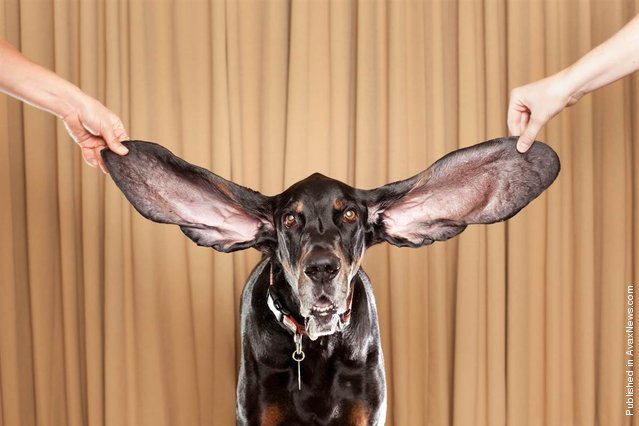
A Black and Tan Coonhound named Harbor has the longest ears of any living dog, with measurements of 12.25 (31,12 cm) inches for the left ear and 13.5 (34,29 cm) inches for the right

A Black and Tan Coonhound named Harbor has the longest ears of any living dog, with measurements of 12.25 (31,12 cm) inches for the left ear and 13.5 (34,29 cm) inches for the right. (Photo by Ryan Schude/Guinness World Records via AP)
Details
14 Apr 2012 11:24:00
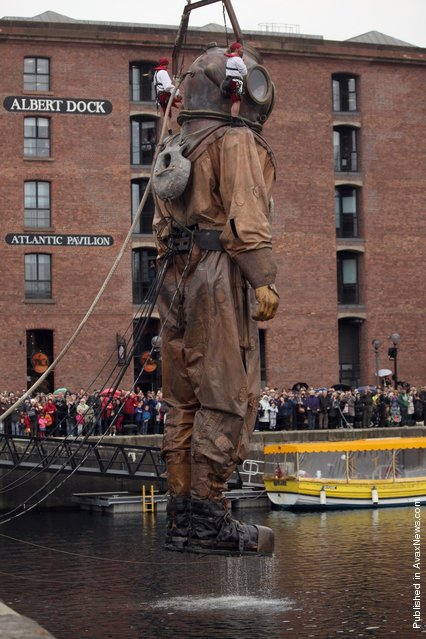
A giant deep sea diver

Two giant puppets, a deep sea diver and his niece, roam through the streets of Liverpool, northern England, and April 20–23 looking for each other during the Sea Odyssey festival. The free event, organized by the French company Royal de Luxe is one of a series of events marking the 100th anniversary of the sinking of The Titanic. The liner, registered in Liverpool, sank on its maiden voyage to New York on April 15, 1912.

Photo: A giant deep sea diver emerges from the Albert Dock to begin a journey through the streets of Liverpool during the Titanic Sea Odyssey on April 20 in Liverpool, England. (Photo by Christopher Furlong)
Details
22 Apr 2012 12:02:00
A boy walks past boats docked at the entrance gate of the fishermen's village in the El Max area of the Mediterranean city of Alexandria September 12, 2014.  El Max, where hundreds of boats dart through the canals, has been called the “Venice of Egypt” for its waterways and relaxed atmosphere. Its fishermen, however, worry about how they will make ends meet on meagre earnings they  say are being reduced further by polluted waters that are making fishing more difficult. (Photo by Amr Abdallah Dalsh/Reuters)

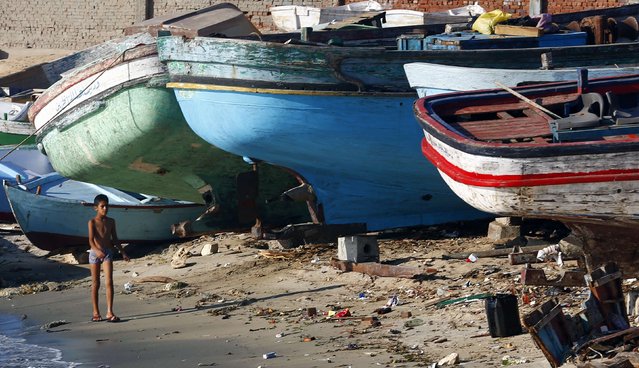
A boy walks past boats docked at the entrance gate of the fishermen's village in the El Max area of the Mediterranean city of Alexandria September 12, 2014. El Max, where hundreds of boats dart through the canals, has been called the “Venice of Egypt” for its waterways and relaxed atmosphere. Its fishermen, however, worry about how they will make ends meet on meagre earnings they say are being reduced further by polluted waters that are making fishing more difficult. While the government has tried to fix the state's bloated finances by cutting subsidies and reining in spending, some argue the reforms hurt Egypt's most vulnerable who have long relied on a generous system of fuel and food subsidies to supplement low incomes. (Photo by Amr Abdallah Dalsh/Reuters)
Details
12 Dec 2014 12:42:00
The setting sun illuminates the sky behind wind turbines of a wind park near Neusiedl am See, December 22, 2014. (Photo by Heinz-Peter Bader/Reuters)

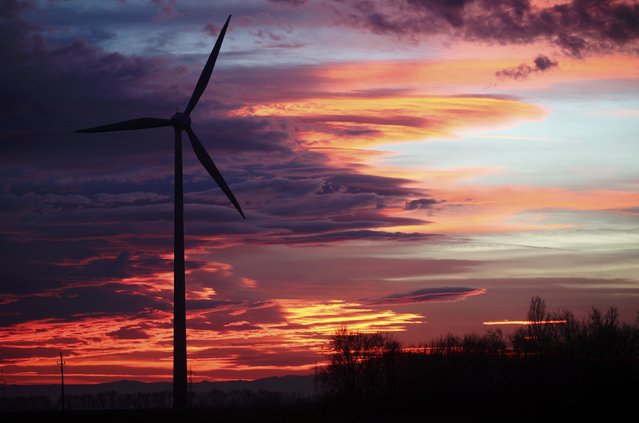
The setting sun illuminates the sky behind wind turbines of a wind park near Neusiedl am See, December 22, 2014. (Photo by Heinz-Peter Bader/Reuters)
Details
08 Jan 2015 14:27:00
A Sri Lankan elephant, accompanied by his mahout, browse through a roadside fruit stall in Colombo on January 19, 2015. The Sri Lankan elephant is listed as endangered by the International Union for Conservation of Nature (IUCN) as the population has declined by at least 50 percent over the last three generations, with the species threatened by habitat loss, degradation and fragmentation. (Photo by Lakruwan Wanniarachchi/AFP Photo)

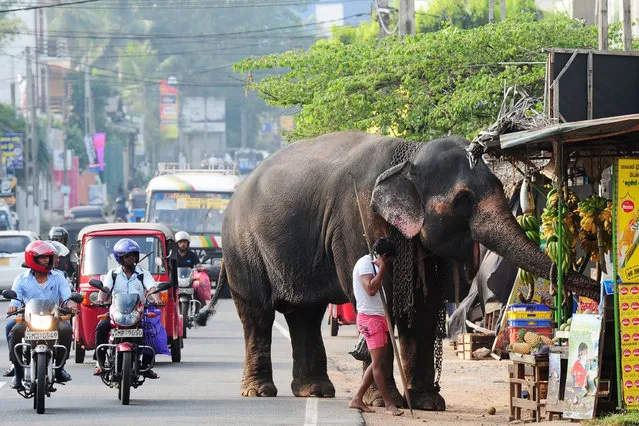
A Sri Lankan elephant, accompanied by his mahout, browse through a roadside fruit stall in Colombo on January 19, 2015. The Sri Lankan elephant is listed as endangered by the International Union for Conservation of Nature (IUCN) as the population has declined by at least 50 percent over the last three generations, with the species threatened by habitat loss, degradation and fragmentation. (Photo by Lakruwan Wanniarachchi/AFP Photo)
Details
23 Jan 2015 13:21:00