Loading...
Done
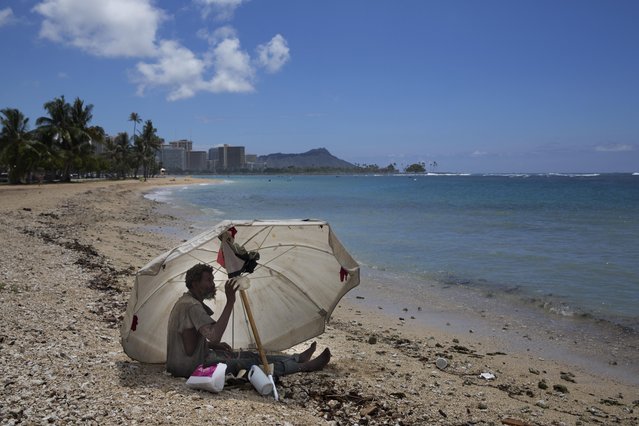
In this Thursday, August 27, 2015 photo, a homeless man drinks water while sitting on the beach at Ala Moana Beach Park located near Waikiki in Honolulu. Homelessness in Hawaii has grown steadily in recent years, leaving the state with the nation's highest rate of homeless people per capita. (Photo by Jae C. Hong/AP Photo)

Hawaii has long been known as a tropical paradise, but in recent years another image has intruded into the state's carefully crafted one of idyllic beaches and relaxing resorts: homelessness. The number of homeless people has grown in recent years, leaving the state with 487 homeless per 100,000 people, the nation's highest rate per capita, above New York and Nevada, according to federal statistics. Many of the homeless, however, defy the stereotype of the mentally ill or drug addicted. They are families, with men and women who work full-time jobs. They are struggling to get a foothold in a place with a high cost of living and low wages. Here: in this Thursday, August 27, 2015 photo, a homeless man drinks water while sitting on the beach at Ala Moana Beach Park located near Waikiki in Honolulu. (Photo by Jae C. Hong/AP Photo)
Details
11 Nov 2015 08:03:00
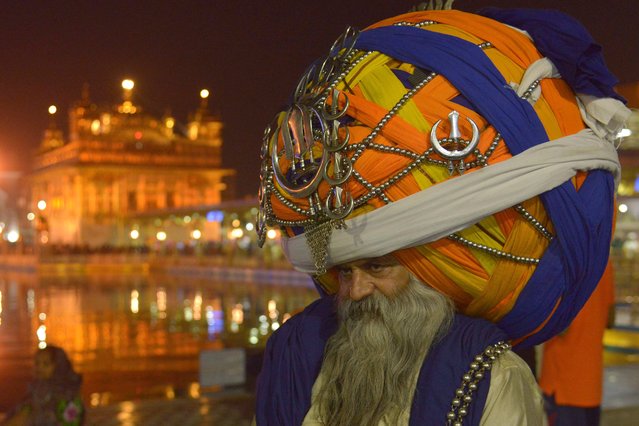
An Indian Sikh Nihang (a traditional Sikh religious warrior) Baba 'Avtar' Singh wears an oversized giant traditional turban as he pay respects at the Golden temple in Amritsar on November 10, 2015 on the eve of the Indian festival of Diwali, the festival of lights. (Photo by Narinder Nanu/AFP Photo)

An Indian Sikh Nihang (a traditional Sikh religious warrior) Baba 'Avtar' Singh wears an oversized giant traditional turban as he pay respects at the Golden temple in Amritsar on November 10, 2015 on the eve of the Indian festival of Diwali, the festival of lights. There will be no spectacular show of light and fireworks this Diwali at the Golden Temple as the Shiromani Gurdwara Parbandhak Committee (SGPC) has decided not to celebrate the festival in the wake of series of incidents of alleged desecration of the Guru Granth Sahib (Sikh holy book). (Photo by Narinder Nanu/AFP Photo)
Details
22 Nov 2015 08:05:00
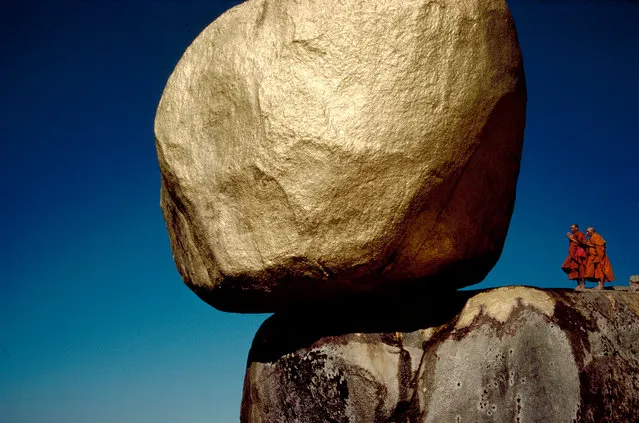
Kyaiktiyo, Burma, 1978. The Golden Rock at Shwe Pyi Daw (the Golden Country), the Buddhist holy place. Hiroji Kubota writes: “I was desperate to keep a distance from America for a while; luckily, I found Burma and its gentle and compassionate people. In the spring of 1978, on the top of the hill where I took this photo, I had two Leica bodies: the one with Tri-X and the other with Kodachrome 64. Soon after, I realised that the colour one looked very colourful and was more powerful. That was my decisive moment, to become a colour photographer”. (Photo by Hiroji Kubota/Magnum Photos)

Kyaiktiyo, Burma, 1978. The Golden Rock at Shwe Pyi Daw (the Golden Country), the Buddhist holy place. Hiroji Kubota writes: “I was desperate to keep a distance from America for a while; luckily, I found Burma and its gentle and compassionate people. In the spring of 1978, on the top of the hill where I took this photo, I had two Leica bodies: the one with Tri-X and the other with Kodachrome 64. Soon after, I realised that the colour one looked very colourful and was more powerful. That was my decisive moment, to become a colour photographer”. (Photo by Hiroji Kubota/Magnum Photos)
Details
10 Jun 2016 13:30:00
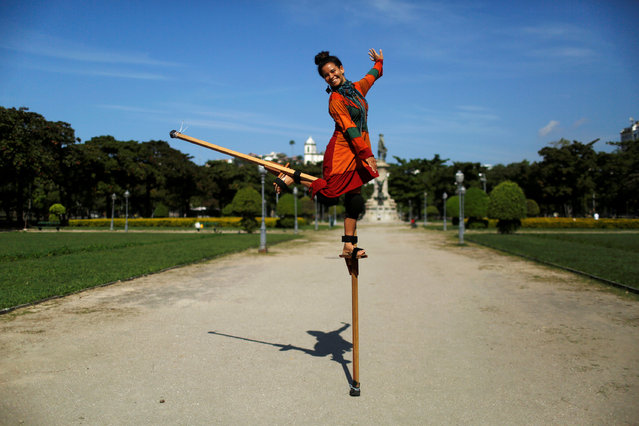
Raquel Poti, a 32-year-old street artist, poses at a park in Rio de Janeiro, Brazil, June 25, 2016. Raquel thinks the Olympics promotes a lifestyle that combines sports, culture and education. She is concerned about the large investment for the event while the population needs improvements in basic services. (Photo by Pilar Olivares/Reuters)

Just a week before Rio de Janeiro hosts South America's first Olympics, city residents expressed mixed feelings about the cost and security of the Games, while holding out hope they will bring joy to a nation facing economic and political crises. The conflicted thoughts mirror a recent survey by the Datafolha polling group showing that half of Brazilians were opposed to holding the Games, while 63 percent think the costs of hosting the event will outweigh benefits. (Photo by Pilar Olivares/Reuters)
Details
03 Aug 2016 11:51:00
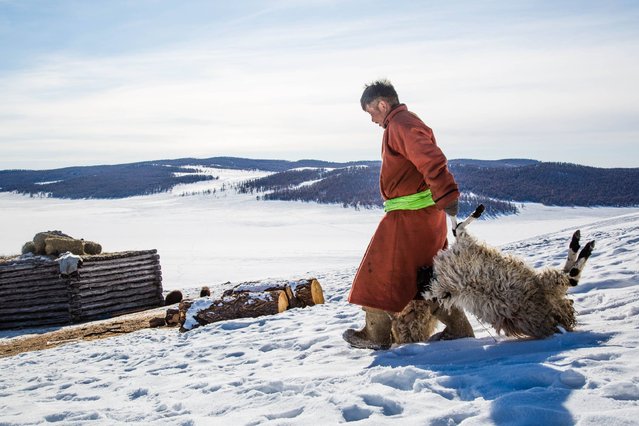
This handout photo taken on February 12, 2017 and released on February 16 by the International Federation of Red Cross and Red Crescent Societies (IFRC) shows Mongolian herder Munkhbat Bazarragchaa (C) dragging two sheep – which recently died due to the weather - to a pile of dead animals behind his “ger” in Khuvsgul province, northern Mongolia. Thousands of Mongolian herders face disastrous livestock losses from dreaded severe weather  known as the “dzud”, the Red Cross said on February 16, 2017 in launching an international emergency aid appeal. (Photo by Mirva Helenius/AFP Photo/IFRC)

This handout photo taken on February 12, 2017 and released on February 16 by the International Federation of Red Cross and Red Crescent Societies (IFRC) shows Mongolian herder Munkhbat Bazarragchaa (C) dragging two sheep – which recently died due to the weather - to a pile of dead animals behind his “ger” in Khuvsgul province, northern Mongolia. Thousands of Mongolian herders face disastrous livestock losses from dreaded severe weather known as the “dzud”, the Red Cross said on February 16, 2017 in launching an international emergency aid appeal. (Photo by Mirva Helenius/AFP Photo/IFRC)
Details
17 Feb 2017 11:40:00
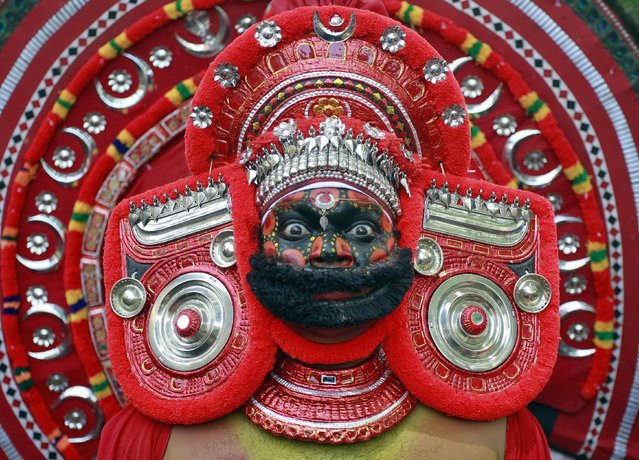
A dancer waits to perform during festivities marking the start of the annual harvest festival of “Onam” in Kochi, India, August 19, 2015. The ten-day-long Hindu festival is celebrated annually in India's southern coastal state of Kerala to commemorate the return of King Mahabali to his beloved subjects. (Photo by Sivaram V/Reuters)

A dancer waits to perform during festivities marking the start of the annual harvest festival of “Onam” in Kochi, India, August 19, 2015. The ten-day-long Hindu festival is celebrated annually in India's southern coastal state of Kerala to commemorate the return of King Mahabali to his beloved subjects. (Photo by Sivaram V/Reuters)
Details
26 Aug 2015 09:35:00


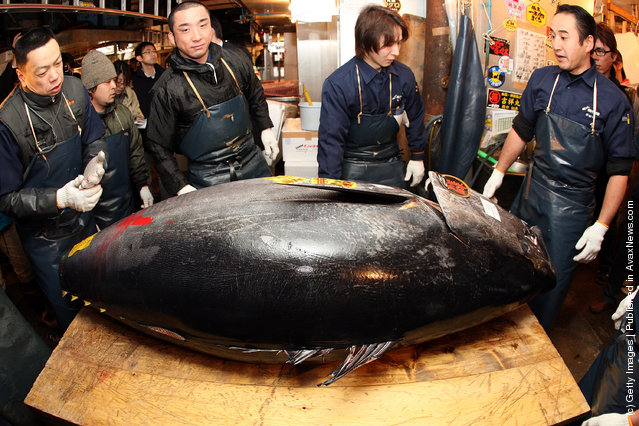
“The Tokyo Metropolitan Central Wholesale Market, commonly known as the Tsukiji Market, is the biggest wholesale fish and seafood market in the world and also one of the largest wholesale food markets of any kind. The market is located in Tsukiji in central Tokyo, and is a major attraction for foreign visitors”. – Wikipedia

Photo: A 232kg blue-fin tuna is displayed during the new year's first auction at the Tsukiji fish market on January 5, 2010 in Tokyo, Japan. (Photo by Koichi Kamoshida/Getty Images)
Details
19 Jul 2011 12:29:00
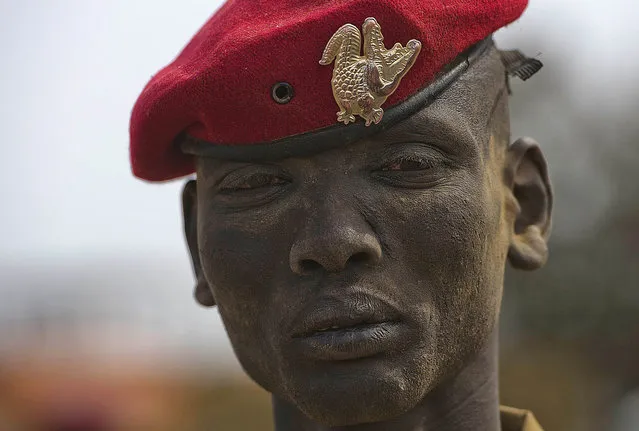
A South Sudanese People Liberation Army (SPLA) soldier patrols the streets in Malakal on January 21, 2014. (Photo by Harrison Ngethi/AFP Photo)

A South Sudanese People Liberation Army (SPLA) soldier patrols the streets in Malakal on January 21, 2014. (Photo by Harrison Ngethi/AFP Photo)
Details
26 Jan 2014 12:48:00