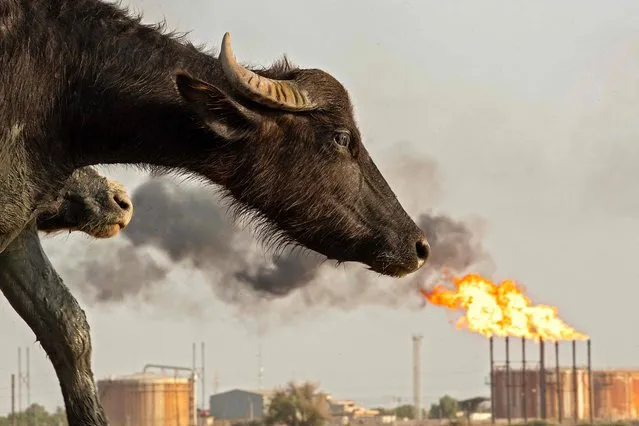
A water buffalo is pictured across from the Nahr Bin Omar oilfield in Iraq's southern province of Basra on July 18, 2022. (Photo by Hussein Faleh/AFP Photo)
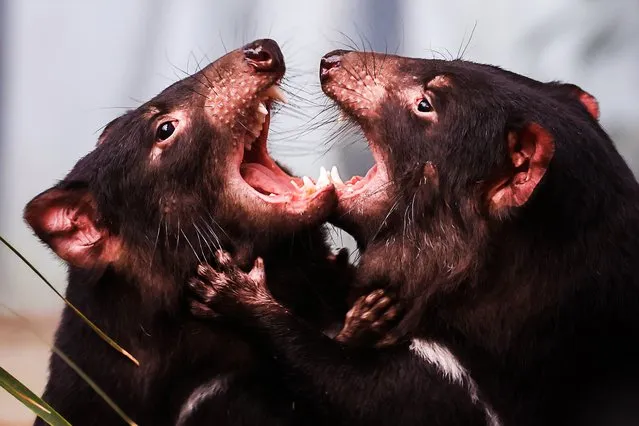
Tasmanian devils play on May 31, 2023 in Sydney, Australia. Creatures living at the zoo welcomed the arrival of winter with snow and an array of treats. Many of the zoo's species would naturally experience seasonal changes within their wild ranges. With the support of the SEA LIFE Sydney Aquarium's sub-Antarctic penguin team, snow is predicted to hit the Darling Harbour-based attraction on Wednesday morning. (Photo by Jenny Evans/Getty Images)
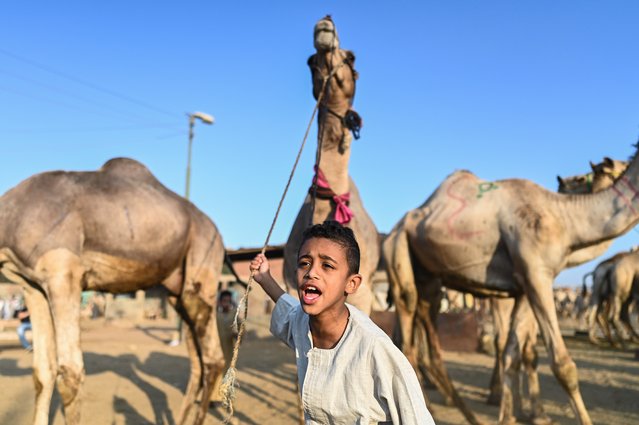
A child stands next to sacrificial camels at the camel market ahead of the Muslim festival of Eid al-Adha in the Birqash district, Giza, Egypt, 30 May 2025. Eid al-Adha is one of the holiest Muslim holidays, marking the annual Hajj pilgrimage to Mecca. (Photo by Mohamed Hossam/EPA/EFE)
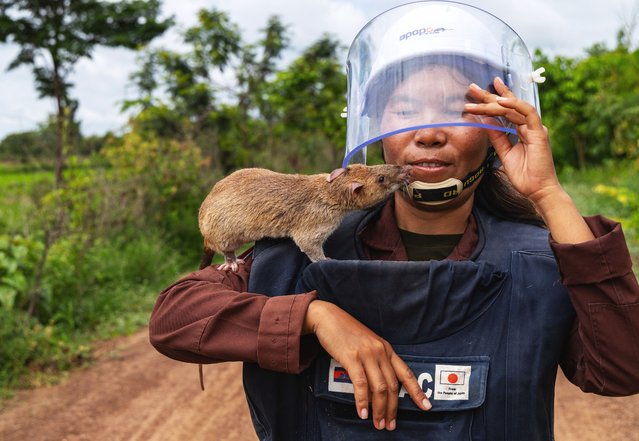
Mott Sreymom, 34, a rat handler with the humanitarian demining organization APOPO, carries an African giant pouched rat back from a landmine field in Siem Reap, Cambodia, Tuesday, June 10, 2025. (Photo by Anton L. Delgado/AP Photo)
A police officer stands at a police cordon near the scene of a terror attack in London, U.K., on Sunday, June 4, 2017. A van swerved into Saturday-night crowds on London Bridge, before three men got out and went on a stabbing rampage through nearby bars. (Photo by Luke MacGregor/Bloomberg)
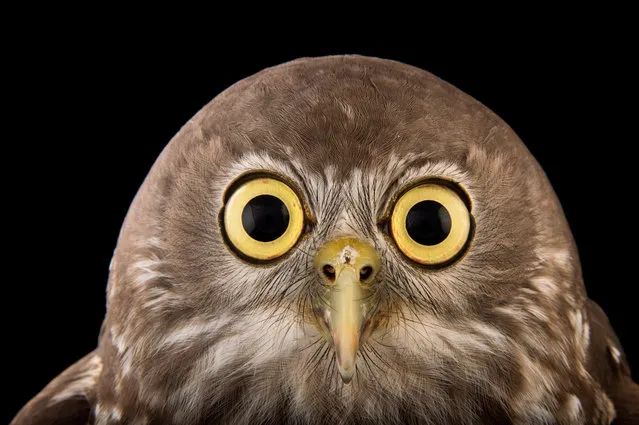
The National Geographic Photo Ark is a travelling exhibition of photographer Joel Sartore’s quest to create a photo archive of biodiversity around the world. So far, Sartore has captured studio portraits of more than 6,000 species – a number that he hopes to double. On 1 July, the ark will open at Melbourne zoo – the first time it has been exhibited in the southern hemisphere. More than 50 portraits will be on display, including many of Australian endangered animals being protected by programs at the zoo itself. These captions have been edited from text supplied by Melbourne zoo. Here: Barking owl. (Photo by Joel Sartore/National Geographic Photo Ark/The Guardian)
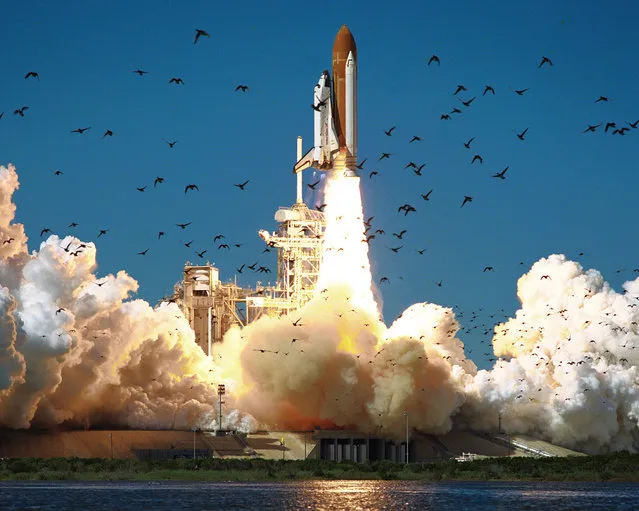
A wide-angle view shows the ascent of the shuttle Challenger on January 28, 1986. In the seconds after ignition, the rocket engines' hot blast began the process of destruction. (Photo by NASA)