Loading...
Done
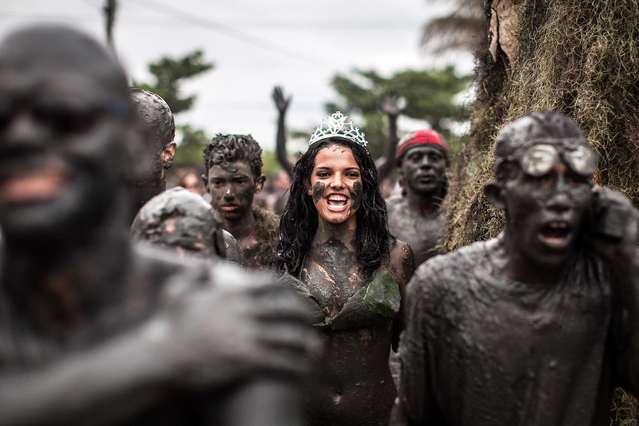
Revelers participate in the traditional Bloco da Lama (Mud block) carnival in Parati, Rio de Janeiro State, Brazil, on February 9, 2013. The event, which was begun by two men in a playful manner in 1986, has now become a traditional carnival in which participants disguised as primitives with rags, lianas or skulls and bones, dive in the mud. (Photo by Victor Moriyama/AFP Photo)

Revelers participate in the traditional Bloco da Lama (Mud block) carnival in Parati, Rio de Janeiro State, Brazil, on February 9, 2013. The event, which was begun by two men in a playful manner in 1986, has now become a traditional carnival in which participants disguised as primitives with rags, lianas or skulls and bones, dive in the mud. (Photo by Victor Moriyama/AFP Photo)
Details
12 Feb 2013 14:10:00


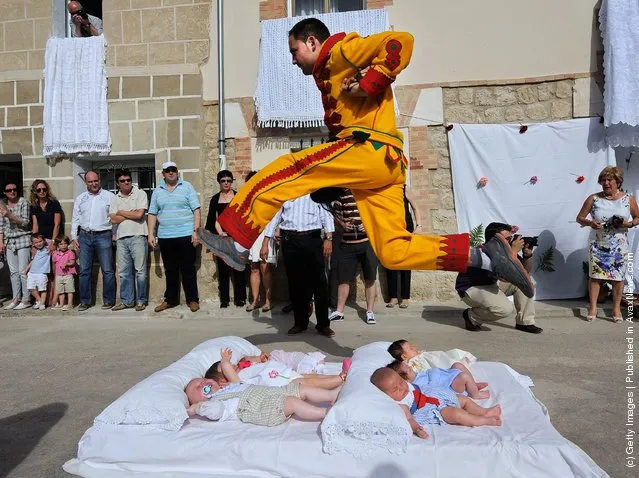
“Baby jumping (El Colacho) is a traditional Spanish practice dating back to 1620 that takes place annually to celebrate the Catholic feast of Corpus Christi in the village of Castrillo de Murcia near Burgos. During the act – known as El Salto del Colacho (the devil's jump) or simply El Colacho – men dressed as the Devil (known as the Colacho) jump over babies born during the previous twelve months of the year who lie on mattresses in the street. ... The festival has been rated as one of the most dangerous in the world”. – Wikipedia

Photo: A man representing the devil leaps over babies during the festival of El Colacho on June 26, 2011 in Castrillo de Murcia near Burgos, Spain. The festival, held on the first Sunday after Corpus Cristi, represents the devil taking away original sin from the newly born babies by leaping over them. (Photo by Denis Doyle/Getty Images)
Details
27 Jun 2011 09:20:00
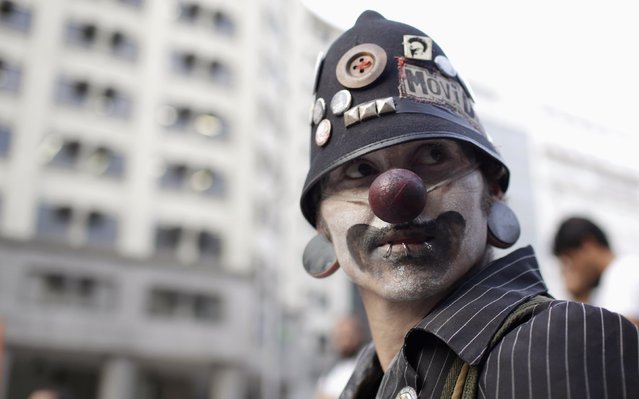
A demonstrator attends a protest against fare hikes for city buses in Rio de Janeiro January 16, 2015. Amid a marked economic downturn and high inflation, bus fares went up in Sao Paulo, Brazil's largest city, from 3 to 3.50 reais, and in Rio, the former capital, from 3.0 to 3.40 reais. (Photo by Mauro Pimentel/Reuters)

A demonstrator attends a protest against fare hikes for city buses in Rio de Janeiro January 16, 2015. Amid a marked economic downturn and high inflation, bus fares went up in Sao Paulo, Brazil's largest city, from 3 to 3.50 reais, and in Rio, the former capital, from 3.0 to 3.40 reais. (Photo by Mauro Pimentel/Reuters)
Details
18 Jan 2015 13:42:00
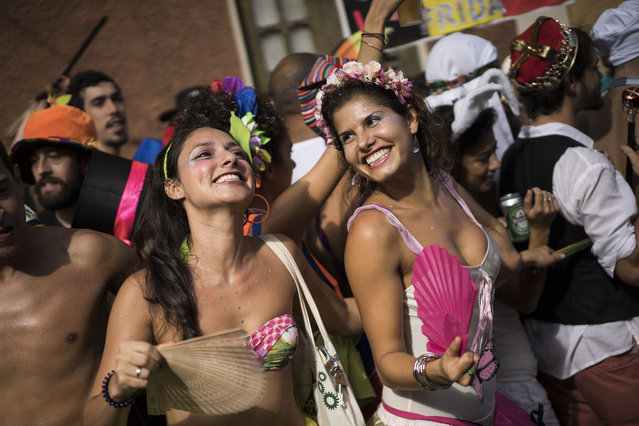
Revelers dance during the “Ceu na Terra”, or Heaven on earth, carnival parade in Rio de Janeiro, Brazil, Saturday, February 7, 2015. Rio's over-the-top Carnival is the highlight of the year for many local residents. Hundreds of thousands of merrymakers are beginning to take to the streets in open-air “blocos” parties. (Photo by Felipe Dana/AP Photo)

Revelers dance during the “Ceu na Terra”, or Heaven on earth, carnival parade in Rio de Janeiro, Brazil, Saturday, February 7, 2015. Rio's over-the-top Carnival is the highlight of the year for many local residents. Hundreds of thousands of merrymakers are beginning to take to the streets in open-air “blocos” parties. (Photo by Felipe Dana/AP Photo)
Details
10 Feb 2015 12:33:00
In this March 18, 2015 photo, Andrea, better known as Loira, which is the Portuguese word for 'blonde," poses for a portrait in an open-air crack cocaine market, known as a “cracolandia” or crackland where users can buy crack, and smoke it in plain sight, day or night, in Rio de Janeiro, Brazil. Andrea says she is married and has a home, but she keeps returning to crackland to feed her addiction. (Photo by Felipe Dana/AP Photo)

In this March 18, 2015 photo, Andrea, better known as Loira, which is the Portuguese word for “blonde”, poses for a portrait in an open-air crack cocaine market, known as a “cracolandia” or crackland where users can buy crack, and smoke it in plain sight, day or night, in Rio de Janeiro, Brazil. Andrea says she is married and has a home, but she keeps returning to crackland to feed her addiction. (Photo by Felipe Dana/AP Photo)
Details
09 Apr 2015 13:05:00
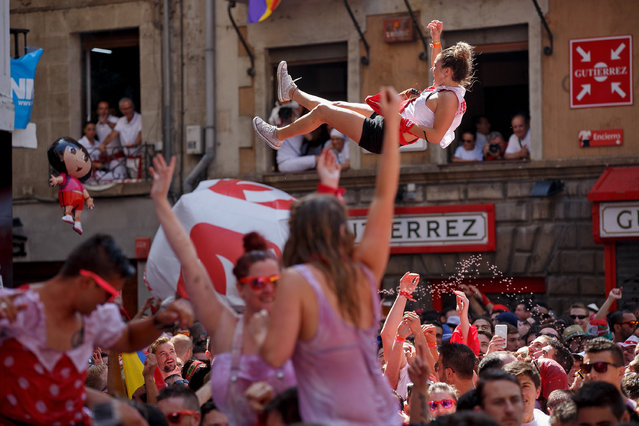
Revellers enjoy the atmosphere during the opening day or “Chupinazo” of the San Fermin Running of the Bulls fiesta on July 6, 2015 in Pamplona, Spain. The annual Fiesta de San Fermin, made famous by the 1926 novel of US writer Ernest Hemmingway entitled “The Sun Also Rises”, involves the daily running of the bulls through the historic heart of Pamplona to the bull ring. (Photo by Pablo Blazquez Dominguez/Getty Images)

Revellers enjoy the atmosphere during the opening day or “Chupinazo” of the San Fermin Running of the Bulls fiesta on July 6, 2015 in Pamplona, Spain. The annual Fiesta de San Fermin, made famous by the 1926 novel of US writer Ernest Hemmingway entitled “The Sun Also Rises”, involves the daily running of the bulls through the historic heart of Pamplona to the bull ring. (Photo by Pablo Blazquez Dominguez/Getty Images)
Details
07 Jul 2015 12:08:00
Cuban girls dressed as nurses and a lizard wait for their turn to dance during a visit by the Gay Men's Chorus of Washington in Havana July 13, 2015. The choir made its first appearance on July 12, 2015 in Cuba as part of a tour that will include a dozen concerts in the context of the restoration of relations between the island and the United States. (Photo by Enrique de la Osa/Reuters)

Cuban girls dressed as nurses and a lizard wait for their turn to dance during a visit by the Gay Men's Chorus of Washington in Havana July 13, 2015. The choir made its first appearance on July 12, 2015 in Cuba as part of a tour that will include a dozen concerts in the context of the restoration of relations between the island and the United States. (Photo by Enrique de la Osa/Reuters)
Details
22 Jul 2015 12:19:00
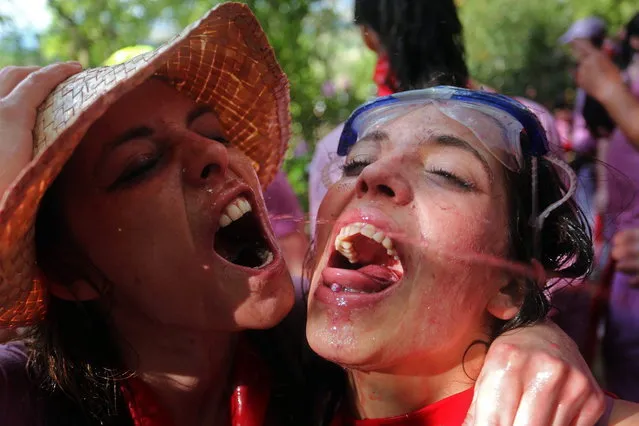
Revelers drink wine as they take part in the “Battle of Wine” (La batalla del vino de Haro), a wine fight, during the Haro Wine Festival, in Haro, in the northern province of La Rioja on June 29, 2014. More than nine thousand locals and tourists threw around 130.000 litres of wine at each other during the Haro Wine Festival, according to local media. (Photo by Cesar Manso/AFP Photo)

Revelers drink wine as they take part in the “Battle of Wine” (La batalla del vino de Haro), a wine fight, during the Haro Wine Festival, in Haro, in the northern province of La Rioja on June 29, 2014. More than nine thousand locals and tourists threw around 130.000 litres of wine at each other during the Haro Wine Festival, according to local media. (Photo by Cesar Manso/AFP Photo)
Details
30 Jun 2014 12:34:00