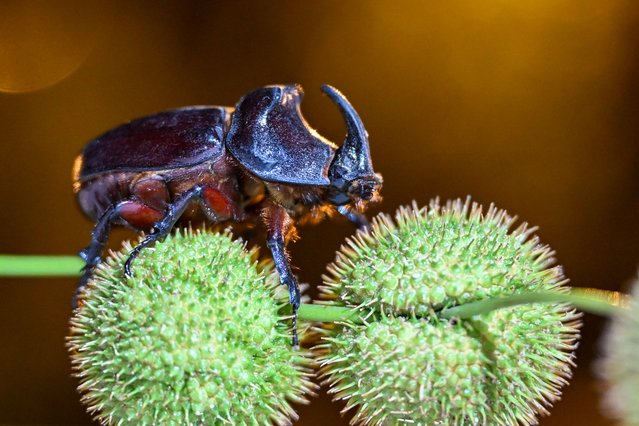
A “Rhino Beetle” (Oryctes nasicornis) is seen in Edremit, Van, Turkiye on August 2, 2024. Named “Rhino Beetle” due to the horn on its head, this beetle is commonly found in moist areas across Europe and Turkiye. (Photo by Ozkan Bilgin/Anadolu via Getty Images)
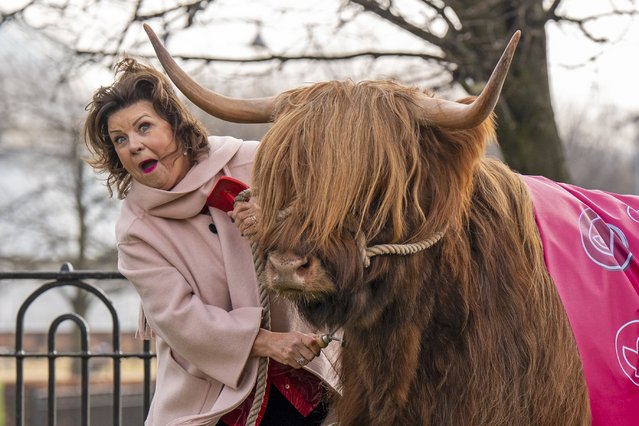
Actress Elaine C Smith grazes Siusan, the Highland cow, on Glasgow Green to mark being given the Freedom of the City of Glasgow, UK on Thursday, March 6, 2025. (Photo by Jane Barlow/PA Wire)
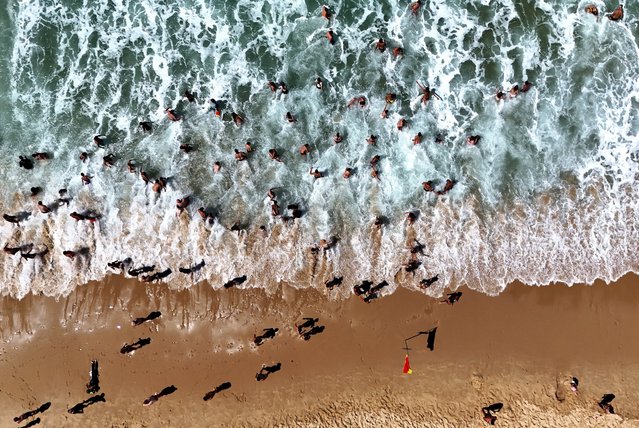
This aerial photograph shows beach-goers gathering on a beach alongside the Atlantic Ocean in Carcans, south-western France on July 22, 2025. (Photo by Christophe Archambault/AFP Photo)
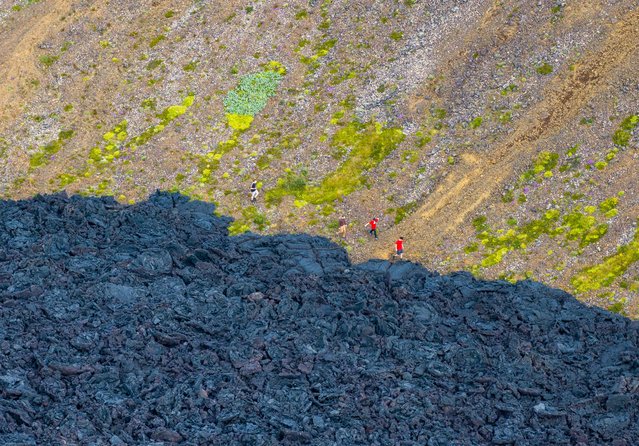
An aerial view taken with a drone shows people walking past dried lava (L) from a previous volcanic eruption as they make their way to a location closer to watch the fresh volcano eruption near Grindavik, Reykjanes, Iceland, 17 July 2025. According to the Icelandic Meteorological Office, a magma flow has begun at the Sundhnuk crater range on 16 July. (Photo by Jakob Vegerfors/EPA)
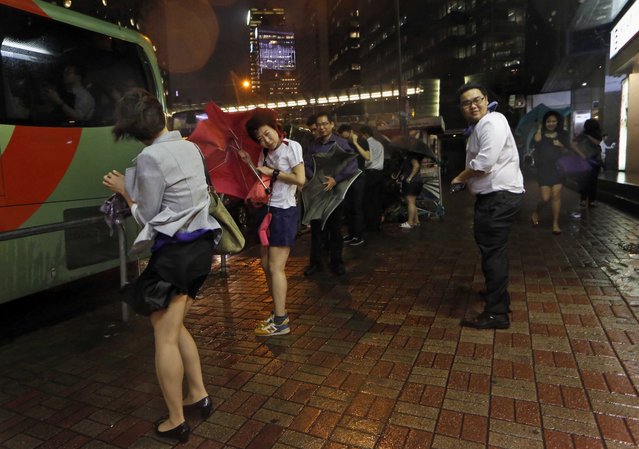
Passengers brave the strong winds as they wait for a bus, in Hong Kong, Monday, September 15, 2014. The Hong Kong Observatory issued the number 8 southeast storm signal, as Typhoon Kalmaegi edges closer to Hong Kong. (Photo by Kin Cheung/AP Photo)
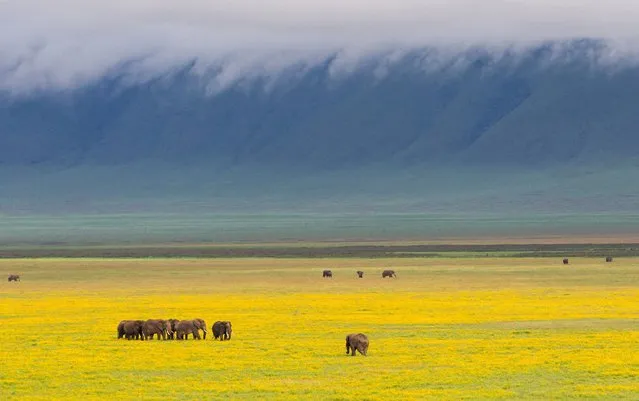
Ngorongoro Crater (Tanzania). At 610m deep and 260 sq km, this is the largest unflooded caldera in the world. A blue-green vision from above it's a haven for engangered wildlife and Maasai livestock. The crater was formed three million years ago when a giant volcano, which could have been as high as Kilimanjaro, exploded and collapsed. The caldera formed the concentric fractures in the crust cracked down to a magma reservoir deep underground. (Photo by John Bryant/Getty Images)