Loading...
Done


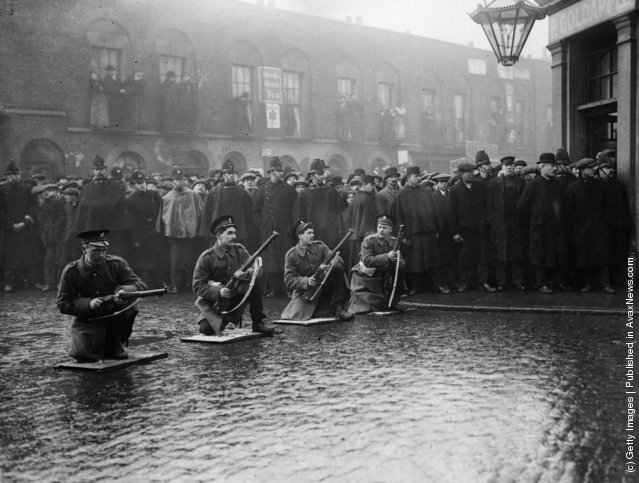
“The Siege of Sidney Street, popularly known as the “Battle of Stepney”, was a notorious gunfight in London's East End on the 2nd of January 1911. Preceded by the Houndsditch Murders, it ended with the deaths of two members of a supposedly politically-motivated gang of burglars supposedly led by Peter Piatkow, a.k.a. “Peter the Painter”, and sparked a major political row over the involvement of the then Home Secretary, Winston Churchill”. – Wikipedia

Photo: Scots Guards and police on duty during the “Siege of Sidney Street” in east London. (Photo by Central Press/Getty Images). 3rd January 1911
Details
03 Apr 2011 09:47:00


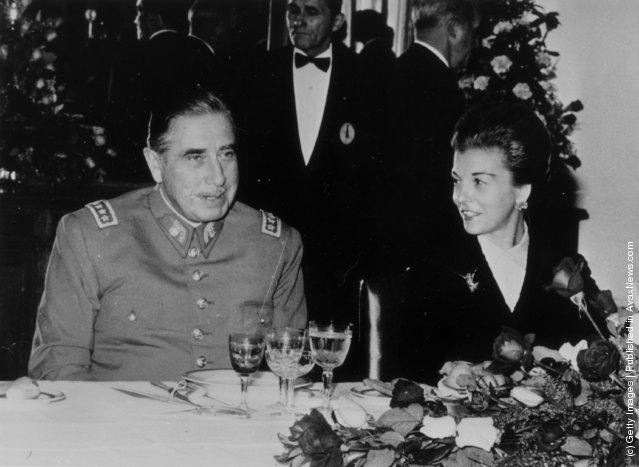
General Augusto Pinochet, the President of Chile, with the Argentinian President, Maria Estela Martinez De Peron, at a dinner given in his honour in Buenos Aires. (Photo by Keystone/Getty Images). 22nd April 1975
Details
30 Mar 2011 11:28:00
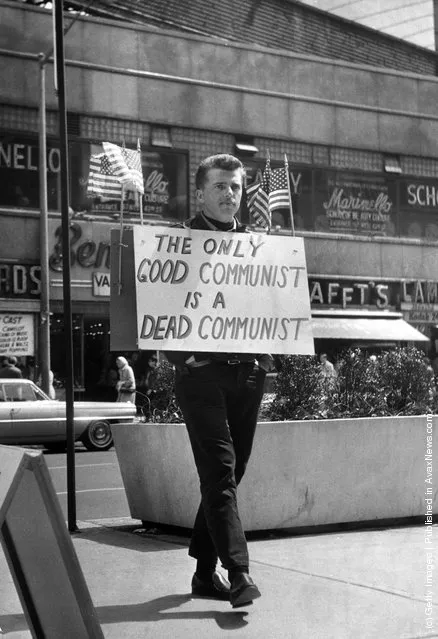
1965: New York nightclub owner Jack L Hickman spends his free time marching around Times Square with a sign that reads 'The only good communist is a dead communist'

New York nightclub owner Jack L Hickman spends his free time marching around Times Square with a sign that reads “The only good communist is a dead communist”. (Photo by Peter Keegan/Keystone/Getty Images). 26th April 1965
Details
22 Jan 2012 12:17:00
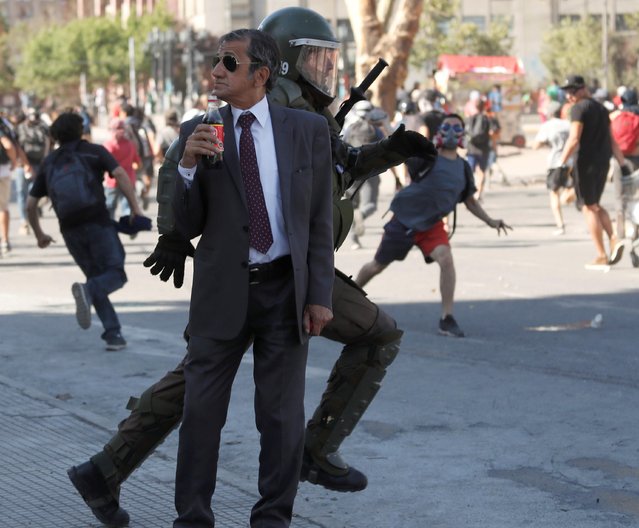
A man drinks a Frucola as a policeman chases demonstrators during a protest against Chile's government in Santiago, Chile on December 4, 2019. (Photo by Goran Tomasevic/Reuters)

A man drinks a Frucola as a policeman chases demonstrators during a protest against Chile's government in Santiago, Chile on December 4, 2019. (Photo by Goran Tomasevic/Reuters)
Details
07 Dec 2019 00:07:00
A participant in costume poses for a photo during a Halloween event in Kawasaki, south of Tokyo, Japan on October 28, 2018. (Photo by Toru Hanai/Reuters)

A participant in costume poses for a photo during a Halloween event in Kawasaki, south of Tokyo, Japan on October 28, 2018. (Photo by Toru Hanai/Reuters)
Details
01 Nov 2018 00:05:00
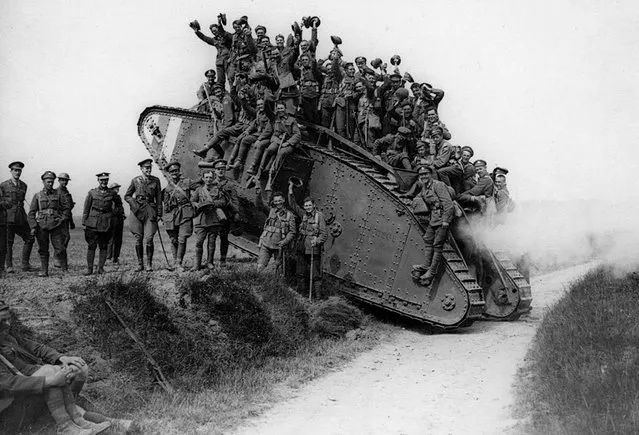
These black-and-white photos are taken from the new book “Armoured Warfare in the First World War 1916 – 1918” by Anthony Tucker-Jones and published by Pen & Sword Military. “Interestingly the British, French and Germans took completely different approaches with varying results”. The British military produced “Little Willie” in Autumn 1915 weighing 18 tonnes, which had a crew of two plus four gunners. “Inspired by a tracked artillery tractor “Little Willie” was referred to as a water tank – hence the name tank – to ensure secrecy”, said Anthony. “This led to the strange looking Mark I with its peculiar rhomboid shape, designed to cross trenches with guns in sponsons on either side. The Germans saw the tank as unchivalrous and were slow to grasp its utility. They favoured the Stormtrooper (specialist soldiers used to infiltrate enemy trenches) and artillery, not the tank”, said Anthony. “However, they didn’t hesitate to make use of captured British tanks. Although the tank helped secure victory and German soldiers dubbed it “Germany’s Downfall” the country was ultimately brought to its knees by the Allies blockade”. Here: British troops hitch a ride on a Mark IV after the massed tank fleet spearheading attack at Cambrai on November 20, 1917. (Photo by Anthony Tucker-Jones/Mediadrumworld.com)

These black-and-white photos are taken from the new book “Armoured Warfare in the First World War 1916 – 1918” by Anthony Tucker-Jones and published by Pen & Sword Military. Here: British troops hitch a ride on a Mark IV after the massed tank fleet spearheading attack at Cambrai on November 20, 1917. (Photo by Anthony Tucker-Jones/Mediadrumworld.com)
Details
23 Feb 2017 00:02:00
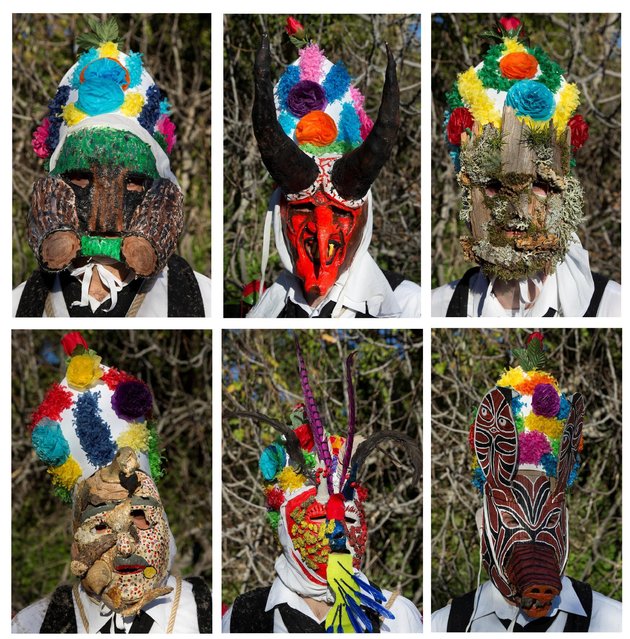
This combination picture shows some revellers wearing masks while dressed as “Botargas” during carnival celebrations in Almiruete, Spain, February 25, 2017. (Photo by Sergio Perez/Reuters)

This combination picture shows some revellers wearing masks while dressed as “Botargas” during carnival celebrations in Almiruete, Spain, February 25, 2017. (Photo by Sergio Perez/Reuters)
Details
28 Feb 2017 00:00:00
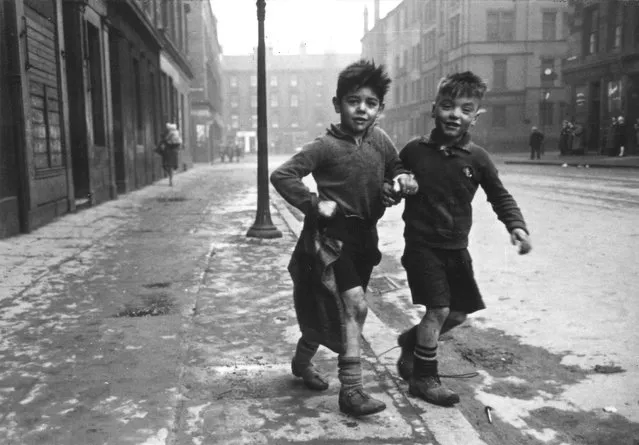
Two boys in the Gorbals area of Glasgow, UK on January 31, 1948. The Gorbals tenements were built quickly and cheaply in the 1840s, providing housing for Glasgow's burgeoning population of industrial workers. Conditions were appalling; overcrowding was standard and sewage and water facilities inadequate. The tenements housed about 40,000 people with up to eight family members sharing a single room, 30 residents sharing a toilet and 40 sharing a tap. By the time this photograph was taken 850 tenements had been demolished since 1920. Redevelopment of the area began in the late 1950s and the tenements were replaced with a modern tower block complex in the sixties. (Photo by Bert Hardy/Getty Images)

Two boys in the Gorbals area of Glasgow, UK on January 31, 1948. The Gorbals tenements were built quickly and cheaply in the 1840s, providing housing for Glasgow's burgeoning population of industrial workers. Conditions were appalling; overcrowding was standard and sewage and water facilities inadequate. The tenements housed about 40,000 people with up to eight family members sharing a single room, 30 residents sharing a toilet and 40 sharing a tap. By the time this photograph was taken 850 tenements had been demolished since 1920. Redevelopment of the area began in the late 1950s and the tenements were replaced with a modern tower block complex in the sixties. (Photo by Bert Hardy/Getty Images)
Details
09 Mar 2017 00:03:00