Loading...
Done
Ocean voyage

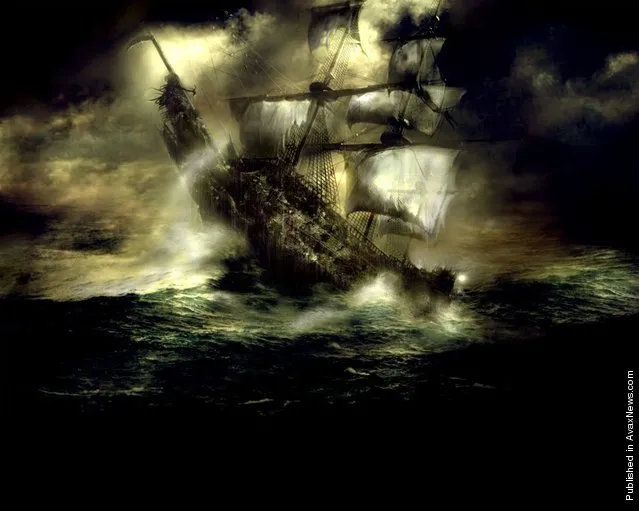
Do you think that history is a science? Well, not exactly. First, and foremost, history is the state's “legend of wars”, it’s official regalia. Of course, public historians are not interested in scientific truth – quite the opposite. In this respect, any attempt to present a state’s history as altruistic and benevolent as possible is welcomed and encouraged – as opposed to any revisionism attempts that may be more accurate. In this matter, Chinese have surpassed us all – they revised in highly creative manner (but rather shamelessly) the technology already invented by Europeans, a process that resulted in oldest state on the planet. Here is an interesting paradox: ask any sinologist about the Middle Kingdom during second century B.C., and he will describe it to you in such a vivid manner as if he has been living there all his life – but as soon as you will ask him to describe Chinese history in the 19-20th centuries… let's say, his eagerness will be greatly diminished. However, we will discuss China in a different article, and in the meantime we will try to understand how exactly historic “legend of wars” is formed and functions – based on a specific and well-known example. A great example is Ferdinand Magellan's first voyage around the world.
Details
14 Nov 2011 09:11:00
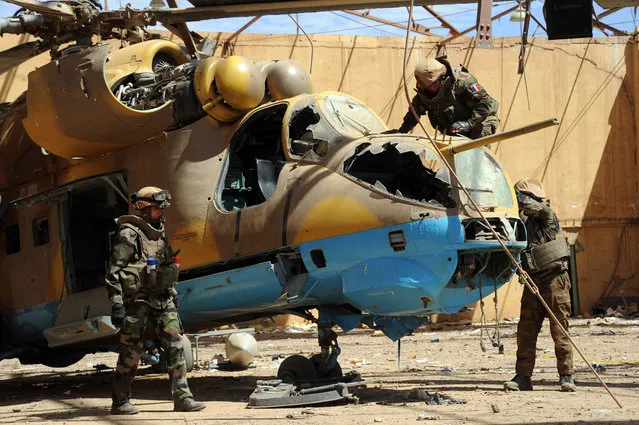
French army deminers secure a helicopter in a hangar at the Gao airport, on February 9, 2013. Two Malian soldiers and four civilians have already been killed by landmines, and French troops are still fighting off what Paris called “residual jihadists” in reclaimed territory. (Photo by Pascal Guyot/AFP Photo/The Atlantic)

French army deminers secure a helicopter in a hangar at the Gao airport, on February 9, 2013. Two Malian soldiers and four civilians have already been killed by landmines, and French troops are still fighting off what Paris called “residual jihadists” in reclaimed territory. (Photo by Pascal Guyot/AFP Photo via The Atlantic)
Details
28 Feb 2013 12:00:00
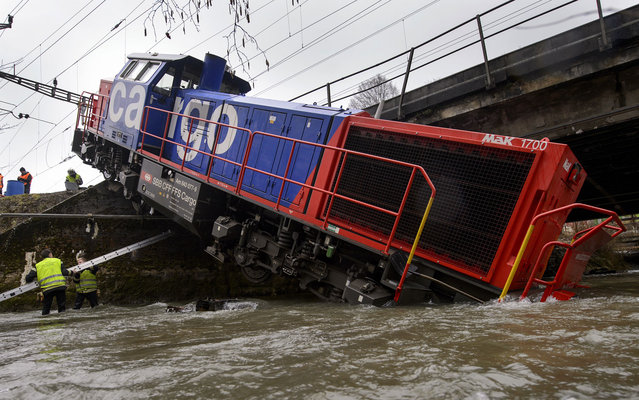
A diesel locomotive has ended up in the river Venoge on March 8, 2013 near Penthalaz, Western Switzerland. The freight locomotive derailed near Cossonez railway station with its driver slightly injured. (Photo by Fabrice Coffrini/AFP Photo)

A diesel locomotive has ended up in the river Venoge on March 8, 2013 near Penthalaz, Western Switzerland. The freight locomotive derailed near Cossonez railway station with its driver slightly injured. (Photo by Fabrice Coffrini/AFP Photo)
Details
09 Mar 2013 12:26:00
“Eye of a toad”. Animal Portraits, Łukasz Bożycki, Poland.  (Photo by Łukasz Bożycki)

“Eye of a toad”. Animal Portraits, Łukasz Bożycki, Poland. Early spring sees a pond near Łukasz’s home city of Warsaw, Poland, full of mating frogs and a few toads. On this March day, Łukasz shared the pond with them for an evening, sitting in the icy water in his chest-high waders, keeping as still as possible, despite the numbing cold, so that the amphibians could get used to him. “I wanted to find a fresh way of portraying the amphibians”, he says, “at water level”. Using a telephoto lens, he focused on one lone toad and waited for the sun to dip almost below the horizon before pressing the shutter, using flash to bring out the details in the shadow. His prize was “the glorious pool of sunset colour” and fiery glow of the toad’s eye. Nikon D80 + 70-300mm f4.5-5.6 lens + extension tube; 1/125 sec at f9 (-2.3 e/v); ISO 100; built-in flash. (Photo by Łukasz Bożycki)
Details
28 Aug 2013 11:45:00
Hirari in Harajuku. Ran into one of my favorite street snap models in Harajuku, Hirari. (Photo by Tokyo Fashion)

Hirari Ikeda, a well-known Harajuku street fashion personality, on the street in Shibuya. (Photo by Tokyo Fashion)


Details
28 Nov 2012 10:16:00
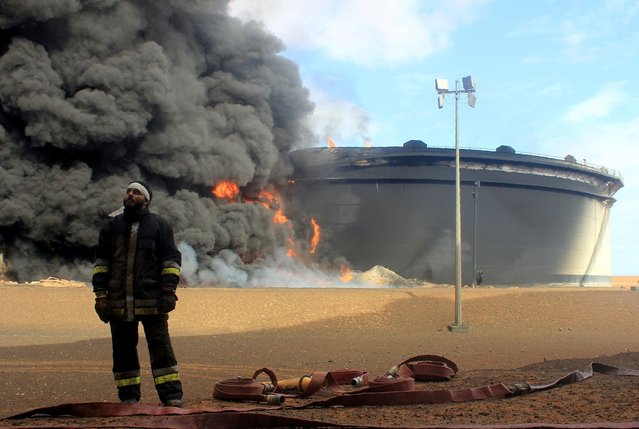
A Libyan fireman stands in front of smoke and flames rising from an oil storage tank at an oil facility in northern Libya's Ras Lanouf region on January 23, 2016, after it was set ablaze earlier in the week following attacks launched by Islamic State (IS) group jihadists to seize key port terminals. (Photo by AFP Photo/Stringer)

A Libyan fireman stands in front of smoke and flames rising from an oil storage tank at an oil facility in northern Libya's Ras Lanouf region on January 23, 2016, after it was set ablaze earlier in the week following attacks launched by Islamic State (IS) group jihadists to seize key port terminals. (Photo by AFP Photo/Stringer)
Details
25 Jan 2016 12:19:00
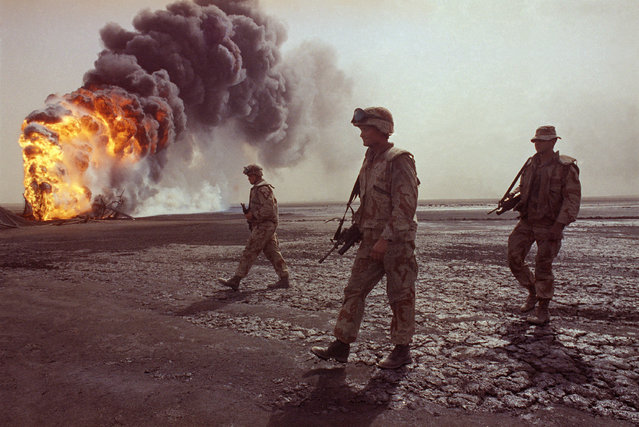
In this March 7, 1991 file photo, a U.S. Marine patrol walks across the charred oil landscape near a burning well during perimeter security patrol near Kuwait City. Twenty five years after the first U.S. Marines swept across the border into Kuwait in the 1991 Gulf War, American forces find themselves battling the extremist Islamic State group, born out of al-Qaida, in the splintered territories of Iraq and Syria. The Arab allies that joined the 1991 coalition are fighting their own conflicts both at home and abroad, as Iran vies for greater regional power following a nuclear deal with world powers. (Photo by John Gaps III/AP Photo)

In this March 7, 1991 file photo, a U.S. Marine patrol walks across the charred oil landscape near a burning well during perimeter security patrol near Kuwait City. Twenty five years after the first U.S. Marines swept across the border into Kuwait in the 1991 Gulf War, American forces find themselves battling the extremist Islamic State group, born out of al-Qaida, in the splintered territories of Iraq and Syria. The Arab allies that joined the 1991 coalition are fighting their own conflicts both at home and abroad, as Iran vies for greater regional power following a nuclear deal with world powers. (Photo by John Gaps III/AP Photo)
Details
23 Feb 2016 11:43:00
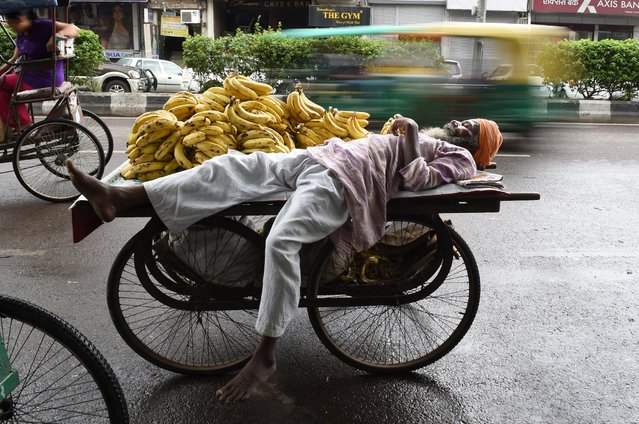
An Indian street vendor selling bananas naps on his fruit cart at the roadside in New Delhi on June 3, 2015. (Photo by Money Sharma/AFP Photo)

An Indian street vendor selling bananas naps on his fruit cart at the roadside in New Delhi on June 3, 2015. (Photo by Money Sharma/AFP Photo)
Details
02 Mar 2016 13:33:00