Loading...
Done
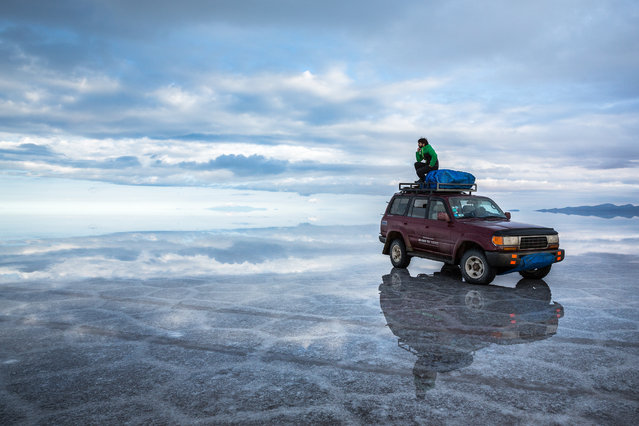
At 10,582 square kilometres, the Bolivian salt flats – otherwise known as Salar de Uyuni – are the largest on the planet and contain between 50 and 70% of the world’s lithium reserves. After exploring Chile and Argentina, photographer Joel Santos decided to travel to Bolivia in January 2017 to check the salt flats off his bucket list. With an electrical storm rolling in, Joel and his two travelling companions were the only souls left on the vast flats and captured the eerie flats without a person in sight. (Photo by Joel Santos/Barcroft Images)

At 10,582 square kilometres, the Bolivian salt flats – otherwise known as Salar de Uyuni – are the largest on the planet and contain between 50 and 70% of the world’s lithium reserves. After exploring Chile and Argentina, photographer Joel Santos decided to travel to Bolivia in January 2017 to check the salt flats off his bucket list. With an electrical storm rolling in, Joel and his two travelling companions were the only souls left on the vast flats and captured the eerie flats without a person in sight. (Photo by Joel Santos/Barcroft Images)
Details
12 Aug 2019 00:03:00
In this January 16, 2019 photo, a sculpture of a Plesiosaur is displayed at an exhibit about the studies of researchers from the National Museum made in Antartica, during a media presentation of the exhibit in Rio de Janeiro, Brazil. The National Museum will inaugurate on Jan. 17 their first exhibition after the fire, held at the building that houses the Cultural Center and Museum of Brazil's Mint. (Photo by Leo Correa/AP Photo)

In this January 16, 2019 photo, a sculpture of a Plesiosaur is displayed at an exhibit about the studies of researchers from the National Museum made in Antartica, during a media presentation of the exhibit in Rio de Janeiro, Brazil. The National Museum will inaugurate on Jan. 17 their first exhibition after the fire, held at the building that houses the Cultural Center and Museum of Brazil's Mint. (Photo by Leo Correa/AP Photo)
Details
18 Jan 2019 09:26:00
Health workers watch as the vaccine against the Coronavirus arrives at a nursing home in l'Hospitalet de Llobregat in Barcelona, Spain, on Sunday, December 27, 2020. The first shipments of coronavirus vaccines developed by BioNTech and Pfizer have arrived across the European Union, authorities started to vaccinate the most vulnerable people in a coordinated effort on Sunday. (Photo by Emilio Morenatti/AP Photo)

Health workers watch as the vaccine against the Coronavirus arrives at a nursing home in l'Hospitalet de Llobregat in Barcelona, Spain, on Sunday, December 27, 2020. The first shipments of coronavirus vaccines developed by BioNTech and Pfizer have arrived across the European Union, authorities started to vaccinate the most vulnerable people in a coordinated effort on Sunday. (Photo by Emilio Morenatti/AP Photo)
Details
29 Dec 2020 00:07:00
A man is arrested by Police during clashes in Rotterdam, The Netherlands, 25 January 2021. Police's mobile unit is present and has carried out charges to clear the street. Some arrests have also been made and a water cannon has been used. Nationwide protest against coronavirus restrictions and curfew imposed by Dutch government broke out during the weekend in many Dutch cities, leading to some violent riots and clashes with Police. (Photo by Marco de Swart/EPA/EFE)

A man is arrested by Police during clashes in Rotterdam, The Netherlands, 25 January 2021. Police's mobile unit is present and has carried out charges to clear the street. Some arrests have also been made and a water cannon has been used. Nationwide protest against coronavirus restrictions and curfew imposed by Dutch government broke out during the weekend in many Dutch cities, leading to some violent riots and clashes with Police. (Photo by Marco de Swart/EPA/EFE)
Details
26 Jan 2021 10:33:00
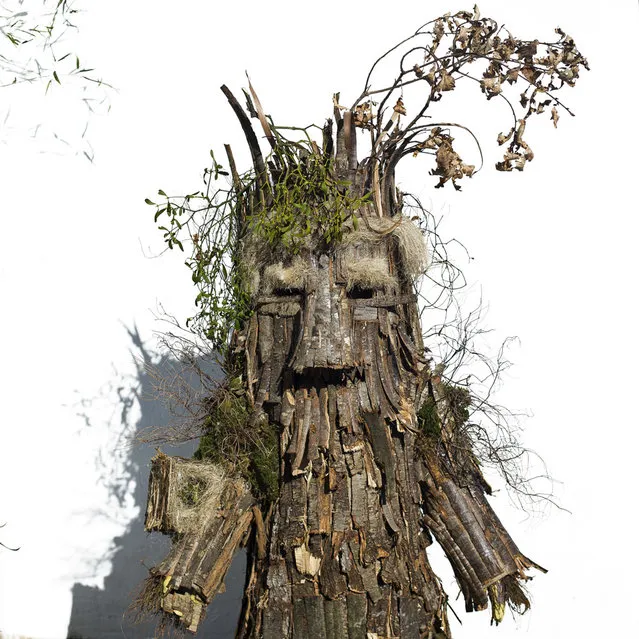
A man dressed as a  “Trapajon”, representing entities of nature, poses for a picture after taking part in the Vijanera Festival in Silio, northern Spain, Sunday, Jan. 6, 2013. The Vijanera masquerade, of pre-Roman origin, is the first carnival of the year in Europe symbolizing the triumph of good over evil and involving the participation of crowds of residents wearing different masks, animal skins and brightly colored clothing with its own complex function and symbolism and becoming the living example of the survival of archaic cults to nature. (Photo by Daniel Ochoa de Olza/AP Photo)

A man dressed as a “Trapajon”, representing entities of nature, poses for a picture after taking part in the Vijanera Festival in Silio, northern Spain, Sunday, Jan. 6, 2013. The Vijanera masquerade, of pre-Roman origin, is the first carnival of the year in Europe symbolizing the triumph of good over evil and involving the participation of crowds of residents wearing different masks, animal skins and brightly colored clothing with its own complex function and symbolism and becoming the living example of the survival of archaic cults to nature. (Photo by Daniel Ochoa de Olza/AP Photo)
Details
19 Jan 2013 13:01:00
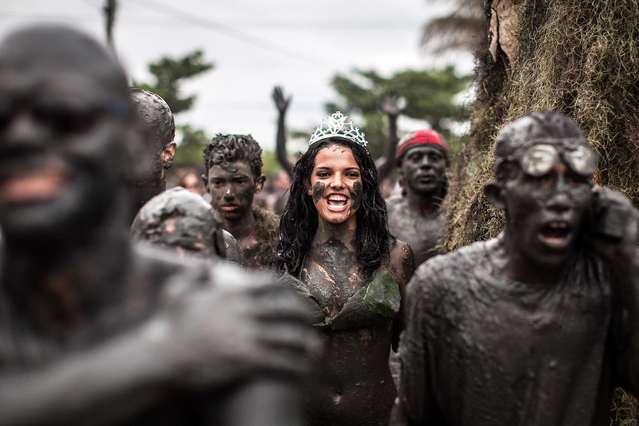
Revelers participate in the traditional Bloco da Lama (Mud block) carnival in Parati, Rio de Janeiro State, Brazil, on February 9, 2013. The event, which was begun by two men in a playful manner in 1986, has now become a traditional carnival in which participants disguised as primitives with rags, lianas or skulls and bones, dive in the mud. (Photo by Victor Moriyama/AFP Photo)

Revelers participate in the traditional Bloco da Lama (Mud block) carnival in Parati, Rio de Janeiro State, Brazil, on February 9, 2013. The event, which was begun by two men in a playful manner in 1986, has now become a traditional carnival in which participants disguised as primitives with rags, lianas or skulls and bones, dive in the mud. (Photo by Victor Moriyama/AFP Photo)
Details
12 Feb 2013 14:10:00


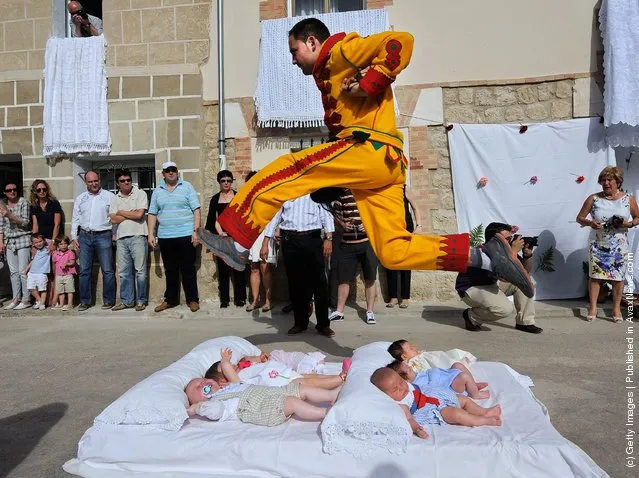
“Baby jumping (El Colacho) is a traditional Spanish practice dating back to 1620 that takes place annually to celebrate the Catholic feast of Corpus Christi in the village of Castrillo de Murcia near Burgos. During the act – known as El Salto del Colacho (the devil's jump) or simply El Colacho – men dressed as the Devil (known as the Colacho) jump over babies born during the previous twelve months of the year who lie on mattresses in the street. ... The festival has been rated as one of the most dangerous in the world”. – Wikipedia

Photo: A man representing the devil leaps over babies during the festival of El Colacho on June 26, 2011 in Castrillo de Murcia near Burgos, Spain. The festival, held on the first Sunday after Corpus Cristi, represents the devil taking away original sin from the newly born babies by leaping over them. (Photo by Denis Doyle/Getty Images)
Details
27 Jun 2011 09:20:00
In this February 5, 2014 photo, Divaldo Aguiar, who plays the part of Pachencho, is carried in a mock coffin during the Burial of Pachencho celebration, through a cemetery in Santiago de Las Vegas, Cuba. Cuban villagers stage a mock funeral and burial of Pachencho, with a living man playing the part of Pachencho, in a boozy festival that has become an annual tradition in this small town near Havana, held each February 5 for the last 30 years. (Photo by Enric Marti/AP Photo)

In this February 5, 2014 photo, Divaldo Aguiar, who plays the part of Pachencho, is carried in a mock coffin during the Burial of Pachencho celebration, through a cemetery in Santiago de Las Vegas, Cuba. Cuban villagers stage a mock funeral and burial of Pachencho, with a living man playing the part of Pachencho, in a boozy festival that has become an annual tradition in this small town near Havana, held each February 5 for the last 30 years. (Photo by Enric Marti/AP Photo)
Details
10 Feb 2014 09:24:00