Loading...
Done


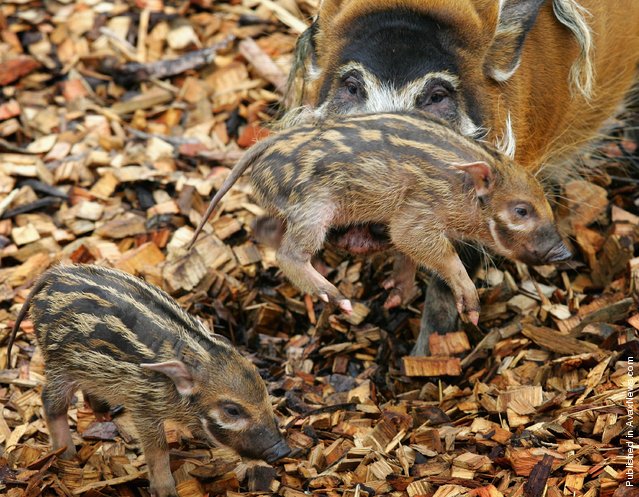
“The Red River Hog (Potamochoerus porcus), also known as the Bush Pig (but not to be confused with P. larvatus, common name “Bushpig”), is a wild member of the pig family living in Africa, with most of its distribution in the Guinean and Congolian forests. It is rarely seen away from rainforests, and generally prefers areas near rivers or swamps.

Red River Hogs eat grass, berries, roots, insects, molluscs, small vertebrates and carrion. They are capable of causing damage to plantations. Red River Hogs typically live in herds of 6-20 members led by a dominant boar. Sows rear 3-6 piglets at a time.”

Photo: Two 17 day old red river hoglet twins forage for food next to their mother Bahiti at London Zoo on August 23, 2007 in London, England. Red River hoglets inhabit the forests and swamps of West and Central Africa. The recent additions to the London Zoo pig pen have been eagerly awaited by zoo keepers. (Photo by Chris Jackson/Getty Images)
Details
18 Mar 2011 15:15:00
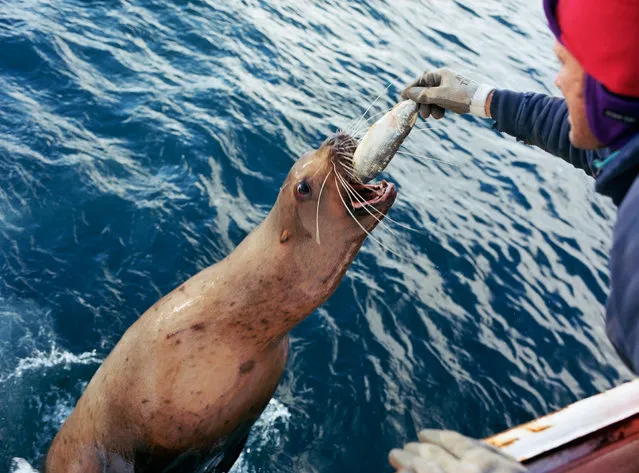
Before heading up to Alaska, the ship loads up with 3 months worth of food. Even so, it's hardly necessary. The ship's cook is constantly steaming fresh crab legs and seafood caught during the day. The hard labour of fishing requires a diet heavy in fat, protein, and omega-3s. Here, a sea lion gets a bite of the grub. (Photo by Corey Arnold)

In 2002 photographer Corey Arnold left behind a poor economy in San Francisco and headed up to Alaska to try his luck at his longtime passion of fishing. Arnold, who had worked summers during college on a salmon boat in Alaska, signed onto the f/v Rollo, a crabbing boat that fishes in the dangerous Bering Sea. While working long, strenuous hours on the Rollo, Arnold often stole away with the captain’s permission to grab his camera and photograph the crew and the ship. Arnold eventually put together “Fish Work: Bering Sea”, a documentation of his seven adventurous and dicey crab seasons aboard the Rollo. (Photo by Corey Arnold)
Details
20 Aug 2014 10:05:00
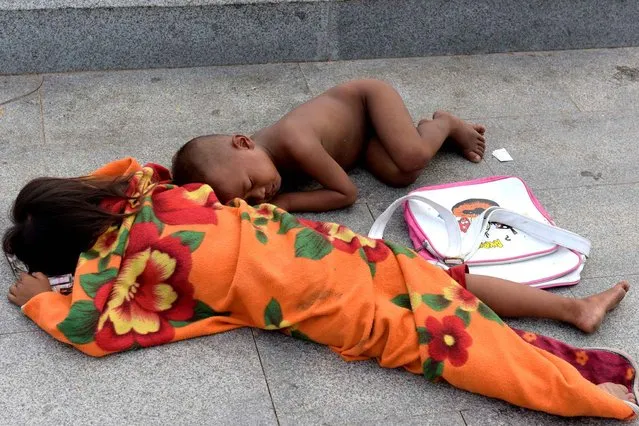
Cambodian children sleep on a pavement at a park in Phnom Penh on July 8, 2016. (Photo by Tang Chhin Sothy/AFP Photo)

Cambodian children sleep on a pavement at a park in Phnom Penh on July 8, 2016. (Photo by Tang Chhin Sothy/AFP Photo)
Details
23 Jul 2016 13:01:00
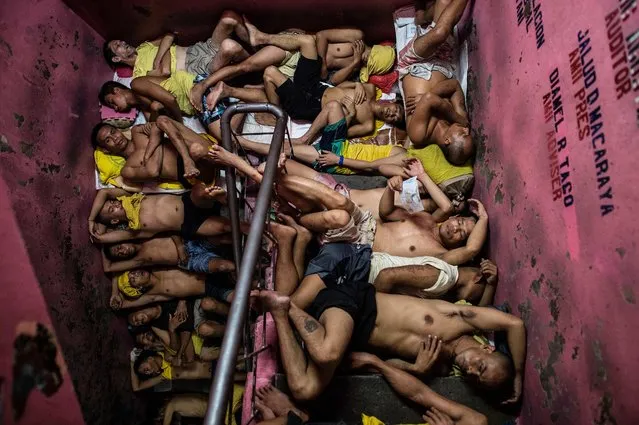
Inmates sleep on the steps of a ladder inside the Quezon City jail at night in Manila in this picture taken on July 21, 2016. (Photo by Noel Celis/AFP Photo)

Inmates sleep on the steps of a ladder inside the Quezon City jail at night in Manila in this picture taken on July 21, 2016. There are 3,800 inmates at the jail, which was built six decades ago to house 800, and they engage in a relentless contest for space. Men take turns to sleep on the cracked cement floor of an open-air basketball court, the steps of staircases, underneath beds and hammocks made out of old blankets. (Photo by Noel Celis/AFP Photo)
Details
06 Aug 2016 13:24:00
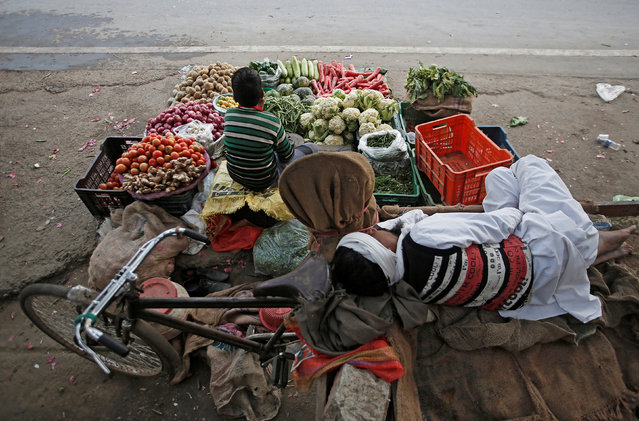
A vendor sleeps as his son waits for customers at their roadside vegetable shop in New Delhi, February 12, 2019. (Photo by Adnan Abidi/Reuters)

A vendor sleeps as his son waits for customers at their roadside vegetable shop in New Delhi, February 12, 2019. (Photo by Adnan Abidi/Reuters)
Details
23 Mar 2019 00:01:00
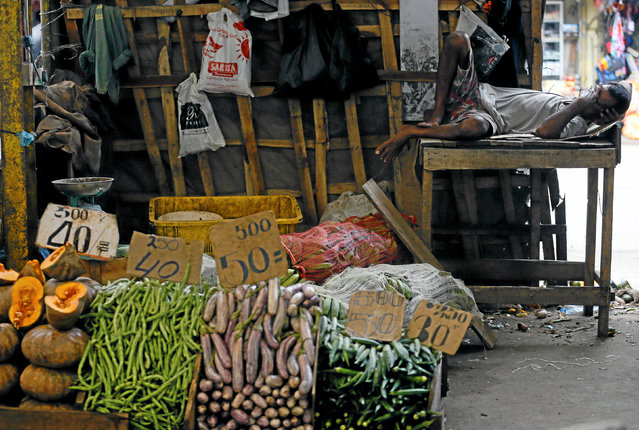
A vendor sleeps at his vegetables shop at a main market in Colombo, Sri Lanka May 31, 2016. (Photo by Dinuka Liyanawatte/Reuters)

A vendor sleeps at his vegetables shop at a main market in Colombo, Sri Lanka May 31, 2016. (Photo by Dinuka Liyanawatte/Reuters)
Details
01 Jun 2016 12:38:00
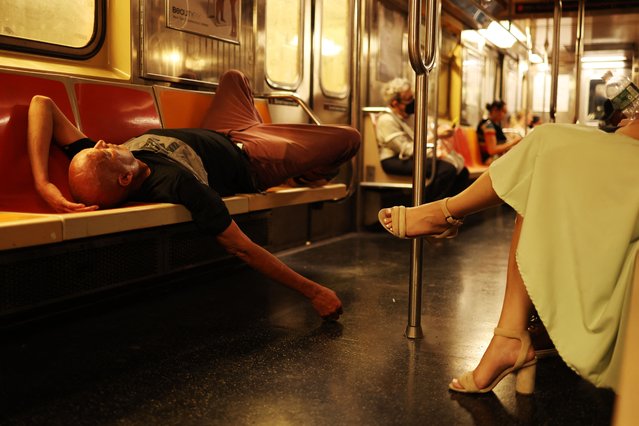
A man sleeps in a subway train in New York city on August 1, 2024. (Photo by Charly Triballeau/AFP Photo)

A man sleeps in a subway train in New York city on August 1, 2024. (Photo by Charly Triballeau/AFP Photo)
Details
12 Aug 2024 03:35:00
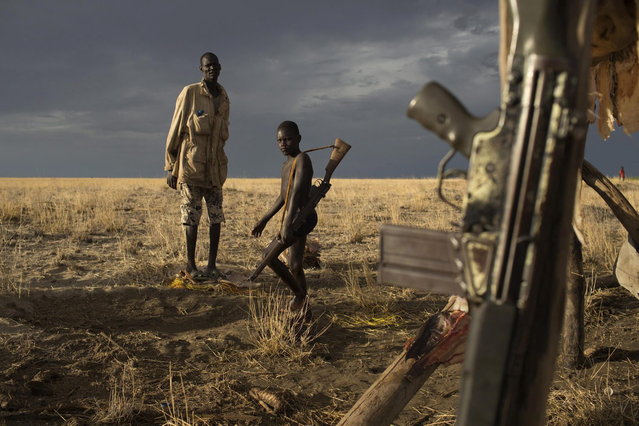
A Turkana man and a boy carrying a gun look on as a G3 battle rifle hangs from a structure used to dry fish at a fishing camp on the shores of Lake Turkana, some kilometres from Todonyang near the Kenya-Ethiopia border in northwestern Kenya October 12, 2013. (Photo by Siegfried Modola/Reuters)

A Turkana man and a boy carrying a gun look on as a G3 battle rifle hangs from a structure used to dry fish at a fishing camp on the shores of Lake Turkana, some kilometres from Todonyang near the Kenya-Ethiopia border in northwestern Kenya October 12, 2013The Turkana are traditionally nomadic pastoralists, but they have seen the pasture that they need to feed their herds suffer from recurring droughts and many have turned to fishing. However, Lake Turkana is overfished, and scarcity of food and pastureland is fuelling long-standing conflict with Ethiopian indigenous Dhaasanac, who have seen grazing grounds squeezed by large-scale government agricultural schemes in southern Ethiopia. The Dhaasanac now venture ever deeper into Kenyan territory in search of fish and grass, clashing with neighbours. Fighting between the communities has a long history, but the conflict has become ever more fatal as automatic weapons from other regional conflicts seep into the area. While the Turkana region is short of basics like grass and ground-water, it contains other resources including oil reserves and massive, newly discovered underground aquifers. (Photo by Siegfried Modola/Reuters)
Details
05 Dec 2013 12:08:00