Loading...
Done
Julian, left, is photographed by his mother with friend Gianluca, right, under water at a public pool in Gelsenkirchen, Germany, on a hot Friday, July 3, 2015. Germany faces a heat wave with temperatures up to 38 degrees Celsius  (100 degrees Fahrenheit) at the weekend. (Photo by Martin Meissner/AP Photo)

Julian, left, is photographed by his mother with friend Gianluca, right, under water at a public pool in Gelsenkirchen, Germany, on a hot Friday, July 3, 2015. Germany faces a heat wave with temperatures up to 38 degrees Celsius (100 degrees Fahrenheit) at the weekend. (Photo by Martin Meissner/AP Photo)
Details
04 Jul 2015 10:39:00
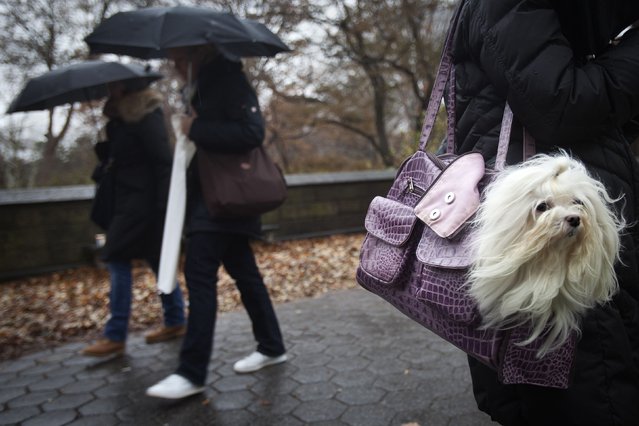
Emma the Maltese's fur blows in the wind as she rides in her owner's purse on 5th Avenue at Central Park in New York December 2, 2014. (Photo by Carlo Allegri/Reuters)

Emma the Maltese's fur blows in the wind as she rides in her owner's purse on 5th Avenue at Central Park in New York December 2, 2014. (Photo by Carlo Allegri/Reuters)
Details
06 Dec 2014 13:07:00
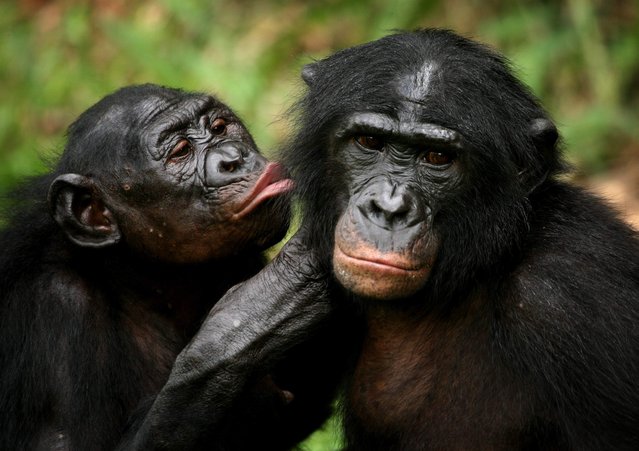
Bonobo apes, primates unique to Congo and humankind's closest relative, groom one another at a sanctuary just outside the capital Kinshasa, Congo on October 31, 2006. (Photo by Finbarr O'Reilly/Reuters)

Bonobo apes, primates unique to Congo and humankind's closest relative, groom one another at a sanctuary just outside the capital Kinshasa, Congo on October 31, 2006. (Photo by Finbarr O'Reilly/Reuters)
Details
08 Feb 2017 00:01:00
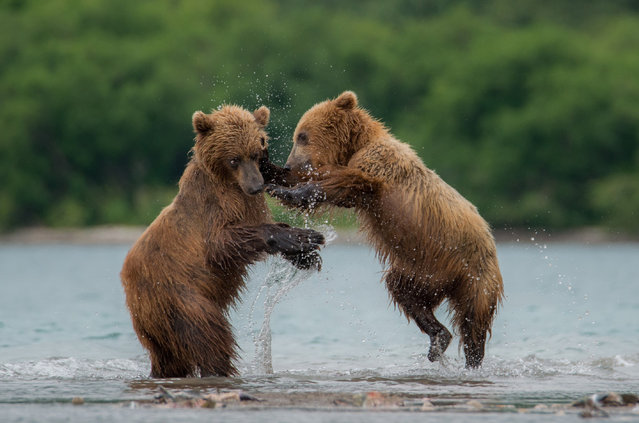
Kamchatka brown bears at Kurile Lake in Kamchatka peninsula’s volcanic terrain, Russia on August, 2017. Kamchatka brown bears are generally not dangerous to humans, and only 1% of encounters result in attack. (Photo by Igor Ivanko/Anadolu Agency/Getty Images)

Kamchatka brown bears at Kurile Lake in Kamchatka peninsula’s volcanic terrain, Russia on August, 2017. Kamchatka brown bears are generally not dangerous to humans, and only 1% of encounters result in attack. (Photo by Igor Ivanko/Anadolu Agency/Getty Images)
Details
03 Sep 2017 07:17:00
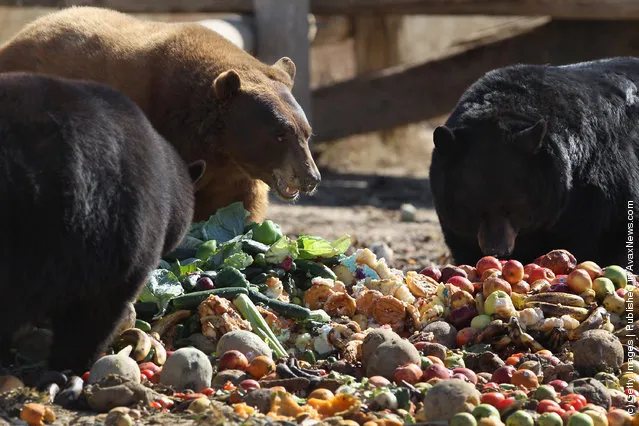
Rescued brown and black bears feed at The Wild Animal Sanctuary

“The Wild Animal Sanctuary is a U.S. organization that specializes in rescuing and caring for large predators which are being ill-treated, for which their owners can no longer care, or which might otherwise be euthanized. Created in 1980, The Wild Animal Sanctuary is situated on 720 acres (291 ha) of grassland near Keenesburg, Colorado North of Denver, and has helped over 1,000 animals since it first opened. As of 2010, it was home to over 290 animals”. – Wikipedia

Photo: Rescued brown and black bears feed at The Wild Animal Sanctuary on October 20, 2011 in Keenesburg, Colorado. (Photo by John Moore/Getty Images)
Details
27 Feb 2012 11:59:00
Athletes from Australia's Olympic team going to the 2016 Olympics in Rio present their uniforms alongside Brazilian Samba dancer Sashya Jay at an official unveiling ceremony at Sydney's Bondi Beach, March 30, 2016. (Photo by Jason Reed/Reuters)

Athletes from Australia's Olympic team going to the 2016 Olympics in Rio present their uniforms alongside Brazilian Samba dancer Sashya Jay at an official unveiling ceremony at Sydney's Bondi Beach, March 30, 2016. (Photo by Jason Reed/Reuters)
Details
31 Mar 2016 11:41:00
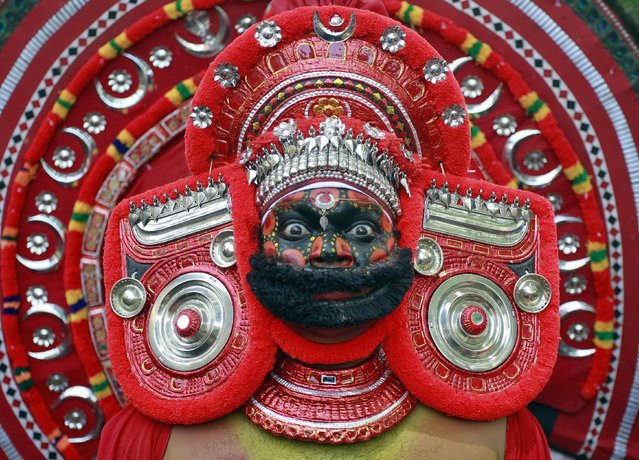
A dancer waits to perform during festivities marking the start of the annual harvest festival of “Onam” in Kochi, India, August 19, 2015. The ten-day-long Hindu festival is celebrated annually in India's southern coastal state of Kerala to commemorate the return of King Mahabali to his beloved subjects. (Photo by Sivaram V/Reuters)

A dancer waits to perform during festivities marking the start of the annual harvest festival of “Onam” in Kochi, India, August 19, 2015. The ten-day-long Hindu festival is celebrated annually in India's southern coastal state of Kerala to commemorate the return of King Mahabali to his beloved subjects. (Photo by Sivaram V/Reuters)
Details
26 Aug 2015 09:35:00
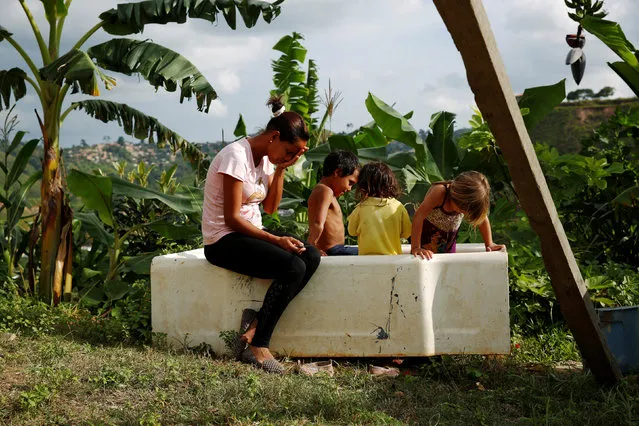
Lisibeht Martinez (L), 30, who was sterilized one year ago, sits next to her children while they play in a bathtub in the backyard of their house in Los Teques, Venezuela July 19, 2016. (Photo by Carlos Garcia Rawlins/Reuters)

Venezuela's food shortages, inflation and crumbling medical sector have become such a source of anguish that a growing number of young women are reluctantly opting for sterilizations rather than face the hardship of pregnancy and child-rearing. Traditional contraceptives like condoms or birth control pills have virtually vanished from store shelves, pushing women towards the hard-to-reverse surgery. While no recent national statistics on sterilizations are available, doctors and health workers say demand for the procedure is growing. (Photo by Carlos Garcia Rawlins/Reuters)
Details
04 Aug 2016 12:22:00