Loading...
Done
A new species of monkey found in the Democratic Republic of the Congo and identified as Lesula (Cercopithecus lomamiensis) is seen in this undated photograph from an article published September 12, 2012 in the science journal PLOS One. (Photo by Hart J. A., Detwiler K. M., Gilbert C. C./Reuters)

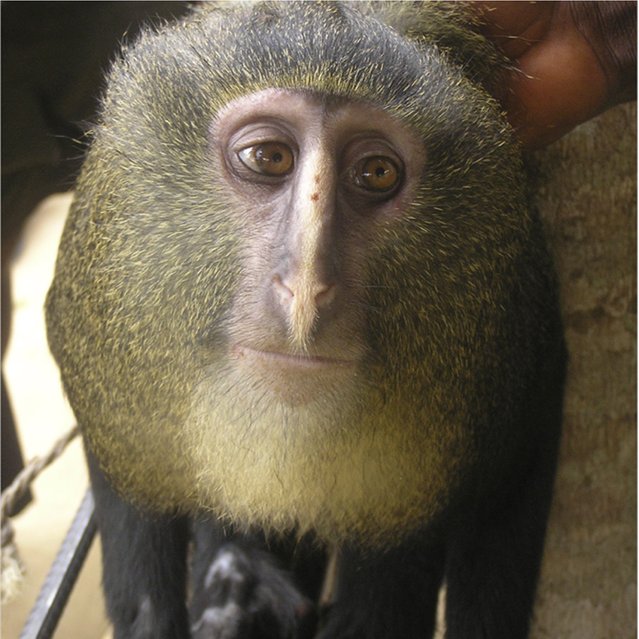
A new species of monkey found in the Democratic Republic of the Congo and identified as Lesula (Cercopithecus lomamiensis) is seen in this undated photograph from an article published September 12, 2012 in the science journal PLOS One. The monkey was first seen in 2007 by researchers John and Terese Hart of the Peabody Museum of Natural History at Yale Research Project. The finding of C. lomamiensis represents only the second new species of African monkey to be discovered in the past 28 years, according to the research article. (Photo by Hart J. A., Detwiler K. M., Gilbert C. C./Reuters)
Details
27 Sep 2012 08:17:00
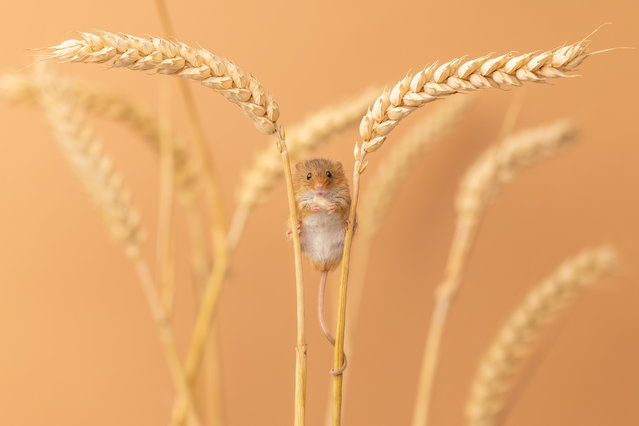
Stunning image capture the moment a tiny harvest mouse uses wheat stems as stilts as he munches on a kernel in UK in August 2025. The minute-mouse, who weighs as much as a 2p coin and is only two-inches-long, uses his prehensile tail to keep himself perfectly level. (Photo by Tony Nellis/South West News Service)

Stunning image capture the moment a tiny harvest mouse uses wheat stems as stilts as he munches on a kernel in UK in August 2025. The minute-mouse, who weighs as much as a 2p coin and is only two-inches-long, uses his prehensile tail to keep himself perfectly level. (Photo by Tony Nellis/South West News Service)
Details
24 Aug 2025 04:16:00
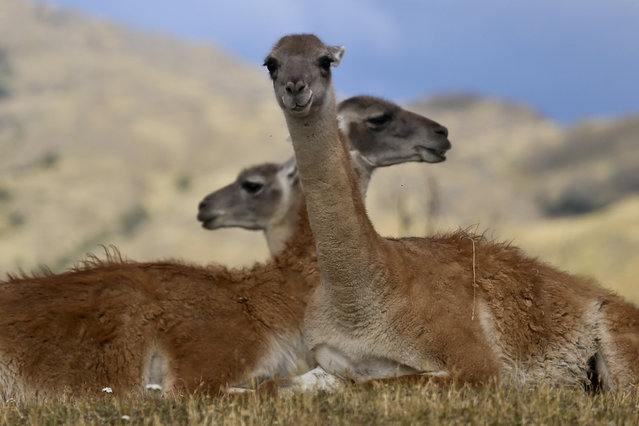
Guanacos sit during a signing ceremony in Patagonia Park, Chile, January 29, 2018. Chilean President Michelle Bachelet signed decrees Monday creating vast new national parks using lands donated by U.S. conservation organization Tompkins Conservation in what is believed to be the largest private donation of land ever from a private entity to a country. (Photo by Esteban Felix/AP Photo)

Guanacos sit during a signing ceremony in Patagonia Park, Chile, January 29, 2018. Chilean President Michelle Bachelet signed decrees Monday creating vast new national parks using lands donated by U.S. conservation organization Tompkins Conservation in what is believed to be the largest private donation of land ever from a private entity to a country. (Photo by Esteban Felix/AP Photo)
Details
27 Dec 2018 00:01:00
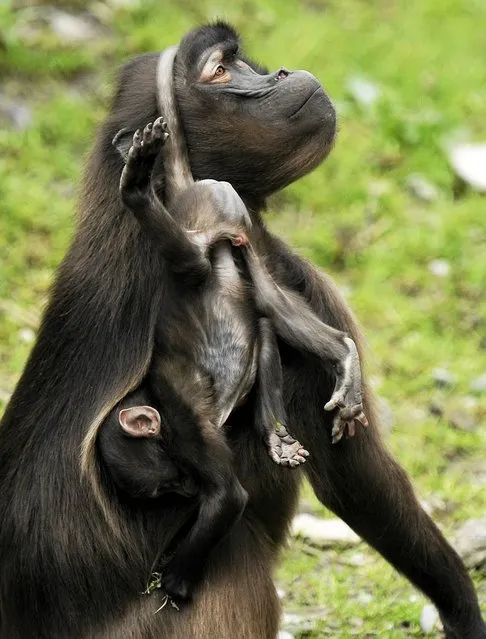
Gelada baboons (Theropithecus gelada) play in their enclosure at the Zoo in Zurich, Switzerland, Wednesday, May 15, 2013. (Photo by Steffen Schmidt/Keystone/AP Photo)

Gelada baboons (Theropithecus gelada) play in their enclosure at the Zoo in Zurich, Switzerland, Wednesday, May 15, 2013. (Photo by Steffen Schmidt/Keystone/AP Photo)
Details
18 May 2013 12:04:00
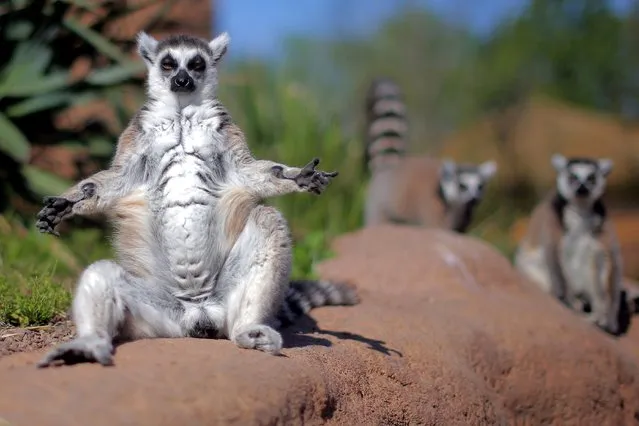
A ring-tailed lemur is pictured at Zoom Torino, a zoological park in Cumiana near Turin, on April 22, 2015. Zoom Torino is a new immersive zoological park, where animals can be seen without bars or cages, only natural barriers ensure the visit. (Photo by Marco Bertorello/AFP Photo)

A ring-tailed lemur is pictured at Zoom Torino, a zoological park in Cumiana near Turin, on April 22, 2015. Zoom Torino is a new immersive zoological park, where animals can be seen without bars or cages, only natural barriers ensure the visit. (Photo by Marco Bertorello/AFP Photo)
Details
25 Apr 2015 10:31:00
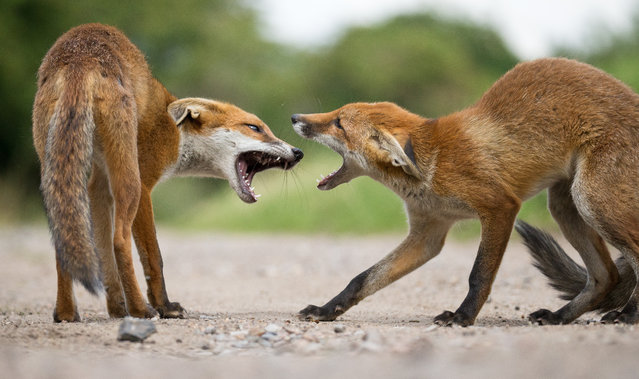
Four-month-old fox cubs squaring up to each other in Walthamstow, England on August 7, 2015. (Photo by Greg Morgan/Barcroft Media)

Four-month-old fox cubs squaring up to each other in Walthamstow, England on August 7, 2015. (Photo by Greg Morgan/Barcroft Media)
Details
09 Aug 2015 10:54:00
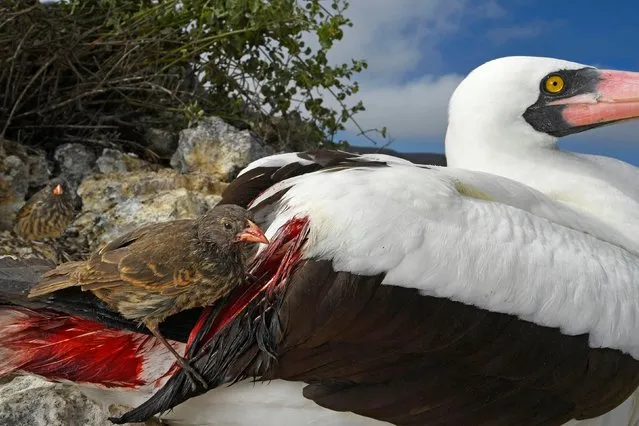
Bloodthirsty by Thomas P Peschak, Germany/South Africa — winner, Behaviour: birds. When rations run short on Wolf Island, in the remote northern Galápagos, the sharp-beaked ground finches become vampires. Their sitting targets are Nazca boobies and other large birds. The finches rely on a scant diet of seeds and insects, which regularly dries up, so they drink blood to survive. ‘I’ve seen more than half a dozen finches drinking from a single Nazca booby,’ says Tom. Rather than leave their nests the boobies tolerate the vampires, and the blood loss doesn’t seem to cause permanent harm. (Photo by Thomas P Peschak/2018 Wildlife Photographer of the Year)

Bloodthirsty by Thomas P. Peschak, Germany/South Africa — winner, Behaviour: birds. When rations run short on Wolf Island, in the remote northern Galápagos, the sharp-beaked ground finches become vampires. Their sitting targets are Nazca boobies and other large birds. The finches rely on a scant diet of seeds and insects, which regularly dries up, so they drink blood to survive. ‘I’ve seen more than half a dozen finches drinking from a single Nazca booby,’ says Tom. Rather than leave their nests the boobies tolerate the vampires, and the blood loss doesn’t seem to cause permanent harm. (Photo by Thomas P. Peschak/2018 Wildlife Photographer of the Year)
Details
19 Oct 2018 00:05:00
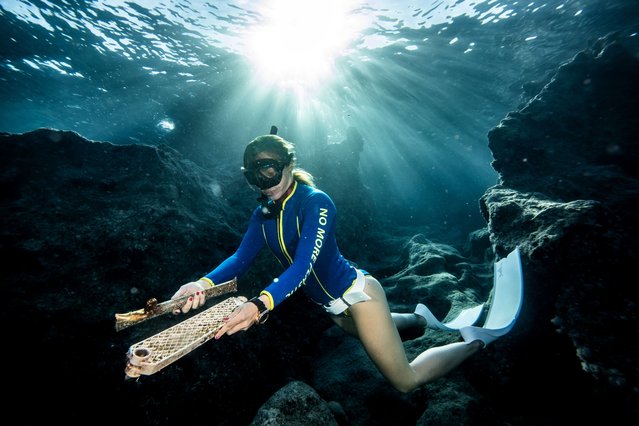
Turkish World Record Holder in freediving Sahika Ercumen dives to raise awareness about pollution in sea waters in Kas district of Antalya, Turkiye on June 07, 2023. Every year 400 tons of one time use plastic are made globally and in Turkiye 91 percent of the plastics are not recycled. (Photo by Sebnem Coskun/Anadolu Agency via Getty Images)

Turkish World Record Holder in freediving Sahika Ercumen dives to raise awareness about pollution in sea waters in Kas district of Antalya, Turkiye on June 07, 2023. Every year 400 tons of one time use plastic are made globally and in Turkiye 91 percent of the plastics are not recycled. (Photo by Sebnem Coskun/Anadolu Agency via Getty Images)
Details
21 Jun 2023 02:15:00