Participants wearing masks during a hazy day at the Beijing International Marathon in front of Tiananmen Square, in Beijing, October 19, 2014. (Photo by Reuters/Stringer)
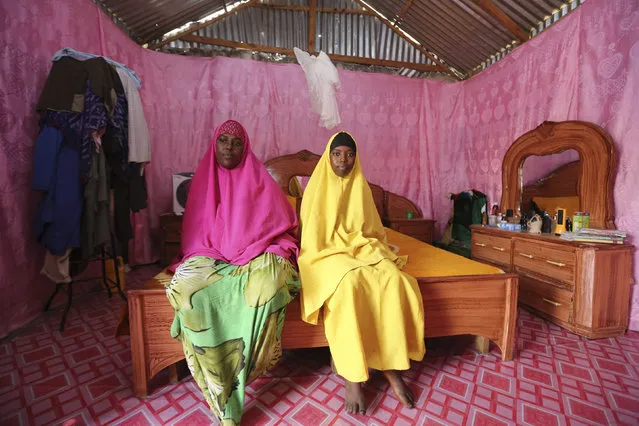
“On March 8th activists celebrate International Women’s Day, which dates back to the early 20th century and has been observed by the United Nations since 1975. In the run-up to the event, Reuters photographers in countries around the globe took a series of portraits of women and their daughters. They asked each mother what her profession was, at what age she had finished education, and what she wanted her daughter to become when she grew up. They also asked each daughter at what age she would finish education and what she wanted to do in the future. The series of images offers an insight into the lives of women and girls around the world”. – Reuters. (Photo by Feisal Omar/Reuters)
Senji Nakajima sleeps with his Love Doll “Saori” at Love Hotel on June 4, 2016 in Nagano, Japan. Senji Nakajima, 61 years old, lives with his life-size “love doll” named “Saori” in his apartment in Tokyo, Japan. Nakajima, married with two children, who lives away from home for work, first started his life with Saori six years ago. (Photo by Taro Karibe/Getty Images)
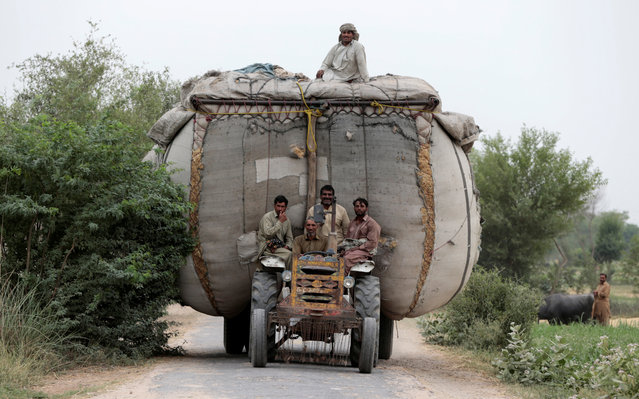
Farmers ride home on a tractor pulling an overloaded trailer full of straw in a village outside Faisalabad, Pakistan May 3, 2017. (Photo by Caren Firouz/Reuters)
Artist Kong Ning wears a wedding dress made from respirators to highlight concerns about air quality and pollution in Beijing, China on December 1, 2015. (Photo by Luo Xiaoguang/Xinhua Press/Corbis)
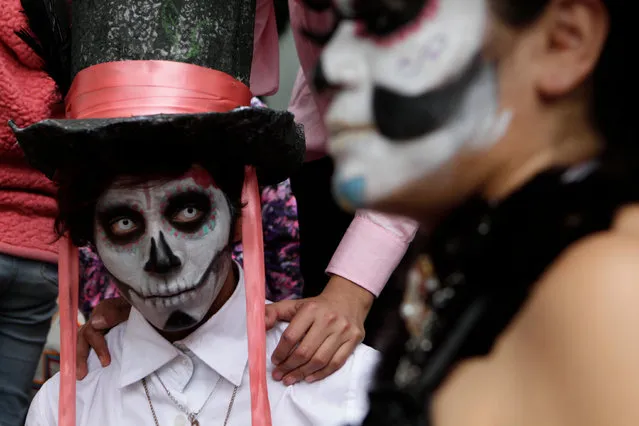
Angel Paz, dressed as a calavera, waits with family for the start of the Gran Procession of the Catrinas, to mark the upcoming Day of the Dead holiday, in Mexico City, Sunday, October 23 2016. (Photo by Anita Baca/AP Photo)
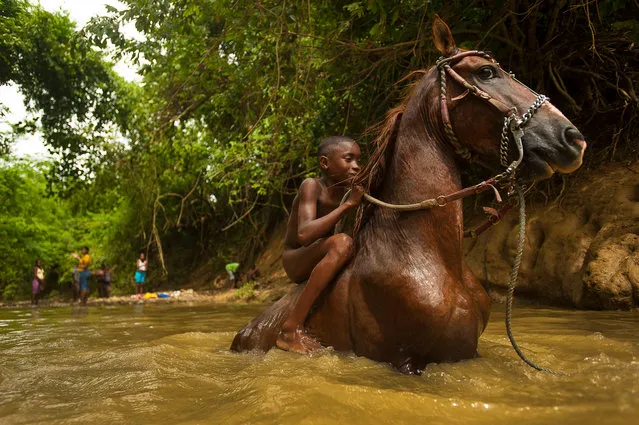
This image of a young bareback rider was taken in the village of Palenque de San Basilio, in Colombia’s Bolívar department. Founded by freed slaves in the 17th century, it became the first free town in the Americas, following a decree by the Spanish crown. Most of today’s inhabitants are direct descendants of those slaves and have preserved many of their customs, including their own language, Palenquero. (Photo by Sebastián Suki Beláustegui/The Guardian)