Loading...
Done
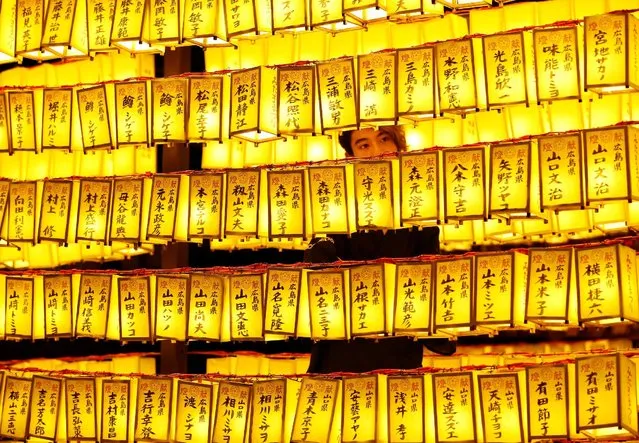
A man stands between thousands of paper lanterns, which were displayed and lit up the precincts of the shrine, where more than 2.4 million war-dead are enshrined, during the Mitama Festival at Yasukuni Shrine in Tokyo, Japan July 13, 2016. “Mitama” is a respectful word that means “the soul of a dead person” in Japanese, and this “Soul Festival” honors just that. The Yasukuni Shrine is dedicated to the honoring of the souls of those who gave their lives to defend Japan, and this festival is an early step towards the Japanese holiday season of Obon, during which Japanese people honor their deceased ancestors. (Photo by Issei Kato/Reuters)

A man stands between thousands of paper lanterns, which were displayed and lit up the precincts of the shrine, where more than 2.4 million war-dead are enshrined, during the Mitama Festival at Yasukuni Shrine in Tokyo, Japan July 13, 2016. “Mitama” is a respectful word that means “the soul of a dead person” in Japanese, and this “Soul Festival” honors just that. (Photo by Issei Kato/Reuters)
Details
14 Jul 2016 09:37:00
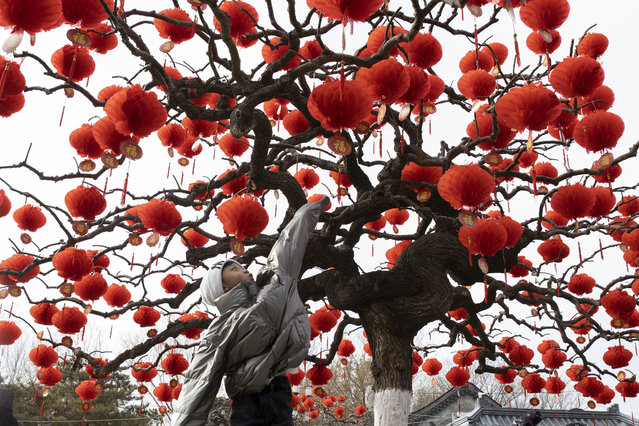
A child jumps to touch lanterns hung on a tree ahead of the Chinese Lunar New Year celebrations in Beijing on Thursday, January 16, 2020. The world's largest annual migration begins this week in China with millions of Chinese traveling to their hometowns to celebrate the Lunar New Year on Jan. 25 this year which marks the Year of the Rat on the Chinese zodiac. (Photo by Ng Han Guan/AP Photo)

A child jumps to touch lanterns hung on a tree ahead of the Chinese Lunar New Year celebrations in Beijing on Thursday, January 16, 2020. The world's largest annual migration begins this week in China with millions of Chinese traveling to their hometowns to celebrate the Lunar New Year on Jan. 25 this year which marks the Year of the Rat on the Chinese zodiac. (Photo by Ng Han Guan/AP Photo)
Details
22 Jan 2020 00:01:00
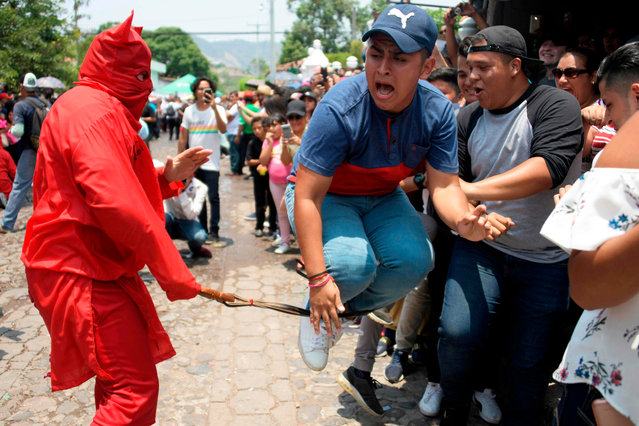
A Catholic faithful fancy dressed as a “talciguin” -character of the local folklore- takes part in the celebration of an ancient local tradition that marks the start of Holy Week, in Texistepeque, some 80 km west of San Salvador, on April 15, 2019. Talciguines are devils who “lash” Catholic faithfuls to cleanse their sins. (Photo by Marvin Recinos/AFP Photo)

A Catholic faithful fancy dressed as a “talciguin” -character of the local folklore- takes part in the celebration of an ancient local tradition that marks the start of Holy Week, in Texistepeque, some 80 km west of San Salvador, on April 15, 2019. Talciguines are devils who “lash” Catholic faithfuls to cleanse their sins. (Photo by Marvin Recinos/AFP Photo)
Details
18 Apr 2019 00:07:00
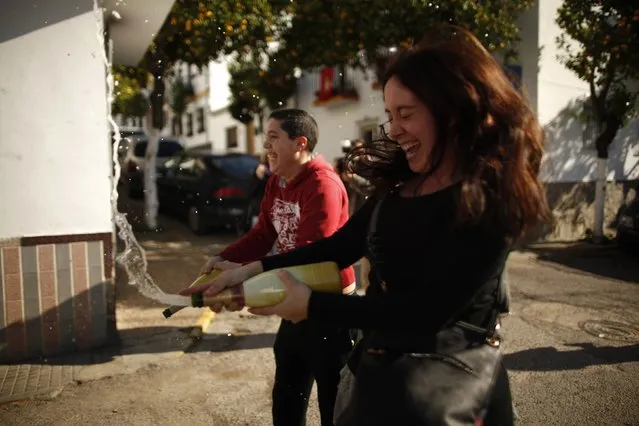
Winners of Spain's Christmas Lottery “El Gordo” celebrate in El Gastor, near Cadiz, December 22, 2014. The total prize money of 2.4 billion euros is split into thousands of cash prizes amongst hundreds of winning numbers. (Photo by Jon Nazca/Reuters)

Winners of Spain's Christmas Lottery “El Gordo” celebrate in El Gastor, near Cadiz, December 22, 2014. The total prize money of 2.4 billion euros is split into thousands of cash prizes amongst hundreds of winning numbers. (Photo by Jon Nazca/Reuters)
Details
23 Dec 2014 13:57:00
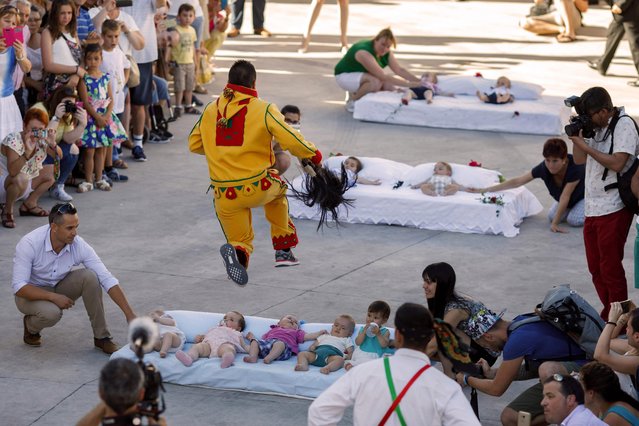
A man dressed up as the devil jumps over babies lying on a mattress in the street during “El Colacho”, the “baby jumping festival” in the village of Castrillo de Murcia, near Burgos on June 18, 2017. Baby jumping (El Colacho) is a traditional Spanish practice dating back to 1620 that takes place annually to celebrate the Catholic feast of Corpus Christi. During the act – known as El Salto del Colacho (the devil's jump) or simply El Colacho – men dressed as the Devil jump over babies born in the last twelve months of the year who lie on mattresses in the street. (Photo by Cesar Manso/AFP Photo)

A man dressed up as the devil jumps over babies lying on a mattress in the street during “El Colacho”, the “baby jumping festival” in the village of Castrillo de Murcia, near Burgos on June 18, 2017. Baby jumping (El Colacho) is a traditional Spanish practice dating back to 1620 that takes place annually to celebrate the Catholic feast of Corpus Christi. During the act – known as El Salto del Colacho (the devil's jump) or simply El Colacho – men dressed as the Devil jump over babies born in the last twelve months of the year who lie on mattresses in the street. (Photo by Cesar Manso/AFP Photo)
Details
20 Jun 2017 07:29:00
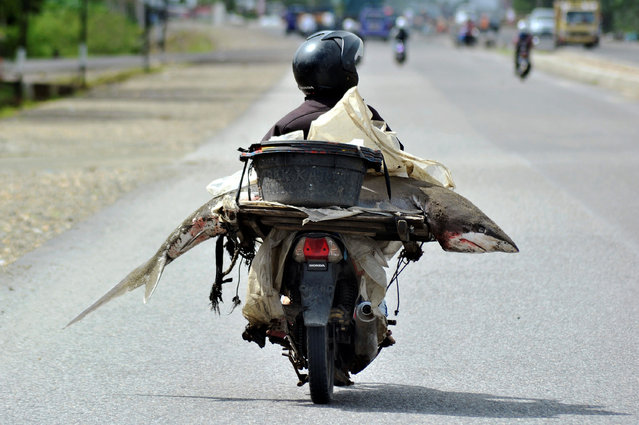
A fishmonger carries a shark on his motorcycle in Padang, West Sumatra, Indonesia August 25, 2016. (Photo by Iggoy el Fitra/Reuters/Antara Foto)

A fishmonger carries a shark on his motorcycle in Padang, West Sumatra, Indonesia August 25, 2016. (Photo by Iggoy el Fitra/Reuters/Antara Foto)
Details
10 Sep 2016 09:10:00
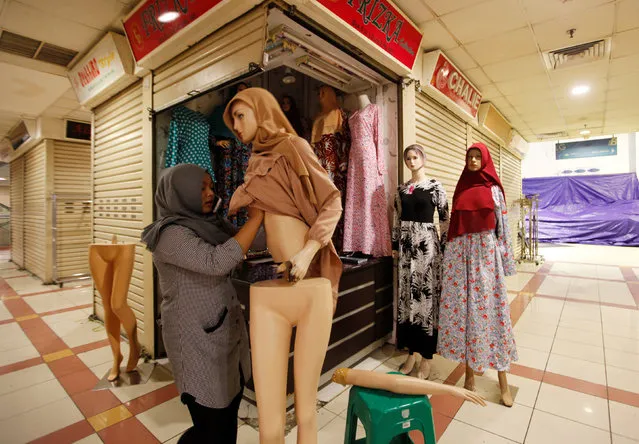
A woman worker prepares her stall at Tanah Abang textile market in Jakarta, Indonesia January 11, 2017. (Photo by Fatima El-Kareem/Reuters)

A woman worker prepares her stall at Tanah Abang textile market in Jakarta, Indonesia January 11, 2017. (Photo by Fatima El-Kareem/Reuters)
Details
12 Jan 2017 11:55:00
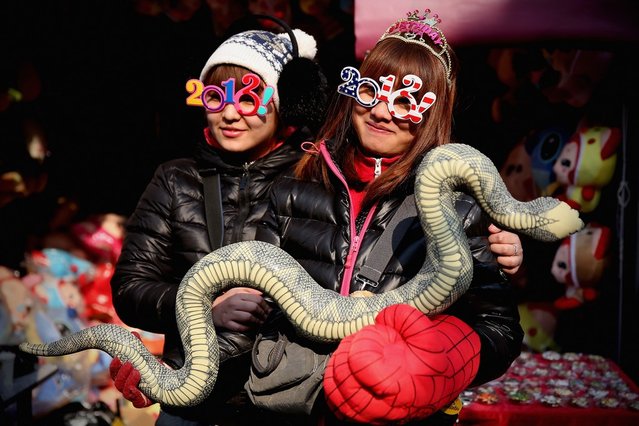
The vendors show the toy of snake at the Spring Festival Temple Fair for celebrating Chinese Lunar New Year of Snake at the Temple of Earth park on February 9, 2013 in Beijing, China. The Chinese Lunar New Year of Snake also known as the Spring Festival, which is based on the Lunisolar Chinese calendar, is celebrated from the first day of the first month of the lunar year and ends with Lantern Festival on the Fifteenth day.  (Photo by Feng Li)

The vendors show the toy of snake at the Spring Festival Temple Fair for celebrating Chinese Lunar New Year of Snake at the Temple of Earth park on February 9, 2013 in Beijing, China. The Chinese Lunar New Year of Snake also known as the Spring Festival, which is based on the Lunisolar Chinese calendar, is celebrated from the first day of the first month of the lunar year and ends with Lantern Festival on the Fifteenth day. (Photo by Feng Li)
Details
10 Feb 2013 13:03:00