Loading...
Done
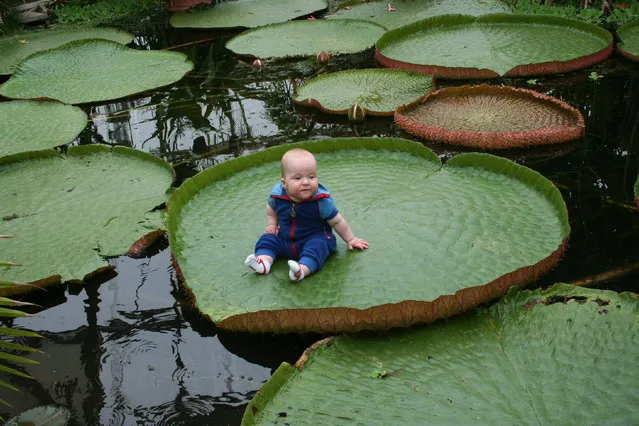
Victoria amazonica

The species has very large leaves, up to 3 m in diameter, that float on the water's surface on a submerged stalk, 7–8 m in length. The species was once called Victoria regia after Queen Victoria, but the name was superseded. V. amazonica is native to the shallow waters of the Amazon River basin, such as oxbow lakes and bayous. It is depicted in the Guyanese coat of arms. The flowers are white the first night they are open and become pink the second night. They are up to 40 cm in diameter, and are pollinated by beetles.
Details
03 Sep 2012 06:58:00
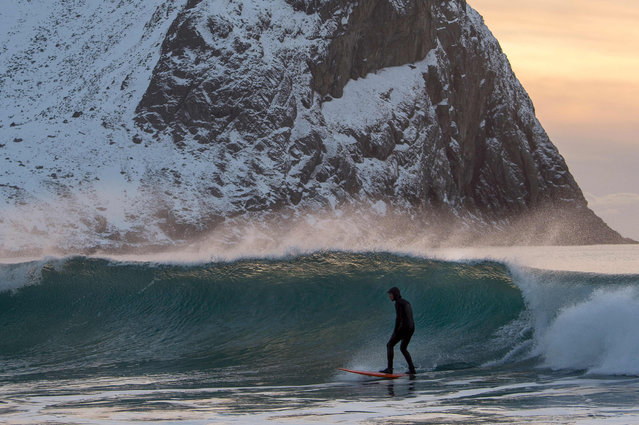
A surfer rides a wave at the snowy beach of Unstad, in Lofoten Island, Arctic Circle, on March 9, 2016. (Photo by Olivier Morin/AFP Photo)

A surfer rides a wave at the snowy beach of Unstad, in Lofoten Island, Arctic Circle, on March 9, 2016. Surfers from all over the world comes to Lofoten island to surf in extrem conditions. Ocean temperature is 6-7 °C, air temperature around 0°C in spite of a weather very unstable. (Photo by Olivier Morin/AFP Photo)
Details
15 Mar 2016 13:54:00


It looks like 2024 has ended and we are still alive (although of course it's not evening yet). Well, let's wish ourselves the same in the future. If someone wants to put USDT TRC20 under the tree: TDWPvSi7RY4wNZPukDRyKghhLGTGsRNRBe (nobody will put anything, of course – but you understand, it's a ritual). Happy New Year! And now disco.
Details
31 Dec 2024 04:28:00


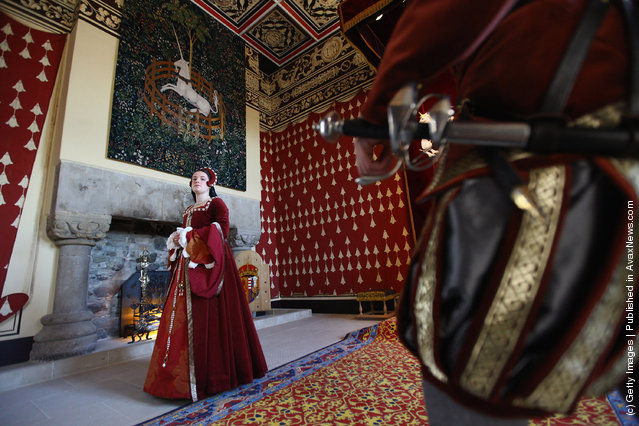
Laura Titch, dressed as Mary of Guise, and Duncan Maclachlan, dressed as Alexander of Stewart, rehearse for Stirling Castle's grand renaissance palace opening on June 3, 2011 in Stirling, Scotland. The palace has been closed for two years, while a Ј12 million pound project was undertaken to return the palace to how it might have looked back in the 1540s, when it was home to Mary of Guise, the widow of James V. Their daughter, Mary Queen of Scots, was raised there before living in France. (Photo by Jeff J Mitchell/Getty Images)
Details
04 Jun 2011 06:24:00
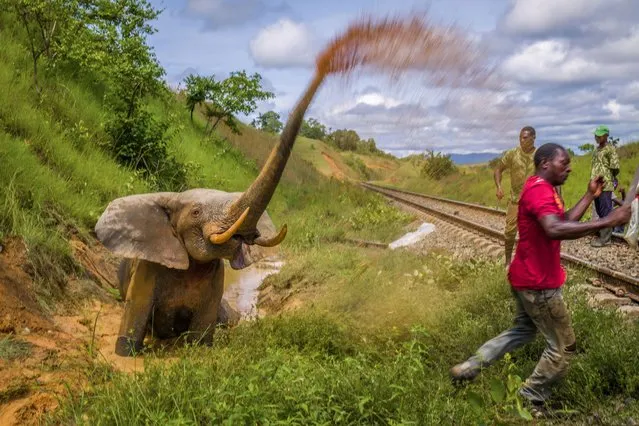
Grand prize winner: environmental photographer of the year 2023; also 1st place in the humanity v nature category; and winner of the 2023 public award. Lopé national park, Gabon, 2021. An angry elephant tries to defend itself after it was hit by a train that crosses paths the animals use within Lopé national park. Park officials decided the elephant was too severely injured to be saved. After it was killed, the park director distributed the meat to local people. As the forest loses its carrying capacity to sustain its megafauna, this kind of human-wildlife conflict is increasing. (Photo by Jasper Doest/Environmental Photography Award)

Grand prize winner: environmental photographer of the year 2023; also 1st place in the humanity v nature category; and winner of the 2023 public award. Lopé national park, Gabon, 2021. An angry elephant tries to defend itself after it was hit by a train that crosses paths the animals use within Lopé national park. Park officials decided the elephant was too severely injured to be saved. After it was killed, the park director distributed the meat to local people. As the forest loses its carrying capacity to sustain its megafauna, this kind of human-wildlife conflict is increasing. (Photo by Jasper Doest/Environmental Photography Award)
Details
09 Jul 2023 03:06:00
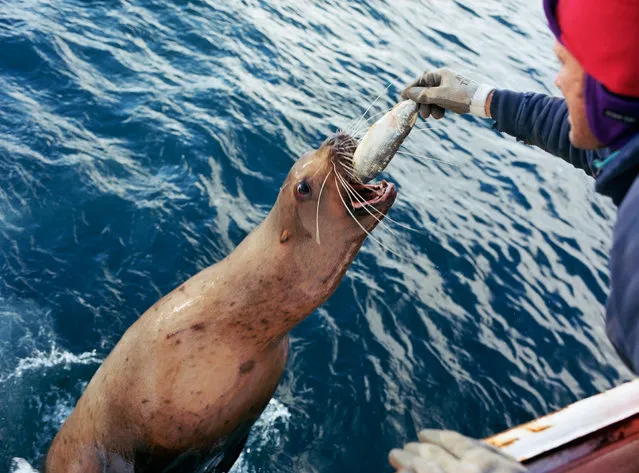
Before heading up to Alaska, the ship loads up with 3 months worth of food. Even so, it's hardly necessary. The ship's cook is constantly steaming fresh crab legs and seafood caught during the day. The hard labour of fishing requires a diet heavy in fat, protein, and omega-3s. Here, a sea lion gets a bite of the grub. (Photo by Corey Arnold)

In 2002 photographer Corey Arnold left behind a poor economy in San Francisco and headed up to Alaska to try his luck at his longtime passion of fishing. Arnold, who had worked summers during college on a salmon boat in Alaska, signed onto the f/v Rollo, a crabbing boat that fishes in the dangerous Bering Sea. While working long, strenuous hours on the Rollo, Arnold often stole away with the captain’s permission to grab his camera and photograph the crew and the ship. Arnold eventually put together “Fish Work: Bering Sea”, a documentation of his seven adventurous and dicey crab seasons aboard the Rollo. (Photo by Corey Arnold)
Details
20 Aug 2014 10:05:00
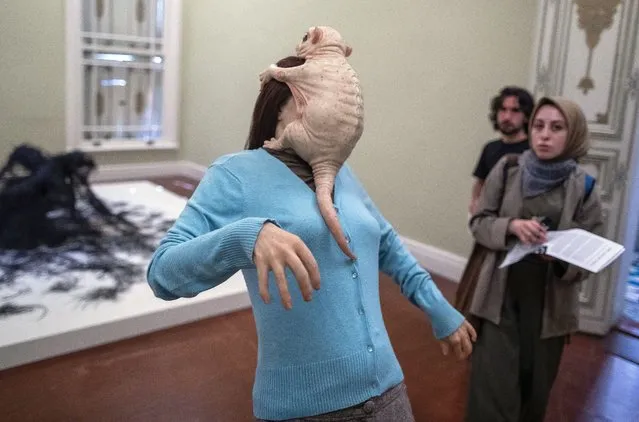
vVisitors view Patricia Piccinini's “The Embrace” artwork during the “You Know Who” exhibition at the Abdulmecit Efendi mansion in Istanbul, Turkey, 27 September 2022. The exhibition, which by the organizers is described as questioning “the representation of the unknown in contemporary art, based on the symbolic world of the supernatural and unknown in the Byzantine period”, is shown from 20 September until 11 December 2022. (Photo by Erdem Sahin/EPA/EFE/Rex Features/Shutterstock)

Visitors view Patricia Piccinini's “The Embrace” artwork during the “You Know Who” exhibition at the Abdulmecit Efendi mansion in Istanbul, Turkey, 27 September 2022. The exhibition, which by the organizers is described as questioning “the representation of the unknown in contemporary art, based on the symbolic world of the supernatural and unknown in the Byzantine period”, is shown from 20 September until 11 December 2022. (Photo by Erdem Sahin/EPA/EFE/Rex Features/Shutterstock)
Details
28 Sep 2022 05:03:00
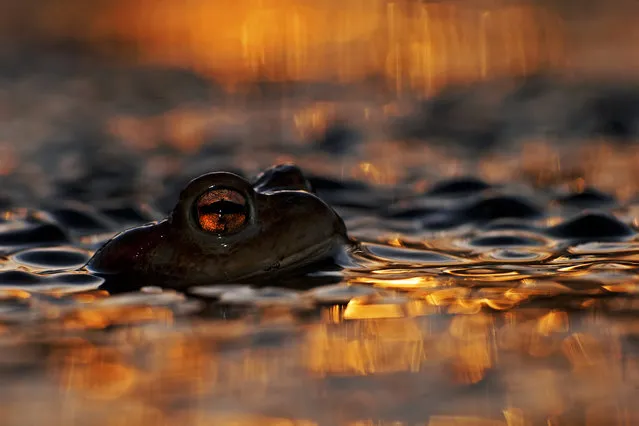
“Eye of a toad”. Animal Portraits, Łukasz Bożycki, Poland.  (Photo by Łukasz Bożycki)

“Eye of a toad”. Animal Portraits, Łukasz Bożycki, Poland. Early spring sees a pond near Łukasz’s home city of Warsaw, Poland, full of mating frogs and a few toads. On this March day, Łukasz shared the pond with them for an evening, sitting in the icy water in his chest-high waders, keeping as still as possible, despite the numbing cold, so that the amphibians could get used to him. “I wanted to find a fresh way of portraying the amphibians”, he says, “at water level”. Using a telephoto lens, he focused on one lone toad and waited for the sun to dip almost below the horizon before pressing the shutter, using flash to bring out the details in the shadow. His prize was “the glorious pool of sunset colour” and fiery glow of the toad’s eye. Nikon D80 + 70-300mm f4.5-5.6 lens + extension tube; 1/125 sec at f9 (-2.3 e/v); ISO 100; built-in flash. (Photo by Łukasz Bożycki)
Details
28 Aug 2013 11:45:00