Loading...
Done
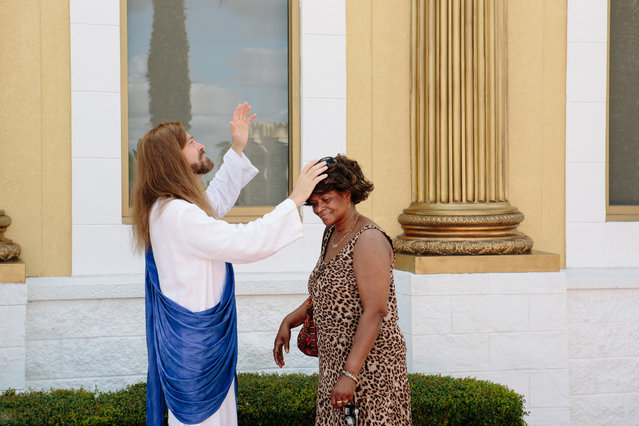
A woman asks the actor who plays Jesus for a blessing at The Holy Land Experience. (Photo by Daniel Cronin)

Every week, crowds bypass Orlando’s enticing theme parks and megamalls, opting instead to follow a blood-soaked Jesus impersonator as he heads for crucifixion on an immaculate Florida lawn. This ironic choice of amusement is what prompted photographer Daniel Cronin to pay a hefty entrance fee and document the Holy Land Theme Park Experience, a 1,200-square-foot replica of biblical Jerusalem a few miles from Disney World and other well-known theme parks. (Photo by Daniel Cronin)
Details
08 Sep 2014 11:05:00
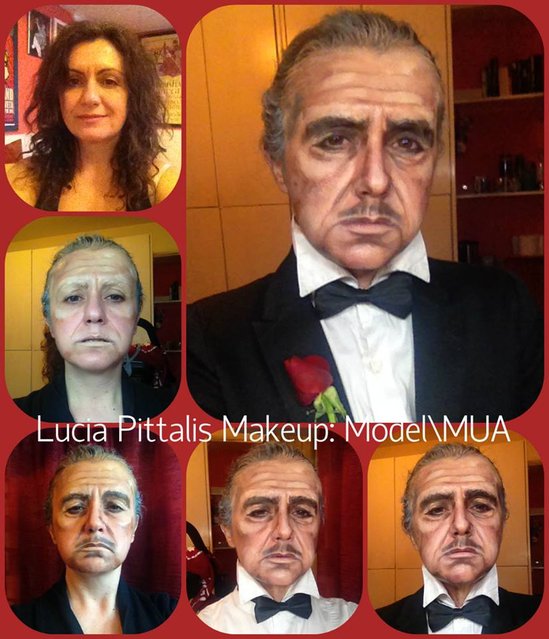
The Amazing Makeup By Lucia Pittalis

You have no idea of the power of a skillful makeup artist. By working his magic, he can transform a woman into a respectable gentleman, a young lady into a heartless drug dealer, or simply show how a person would look like after a few decades have passed. Some can even transform a not-so-handsome young man into a beautiful young girl, which can spell a lot of trouble if you see him/her at a night club. Lucia Pittalis is one of those masters of makeup, and she uses her skills to stun the audience by transforming herself and a few volunteers into famous movie characters, actors, and musicians. (Photo by Lucia Pittalis)
Details
03 Dec 2014 14:02:00
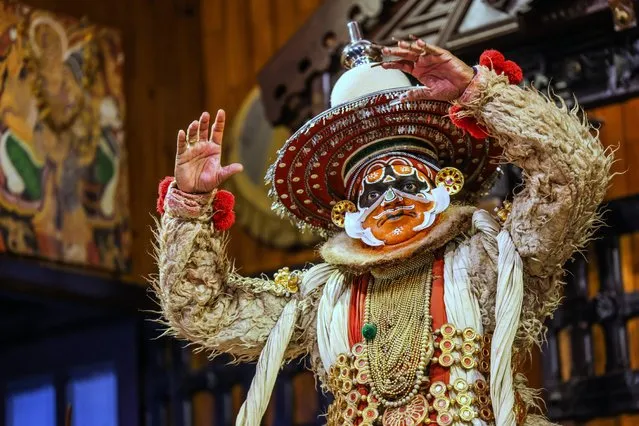
A Kathakali dancer in Kochi, India, performs a traditional story play on August 10, 2023. Kerala Kathakali originated in the Early 17th Century. A story acted that contains Mime, Acting Drama and music, The Stories are mainly taken from Hindu Mythology and Puranas. (Photo by Paul Quezada-Neiman/Alamy Live News)

A Kathakali dancer in Kochi, India, performs a traditional story play on August 10, 2023. Kerala Kathakali originated in the Early 17th Century. A story acted that contains Mime, Acting Drama and music, The Stories are mainly taken from Hindu Mythology and Puranas. (Photo by Paul Quezada-Neiman/Alamy Live News)
Details
16 Aug 2023 04:04:00
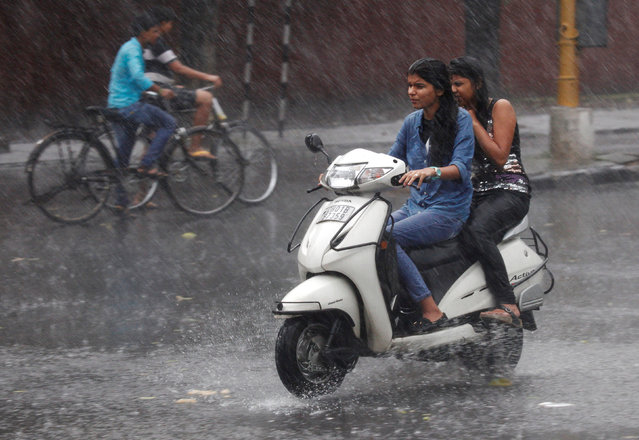
People commute during a heavy rain shower in Chandigarh, India, June 22, 2016. (Photo by Ajay Verma/Reuters)

People commute during a heavy rain shower in Chandigarh, India, June 22, 2016. (Photo by Ajay Verma/Reuters)
Details
27 Jun 2016 12:01:00
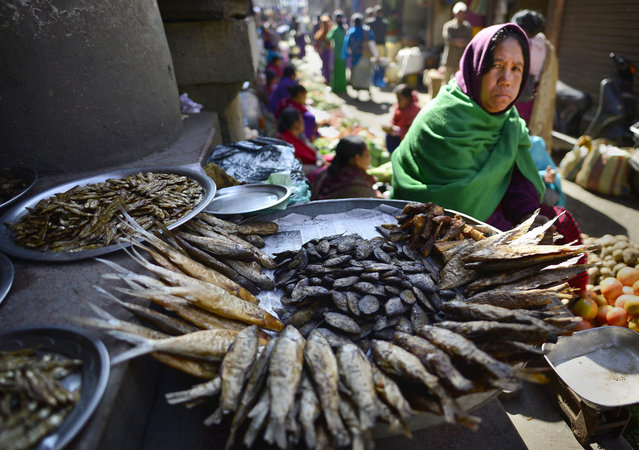
A Manipuri woman sells smoked and dry fish in Ima market - the world's largest all women market - in Imphal city, Manipur state, 06 January 2016. The 150-year-old Ima Keithel or 'Mothers's market' complex, which is run exclusively by women and was damaged in the 04 January 2016 earthquake, is returning back to normal. Nine deaths have been reported from in and around Imphal due to falling debris. (Photo by EPA/Stringer)

A Manipuri woman sells smoked and dry fish in Ima market - the world's largest all women market – in Imphal city, Manipur state, 06 January 2016. The 150-year-old Ima Keithel or “Mothers's market” complex, which is run exclusively by women and was damaged in the 04 January 2016 earthquake, is returning back to normal. Nine deaths have been reported from in and around Imphal due to falling debris. Imphal has a population of some 270,000 and people were jolted from their sleep and ran out of their homes in panic when the earth shook 04 January, reports say. (Photo by EPA/Stringer)
Details
08 Jan 2016 08:04:00
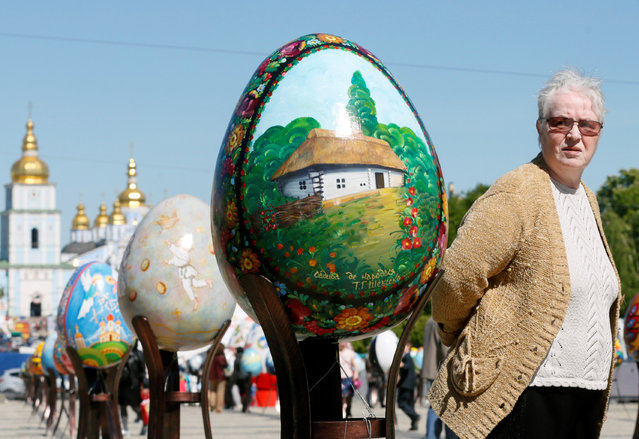
A woman looks at traditional Ukrainian Easter eggs “Pysanka”, installed as part of the upcoming celebrations of Easter, in central Kiev, Ukraine, April 29, 2016. A pysanka is a Ukrainian Easter egg, decorated with traditional Ukrainian folk designs using a wax-resist (batik) method. The word pysanka comes from the verb pysaty, “to write”, as the designs are not painted on, but written with beeswax. Many other eastern European ethnic groups decorate eggs using wax resist for Easter. These include the Belarusians, Bulgarians, Croats, Czechs, Hungarians, Lithuanians, Poles, Romanians, Serbs, Slovaks, Slovenes and Sorbs. (Photo by Valentyn Ogirenko/Reuters)

A woman looks at traditional Ukrainian Easter eggs “Pysanka”, installed as part of the upcoming celebrations of Easter, in central Kiev, Ukraine, April 29, 2016. A pysanka is a Ukrainian Easter egg, decorated with traditional Ukrainian folk designs using a wax-resist (batik) method. The word pysanka comes from the verb pysaty, “to write”, as the designs are not painted on, but written with beeswax. Many other eastern European ethnic groups decorate eggs using wax resist for Easter. These include the Belarusians, Bulgarians, Croats, Czechs, Hungarians, Lithuanians, Poles, Romanians, Serbs, Slovaks, Slovenes and Sorbs. (Photo by Valentyn Ogirenko/Reuters)
Details
30 Apr 2016 09:00:00
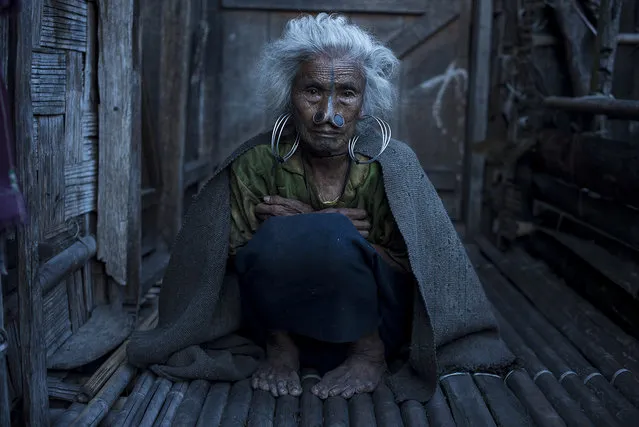
“YagYang”. The Apatani are tribal people living in north east of India in the region of Arunachal Pradesh. Tattooing and stuffing of large nose plugs is the particularity of these women. YagYang 75 years old, her husband passed away few months ago and she feels very alone, during my visit I was very fond of this woman and I wanted to spend some more time with her, so I asked her which was her favorite dish. Photo location: India. (Photo and caption by Passarini Mattia/National Geographic Photo Contest)

“YagYang”. The Apatani are tribal people living in north east of India in the region of Arunachal Pradesh. Tattooing and stuffing of large nose plugs is the particularity of these women. YagYang 75 years old, her husband passed away few months ago and she feels very alone, during my visit I was very fond of this woman and I wanted to spend some more time with her, so I asked her which was her favorite dish. The next day i returned with the fresh fish, as she mentioned, and when she saw me she was very happy and welcomed me with a big smile. Photo location: India. (Photo and caption by Passarini Mattia/National Geographic Photo Contest)
Details
05 Nov 2014 11:55:00
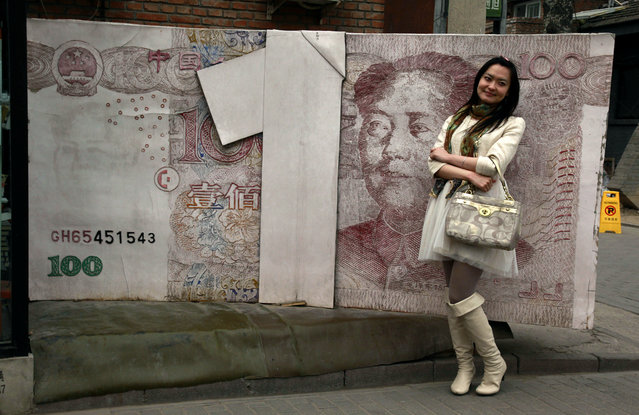
In this March 15, 2012 file photo, a Chinese woman poses for photos near a sculpture depicting a Chinese yuan note at an art district in Beijing, China. China devalued its tightly controlled currency on Tuesday, August 11,2015,  following a slump in trade, triggering the yuan's biggest one-day decline in a decade. The central bank said the yuan's 1.3 percent fall was due to a change aimed at making its exchange rate controls more market-oriented. But any change raises the risk of tensions with China's trading partners. (Photo by Ng Han Guan/AP Photo)

In this March 15, 2012 file photo, a Chinese woman poses for photos near a sculpture depicting a Chinese yuan note at an art district in Beijing, China. China devalued its tightly controlled currency on Tuesday, August 11,2015, following a slump in trade, triggering the yuan's biggest one-day decline in a decade. The central bank said the yuan's 1.3 percent fall was due to a change aimed at making its exchange rate controls more market-oriented. But any change raises the risk of tensions with China's trading partners. (Photo by Ng Han Guan/AP Photo)
Details
12 Aug 2015 13:11:00