Loading...
Done
Participants in the 18th Annual “No Pants Subway Ride” travel in the subway on January 13, 2019 in New York. The “No Pants Subway Ride” is an annual event started in 2002 by Improv Everywhere in New York, the goal of which is for riders on the subway train to dress in normal winter clothes without pants while keeping a straight face. (Photo by Johannes Eisele/AFP Photo)

Participants in the 18th Annual “No Pants Subway Ride” travel in the subway on January 13, 2019 in New York. The “No Pants Subway Ride” is an annual event started in 2002 by Improv Everywhere in New York, the goal of which is for riders on the subway train to dress in normal winter clothes without pants while keeping a straight face. (Photo by Johannes Eisele/AFP Photo)
Details
16 Jan 2019 00:03:00
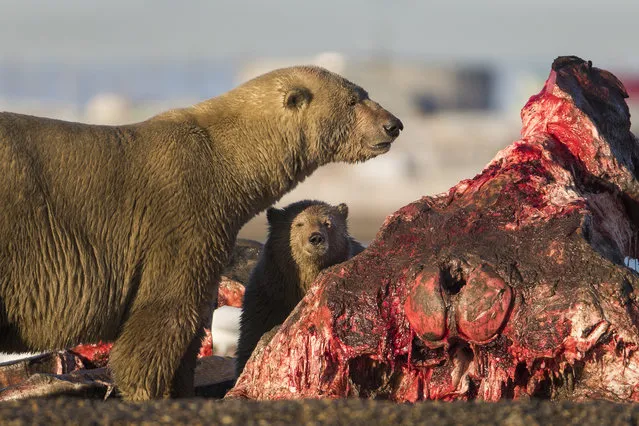
Polar bears prepare to feast on the remains of a bowhead whale, harvested legally by whalers during their annual subsistence hunt, just outside the Inupiat village of Kaktovik, Alaska, USA, 10 September 2017. (Photo by Jim Lo Scalzo/EPA/EFE)

Polar bears prepare to feast on the remains of a bowhead whale, harvested legally by whalers during their annual subsistence hunt, just outside the Inupiat village of Kaktovik, Alaska, USA, 10 September 2017. As climate change shrinks their natural habitat, polar bears are turning Kaktovik into their very own sanctuary city. (Photo by Jim Lo Scalzo/EPA/EFE)
Details
28 Sep 2017 07:33:00
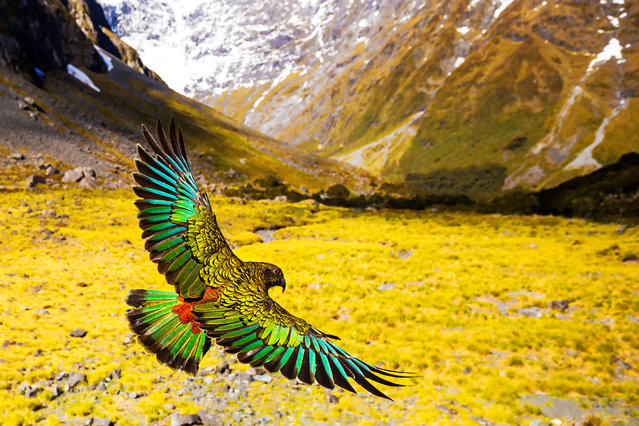
Kea are the only true alpine parrots in the world and thrive as cunning opportunists in the freezing conditions of the Southern Alps. Kea are thought to have developed their wide array of food-finding strategies during the last great ice age, where they learned to adapt using their unusual powers of curiosity. (Photo by Tom Walker/BBC Pictures/The Guardian)

Kea are the only true alpine parrots in the world and thrive as cunning opportunists in the freezing conditions of the Southern Alps. Kea are thought to have developed their wide array of food-finding strategies during the last great ice age, where they learned to adapt using their unusual powers of curiosity. (Photo by Tom Walker/BBC Pictures/The Guardian)
Details
19 Jul 2016 13:03:00
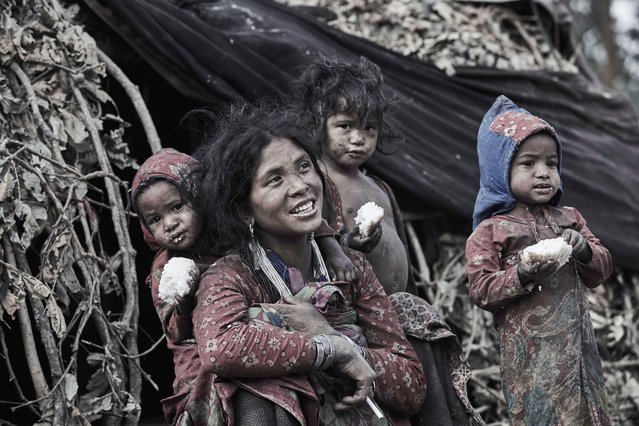
Only 156 people remained in the tribe when Jan visited in Accham District, Nepal, January 2016. (Photo by Jan Moller Hansen/Barcroft Images)

Only 156 people remained in the tribe when Jan visited in Accham District, Nepal, January 2016. Hidden deep in the Himalayan forest is one of the world’s last enduring nomadic tribes who are resisting attempts to move them into permanent settlements. (Photo by Jan Moller Hansen/Barcroft Images)
Details
14 Jan 2017 12:35:00
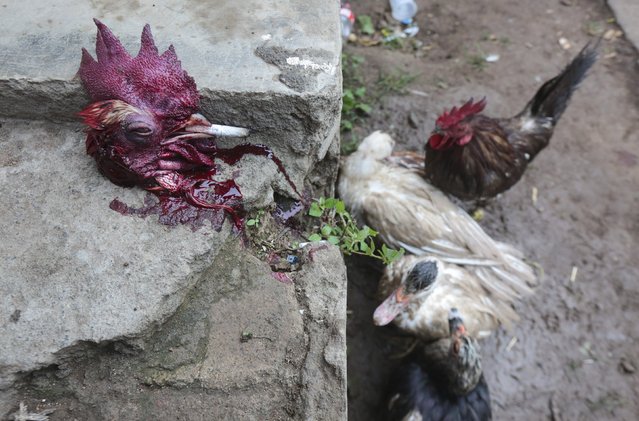
The head of a decapitated rooster is pictured after a rooster run, during celebrations in honour of San Juan Bautista in San Juan de Oriente town, Nicaragua, June 26, 2015. The rooster runs, where horse-riders try to pull the head off live roosters, symbolize the beheading of John the Baptist. (Photo by Oswaldo Rivas/Reuters)

The head of a decapitated rooster is pictured after a rooster run, during celebrations in honour of San Juan Bautista in San Juan de Oriente town, Nicaragua, June 26, 2015. The rooster runs, where horse-riders try to pull the head off live roosters, symbolize the beheading of John the Baptist. (Photo by Oswaldo Rivas/Reuters)
Details
28 Jun 2015 12:45:00
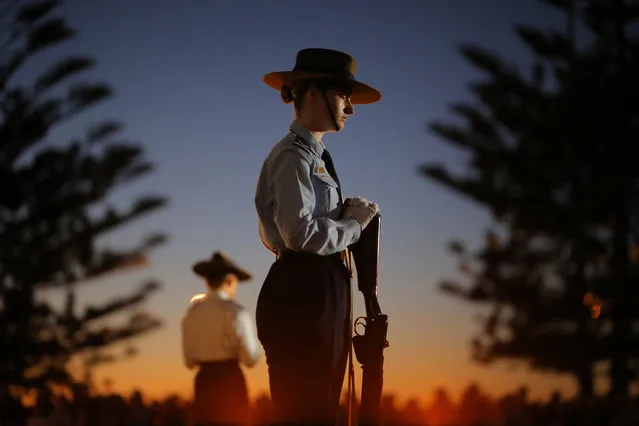
A member of the 324 Squadron during the Anzac Day dawn service at Coogee Beach in Sydney, Australia on 23 April 2019.(Photo by Steven Saphore/Australian Associated Press)

A member of the 324 Squadron during the Anzac Day dawn service at Coogee Beach in Sydney, Australia on 23 April 2019. Anzac Day, held annually on 25 April, is a national day of remembrance across Australia and New Zealand, which commemorates the people who lost their lives or served in wars and conflicts. The day coincides with the first landing of the Anzacs at Gallipoli, Turkey, in World War One. (Photo by Steven Saphore/Australian Associated Press)
Details
26 Apr 2019 00:03:00
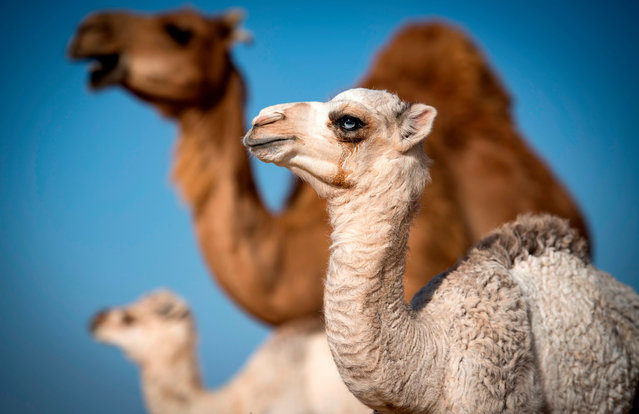
A camel calf is seen among a herd in the desert near Dakhla in Morocco-administered Western Sahara, on October 13, 2019. In the Oued Eddahab desert in Western Sahara, Habiboullah Dlimi raises dairy and racing camels just like his ancestors used to, but with a little help from modern technology. While his animals roam free and are milked traditionally, by hand, at dawn and dusk, they are watched over by hired herders and Dlimi follows GPS coordinates across the desert in a 4X4 vehicle to reach them. (Photo by Fadel Senna/AFP Photo)

A camel calf is seen among a herd in the desert near Dakhla in Morocco-administered Western Sahara, on October 13, 2019. In the Oued Eddahab desert in Western Sahara, Habiboullah Dlimi raises dairy and racing camels just like his ancestors used to, but with a little help from modern technology. While his animals roam free and are milked traditionally, by hand, at dawn and dusk, they are watched over by hired herders and Dlimi follows GPS coordinates across the desert in a 4X4 vehicle to reach them. (Photo by Fadel Senna/AFP Photo)
Details
24 Nov 2019 00:03:00
An Orthodox Jew child from Israel yells as other members of the community protest at a government facility where they are being held after being detained last Sunday during an operation by agents of the National Institute of Migration (INM), in Huixtla, Chiapas state, Mexico on September 28, 2022. (Photo by Jose Torres/Reuters)

An Orthodox Jew child from Israel yells as other members of the community protest at a government facility where they are being held after being detained last Sunday during an operation by agents of the National Institute of Migration (INM), in Huixtla, Chiapas state, Mexico on September 28, 2022. (Photo by Jose Torres/Reuters)
Details
03 Nov 2022 04:24:00