Loading...
Done
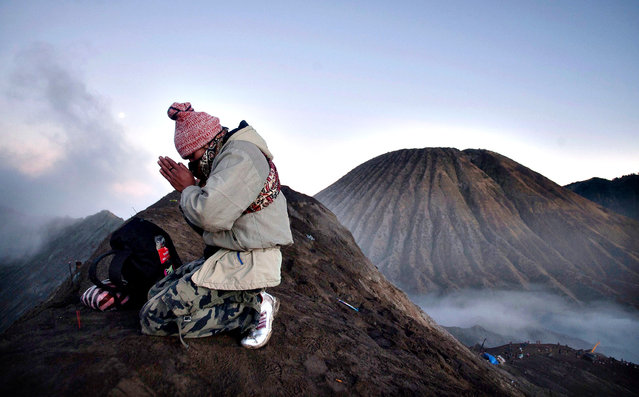
A Tengger tribesman prays at Mount Bromo during the annual Kasada ceremony in East Java on August 12, 2014. The Kasada ceremony is a festival held every 14th day of the Kasada month in the traditional Hindu lunar calender to honour Sang Hyang Widhi (God Almighty) and is based on the legend of Roro Anteng and Joko Seger from the Majapahit Kingdom, from which their Tengger tribe name originates. (Photo by Juni Kriswanto/AFP Photo)

A Tengger tribesman prays at Mount Bromo during the annual Kasada ceremony in East Java on August 12, 2014. The Kasada ceremony is a festival held every 14th day of the Kasada month in the traditional Hindu lunar calender to honour Sang Hyang Widhi (God Almighty) and is based on the legend of Roro Anteng and Joko Seger from the Majapahit Kingdom, from which their Tengger tribe name originates. Hundreds of worshippers from the Tengger tribe offer food and livestock as a symbolic sacrifice which they throw into the crater for the blessings of safety and prosperity to their familyies and community. (Photo by Juni Kriswanto/AFP Photo)
Details
16 Aug 2014 11:19:00
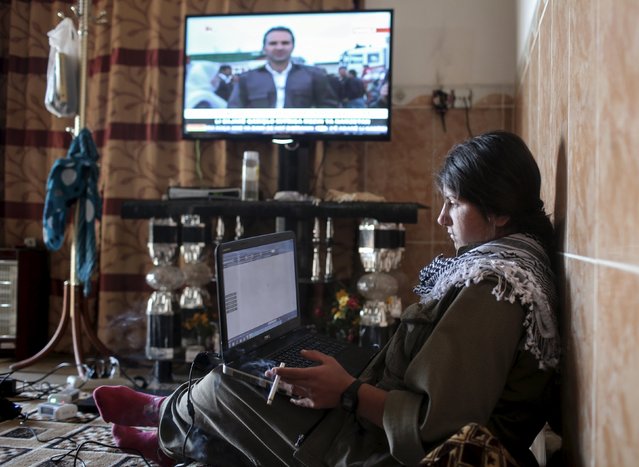
A female Kurdistan Workers Party (PKK) fighter works on her laptop while watching a Kurdish TV station at a base in the Sinjar mountains, March 11, 2015. (Photo by Asmaa Waguih/Reuters)

A female Kurdistan Workers Party (PKK) fighter works on her laptop while watching a Kurdish TV station at a base in the Sinjar mountains, March 11, 2015. Women fighters at a Kurdistan Workers Party (PKK) base on Mount Sinjar in northwest Iraq, just like their male counterparts, have to be ready for action at any time. Smoke from the front line, marking their battle against Islamic State, which launched an assault on northern Iraq last summer, is visible from the base. Many of the women have cut links with their families back home; the fighters come from all corners of the Kurdish region. (Photo by Asmaa Waguih/Reuters)
Details
04 May 2015 09:44:00
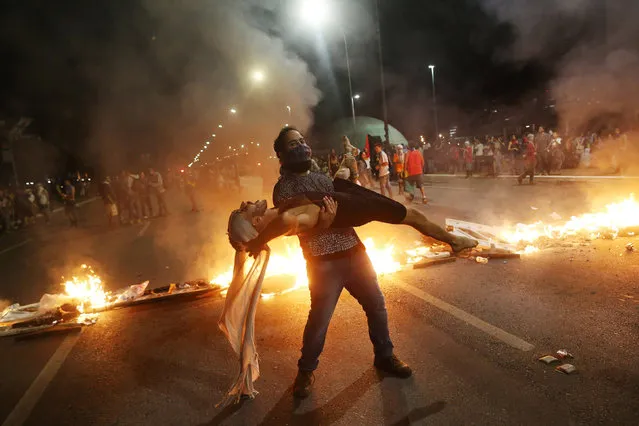
Anti-government demonstrators perform in front of burning barricades as they attend a protest against a constitutional amendment, known as PEC 55, that limit public spending, in front of Brazil's National Congress in Brasilia, Brazil, November 29, 2016. (Photo by Adriano Machado/Reuters)

Anti-government demonstrators perform in front of burning barricades as they attend a protest against a constitutional amendment, known as PEC 55, that limit public spending, in front of Brazil's National Congress in Brasilia, Brazil, November 29, 2016. (Photo by Adriano Machado/Reuters)
Details
01 Dec 2016 12:43:00
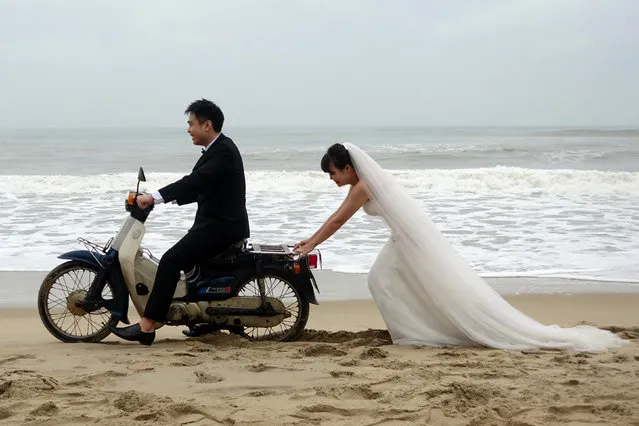
A Vietnamese bride is seen pushing the groom on a scooter during a photo shoot for their wedding in An Bang Beach outside Hoi An in Vietnam December 11, 2016. (Photo by Reuters/Stringer)

A Vietnamese bride is seen pushing the groom on a scooter during a photo shoot for their wedding in An Bang Beach outside Hoi An in Vietnam December 11, 2016. (Photo by Reuters/Stringer)
Details
12 Dec 2016 10:49:00
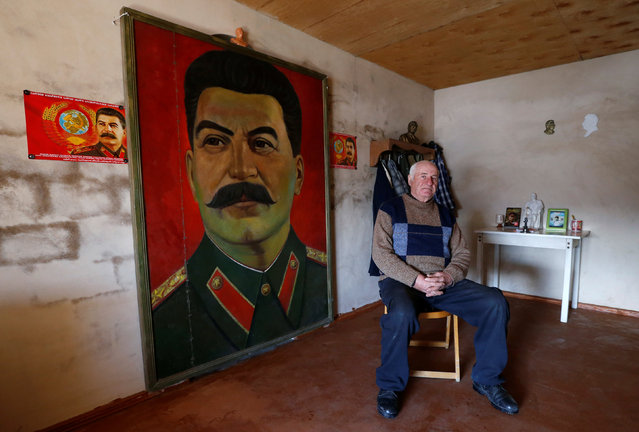
Retired builder Vasili Sidamonidze, 70, poses for a portrait at his home in Gori, Georgia, December 6, 2016. “Unfortunately, Stalin is not popular nowadays. Our people don't respect him. Only we, members of the (Communist) Party, respect him”, Sidamonidze said. “I always try to attend Stalin's birthday anniversaries in Gori. Unfortunately many people don't want to join us even if they live nearby. They look at us from their windows”. Stalin, who was born in Gori in 1878 and died in 1953, is largely reviled today in Georgia, which regained its independence during the 1991 collapse of the Soviet Union. Over the years, his memorials have been dismantled, most recently in 2010 when authorities removed a statue of the dictator from Gori's central square. But Stalin is still revered by a small group of mainly elderly supporters who stress his role in the industrialisation of the Soviet Union and in defeating Nazi Germany in World War Two. Each Dec. 21, a few dozen people mark his birthday by gathering outside a Gori museum dedicated to Stalin, where they make speeches and walk to the square where a 6-meter-high bronze statue of him once stood, calling for it to be reinstated. Opponents say it was a symbol of Moscow's still lingering shadow. In 2008, Russia fought a brief war with Georgia and recognised its breakaway regions of Abkhazia and South Ossetia as independent states. (Photo by David Mdzinarishvili/Reuters)

Retired builder Vasili Sidamonidze, 70, poses for a portrait at his home in Gori, Georgia, December 6, 2016. “Unfortunately, Stalin is not popular nowadays. Our people don't respect him. Only we, members of the (Communist) Party, respect him”, Sidamonidze said. “I always try to attend Stalin's birthday anniversaries in Gori. Unfortunately many people don't want to join us even if they live nearby. They look at us from their windows”. (Photo by David Mdzinarishvili/Reuters)
Details
17 Dec 2016 07:59:00
People in Mexico wave at U.S. Border Patrol agents on horseback patrolling the U.S.-Mexico border fence near San Diego, California, U.S., November 10, 2016. (Photo by Mike Blake/Reuters)

People in Mexico wave at U.S. Border Patrol agents on horseback patrolling the U.S.-Mexico border fence near San Diego, California, U.S., November 10, 2016. (Photo by Mike Blake/Reuters)
Details
12 Jan 2017 11:22:00
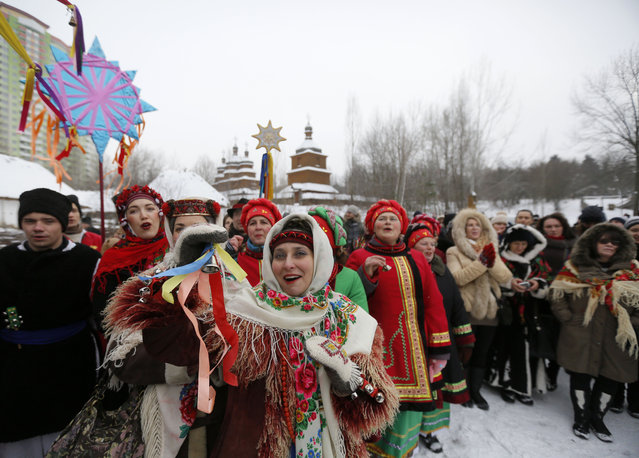
Ukrainians wearing traditional costumes sing Kolyadky or Ukrainian Christmas Carols, as a part of Orthodox Christmas in Kiev, Ukraine, Thursday, January 7 2016. Orthodox Christians mark their traditional Christmas Day Jan. 7, with many ancient symbolic events. (Photo by Sergei Chuzavkov/AP Photo)

Ukrainians wearing traditional costumes sing Kolyadky or Ukrainian Christmas Carols, as a part of Orthodox Christmas in Kiev, Ukraine, Thursday, January 7 2016. Orthodox Christians mark their traditional Christmas Day Jan. 7, with many ancient symbolic events. (Photo by Sergei Chuzavkov/AP Photo)
Details
09 Jan 2016 08:06:00
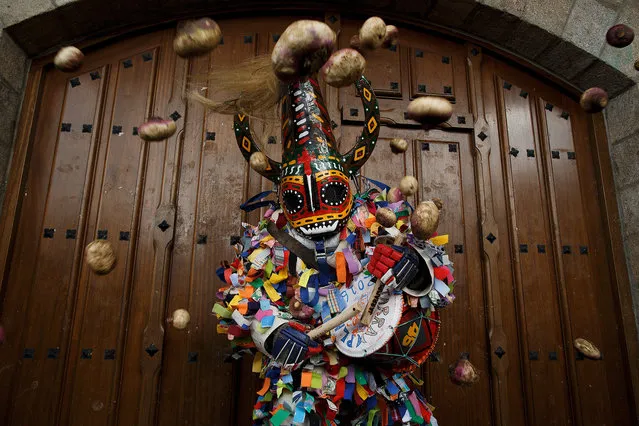
People throw turnips at the Jarramplas as he comes out from the church beating his drum during the Jarramplas Festival on January 20, 2016 in Piornal, Caceres province, Spain. The centuries old Jarramplas festival takes place annually every January 19-20 on Saint Sebastian Day and this year they expect to use more than 20 thousand kilogrames of turnips. Even though the exact origins of the festival are not known, various theories exist including the mythological punishment of Caco by Hercules. (Photo by Pablo Blazquez Dominguez/Getty Images)

People throw turnips at the Jarramplas as he comes out from the church beating his drum during the Jarramplas Festival on January 20, 2016 in Piornal, Caceres province, Spain. The centuries old Jarramplas festival takes place annually every January 19-20 on Saint Sebastian Day and this year they expect to use more than 20 thousand kilogrames of turnips. Even though the exact origins of the festival are not known, various theories exist including the mythological punishment of Caco by Hercules, a relation to ceremonies celebrated by the American Indians that were seen by the first conquerors, to a cattle thief ridiculed and expelled by his village neighbours. It is generally believed to symbolize the expulsion of everything bad. (Photo by Pablo Blazquez Dominguez/Getty Images)
Details
21 Jan 2016 13:21:00