Loading...
Done
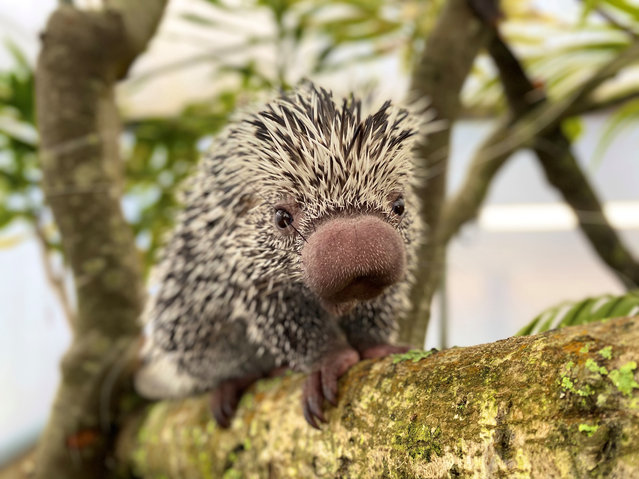
Runner-up, Heart and Minds: Nifty nose, by Samantha Allworthy at Longleat. Species: prehensile tailed porcupines. (Photo by Samantha Allworthy/BIAZA 2020 Photography Competition)

The British and Irish Association of Zoos and Aquariums (BIAZA) has announced the winning images in its annual photography competition. The 2020 winners show the important work of zoos and aquariums at an immensely challenging time. After months of closures, these conservation organisations are reeling from the financial impacts of the coronavirus pandemic. Here: Runner-up, Heart and Minds: Nifty nose, by Samantha Allworthy at Longleat. Species: prehensile tailed porcupines. (Photo by Samantha Allworthy/BIAZA 2020 Photography Competition)
Details
24 Jul 2020 00:03:00
Colombian singer and songwriter Karol G poses on the red carpet during the 24th Annual Latin Grammy Awards show in Seville, Spain on November 16, 2023. (Photo by Marcelo del Pozo/Reuters)

Colombian singer and songwriter Karol G poses on the red carpet during the 24th Annual Latin Grammy Awards show in Seville, Spain on November 16, 2023. (Photo by Marcelo del Pozo/Reuters)
Details
13 Dec 2023 04:44:00
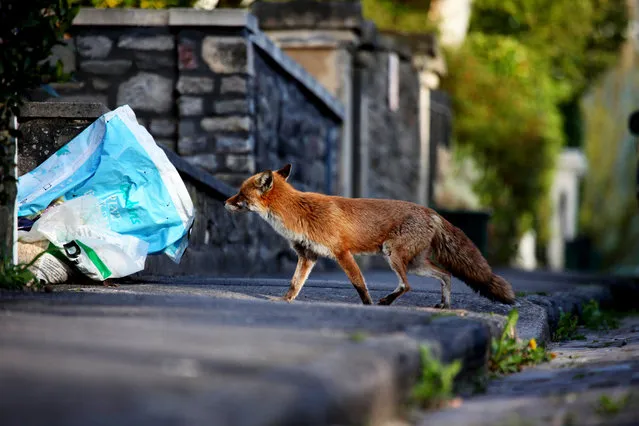
Urban Fox Project by Photographer Ian Wade

“I have been photographing this group of urban foxes in Bristol for over 12 months; what started off as a chance encounter has become an obsession for me and has changed my feelings and attitudes towards urban foxes forever...”. – Ian Wade. (Photo by Ian Wade)
Details
30 Jun 2013 12:36:00
American actress and singer Bella Thorne keeps covered during Paris Fashion Week in the last decade of September 2024. (Photo by bellathorne/Instagram)

American actress and singer Bella Thorne keeps covered during Paris Fashion Week in the last decade of September 2024. (Photo by bellathorne/Instagram)
Details
16 Oct 2024 04:25:00
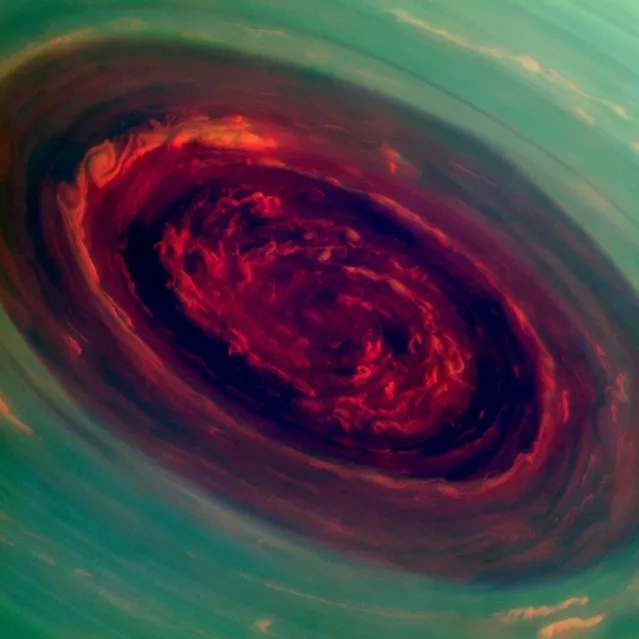
The spinning vortex of Saturn's north polar storm resembles a deep red rose of giant proportions surrounded by green foliage in this false-color image from NASA's Cassini spacecraft. (Photo by NASA/JPL-Caltech/SSI)

NASA's Cassini spacecraft has provided scientists the first close-up, visible-light views of a behemoth hurricane swirling around Saturn's north pole. In high-resolution pictures and video, scientists see the hurricane's eye is about 1,250 miles (2,000 kilometers) wide, 20 times larger than the average hurricane eye on Earth. Thin, bright clouds at the outer edge of the hurricane are traveling 330 mph(150 meters per second). The hurricane swirls inside a large, mysterious, six-sided weather pattern known as the hexagon. Photo: The spinning vortex of Saturn's north polar storm resembles a deep red rose of giant proportions surrounded by green foliage in this false-color image from NASA's Cassini spacecraft. (Photo by NASA/JPL-Caltech/SSI)
Details
31 May 2015 09:11:00
In advance of Fleet Week performances, U.S. Navy Blue Angels fly above San Francisco with Team Oracle aerobatics pilots Sean D. Tucker and Jessy Panzer on Thursday, October 10, 2019. (Photo by Noah Berger/AP Photo)

In advance of Fleet Week performances, U.S. Navy Blue Angels fly above San Francisco with Team Oracle aerobatics pilots Sean D. Tucker and Jessy Panzer on Thursday, October 10, 2019. (Photo by Noah Berger/AP Photo)
Details
13 Oct 2019 00:07:00
The social media star Demi Rose wows her fans and showed off her famous curves as she modelled in a bikini for “I Saw It First” in Ibiza, Spain on Monday, May 28, 2018. (Photo by KP Pictures)

The social media star, British model Demi Rose wows her fans and showed off her famous curves as she modelled in a bikini for “I Saw It First” in Ibiza, Spain on Monday, May 28, 2018. (Photo by KP Pictures)
Details
03 Jun 2018 00:05:00
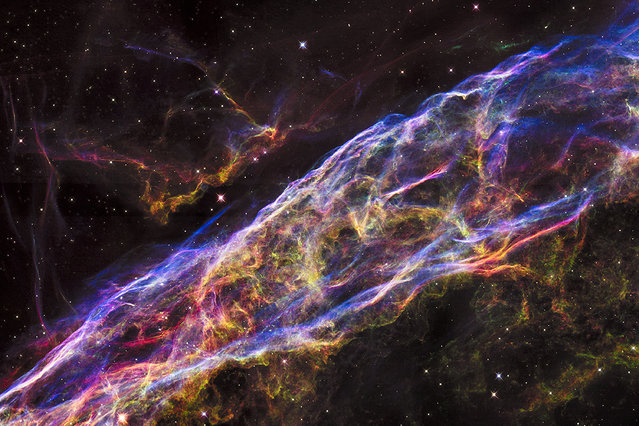
A small section of the expanding remains of the Veil Nebula, a massive star that exploded about 8,000 years ago. The entire nebula is 110 light-years across, covering six full moons on the sky as seen from Earth, and resides about 2,100 light-years away in the constellation Cygnus, the Swan. Image taken by NASA's Hubble Space Telescope. Released September 24, 2015. (Photo by Reuters/NASA/ESA/Hubble Heritage Team)

A small section of the expanding remains of the Veil Nebula, a massive star that exploded about 8,000 years ago. The entire nebula is 110 light-years across, covering six full moons on the sky as seen from Earth, and resides about 2,100 light-years away in the constellation Cygnus, the Swan. Image taken by NASA's Hubble Space Telescope. Released September 24, 2015. (Photo by Reuters/NASA/ESA/Hubble Heritage Team)
Details
10 Dec 2015 08:01:00