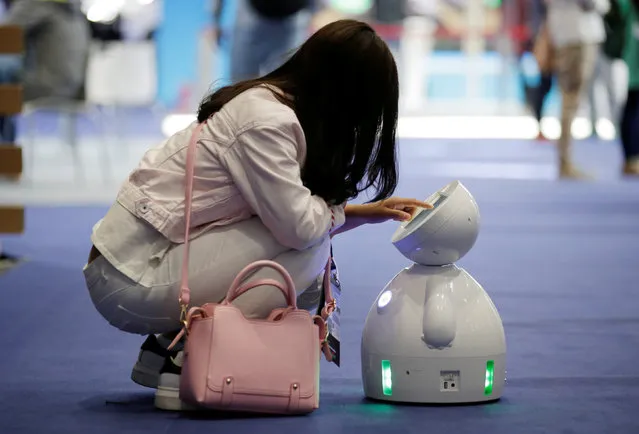
A staff member sets up a ROBOTLEO robot at the Global Mobile Internet Conference (GMIC) 2017 in Beijing, China April 28, 2017. (Photo by Jason Lee/Reuters)
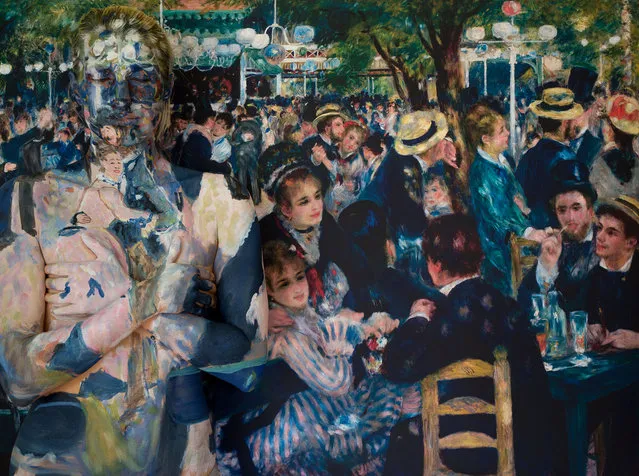
An innovative artist has camouflaged nude bodies by painting them into the worlds most expensive artworks. New York body artist, Trina Merry picked the 20 top dearest paintings, then photographed naked models disguised as part of the piece. Here: Titled 8,100,000 after the price paid for Bal du moulin de la Galette. (Photo by Trina Merry/Caters News)
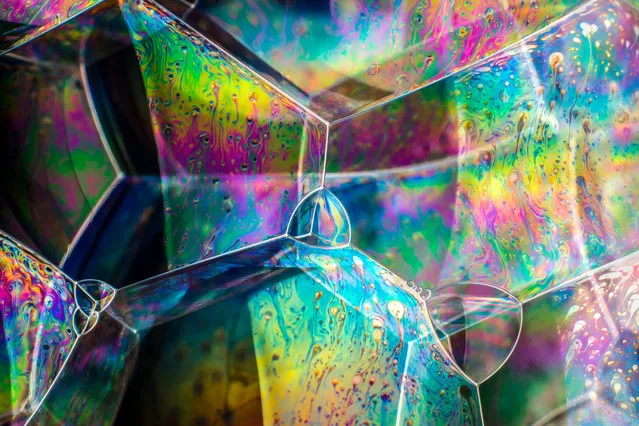
Soap Bubble Structures by Kym Cox. Bubbles optimise space and minimise their surface area for a given volume of air. This phenomenon makes them a useful tool in many areas of research, in particular, materials science and “packing” – how things fit together. Bubble walls drain under gravity, thin at the top, thick at the bottom, which interferes with travelling lightwaves to create bands of colour. Black spots show the wall is too thin for interference colours, indicating the bubble is about to burst. (Photo by Kym Cox/2019 Science Photographer of the Year/RPS)
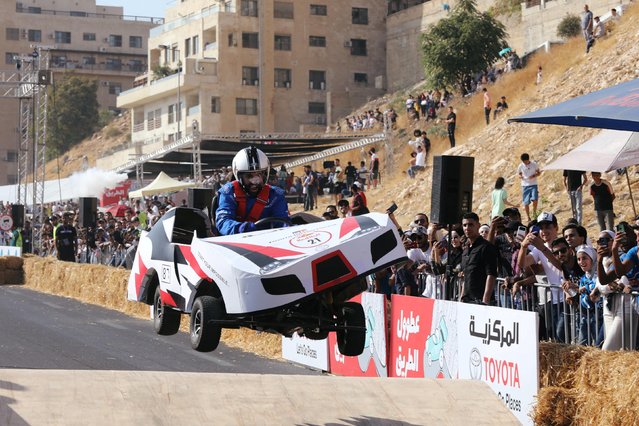
A competitor drives his homemade vehicle without an engine during the Red Bull Soapbox Race in Amman, Jordan on September 20, 2019. (Photo by Muhammad Hamed/Reuters)
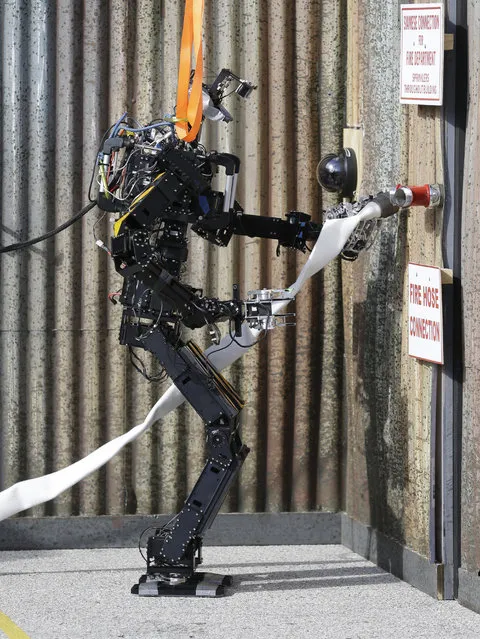
Thor, Virginia Tech College of Engineering, Robotics and Mechanisms Laboratory, tries to connect the hose to a firehose connection during the hose task at the Homestead-Miami Speedway, Friday, December 20, 2013, in Homestead, Fla. (Photo by Alan Diaz/AP Photo)
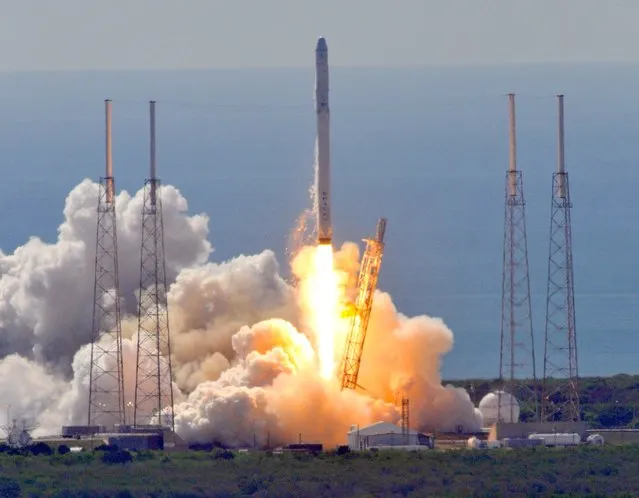
SpaceX, the space transportation company built from scratch by visionary billionaire Elon Musk, has the grand goal of space travel evolution through the use of re-usable rockets. Its technology – which has proven its worth several times – can reduce the costs of space transportation to its fraction, making it a more affordable way of reaching orbit or traveling beyond.
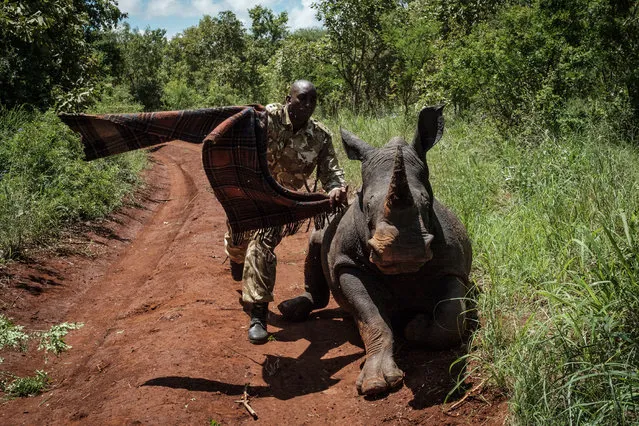
A ranger of Kenya Wildlife Services (KWS) tries to cover the eyes of 2.5-year-old female Southern white rhino, Elia, to calm down after being shot a tranquilizer from a helicopter during Kenya Wildlife Services (KWS) rhino ear notching exercise for identification at Meru National Park, 350 km from Nairobi, Kenya, on April 5, 2018. (Photo by Yasuyoshi Chiba/AFP Photo)