Loading...
Done
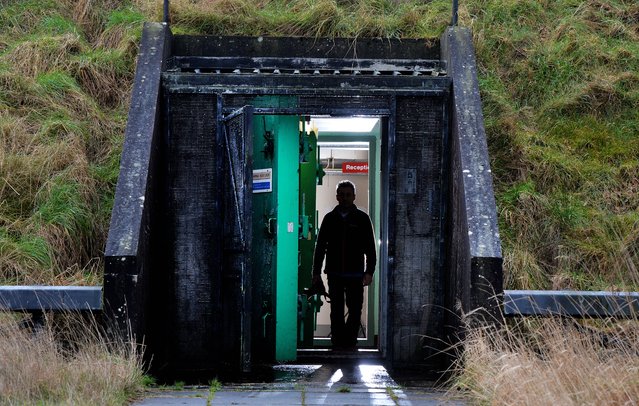
The main entrance and blast door at the nuclear bunker site on the Woodside Road industrial estate on February 4, 2016 in Ballymena, Northern Ireland. The underground shelter has been put up for sale by the offices of the Northern Ireland First and Deputy First Minister. The bunker which was completed in 1990 was built to hold up to 235 people in the event of a nuclear bomb and is complete with kitchen facilities, dormitories and decontamination chambers. (Photo by Charles McQuillan/Getty Images)

The main entrance and blast door at the nuclear bunker site on the Woodside Road industrial estate on February 4, 2016 in Ballymena, Northern Ireland. The underground shelter has been put up for sale by the offices of the Northern Ireland First and Deputy First Minister. The bunker which was completed in 1990 was built to hold up to 235 people in the event of a nuclear bomb and is complete with kitchen facilities, dormitories and decontamination chambers. The site, one of approximately 1,600 nuclear monitoring posts built in the UK since 1955, is on the housing market with an asking price of £575,000. (Photo by Charles McQuillan/Getty Images)
Details
05 Feb 2016 10:55:00
A participant is hit by an orange during an annual carnival battle in the northern Italian town of Ivrea February 7, 2016. Dressed up as Middle Age kings' guards, a group of men ride in a horse-drawn carriage and pelt “foot soldiers” with oranges as thousands of people gather to re-enact a Middle Age battle when the townsfolk of Ivrea overthrew an evil king. In a strange twist, instead of swords and cross bows, these days the weapons of choice are oranges. (Photo by Stefano Rellandini/Reuters)

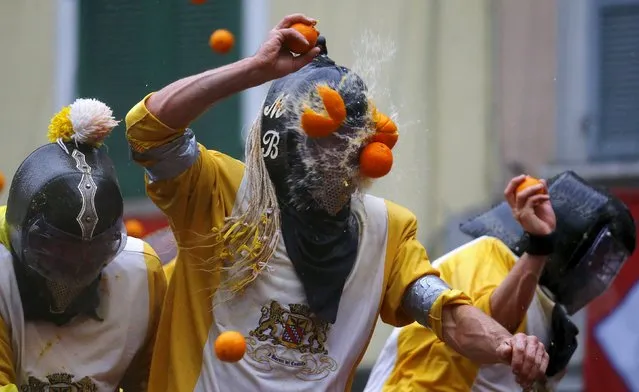
A participant is hit by an orange during an annual carnival battle in the northern Italian town of Ivrea February 7, 2016. Dressed up as Middle Age kings' guards, a group of men ride in a horse-drawn carriage and pelt “foot soldiers” with oranges as thousands of people gather to re-enact a Middle Age battle when the townsfolk of Ivrea overthrew an evil king. In a strange twist, instead of swords and cross bows, these days the weapons of choice are oranges. (Photo by Stefano Rellandini/Reuters)
Details
08 Feb 2016 12:03:00
This picture taken on January 26, 2016 shows a monkey sitting on a bench during rehearsal at a monkey training school in a zoo in Dongying, eastern China's Shandong province. Shows featuring performing simians, popular in China and throughout Asia, are expecting a boost in the Lunar New Year of the monkey, which begins on February 8. But they are facing a growing backlash from Chinese people concerned about animal welfare. (Photo by Wang Zhao/AFP Photo)

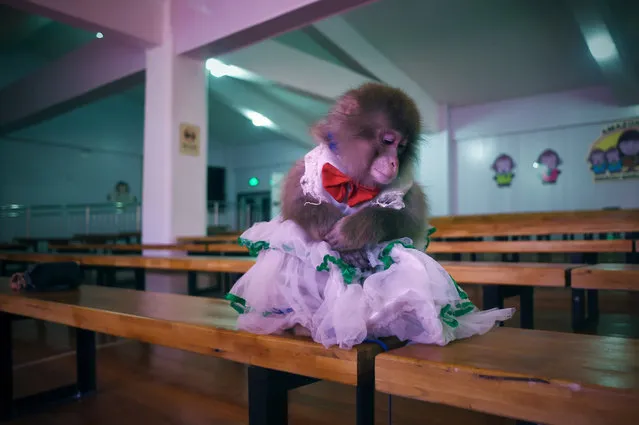
This picture taken on January 26, 2016 shows a monkey sitting on a bench during rehearsal at a monkey training school in a zoo in Dongying, eastern China's Shandong province. Shows featuring performing simians, popular in China and throughout Asia, are expecting a boost in the Lunar New Year of the monkey, which begins on February 8. But they are facing a growing backlash from Chinese people concerned about animal welfare. (Photo by Wang Zhao/AFP Photo)
Details
09 Feb 2016 13:30:00
A girl asks a passerby for help to pay a medical bill as her father sits in his wheelchair in the Douma neighbourhood of Damascus Syria February 3, 2016. (Photo by Bassam Khabieh/Reuters)

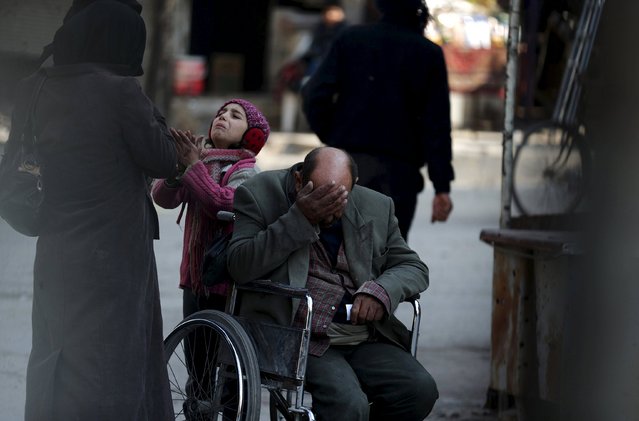
Hadeel, 10, asks a passerby for help to pay a medical bill as her father Shahrour, 54, sits in his wheelchair in the Douma neighbourhood of Damascus Syria February 3, 2016. Shahrour said he developed diabetes at the beginning of the war in Syria. A lack of insulin led to his medical condition worsening and his right foot had to be amputated. Recently he also suffered a stroke that paralysed half his face. He and part of his extended family, a total of 18 people, live together and struggle to get by. (Photo by Bassam Khabieh/Reuters)
Details
12 Feb 2016 12:46:00
Christian families living in a refugee camp stand under a tree in Kaga-Bandoro, Central African Republic, Tuesday February 16,  2016. (Photo by Jerome Delay/AP Photo)

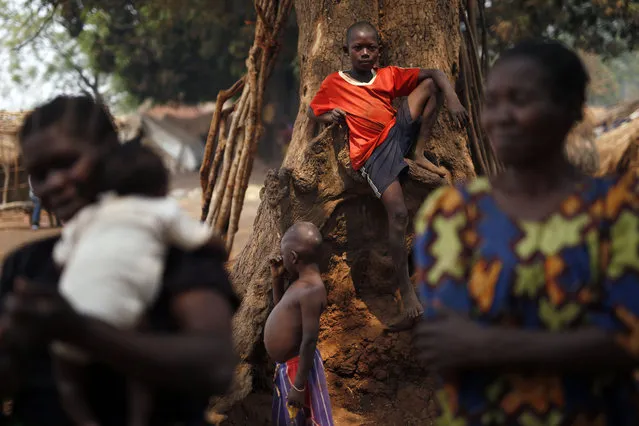
Christian families living in a refugee camp stand under a tree in Kaga-Bandoro, Central African Republic, Tuesday February 16, 2016. Refugees in the north of Central African Republic say they hope the new president will bring peace but no one is heading home just yet. Thousands are still living in displacement camps in Kaga-Bandoro, a stronghold of the former Muslim rebel group known as Seleka that was in power for nearly a year. The one-time rebels say they are waiting to see how the election turns out before taking any action. (Photo by Jerome Delay/AP Photo)
Details
20 Feb 2016 10:13:00
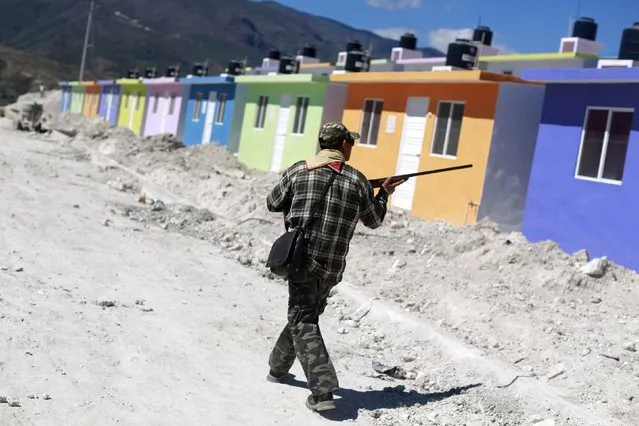
A member of the Community Police of the FUSDEG (United Front for the Security and Development of the State of Guerrero) search for a man, who ran away upon seeing the Community Police approach as they patrolled a street, in the village of Petaquillas, on the outskirts of Chilpancingo, in the Mexican state of Guerrero, February 1, 2015. (Photo by Jorge Dan Lopez/Reuters)

A member of the Community Police of the FUSDEG (United Front for the Security and Development of the State of Guerrero) search for a man, who ran away upon seeing the Community Police approach as they patrolled a street, in the village of Petaquillas, on the outskirts of Chilpancingo, in the Mexican state of Guerrero, February 1, 2015. Approximately 500 members of the Community Police from the FUSDEG took control of the security of the village of Petaquillas on the night of January 30 at the request of the people tired of the actions of organized crime, local media reported. (Photo by Jorge Dan Lopez/Reuters)
Details
03 Feb 2015 13:32:00
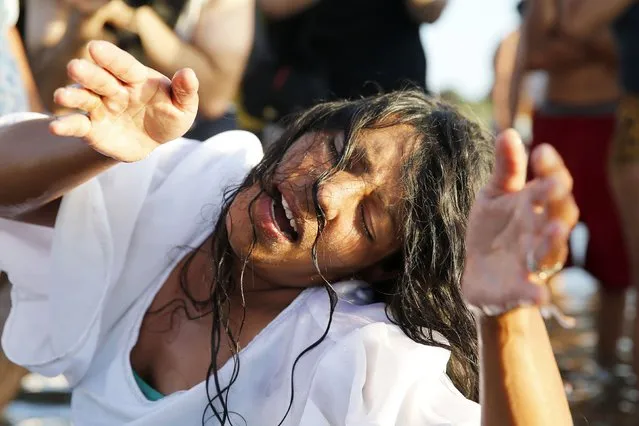
A devotee of the Afro-Brazilian goddess of the sea Lemanja pays tribute on Lemanja's Day at Ramirez beach in Montevideo February 2, 2015. On this day every year, worshippers light candles at a shrine and throw sweets, alcoholic drinks, fruits and cheap jewellery into the sea as offerings to ask for good health and luck in love and work. (Photo by Andres Stapff/Reuters)

A devotee of the Afro-Brazilian goddess of the sea Lemanja pays tribute on Lemanja's Day at Ramirez beach in Montevideo February 2, 2015. On this day every year, worshippers light candles at a shrine and throw sweets, alcoholic drinks, fruits and cheap jewellery into the sea as offerings to ask for good health and luck in love and work. (Photo by Andres Stapff/Reuters)
Details
04 Feb 2015 12:14:00
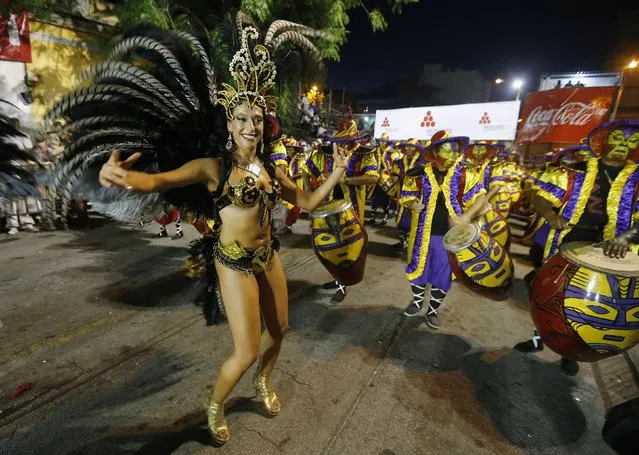
A member of a comparsa, a Uruguayan carnival group, dances during the Llamadas parade in Montevideo February 5, 2015. Thousands of people crowd the capital's Barrio Sur as costumed drummers and dancers kick off the street fiesta known as Llamadas which has traditional Afro-Uruguayan roots. The fiesta, also known in Spanish as “The Calls”, started during the colonial period as a slave parade on the city streets. (Photo by Andres Stapff/Reuters)

A member of a comparsa, a Uruguayan carnival group, dances during the Llamadas parade in Montevideo February 5, 2015. Thousands of people crowd the capital's Barrio Sur as costumed drummers and dancers kick off the street fiesta known as Llamadas which has traditional Afro-Uruguayan roots. The fiesta, also known in Spanish as “The Calls”, started during the colonial period as a slave parade on the city streets. (Photo by Andres Stapff/Reuters)
Details
08 Feb 2015 11:44:00