A combination picture shows Aleppo's Umayyad mosque, Syria, before it was damaged on March 12, 2009 (top) and after it was damaged (bottom) December 13, 2016. (Photo by Omar Sanadiki/Reuters)
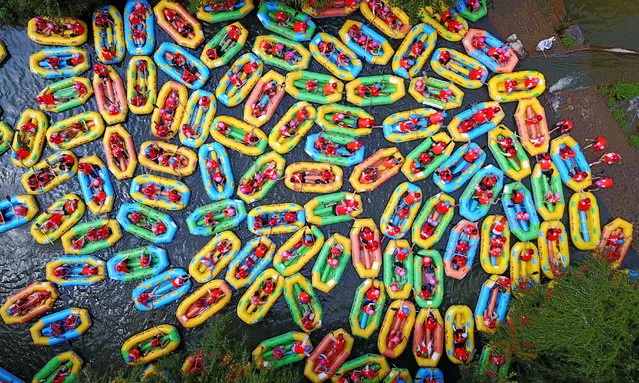
Aerial view of tourists in life vests and rubber rafts in the Grand Canyon of western Henan, Sanmenxia, China on August 5, 2017. (Photo by Imaginechina/Rex Features/Shutterstock)
Australian performers illuminated with real clocks titled “The Time Minder” attend a media preview of the Night Festival in Singapore on August 23, 2017. Singapore's arts and heritage district will be transformed into Singapore largest outdoor performing arts festival to celebrate its 10th year edition Night Festival from August 24 to 26. (Photo by Roslan Rahman/AFP Photo)
Performers of Everland Amusement Park present the part of Christmas Fantasy in downtown of Myundong in Seoul, South Korea on December 3, 2019. (Photo by Seokyong Lee/Penta Press/Rex Features/Shutterstock)
Students run out of their school celebrating their high school graduation at Nacka Gymnasium following the spread of the corona virus disease (COVID-19) in Stockholm, Sweden, June 3, 2020. (Photo by Jessica Gow/TT News Agency via Reuters)
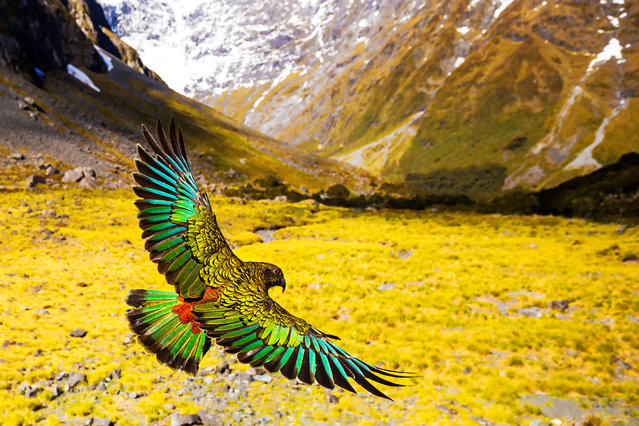
Kea are the only true alpine parrots in the world and thrive as cunning opportunists in the freezing conditions of the Southern Alps. Kea are thought to have developed their wide array of food-finding strategies during the last great ice age, where they learned to adapt using their unusual powers of curiosity. (Photo by Tom Walker/BBC Pictures/The Guardian)
Cubans gather at Havanas Malecon waterfront to watch the fireworks on the eve of the city's 500th anniversary on November 15, 2019, in Havana, Cuba. The fireworks were launched from the opposite side of the Havana bay, at the El Morro fortress and lighthouse complex. (Photo by Sven Creutzmann/Mambo photo/Getty Images)
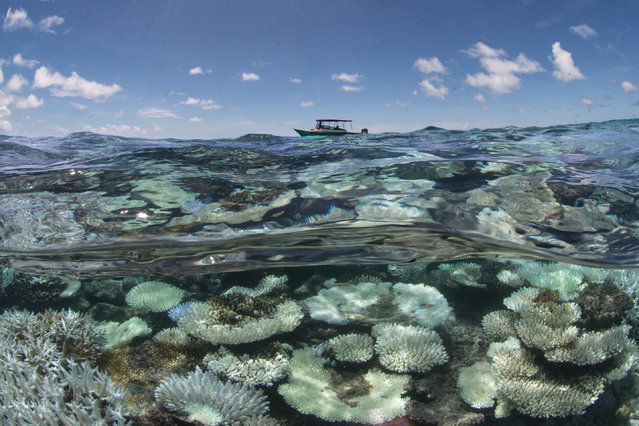
In this May 2016 photo released by The Ocean Agency/XL Catlin Seaview Survey, a boat sails near a coral reef that has been bleached white by heat stress in the Maldives. oral reefs, unique underwater ecosystems that sustain a quarter of the world's marine species and half a billion people, are dying on an unprecedented scale. Scientists are racing to prevent a complete wipeout within decades. (Photo by The Ocean Agency/XL Catlin Seaview Survey via AP Photo)