Loading...
Done
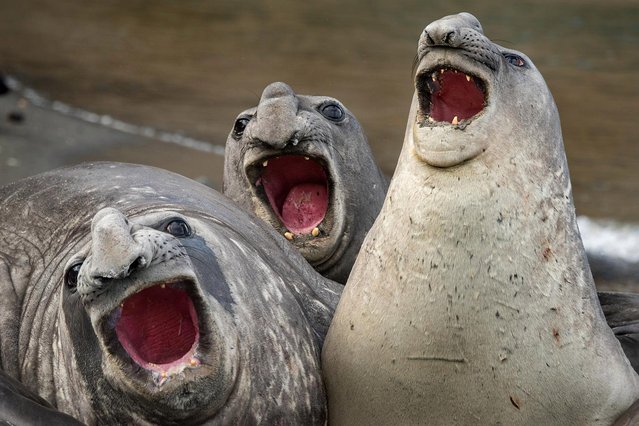
Three elephant seals put on a show in Roie Galitz's “Three Tanors”, taken on January 7, 2016 in South Georgia Island. (Photo by Roie Galitz/CWPA/Barcroft Images)

Three elephant seals put on a show in Roie Galitz's “Three Tanors”, taken on January 7, 2016 in South Georgia Island. The Comedy Wildlife Photography Awards are in full swing, so check out some of the fierce competitors jostling for the top prize this year. Photographers Paul Joynson-Hicks MBE and Tom Sullam founded the awards to spotlight wildlife conservation efforts and to inject some humour into the world of wildlife photography. (Photo by Roie Galitz/CWPA/Barcroft Images)
Details
07 Jul 2017 07:16:00
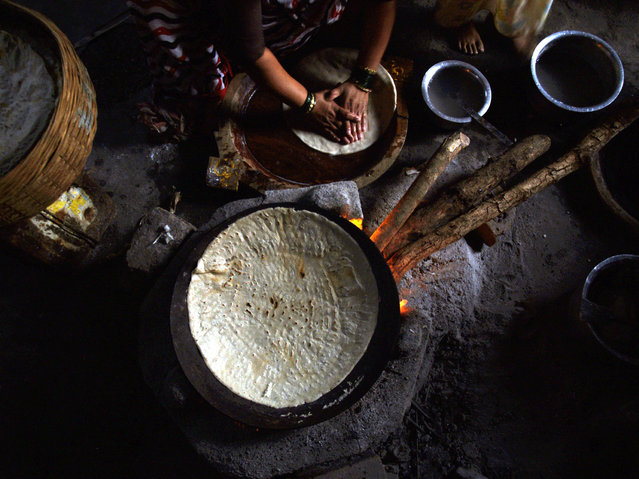
A fisherwoman prepares a meal in her home in a fishing village in Virar, about 40 km (25 miles) from Mumbai December 27, 2005. (Photo by Adeel Halim/Reuters)

A fisherwoman prepares a meal in her home in a fishing village in Virar, about 40 km (25 miles) from Mumbai December 27, 2005. (Photo by Adeel Halim/Reuters)
Details
05 May 2016 13:10:00
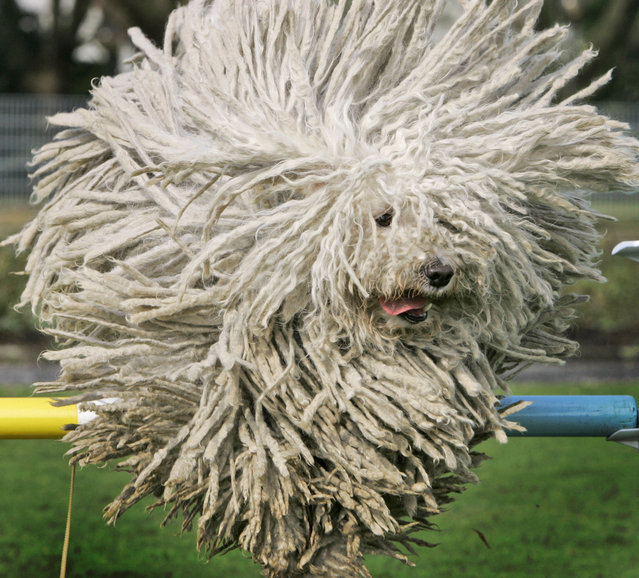
Hungarian Puli sheep dog, Fee, jumps over a hurdle during a preview for a pedigree dog  show in Dortmund on Thursday April 24, 2008. (Photo by Frank Augstein/AP Photo)

Hungarian Puli sheep dog, Fee, jumps over a hurdle during a preview for a pedigree dog show in Dortmund on Thursday April 24, 2008. (Photo by Frank Augstein/AP Photo)
Details
03 Sep 2015 12:49:00
In this photograph taken on December 14, 2016, an Indian craftsman works on unfinished cricket bats in a factory in Meerut, some 70 kms north- east of New Delhi. As Indian factory worker Jitender Singh carves out another big- hitting slab of thick willow he insists MCC proposals to limit the size of cricket bats won' t tame Twenty20 marauders. “I don' t think the thickness matters. It' s more about the balance of the bat and the talent of the batsman”, says Singh, who has made bats for many stars, including South Africa's AB de Villiers. The World Cricket committee of the MCC, the guardians of the game, recommended in December 2016 that limitations be placed on the width and depth of bats because it had become too easy to smash fours and sixes. (Photo by Dominique Faget/AFP Photo)

In this photograph taken on December 14, 2016, an Indian craftsman works on unfinished cricket bats in a factory in Meerut, some 70 kms north- east of New Delhi. (Photo by Dominique Faget/AFP Photo)
Details
11 Jan 2017 14:32:00
A woman looks out from her stall selling traditional garments and textiles at a market in Ashgabat February 8, 2012. (Photo by Aman Mehinli/Reuters)

A woman looks out from her stall selling traditional garments and textiles at a market in Ashgabat February 8, 2012. (Photo by Aman Mehinli/Reuters)
Details
27 May 2015 00:04:00
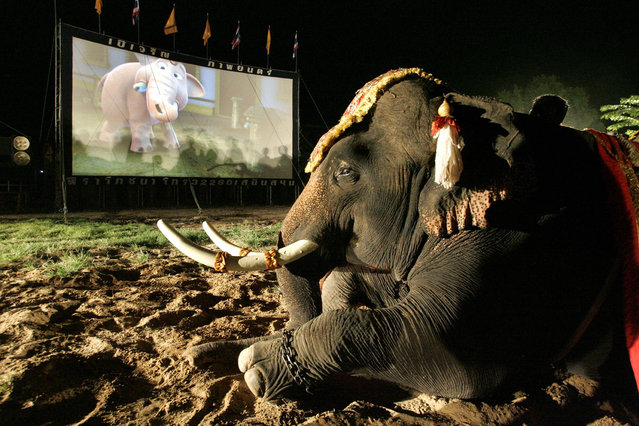
A mahout watches the Thai animation movie Kan Kluay with his elephant in Ayuthaya province, about 80km (49 miles) north of Bangkok June 5, 2006. The movie tells the story of a young Thai wild elephant who, while looking for his father, becomes the war elephant of the Thai King fighting against Burma and restored Thailand's ancient Ayuthaya empire that existed about 400 years ago. (Photo by Sukree Sukplang/Reuters)

A mahout watches the Thai animation movie Kan Kluay with his elephant in Ayuthaya province, about 80km (49 miles) north of Bangkok June 5, 2006. The movie tells the story of a young Thai wild elephant who, while looking for his father, becomes the war elephant of the Thai King fighting against Burma and restored Thailand's ancient Ayuthaya empire that existed about 400 years ago. (Photo by Sukree Sukplang/Reuters)
Details
12 Aug 2015 13:33:00
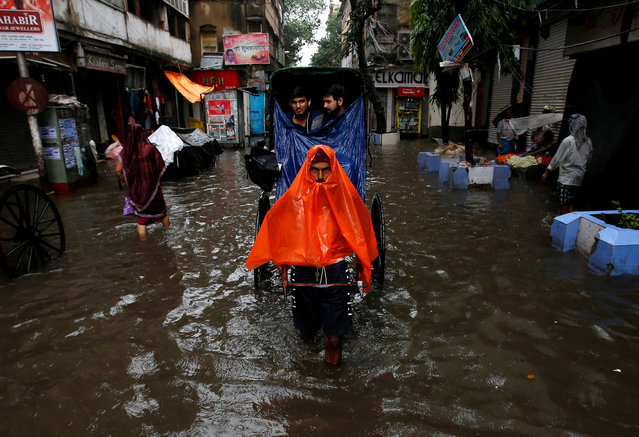
A rickshaw puller transports passengers through a water-logged street after heavy rain in Kolkata, India on June 26, 2018. (Photo by Rupak De Chowdhuri/Reuters)

A rickshaw puller transports passengers through a water-logged street after heavy rain in Kolkata, India on June 26, 2018. (Photo by Rupak De Chowdhuri/Reuters)
Details
03 Jul 2018 00:05:00
For her series “Japanese Whispers”, Belgian photographer Zaza Bertrand headed inside the intimate world of rabuhos – Japanese love hotels. Love hotels became popular in Japan from the 1960s onwards, due to a lack of privacy in many family homes. There are now around 37,000 of these hotels in Japan, allowing short daytime “rests” or overnight stays. (Photo by Zaza Bertrand/The Guardian)

For her series “Japanese Whispers”, Belgian photographer Zaza Bertrand headed inside the intimate world of rabuhos – Japanese love hotels. Love hotels became popular in Japan from the 1960s onwards, due to a lack of privacy in many family homes. There are now around 37,000 of these hotels in Japan, allowing short daytime “rests” or overnight stays. (Photo by Zaza Bertrand/The Guardian)
Details
02 Dec 2016 11:30:00