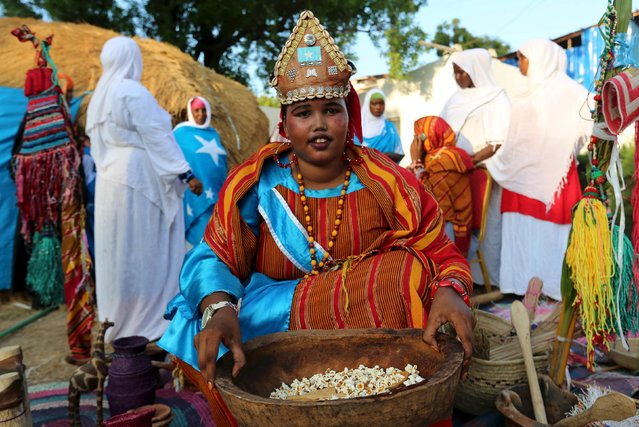
A Somali woman shows traditional items and food during an event to showcase traditional Somali culture in Hamarweyne district in the capital Mogadishu, December 3, 2015. (Photo by Feisal Omar/Reuters)
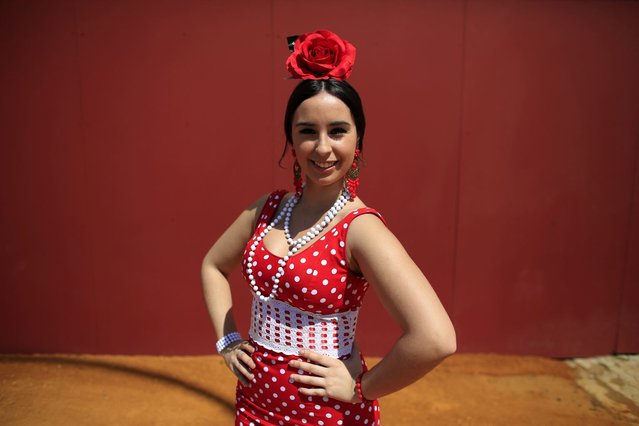
Maria, 18, wearing a traditional Sevillana outfit, poses for a portrait during the traditional Feria de Abril (April fair) in the Andalusian capital of Seville April 16, 2013. (Photo by Marcelo del Pozo/Reuters)
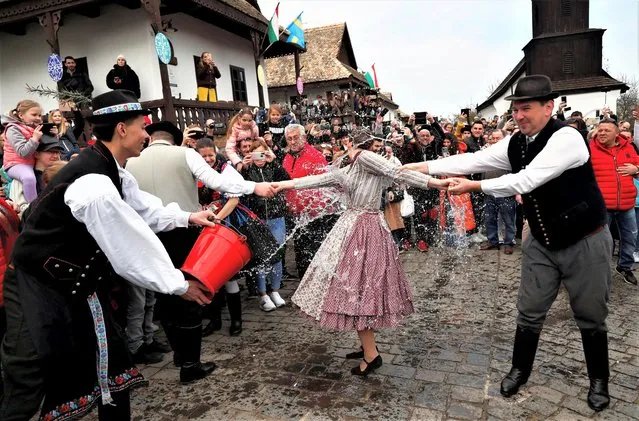
A woman wearing traditional clothes reacts as men throw water at her during a traditional Easter celebration in Holloko, Hungary on April 10, 2023. (Photo by Bernadett Szabo/Reuters)
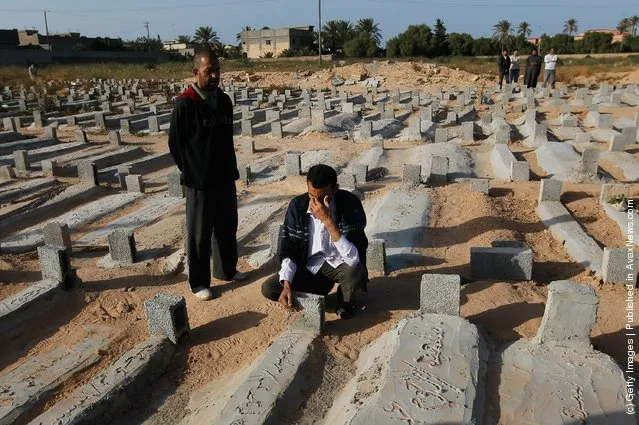
A man cries in a graveyard during the funeral of Nasser Ali Afglio, a young Libyan rebel killed during battle with government troops loyal to Libyan ruler Moammar Gaddafi April 19, 2011 in Misrata, Libya. The graveyard where Nasser was buried has hundreds of simple concrete graves; many dozens are those that have been killed during the last two months of fighting in the besieged town. Thousands of civilians are trapped in Misrata as fighting continues between Libyan government forces that have surrounded the city and anti-government rebels there. (Photo by Chris Hondros/Getty Images)
Some people joke about having clowns at their funeral, but how about having a coffin that looks like a gigantic cellphone? It is impossible to tell at the first glance that these colorful sculptures are actually coffins. The coffins were made by Kane Kwei and his assistant Paa Joe more than twenty years ago and have been a somewhat grim tourist attraction ever since. These coffins were probably made as an advertisement for the actual business, since it would hard to imagine someone actually ordering a coffin such as this.
Architects Christophe Berdaguer and Marie Péjus get scary with this sculptural,bogey-inspired arts center in France. Situated behind the severe Synagogue de Delme, the center's design transforms an old house, which previously served as a prison, a school, and most recently a funeral home. The new intervention draws inspiration from the latter, cloaking the structure in a white veil of molded concrete that creates a "living body" which expands into the surrounding areas of the house.
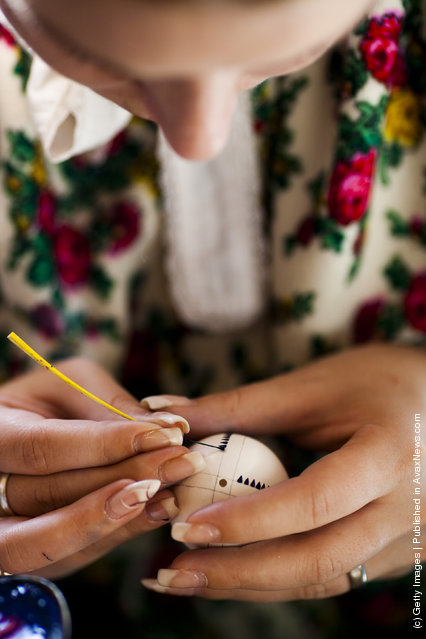
Melanie Baier from the village Obergurig wearing a traditional Lusatian sorbian folk dress, paints an Easter egg in traditional Sorbian motives at the annual Easter egg market on March 24, 2012 in Schleife, near Hoyerswerda, Germany. Easter egg painting is a strong part of Sorbian tradition and visual elements within the painting are meant to ward off evil. (Photo by Carsten Koall/Getty Images)
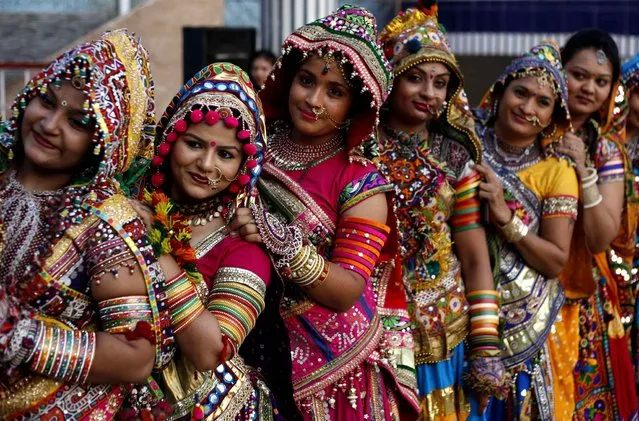
Indian girls in traditional attire pose for photographs as they practice the Garba, the traditional dance of Gujarat state, ahead of Navratri festival in Ahmadabad, India, Saturday, October 3, 2015. Navratri or nine night festival will begin on October 13. (Photo by Ajit Solanki/AP Photo)