Loading...
Done


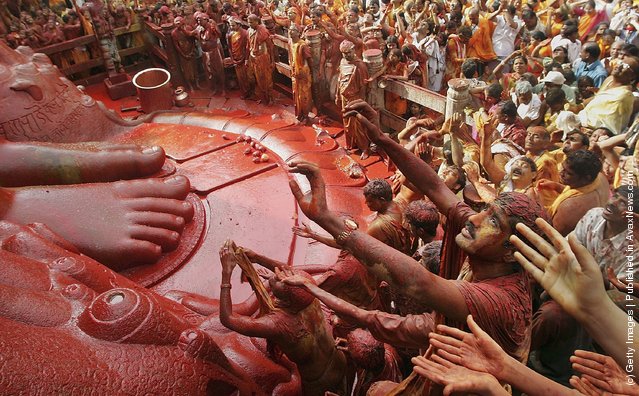
“The Mahamasthakabhisheka (or Mahamasthak Abhishek) is an important Jain festival held once every twelve years in the town of Shravanabelagola in Karnataka state, India. The festival is held in veneration of an immense 18 meter high statue of the Bhagwan (or Saint) Gomateshwara Bahubali. The anointing last took place in February 2006, and the next ceremony will occur in 2018”. – Wikipedia

Photo: A Jain Sadhu (2nd L) and devotees gather and pray at the feet of the monolithic statue of Jain sage Gomateswara during preparations for the Mahamastak Abhisheka ceremony February 7, 2006 in Shravanabelagola, India. The Mahamastak Abhisheka ceremony is held just once every twelve years where the statue will be bathed with milk, yogurt, saffron, gold coins and other religious items. The statue is said to be the world's largest monolith. The ceremony officially runs February 8-19. (Photo by Mario Tama/Getty Images)
Details
21 Jun 2011 12:27:00
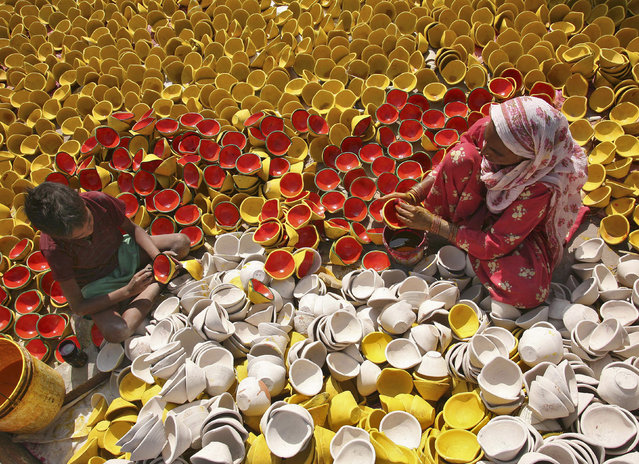
Potters colour earthen lamps at a workshop ahead of the Hindu festival of Diwali in Amritsar October 15, 2014. Earthen lamps are sold in large numbers during Diwali, the annual Hindu festival of lights, as people use them to decorate their homes. (Photo by Munish Sharma/Reuters)

Potters colour earthen lamps at a workshop ahead of the Hindu festival of Diwali in Amritsar October 15, 2014. Earthen lamps are sold in large numbers during Diwali, the annual Hindu festival of lights, as people use them to decorate their homes. (Photo by Munish Sharma/Reuters)
Details
21 Oct 2014 12:01:00
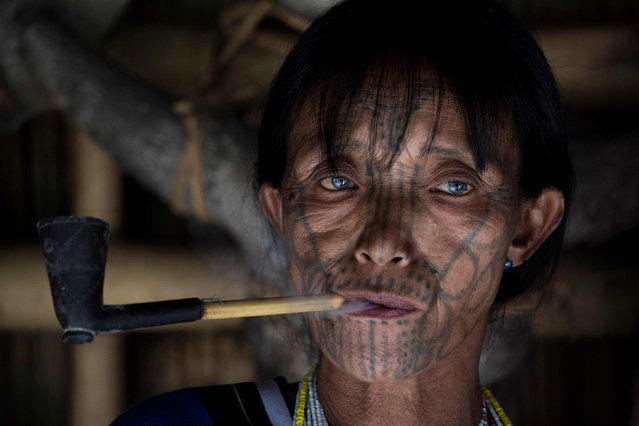
This photo taken on March 3, 2020 shows a tattooed Chin ethnic woman smoking at her house decorated with animal skulls in a village of Chin State, western Myanmar. (Photo by Sai Aung Main/AFP Photo)

This photo taken on March 3, 2020 shows a tattooed Chin ethnic woman smoking at her house decorated with animal skulls in a village of Chin State, western Myanmar. (Photo by Sai Aung Main/AFP Photo)
Details
30 May 2020 00:05:00
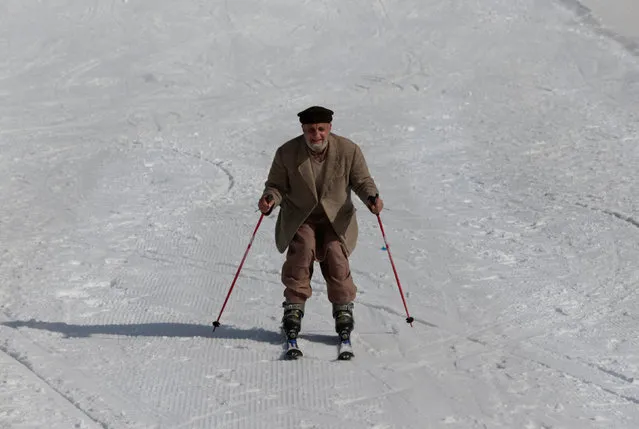
Retired Malam Jabba engineer Akbar Ali skis down the piste at the ski resort in Malam Jabba, Pakistan February 7, 2017. (Photo by Caren Firouz/Reuters)

Retired Malam Jabba engineer Akbar Ali skis down the piste at the ski resort in Malam Jabba, Pakistan February 7, 2017. Atop the piste of Malam Jabba in Pakistan's once dangerous Swat Valley skiers schuss downhill, a new Chinese-built chairlift ferries tourists to the peak, and a luxury hotel is under construction to replace one torched by the Taliban. (Photo by Caren Firouz/Reuters)
Details
23 Feb 2017 00:05:00
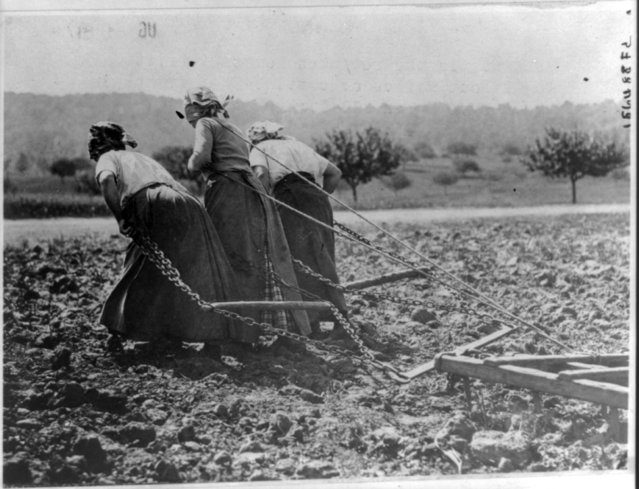
Peasants in the re-taken Somme District work in the fields, circa 1916- 1917, in this Library of Congress handout photo. (Photo by Reuters/Bain Collection/Library of Congress)

Peasants in the re-taken Somme District work in the fields, circa 1916- 1917, in this Library of Congress handout photo. For women 100 years ago, opportunities to work beyond the home and take part in political life were very limited. As the 20th century progressed, hard-won progress included gradually improved voting rights, while the upheaval of war pushed doors ajar as women worked as part of the war effort. U.S. Library of Congress archive photos show women's workplaces ranging from a flour mill in England to a coal mine in Belgium or Lincoln Motor Co.'s welding department in Detroit. International Women's Day is celebrated on March 8. (Photo by Reuters/Bain Collection/Library of Congress)
Details
03 Mar 2016 11:39:00
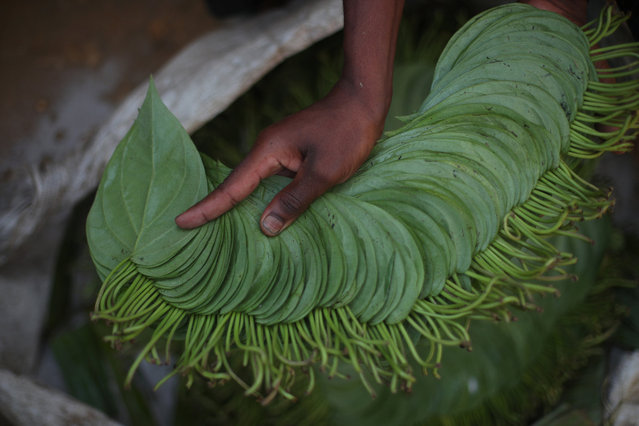
Faruk, 17, a Rohingya refugee trader holds betel leaves which are on sale at a stall in Palong Khali refugee camp near Cox's Bazar, Bangladesh, November 3, 2017. He left his village in Myanmar when the military opened fire towards the Rohingya. “I buy this betel leaf from Palong Khali market, in one bundle there are 160 pieces, I buy it for 80 taka and I sell it for 100 taka. Bangladeshi's and I sell for the same rate in the camp. Outside in the local market it is 80 taka per bundle. My problem is that I don't have money so I can't buy anything to eat, I can't buy fish to eat”, he said. (Photo by Hannah McKay/Reuters)

Faruk, 17, a Rohingya refugee trader holds betel leaves which are on sale at a stall in Palong Khali refugee camp near Cox's Bazar, Bangladesh, November 3, 2017. He left his village in Myanmar when the military opened fire towards the Rohingya. “I buy this betel leaf from Palong Khali market, in one bundle there are 160 pieces, I buy it for 80 taka and I sell it for 100 taka (1 Bangladeshi Taka = 0.012 US Dollar). Bangladeshi's and I sell for the same rate in the camp. Outside in the local market it is 80 taka per bundle. My problem is that I don't have money so I can't buy anything to eat, I can't buy fish to eat”, he said. (Photo by Hannah McKay/Reuters)
Details
27 Nov 2017 08:54:00
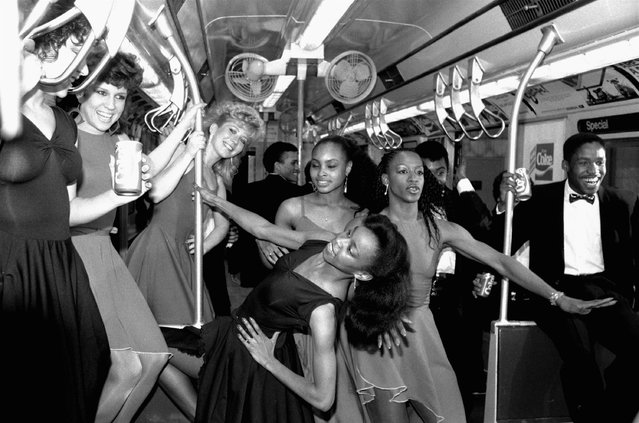
Members of the Apollo Rainbow Dancers stretch out in special A  train late on May 4, 1985, in New York. The legendary Apollo Theatre celebrated its 50th anniversary in an official reopening after a 15 month refurbishing with a celebrity studded evening. (Photo by Ray Stubblebine/AP Photo)

Members of the Apollo Rainbow Dancers stretch out in special A train late on May 4, 1985, in New York. The legendary Apollo Theatre celebrated its 50th anniversary in an official reopening after a 15 month refurbishing with a celebrity studded evening. (Photo by Ray Stubblebine/AP Photo)
Details
01 Jun 2018 00:01:00
A restaurant in Chelsea is giving customers the ultimate post-pub treat – by selling a burger for £1,100. The world's most expensive burger, dubbed the “Glamburger”, is stuffed with a burger patty made from 220 grams of Kobe Wagyu beef minced with 60 grams of New Zealand venison and seasoned with smoked Himalayan salt. (Photo by Groupon)

A restaurant in Chelsea is giving customers the ultimate post-pub treat – by selling a burger for £1,100. The world's most expensive burger, dubbed the “Glamburger”, is stuffed with a burger patty made from 220 grams of Kobe Wagyu beef minced with 60 grams of New Zealand venison and seasoned with smoked Himalayan salt. (Photo by Groupon)
Details
15 Oct 2014 13:27:00