American singer, songwriter, dancer, record producer, actress and model Tinashe is seen on July 23, 2018 in Los Angeles, California. (Photo by gotpap/Bauer-Griffin/GC Images)
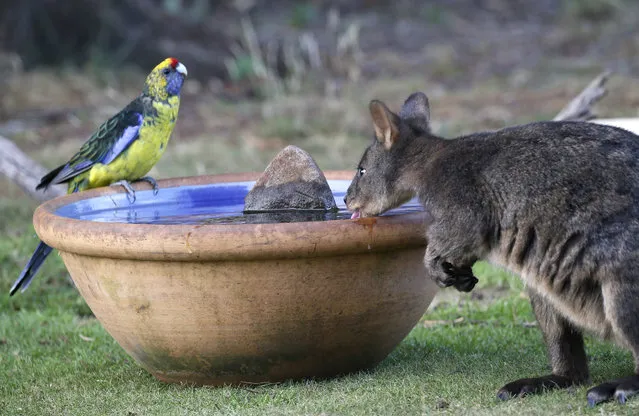
A green rosella and a wallaby, known as a Pademelon, eye off as they drink from a water bowl put out for thirsty wild animals at a back-yard in Kayena, in northern Tasmania, 01 February 2019. Australia recorded its hottest month on record in January; it was also the hottest and driest month on record for the Australian island state of Tasmania. (Photo by Barbara Walton/EPA/EFE)
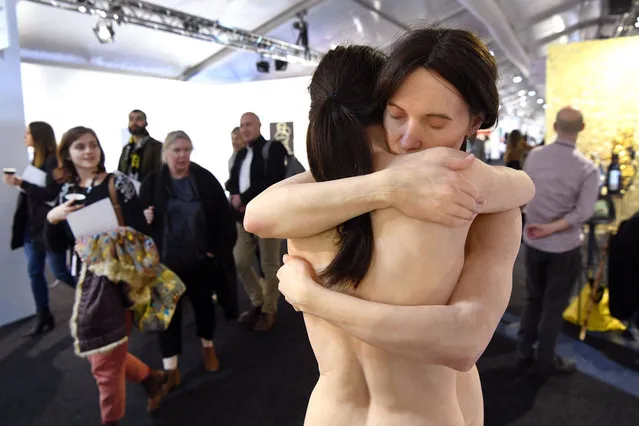
People walk past a sculpture entitled “Reunion” by artist Sam Jinks at a preview of the Melbourne Art Fair in Melbourne on August 1, 2018. The sculpture is made of silicone, pigment, resin and human hair. (Photo by William West/AFP Photo)
Labourers work at the installation site of Liquefied Petroleum Gas (LPG) pipeline on May Day or Labour Day in Chandigarh, India, May 1, 2015. (Photo by Ajay Verma/Reuters)
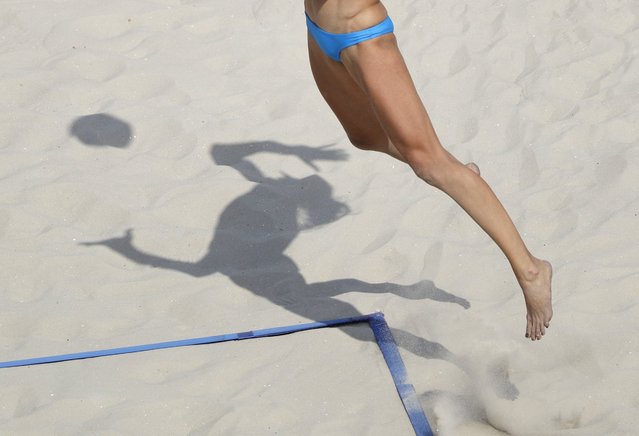
Russia's Ekaterina Birlova casts a shadow on the sand as she serves to Poland during a women's beach volleyball match at the 2016 Summer Olympics in Rio de Janeiro, Brazil, Tuesday, August 9, 2016. (Photo by Marcio Jose Sanchez/AP Photo)
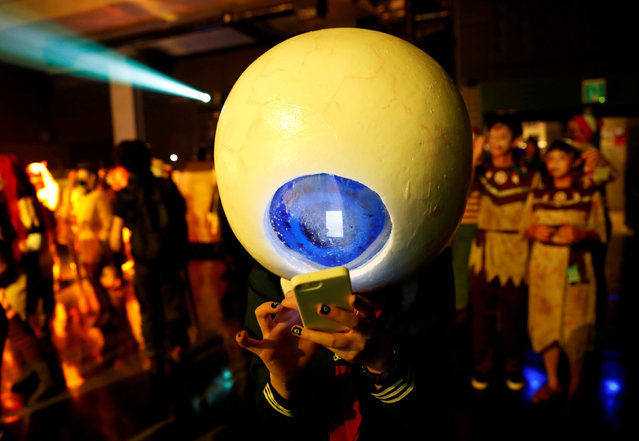
A participant in costume uses a mobile phone at a Halloween event in Kawasaki, south of Tokyo, Japan October 29, 2017. (Photo by Kim Kyung-Hoon/Reuters)
I know, this answer was a little too short, so let me explain in a little more detail.
Imagine tossing a coin. Normally, any normal coin toss has two possible outcomes - heads or tails - with each one having a 50% chance of happening. Ideally, that is, because factors like the force of your finger tossing the coin, gravity, the wind, the moon phase and a passing TARDIS can all influence the outcome of the toss - but I have deviated from the subject.