Loading...
Done
Visitors review their cell phone photos of an installation called 'Plexus A1' by artist Gabriel Dawe, one of nine large-scale art installations displayed at the 'Wonders' exhibit at the Renwick Art Gallery in Washington, DC, Wednesday, January 13, 2016. Built in the 1860s, the Renwick was the first American building to be designed specifically as an art museum; it recently reopened after a two year renovation. (Photo by Jim Lo Scalzo/EPA)

Visitors review their cell phone photos of an installation called “Plexus A1” by artist Gabriel Dawe, one of nine large-scale art installations displayed at the “Wonders” exhibit at the Renwick Art Gallery in Washington, DC, Wednesday, January 13, 2016. Built in the 1860s, the Renwick was the first American building to be designed specifically as an art museum; it recently reopened after a two year renovation. (Photo by Jim Lo Scalzo/EPA)
Details
14 Jan 2016 11:58:00
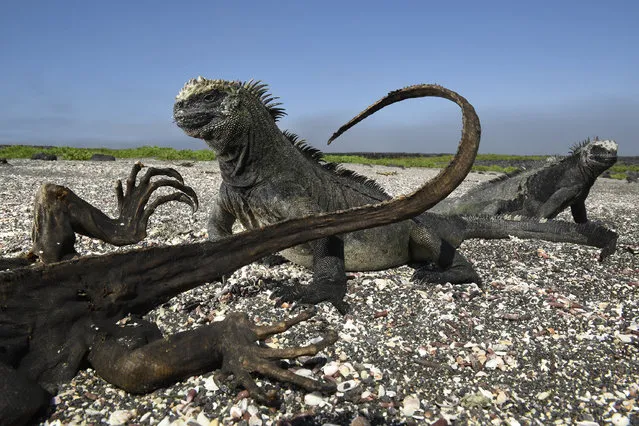
Galapagos – Rocking the Cradle: Four major ocean currents converge along the Galapagos archipelago, creating the conditions for an extraordinary diversity of animal life, April 25, 2016. The islands are home to at least 7,000 flora and fauna species, of which 97 percent of the reptiles, 80 percent of the land birds, 50 percent of the insects and 30 percent of the plants are endemic. The local ecosystem is highly sensitive to the changes in temperature, rainfall and ocean currents that characterize the climatic events known as El Niño and La Niña. These changes cause marked fluctuations in weather and food availability. Many scientists expect the frequency of El Niño and La Niña to increase as a result of climate change, making the Galapagos a possible early-warning location for its effects. (Photo by Thomas P. Peschak for National Geographic/World Press Photo)

Galapagos – Rocking the Cradle: Four major ocean currents converge along the Galapagos archipelago, creating the conditions for an extraordinary diversity of animal life, April 25, 2016. The islands are home to at least 7,000 flora and fauna species, of which 97 percent of the reptiles, 80 percent of the land birds, 50 percent of the insects and 30 percent of the plants are endemic. (Photo by Thomas P. Peschak for National Geographic/World Press Photo)
Details
16 Apr 2018 00:01:00
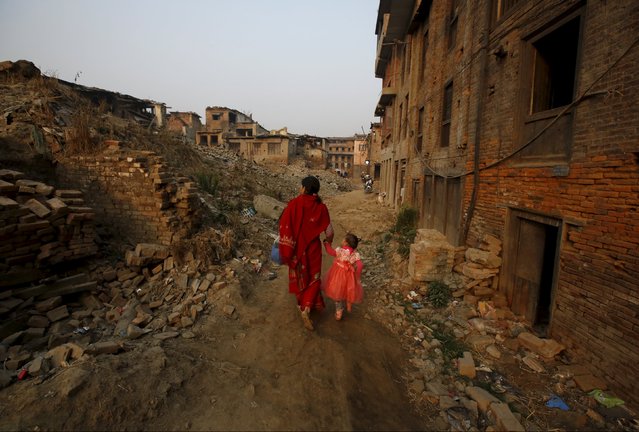
A woman and a child walk past the remains of collapsed houses damaged during the April 2015 earthquake, in Bhaktapur, Nepal March 18, 2016. The two devastating earthquakes that struck Nepal last year killed almost 9,000 people across the country. Inside the Kathmandu Valley almost 2,000 died, and some of the area's most important cultural and heritage sites were completely destroyed. As Kathmandu inhabitants prepare to mark the one-year anniversary of the event, thousands are still displaced and millions are living in temporary shelters. (Photo by Navesh Chitrakar/Reuters)

A woman and a child walk past the remains of collapsed houses damaged during the April 2015 earthquake, in Bhaktapur, Nepal March 18, 2016. The two devastating earthquakes that struck Nepal last year killed almost 9,000 people across the country. Inside the Kathmandu Valley almost 2,000 died, and some of the area's most important cultural and heritage sites were completely destroyed. As Kathmandu inhabitants prepare to mark the one-year anniversary of the event, thousands are still displaced and millions are living in temporary shelters. (Photo by Navesh Chitrakar/Reuters)
Details
25 Apr 2016 09:19:00
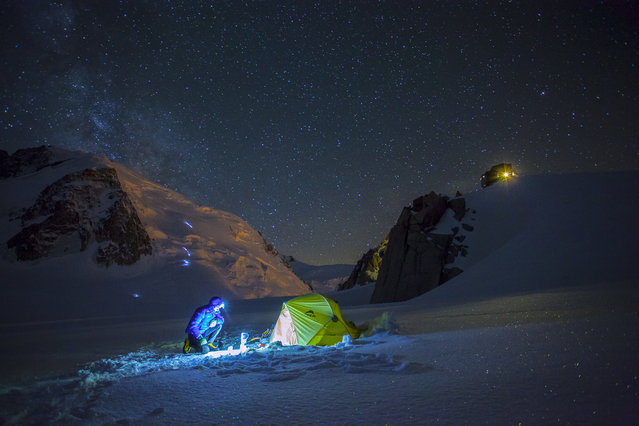
“A snapshot from mountaineer's life”. Have you ever wondered how does a mountaineer's day start? (Photo and caption by Kamil Tamiola/National Geographic Traveler Photo Contest)

“A snapshot from mountaineer's life”. Have you ever wondered how does a mountaineer's day start? I will give you a hint: you wake up at 3 am, set the stove, wake up your partner, pretend it is warm, quickly consume a high-calorie breakfast, watch your friends slowly ascending the icy slopes of your dream summit with their tiny head torches glimmering against perfectly blue ice, and hope for the good weather. One would ask: why all this trouble? The answer is easy: for the love of the adventure and the unknown. Location: Chamonix, Haute Savoye, France. (Photo and caption by Kamil Tamiola/National Geographic Traveler Photo Contest)

ATTENTION! All pictures are presented in high resolution. To see Hi-Res images – just TWICE click on any picture. In other words, click small picture – opens the BIG picture. Click BIG picture – opens VERY BIG picture.
Details
27 Jun 2013 12:47:00
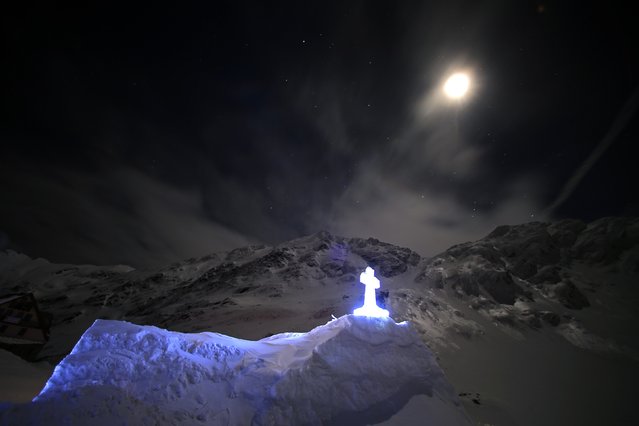
A church made entirely from ice is seen during the night at Balea Lac resort in the Fagaras mountains January 29, 2015. (Photo by Radu Sigheti/Reuters)

A church made entirely from ice is seen during the night at Balea Lac resort in the Fagaras mountains January 29, 2015. (Photo by Radu Sigheti/Reuters)
Details
30 Jan 2015 11:05:00
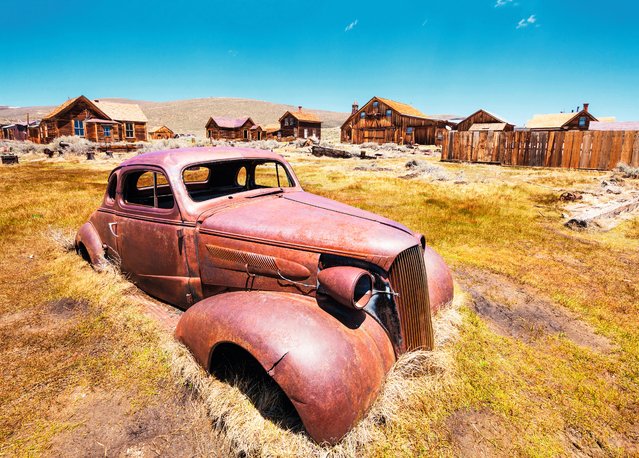
Bodie, Mono County, California. Gold was discovered at Bodie in 1859 (just after the initial California gold rush) and it went from mining camp to boomtown. Its decline began in 1880, when word spread of new boomtowns elsewhere. The Standard Consolidated Mine closed in 1913, and four years later the Bodie Railway was abandoned. By 1940 the population was down to 40. Today, Bodie is maintained in a state of arrested decay as a visitor attraction. (Photo by Alamy Stock Photo)

Kieron Connolly’s new book of photographs of more than 100 once-busy and often elegant buildings gives an idea of how the world might look if humankind disappeared. Here: Bodie, Mono County, California. Gold was discovered at Bodie in 1859 (just after the initial California gold rush) and it went from mining camp to boomtown. Its decline began in 1880, when word spread of new boomtowns elsewhere. The Standard Consolidated Mine closed in 1913, and four years later the Bodie Railway was abandoned. By 1940 the population was down to 40. Today, Bodie is maintained in a state of arrested decay as a visitor attraction. (Photo by Alamy Stock Photo)
Details
07 Sep 2016 09:50:00
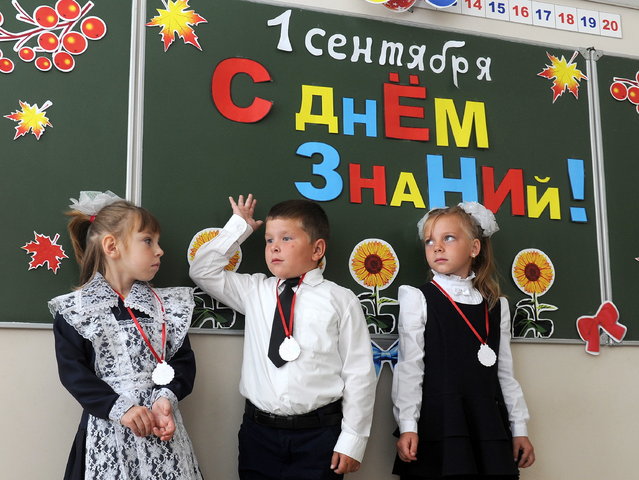
Schoolchildren attend their first lesson on Knowledge Day in the town of Turov, Zhytkavichy District, Gomel Region, Belarus on September 1, 2017. Knowledge Day marks the beginning of a new school year in Belarus and is celebrated on September 1. (Photo by Viktor Drachev/TASS via Getty Images)

Though schools around the globe have different start dates, calendars and traditions, the first day of a new term is an exciting time filled with the prospects of gaining more knowledge, making new friends and building community. Here: Schoolchildren attend their first lesson on Knowledge Day in the town of Turov, Zhytkavichy District, Gomel Region, Belarus on September 1, 2017. Knowledge Day marks the beginning of a new school year in Belarus and is celebrated on September 1. (Photo by Viktor Drachev/TASS via Getty Images)
Details
20 Sep 2017 08:00:00
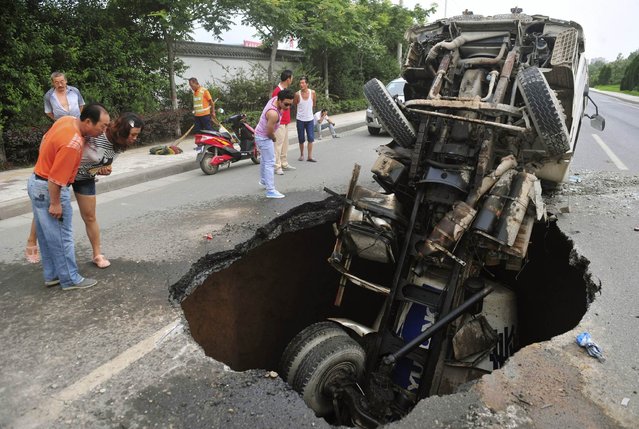
People look at a tanker after it fell into a caved-in area on a road in Xi'an, Shaanxi province, July 27, 2013. No casualty was reported in the accident, according to local media. (Photo by Reuters/Stringer)

People look at a tanker after it fell into a caved-in area on a road in Xi'an, Shaanxi province, July 27, 2013. No casualty was reported in the accident, according to local media. (Photo by Reuters/Stringer)
Details
03 Aug 2013 11:22:00