Loading...
Done
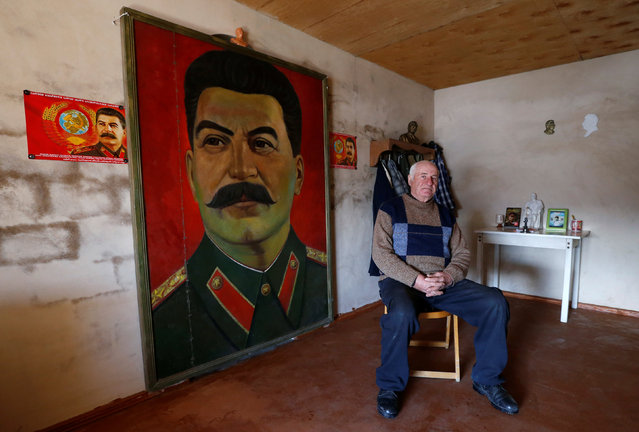
Retired builder Vasili Sidamonidze, 70, poses for a portrait at his home in Gori, Georgia, December 6, 2016. “Unfortunately, Stalin is not popular nowadays. Our people don't respect him. Only we, members of the (Communist) Party, respect him”, Sidamonidze said. “I always try to attend Stalin's birthday anniversaries in Gori. Unfortunately many people don't want to join us even if they live nearby. They look at us from their windows”. Stalin, who was born in Gori in 1878 and died in 1953, is largely reviled today in Georgia, which regained its independence during the 1991 collapse of the Soviet Union. Over the years, his memorials have been dismantled, most recently in 2010 when authorities removed a statue of the dictator from Gori's central square. But Stalin is still revered by a small group of mainly elderly supporters who stress his role in the industrialisation of the Soviet Union and in defeating Nazi Germany in World War Two. Each Dec. 21, a few dozen people mark his birthday by gathering outside a Gori museum dedicated to Stalin, where they make speeches and walk to the square where a 6-meter-high bronze statue of him once stood, calling for it to be reinstated. Opponents say it was a symbol of Moscow's still lingering shadow. In 2008, Russia fought a brief war with Georgia and recognised its breakaway regions of Abkhazia and South Ossetia as independent states. (Photo by David Mdzinarishvili/Reuters)

Retired builder Vasili Sidamonidze, 70, poses for a portrait at his home in Gori, Georgia, December 6, 2016. “Unfortunately, Stalin is not popular nowadays. Our people don't respect him. Only we, members of the (Communist) Party, respect him”, Sidamonidze said. “I always try to attend Stalin's birthday anniversaries in Gori. Unfortunately many people don't want to join us even if they live nearby. They look at us from their windows”. (Photo by David Mdzinarishvili/Reuters)
Details
17 Dec 2016 07:59:00
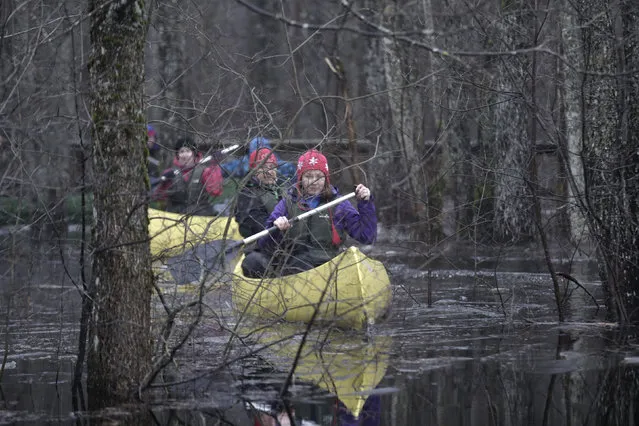
People canoe through a flooded forest in Soomaa national park, Estonia, February 7, 2016. (Photo by Ints Kalnins/Reuters)

People canoe through a flooded forest in Soomaa national park, Estonia, February 7, 2016. In this Estonian region hit by floods every spring the natural disaster is used to attract visitors and organise canoe tours through flooded territories. The floods are called Fifth Season by local people. (Photo by Ints Kalnins/Reuters)
Details
09 Feb 2016 13:50:00
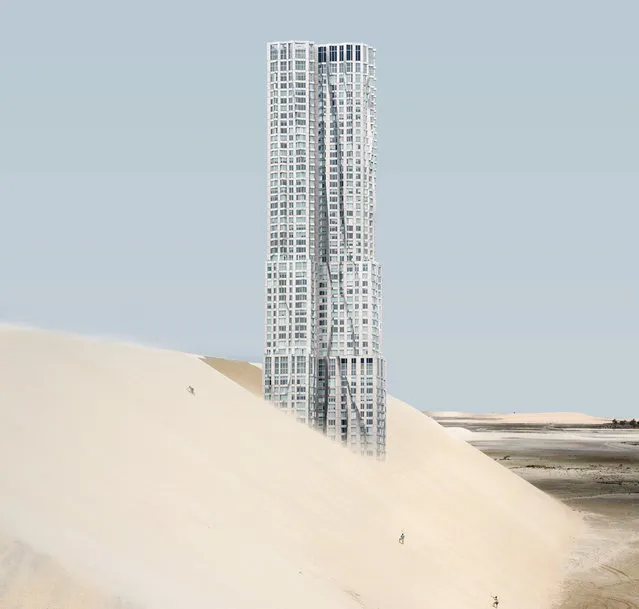
8 Spruce Street/New York By Gehry. Repponen has designed everything from skateboards and milk bottles to concepts for Estonia’s Olympic uniforms. (Photo by Anton Repponen/The Guardian)

Using digital editing, designer Anton Repponen places Manhattan buildings in desolate landscapes, “inviting viewers to see them as if for the first time”. Here: 8 Spruce Street/New York By Gehry. Photo by Anton Repponen/The Guardian)
Details
14 Jun 2016 12:42:00
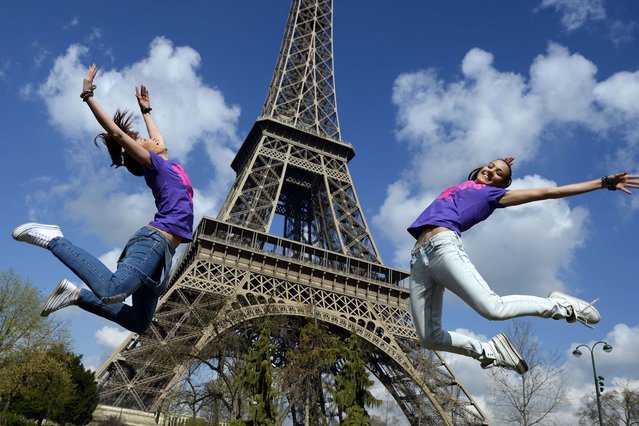
Two Bulgarian tourists pose in front of the Eiffel Tower in Paris on their last day in the capital on March 24, 2014. (Photo by Franck Fife/AFP Photo)

Two Bulgarian tourists pose in front of the Eiffel Tower in Paris on their last day in the capital on March 24, 2014. (Photo by Franck Fife/AFP Photo)
Details
29 Mar 2014 13:13:00
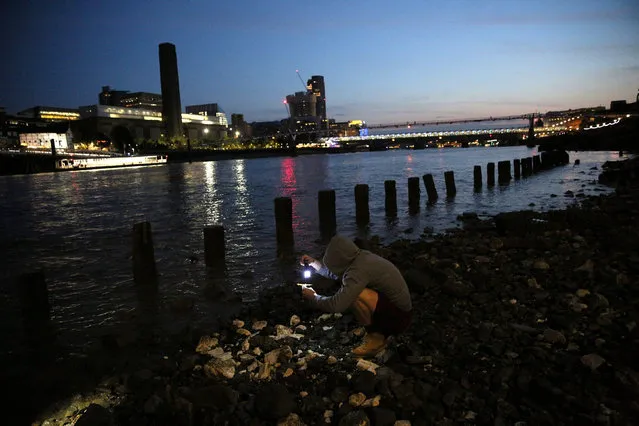
A mudlark uses a torch to look for items on the bank of the River Thames in London, Britain June 06, 2016. Mudlarking is believed to trace its origins to the 18th and 19th century, when scavengers searched the Thames' shores for items to sell. These days, history and archaeology fans are the ones hoping to find old relics such as coins, ceramics, artifacts or everyday items from across centuries. They wait for the low tide and then scour specific areas of exposed shores. "If you're in a field you could be out all day long, with the river you're restricted to about two or three hours," mudlark Nick Stevens said. While many just use the naked eye for their searches, others rely on metal detectors for which a permit from the Port of London Authority is needed. Digging also requires consent. (Photo by Neil Hall/Reuters)

A mudlark uses a torch to look for items on the bank of the River Thames in London, Britain June 06, 2016. Mudlarking is believed to trace its origins to the 18th and 19th century, when scavengers searched the Thames' shores for items to sell. These days, history and archaeology fans are the ones hoping to find old relics such as coins, ceramics, artifacts or everyday items from across centuries. their finds with the Portable Antiquities Scheme. Any item over 300 years old must be recorded. (Photo by Neil Hall/Reuters)
Details
27 Aug 2016 10:43:00
Alexander Levine crosses the Verrazzano-Narrows Bridge during the marathon in New York on November 3, 2024. (Photo by Brendan Mcdermid/Reuters)

Alexander Levine crosses the Verrazzano-Narrows Bridge during the marathon in New York on November 3, 2024. (Photo by Brendan Mcdermid/Reuters)
Details
11 Nov 2024 03:48:00
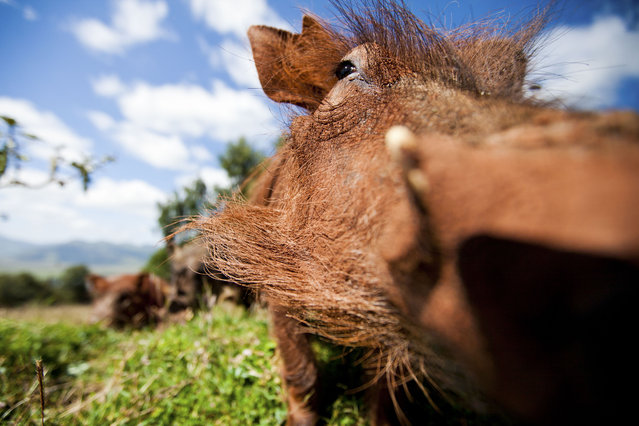
This family of warthogs regularly visited our campsite in the Ethiopian highlands so I set up a remote camera with a wide-angle lens to photograph them as they rummaged around for food. They just had a mud bath. (Photo by Will Burrard-Lucas/Caters News Agency)

This family of warthogs regularly visited our campsite in the Ethiopian highlands so I set up a remote camera with a wide-angle lens to photograph them as they rummaged around for food. They just had a mud bath. (Photo by Will Burrard-Lucas/Caters News Agency)
Details
22 Sep 2019 00:03:00
Parade goers during Brighton Pride Parade on August 03, 2019 in Brighton, England. (Photo by Tristan Fewings/Getty Images)

Parade goers during Brighton Pride Parade on August 03, 2019 in Brighton, England. Tens of thousands of revellers dressed in rainbow colours and elaborate costumes and descended on the seaside city to ask for equality for all. (Photo by Tristan Fewings/Getty Images)
Details
05 Aug 2019 00:05:00