Loading...
Done
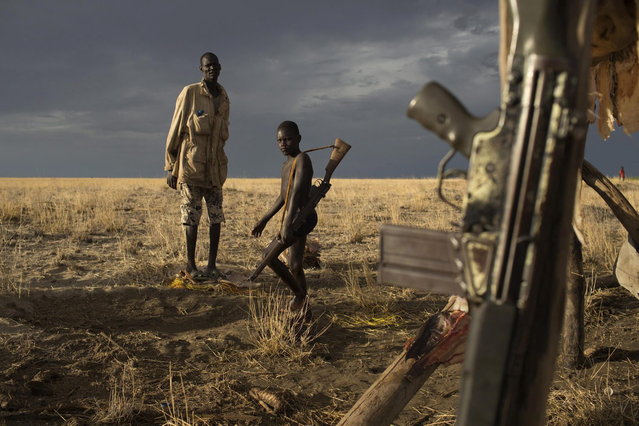
A Turkana man and a boy carrying a gun look on as a G3 battle rifle hangs from a structure used to dry fish at a fishing camp on the shores of Lake Turkana, some kilometres from Todonyang near the Kenya-Ethiopia border in northwestern Kenya October 12, 2013. (Photo by Siegfried Modola/Reuters)

A Turkana man and a boy carrying a gun look on as a G3 battle rifle hangs from a structure used to dry fish at a fishing camp on the shores of Lake Turkana, some kilometres from Todonyang near the Kenya-Ethiopia border in northwestern Kenya October 12, 2013The Turkana are traditionally nomadic pastoralists, but they have seen the pasture that they need to feed their herds suffer from recurring droughts and many have turned to fishing. However, Lake Turkana is overfished, and scarcity of food and pastureland is fuelling long-standing conflict with Ethiopian indigenous Dhaasanac, who have seen grazing grounds squeezed by large-scale government agricultural schemes in southern Ethiopia. The Dhaasanac now venture ever deeper into Kenyan territory in search of fish and grass, clashing with neighbours. Fighting between the communities has a long history, but the conflict has become ever more fatal as automatic weapons from other regional conflicts seep into the area. While the Turkana region is short of basics like grass and ground-water, it contains other resources including oil reserves and massive, newly discovered underground aquifers. (Photo by Siegfried Modola/Reuters)
Details
05 Dec 2013 12:08:00
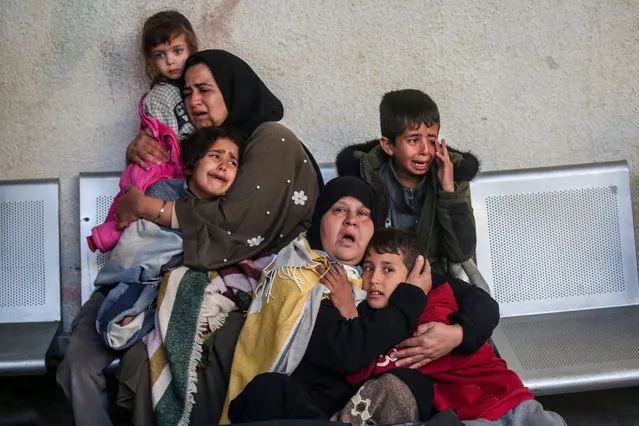
People mourn as they receive the dead bodies of victims of an Israeli strike on March 3, 2024 in Rafah, Gaza. As of Thursday February 29th, more than 30,000 people had been killed in Gaza since the start of the war on Oct. 7, according to the territory's health ministry. Also this week, more details have emerged of a potential new ceasefire deal that could start before Ramadan, pending further negotiations by Israel, Hamas and foreign mediators. (Photo by Ahmad Hasaballah/Getty Images)

People mourn as they receive the dead bodies of victims of an Israeli strike on March 3, 2024 in Rafah, Gaza. As of Thursday February 29th, more than 30,000 people had been killed in Gaza since the start of the war on Oct. 7, according to the territory's health ministry. Also this week, more details have emerged of a potential new ceasefire deal that could start before Ramadan, pending further negotiations by Israel, Hamas and foreign mediators. (Photo by Ahmad Hasaballah/Getty Images)
Details
13 Mar 2024 07:56:00


“Kumbh Mela is a mass Hindu pilgrimage in which Hindus gather at the Ganges river. The normal Kumbh Mela is celebrated every 3 years, the Ardh (half) Kumbh Mela is celebrated every six years at Haridwar and Prayag, the Purna (complete) Kumbh takes place every twelve years, at four places (Prayag (Allahabad), Haridwar, Ujjain, and Nashik). The Maha (great) Kumbh Mela which comes after 12 “Purna Kumbh Melas”, or 144 years, is held at Allahabad.

The last Ardh Kumbh Mela was held over a period of 45 days beginning in January 2007, more than 70 million Hindu pilgrims took part in the Ardh Kumbh Mela at Prayag, and on January 15, the most auspicious day of the festival of Makar Sankranti, more than 5 million participated. The previous Maha Kumbh Mela, held in 2001, was attended by around 60 million people, making it at the time the largest gathering anywhere in the world in recorded history”. – Wikipedia

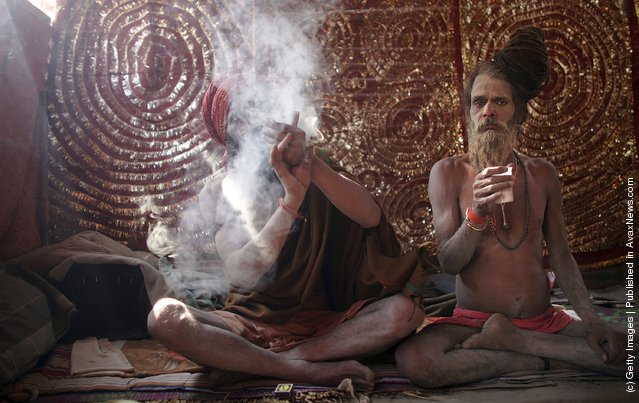
Photo: Sadhus (holy men) smoke at their camp near the ritual site at Sangam, the confluence of the Ganges, Yamuna and mythical Saraswati rivers during the Ardh Kumbh Mela festival (Half Pitcher festival) January 18, 2007 in Allahabad, India. Millions of Hindu pilgrims have flocked to the largest religious gathering in the world which lasts for 45 days in northern India. The festival commemorates the mythical conflict between gods and demons over a pitcher filled with the “nectar of immortality”. Devotees believe that taking a holy dip in the Ganges at this time washes away their sins and paves the path to salvation. (Photo by Mario Tama/Getty Images)
Details
30 Jun 2011 10:27:00
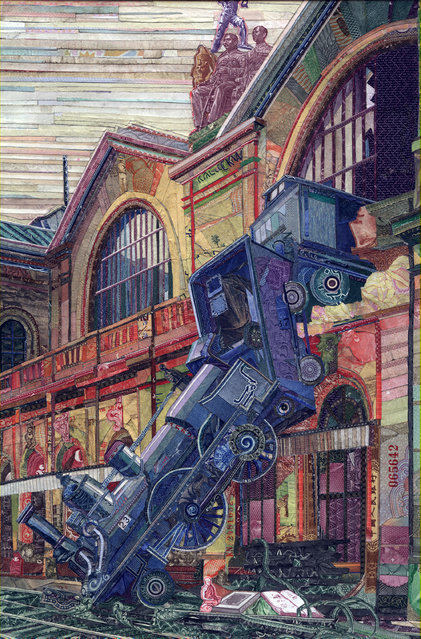
“Great Crash”. (Photo by C. K. Wilde)

Artist C. K. Wilde creates intricate collage compositions using pieces of paper currency from all over the world. His collages have referenced subjects ranging from space exploration, to mythology, religion, slavery, ecology, the history of warfare, the history of money, and art history. Photo: “Great Crash”. (Photo by C. K. Wilde)
Details
11 Jul 2014 12:06:00
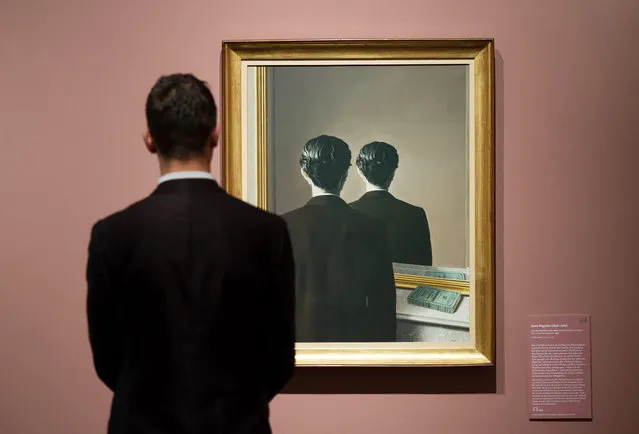
In this October 5, 2016 photo a man looks at the work “Not to be Reproduced” by Rene Magritte at the Kunsthalle art gallery in Hamburg, Germany. The exhibition, which runs from Oct. 7,  2016 until Jan. 22,  2017, features more than 150 masterpieces of surrealism from four of the most significant European private collections of the 20th century. (Photo by Daniel Reinhardt/DPA via AP Photo)

In this October 5, 2016 photo a man looks at the work “Not to be Reproduced” by Rene Magritte at the Kunsthalle art gallery in Hamburg, Germany. The exhibition, which runs from Oct. 7, 2016 until Jan. 22, 2017, features more than 150 masterpieces of surrealism from four of the most significant European private collections of the 20th century. (Photo by Daniel Reinhardt/DPA via AP Photo)
Details
07 Oct 2016 10:29:00
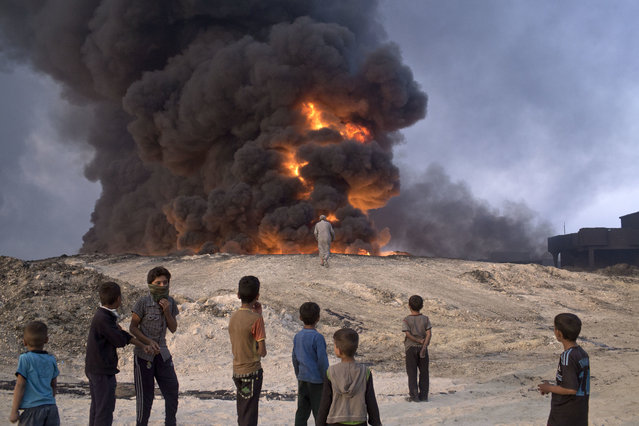
in Qayyarah, about 31 miles (50 km) south of Mosul, Iraq, Sunday, October 23, 2016.in Qayyarah, some 50 kilometers south of Mosul, Iraq, Sunday, Oct. 23, 2016. Islamic State fighters torched a sulfur plant south of Mosul, sending a cloud of toxic fumes into the air that mingled with oil wells the militants had lit on fire to create a smoke screen. (Photo by Marko Drobnjakovic/AP Photo)

in Qayyarah, about 31 miles (50 km) south of Mosul, Iraq, Sunday, October 23, 2016.in Qayyarah, some 50 kilometers south of Mosul, Iraq, Sunday, Oct. 23, 2016. Islamic State fighters torched a sulfur plant south of Mosul, sending a cloud of toxic fumes into the air that mingled with oil wells the militants had lit on fire to create a smoke screen. (Photo by Marko Drobnjakovic/AP Photo)
Details
24 Oct 2016 12:56:00
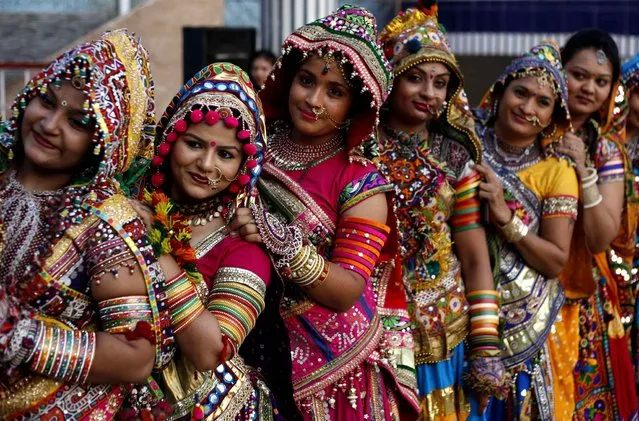
Indian girls in traditional attire pose for photographs as they practice the Garba, the traditional dance of Gujarat state, ahead of Navratri festival in Ahmadabad, India, Saturday, October 3, 2015. Navratri or nine night festival will begin on Oct. 13. (Photo by Ajit Solanki/AP Photo)

Indian girls in traditional attire pose for photographs as they practice the Garba, the traditional dance of Gujarat state, ahead of Navratri festival in Ahmadabad, India, Saturday, October 3, 2015. Navratri or nine night festival will begin on October 13. (Photo by Ajit Solanki/AP Photo)
Details
14 Oct 2015 08:04:00
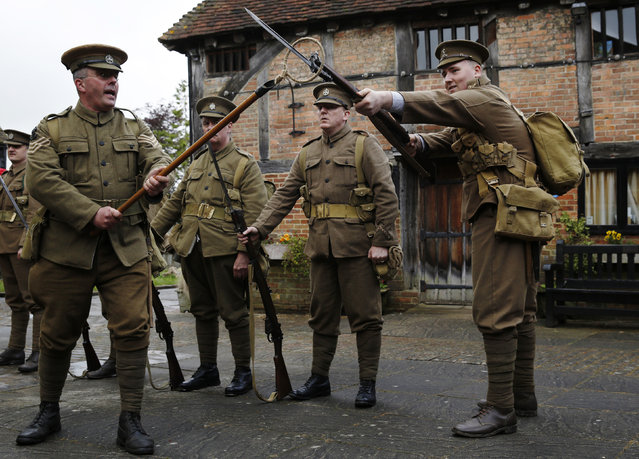
Factory landlord Lawrence Taylor (L), portraying a Colour Sergeant from the King's Royal Rifle Corps, part of the Rifles Living History Society, performs a drill with Connor Young (R) of the Queen's Own Royal West Kent Regiment Living History Group as they recreate the life of a First World War soldier at the Eden Valley Museum in Edenbridge in southeast England May 10, 2014. (Photo by Luke MacGregor/Reuters)

Factory landlord Lawrence Taylor (L), portraying a Colour Sergeant from the King's Royal Rifle Corps, part of the Rifles Living History Society, performs a drill with Connor Young (R) of the Queen's Own Royal West Kent Regiment Living History Group as they recreate the life of a First World War soldier at the Eden Valley Museum in Edenbridge in southeast England May 10, 2014. Lawrence has always had an interest in military history and specifically “The Rifles” – his veteran father's WWII regiment. When he became a re-enactor he chose not to re-enact WWII as many of the veterans are still alive, and he felt uncomfortable as he remembers his father would have flashbacks and nightmares about the war. United by a fascination with military history and a fondness for dressing up, groups such as the Rifles Living History Society and the Queen's Own Royal West Kent Regiment Living History Group get together to recreate aspects of life during the First World War. Reuters photographer Luke MacGregor photographed members of the groups, both as they took part in living history events and at their day jobs. (Photo by Luke MacGregor/Reuters)
Details
26 Aug 2014 10:12:00