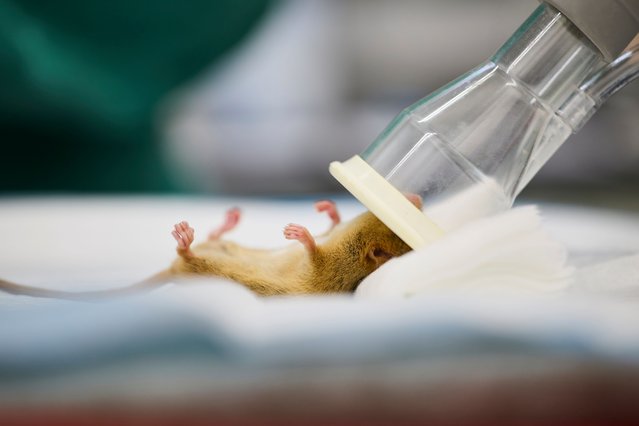
This hazel dormouse is being given a once-over by a disease risk team at ZSL London Zoo, UK in May 2025, as part of reintroduction programme. (Photo by David Levene/The Guardian)
A mural painting by graffiti artist Eme Freethinker features likenesses of US President Donald Trump (R) and Chinese premier Xi Jinping wearing face covers in Berlin on April 28, 2020 amid the new coronavirus COVID-19 pandemic. (Photo by John Macdougall/AFP Photo)
People without face masks are seen at Times Square during the coronavirus disease (COVID-19) pandemic in New York City, U.S., March 11, 2021. (Photo by Eduardo Munoz/Reuters)
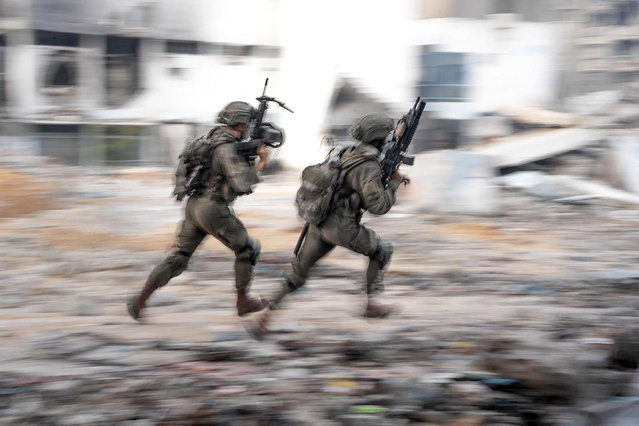
This handout picture released by the Israeli army on May 31, 2024 shows Israeli soldiers during operations in the Gaza Strip amid the ongoing conflict between Israel and the Palestinian militant group Hamas. (Photo by Israeli Army/AFP Photo)
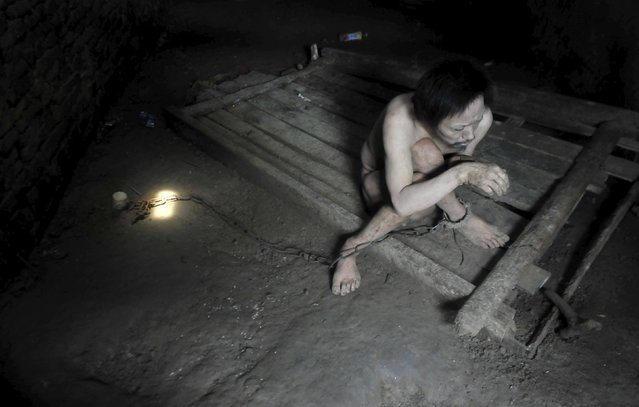
Tong Jieping, 44-year-old mentally disabled patient, is chained by his foot inside his room, in Qunxing village of Wangjiang county, Anhui province, China, July 14, 2015. Tong was diagnosed mentally ill when he was in his 20s. His parents, both in their 70s, could not afford the medical treatments so they had to lock him up in chains to prevent him from running away, according to Tong's family. (Photo by Reuters/Stringer)
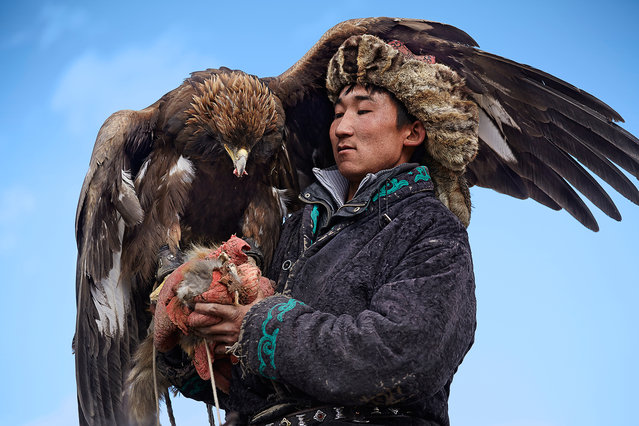
In one of the planet’s most desolate and harsh terrains, the Altai Mountains which run from Siberia in Russia down to Mongolia’s Gobi Desert, hunting with eagles is currently only practiced by a handful of Kyrgyz and Kazakhs. This form of falconry, the practice of hunting with the aid of birds of prey, can be traced back as far as 4,000 years in Central Asia. Here: after a successful hunt, a proud hunter rewards his eagle by feeding it the lungs of the prey, which is considered the most highly prized part of the animal. (Photo by Tariq Zaidi/The Washington Post)