Loading...
Done
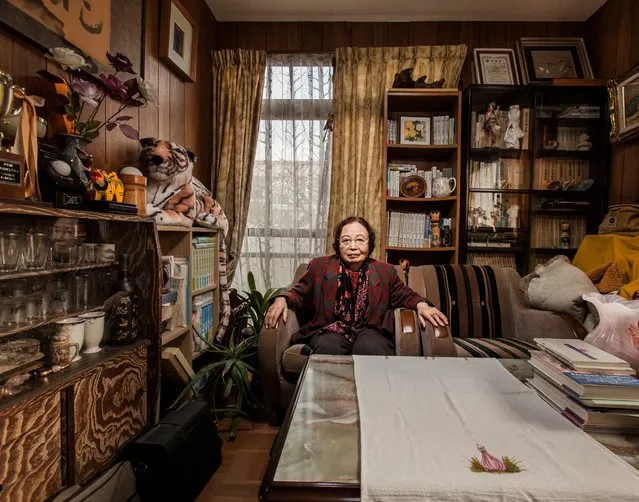
Takeoka Chisaka, Hiroshima, Japan. “One morning in August 1945, I was walking home from the night shift at a factory in Hiroshima. As I reached my door, there was a huge explosion. When I came to, my head was bleeding and I had been blasted 30m away”. (Photo and caption by Sasha Maslov)

Takeoka Chisaka, Hiroshima, Japan. “One morning in August 1945, I was walking home from the night shift at a factory in Hiroshima. As I reached my door, there was a huge explosion. When I came to, my head was bleeding and I had been blasted 30m away. The atomic bomb had detonated. When I found my mother, her eyes were badly burned. A doctor said they had to come out, but he didn’t have the proper tools so used a knife instead. It was hellish. I became a peace-worker after the war. In the 1960s, at a meeting at the UN, I met one of the people who created the atomic bomb. He apologised”. (Photo and caption by Sasha Maslov)
Details
11 May 2015 11:56:00
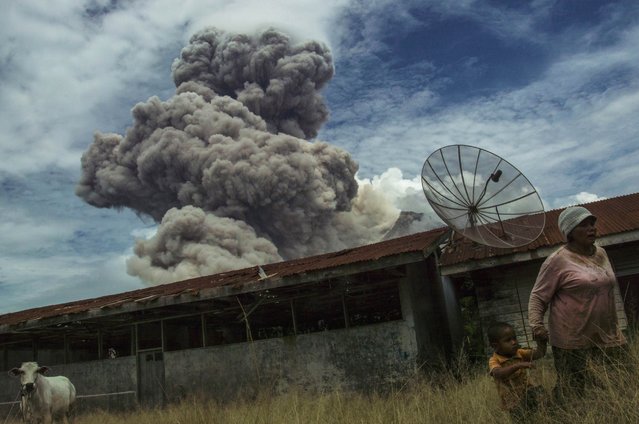
In this photograph taken on April 1, 2015, an Indonesian resident and child walk away from an abandoned school building as Mount Sinabung erupts in Karo district on the Indonesian island of Sumatra. According to authorities about 3,500 people were displaced after the February 2014 eruption of Mount Sinabung volcano and many are still living in evacuation centers as the volcano remains active. (Photo by Sutanta Aditya/AFP Photo)

In this photograph taken on April 1, 2015, an Indonesian resident and child walk away from an abandoned school building as Mount Sinabung erupts in Karo district on the Indonesian island of Sumatra. According to authorities about 3,500 people were displaced after the February 2014 eruption of Mount Sinabung volcano and many are still living in evacuation centers as the volcano remains active. (Photo by Sutanta Aditya/AFP Photo)
Details
04 Apr 2015 10:32:00
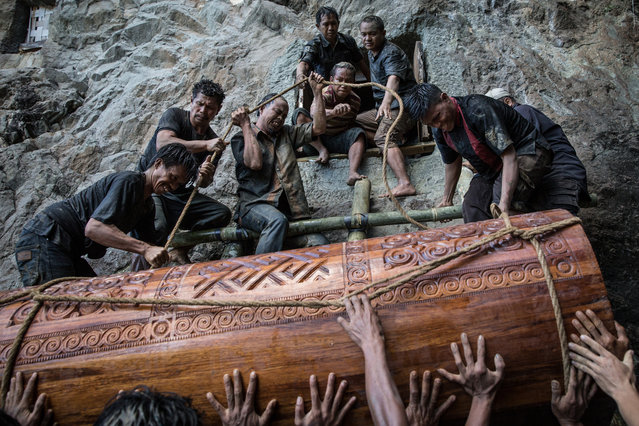
It is said that Torajans are people who “live to die”. For this Indonesian ethnic group, funerals are such extravagant events that they sometimes attract tourists. Families can postpone burials years (and the deceased are considered sick and hosted at home until the funeral) until the family can raise enough money and gather as many relatives as possible. And then it’s a jubilant multiday social event with a parade, dances and animal sacrifices. Agung Parameswara photographed these funerary practices when he traveled to South Sulawesi province, where the Torajans live. But often, their funeral isn’t the last time the dead are seen. In August, crypts are opened, coffins are slid back out and bodies delicately unsheathed. This tender ritual is known as Ma’Nene, which is customarily performed every few years. (Photo by Agung Parameswara/The Washington Post)

It is said that Torajans are people who “live to die”. For this Indonesian ethnic group, funerals are such extravagant events that they sometimes attract tourists. Families can postpone burials years (and the deceased are considered sick and hosted at home until the funeral) until the family can raise enough money and gather as many relatives as possible. And then it’s a jubilant multiday social event with a parade, dances and animal sacrifices. Agung Parameswara photographed these funerary practices when he traveled to South Sulawesi province, where the Torajans live. (Photo by Agung Parameswara/The Washington Post)
Details
06 Oct 2016 09:15:00
Dog puppy “Sandy” protects against the rain with an umbrella fixed on her leash during a stroll in Rust, southern Germany, on May 26, 2013. (Photo by Patrick Seeger/AFP Photo)

Dog puppy “Sandy” protects against the rain with an umbrella fixed on her leash during a stroll in Rust, southern Germany, on May 26, 2013. (Photo by Patrick Seeger/AFP Photo)
Details
02 Jun 2013 07:43:00
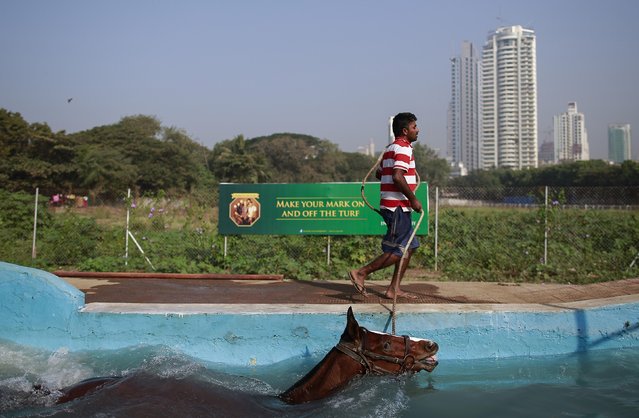
A groom leads his horse in the equine pool after working out on the track, during early morning workouts for the upcoming Derby race in Mumbai January 29, 2015. (Photo by Danish Siddiqui/Reuters)

A groom leads his horse in the equine pool after working out on the track, during early morning workouts for the upcoming Derby race in Mumbai January 29, 2015. (Photo by Danish Siddiqui/Reuters)
Details
31 Jan 2015 13:22:00
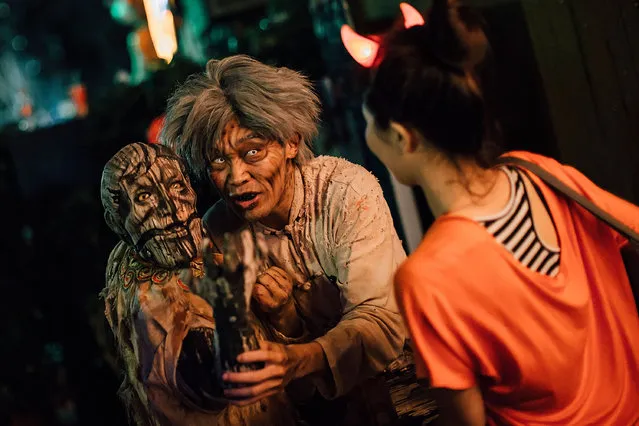
People attend a Halloween event at Ocean Park on October 30, 2015 in Hong Kong. Halloween - a named taken from 'All Hallows' Even' falls on the day before All Saints' Day on November 1 - a holiday when Christians remember their deceased loved ones. (Photo by Anthony Kwan/Getty Images)

People attend a Halloween event at Ocean Park on October 30, 2015 in Hong Kong. Halloween – a named taken from 'All Hallows' Even' falls on the day before All Saints' Day on November 1 – a holiday when Christians remember their deceased loved ones. (Photo by Anthony Kwan/Getty Images)
Details
01 Nov 2015 08:07:00
Actor Bryan Cranston engages Julia-Louis Dreyfus in a prolonged kiss as she takes the stage to accept the award for Outstanding Lead Actress In A Comedy Series for her role in HBO's “Veep” during the 66th Primetime Emmy Awards in Los Angeles, California August 25, 2014. (Photo by Mario Anzuoni/Reuters)

Actor Bryan Cranston engages Julia-Louis Dreyfus in a prolonged kiss as she takes the stage to accept the award for Outstanding Lead Actress In A Comedy Series for her role in HBO's “Veep” during the 66th Primetime Emmy Awards in Los Angeles, California August 25, 2014. (Photo by Mario Anzuoni/Reuters)
Details
30 Aug 2014 10:28:00
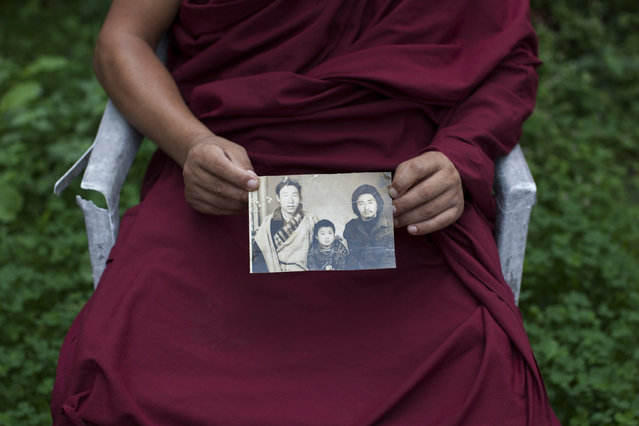
In this Saturday, September 27, 2014 photo, Tibetan monk Dorjee, 38, displays a photograph of his father, left, and himself, center, taken in Tibet, in Dharamsala, India. Dorjee said he held back his tears when he spoke with his parents on the phone after a separation period of 27 years. He exchanged a few words with his father but said his mother fainted on hearing his voice. (Photo by Tsering Topgyal/AP Photo)

“When I was 8 years old, my parents paid a smuggler to take me across the Himalayas, a weekslong walk over the mountains from Tibet to India. It was a trek that tens of thousands of other Tibetans have taken since the Dalai Lama fled a failed 1959 uprising against Chinese rule. My parents must have had their reasons to send me here; they must have had the best of intentions. But 18 years later, I still don't know why they did it. They are not political people. They are small farmers who raise barley and a few yak in a rural area not far from Lhasa, the Tibetan capital. I have not seen them since I left...”. – Tsering Topgyal via The Associated Press. (Photo by Tsering Topgyal/AP Photo)
Details
05 Nov 2014 12:27:00