Loading...
Done
A man watches a classic Turkish movie from his car at a temporary drive-in theatre held in a shopping mall car park amid the ongoing Covid-19 pandemic on May 28, 2020 in Istanbul, Turkey. Istanbul and other major cities across Turkey have begun to ease restrictions and have started preparations for the reopening of some locations, shops and services as infection rates continue to drop. As of May 28, Turkey has reported 4,461 coronavirus-related deaths and 160,979 confirmed cases. (Photo by Chris McGrath/Getty Images)

A man watches a classic Turkish movie from his car at a temporary drive-in theatre held in a shopping mall car park amid the ongoing Covid-19 pandemic on May 28, 2020 in Istanbul, Turkey. Istanbul and other major cities across Turkey have begun to ease restrictions and have started preparations for the reopening of some locations, shops and services as infection rates continue to drop. As of May 28, Turkey has reported 4,461 coronavirus-related deaths and 160,979 confirmed cases. (Photo by Chris McGrath/Getty Images)
Details
08 Jun 2020 00:05:00
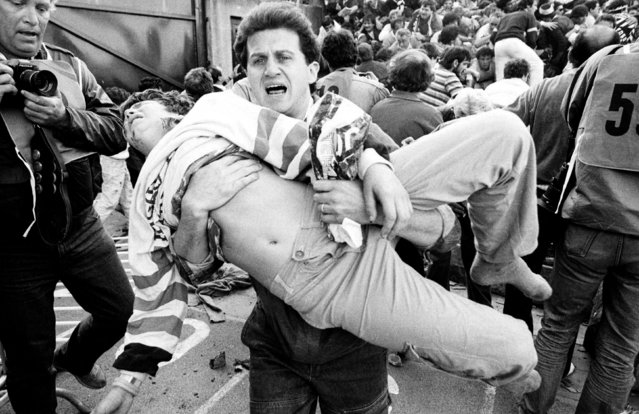
An injured soccer fan is carried to safety by a friend after a wall collapsed during violence between fans before the European Cup final between Juventus and Liverpool at the Heysel stadium in Brussels, May 29, 1985. 39 people died, and a further 600 were injured. (Photo by Nick Didlick/Reuters)

Reuters multi-award winning photographers are celebrated here in a three part retrospective on the 30th anniversary of the service's launch. They have captured dramatic images illustrating the human tragedy of natural disaster and war as well as the fallout of economic events across the continents, creating iconic images, recognised around the world. Here: an injured soccer fan is carried to safety by a friend after a wall collapsed during violence between fans before the European Cup final between Juventus and Liverpool at the Heysel stadium in Brussels, May 29, 1985. 39 people died, and a further 600 were injured. (Photo by Nick Didlick/Reuters)
Details
15 Feb 2015 13:43:00
A devotee dressed as a Roman soldier whips a penitent playing the role of one of two thieves sentenced to be crucified alongside Jesus Christ, during the Via Crucis or Way of the Cross reenactment in the Petare neighborhood of Caracas, Venezuela, Friday, April 15, 2022. Holy Week commemorates the last week of the earthly life of Jesus Christ culminating in his crucifixion on Good Friday and his resurrection on Easter Sunday. (Photo by Matias Delacroix/AP Photo)

A devotee dressed as a Roman soldier whips a penitent playing the role of one of two thieves sentenced to be crucified alongside Jesus Christ, during the Via Crucis or Way of the Cross reenactment in the Petare neighborhood of Caracas, Venezuela, Friday, April 15, 2022. Holy Week commemorates the last week of the earthly life of Jesus Christ culminating in his crucifixion on Good Friday and his resurrection on Easter Sunday. (Photo by Matias Delacroix/AP Photo)
Details
21 Apr 2022 06:20:00
In this aerial view fishing boats are seen on the shore of the Lake Malawi at the Senga village on May 20, 2019 in Senga, Malawi. Hundreds of local traders gather each morning and afternoon at Senga, but fish populations are falling in Lake Malawi, Africa's third largest body of freshwater. (Photo by Gianluigi Guercia/AFP Photo)

In this aerial view fishing boats are seen on the shore of the Lake Malawi at the Senga village on May 20, 2019 in Senga, Malawi. Hundreds of local traders gather each morning and afternoon at Senga, but fish populations are falling in Lake Malawi, Africa's third largest body of freshwater. (Photo by Gianluigi Guercia/AFP Photo)
Details
18 Jul 2019 00:03:00
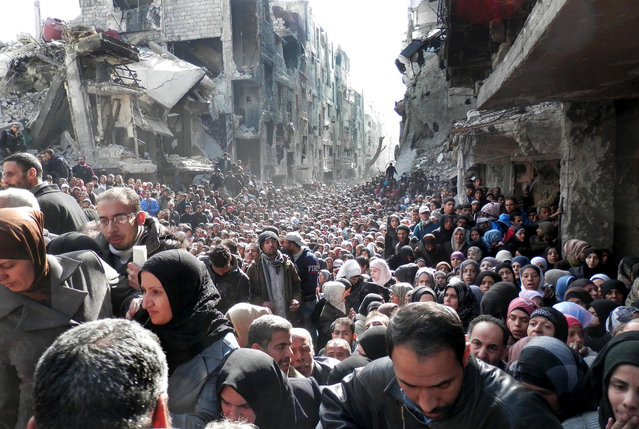
In this January 31, 2014 file photo released by the United Nations Relief and Works Agency for Palestine Refugees in the Near East (UNRWA), shows residents of the besieged Palestinian camp of Yarmouk, queuing to receive food supplies, in Damascus, Syria. That year, the U.N. was able to deliver food to about five percent of people in besieged areas including Yarmouk, while today estimates show the organization is reaching less than one percent. (Photo by UNRWA via AP Photo)

In this January 31, 2014 file photo released by the United Nations Relief and Works Agency for Palestine Refugees in the Near East (UNRWA), shows residents of the besieged Palestinian camp of Yarmouk, queuing to receive food supplies, in Damascus, Syria. That year, the U.N. was able to deliver food to about five percent of people in besieged areas including Yarmouk, while today estimates show the organization is reaching less than one percent. (Photo by UNRWA via AP Photo)
Details
07 Feb 2016 06:36:00
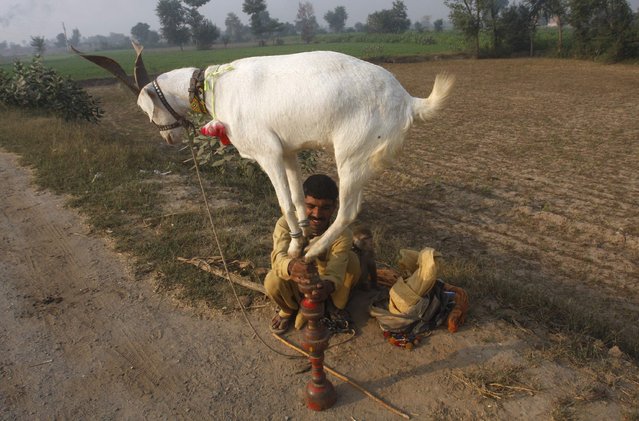
The goats are known to be good climbers, but this one is taking the climbing thing to a whole new level. It clambered on the tip of its owner’s stick, as a part of the roadside performance for a quick coin, on the outskirts of Faisalabad, Pakistan, November 5, 2012. (Photo by Fayyaz Hussain/Reuters)

The goats are known to be good climbers, but this one is taking the climbing thing to a whole new level. It clambered on the tip of its owner’s stick, as a part of the roadside performance for a quick coin, on the outskirts of Faisalabad, Pakistan, November 5, 2012. (Photo by Fayyaz Hussain/Reuters)
Details
10 Nov 2012 11:31:00
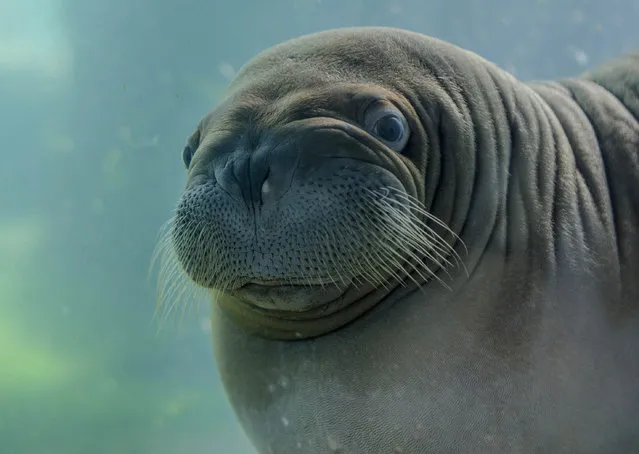
A walruses at Hagenbeck Zoo in Hamburg, Germany on  July, 7, 2015. (Photo by Werner Struss/Startraks action)

A walruses at Hagenbeck Zoo in Hamburg, Germany on July, 7, 2015. (Photo by Werner Struss/Startraks action)
Details
12 Jul 2015 13:06:00
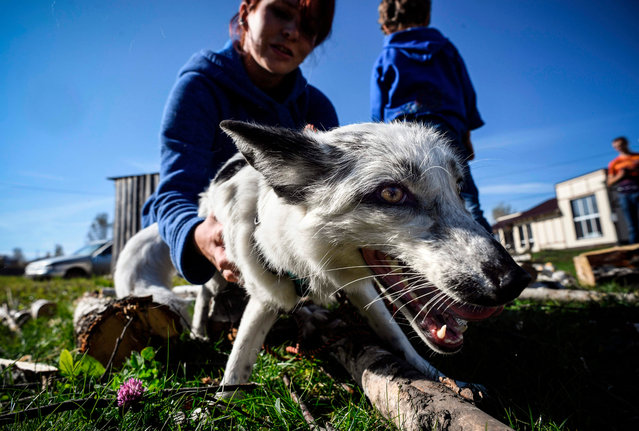
Tatyana Abramova, 33, plays with her home fox Plombir at her countryside house outside Siberian city of Novosibirsk on September 12, 2020. The official start of the Soviet experiment to better understand the domestication of animals by humans began in 1959, and was initiated by geneticists Dmitri Beliaiev and Lioudmila Trout on a farm in Akademgorodok, the scientific center of excellence in Siberia. Their primary objective was to domesticate foxes, to understand how the ancestor of wolves, another canine, evolved into a loyal and loving dog. And understand what this domestication tells us about the genetic evolution of species. (Photo by Alexander Nemenov/AFP Photo)

Tatyana Abramova, 33, plays with her home fox Plombir at her countryside house outside Siberian city of Novosibirsk on September 12, 2020. The official start of the Soviet experiment to better understand the domestication of animals by humans began in 1959, and was initiated by geneticists Dmitri Beliaiev and Lioudmila Trout on a farm in Akademgorodok, the scientific center of excellence in Siberia. Their primary objective was to domesticate foxes, to understand how the ancestor of wolves, another canine, evolved into a loyal and loving dog. And understand what this domestication tells us about the genetic evolution of species. (Photo by Alexander Nemenov/AFP Photo)
Details
25 Oct 2020 00:05:00