Loading...
Done
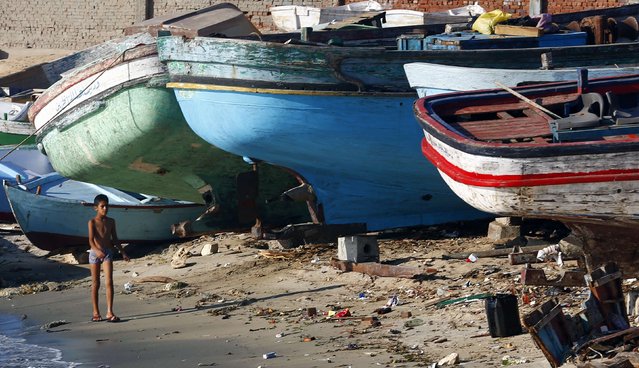
A boy walks past boats docked at the entrance gate of the fishermen's village in the El Max area of the Mediterranean city of Alexandria September 12, 2014.  El Max, where hundreds of boats dart through the canals, has been called the “Venice of Egypt” for its waterways and relaxed atmosphere. Its fishermen, however, worry about how they will make ends meet on meagre earnings they  say are being reduced further by polluted waters that are making fishing more difficult. (Photo by Amr Abdallah Dalsh/Reuters)

A boy walks past boats docked at the entrance gate of the fishermen's village in the El Max area of the Mediterranean city of Alexandria September 12, 2014. El Max, where hundreds of boats dart through the canals, has been called the “Venice of Egypt” for its waterways and relaxed atmosphere. Its fishermen, however, worry about how they will make ends meet on meagre earnings they say are being reduced further by polluted waters that are making fishing more difficult. While the government has tried to fix the state's bloated finances by cutting subsidies and reining in spending, some argue the reforms hurt Egypt's most vulnerable who have long relied on a generous system of fuel and food subsidies to supplement low incomes. (Photo by Amr Abdallah Dalsh/Reuters)
Details
12 Dec 2014 12:42:00
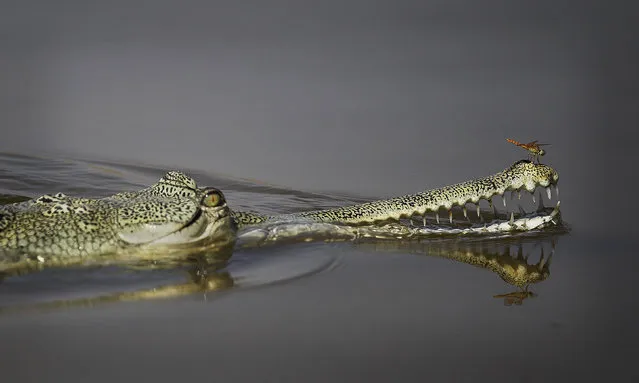
In this photo taken Wednesday, April 30, 2014, a dragonfly sits on the nose of a Gharial, rare crocodile-like creatures, in the River Chambal near Bhopepura village in the northern Indian state of Uttar Pradesh. The narrow 250-mile stretch of the Chambal is a place of crocodiles and jackals, of river dolphins and the occasional wolf. Hundreds of species of birds, storks, geese, babblers, larks, falcons and so many more, nest along the river. (Photo by Altaf Qadri/AP Photo)

In this photo taken Wednesday, April 30, 2014, a dragonfly sits on the nose of a Gharial, rare crocodile-like creatures, in the River Chambal near Bhopepura village in the northern Indian state of Uttar Pradesh. The narrow 250-mile stretch of the Chambal is a place of crocodiles and jackals, of river dolphins and the occasional wolf. Hundreds of species of birds, storks, geese, babblers, larks, falcons and so many more, nest along the river. Endangered birds lay small speckled eggs in tiny pits they dig in the sandbars. Gharials, rare crocodile-like creatures that look like they swaggered out of the Mesozoic Era, are commonplace here and nowhere else. (Photo by Altaf Qadri/AP Photo)
Details
23 Feb 2015 12:55:00
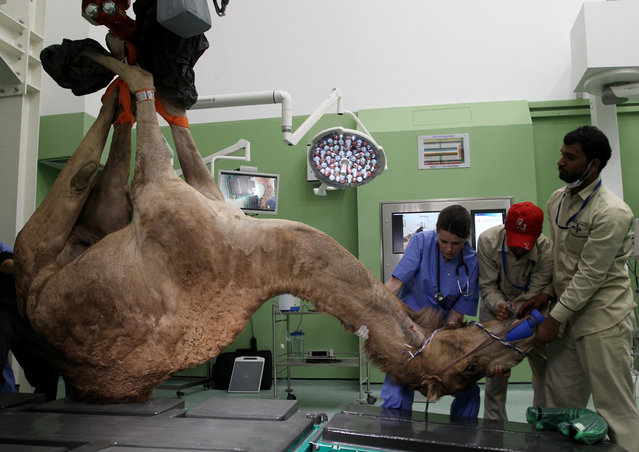
A camel is seen as he is being brought for the foot surgery at the Dubai Camel Hospital in Dubai, UAE, December 11, 2017. (Photo by Satish Kumar/Reuters)

A camel is seen as he is being brought for the foot surgery at the Dubai Camel Hospital in Dubai, UAE, December 11, 2017. (Photo by Satish Kumar/Reuters)
Details
17 Dec 2017 04:37:00
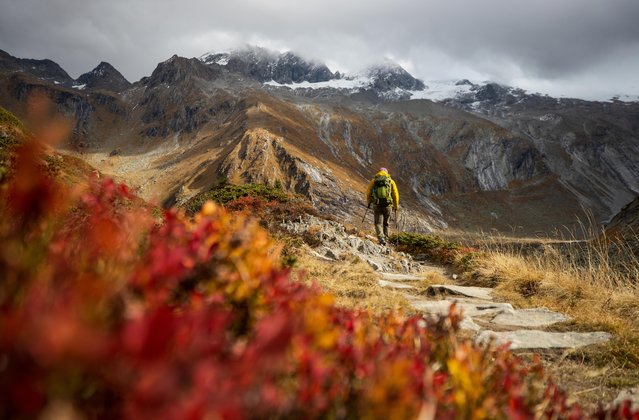
A hiker walks in the Zillertal Alps during an autumn day near the village of Ginzling, Austria, October 15, 2019. (Photo by Lisi Niesner/Reuters)

A hiker walks in the Zillertal Alps during an autumn day near the village of Ginzling, Austria, October 15, 2019. (Photo by Lisi Niesner/Reuters)
Details
11 Dec 2019 00:01:00
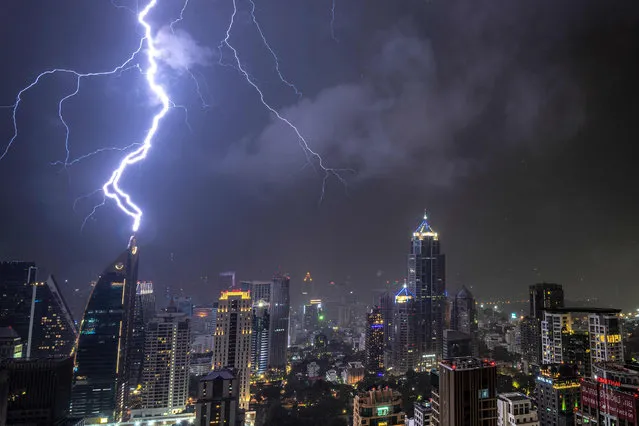
In this picture taken on October 27, 2019 lightening strikes on a building during a thunderstorm in Bangkok. (Photo by Mladen Antonov/AFP Photo)

In this picture taken on October 27, 2019 lightening strikes on a building during a thunderstorm in Bangkok. (Photo by Mladen Antonov/AFP Photo)
Details
31 Jan 2020 00:01:00
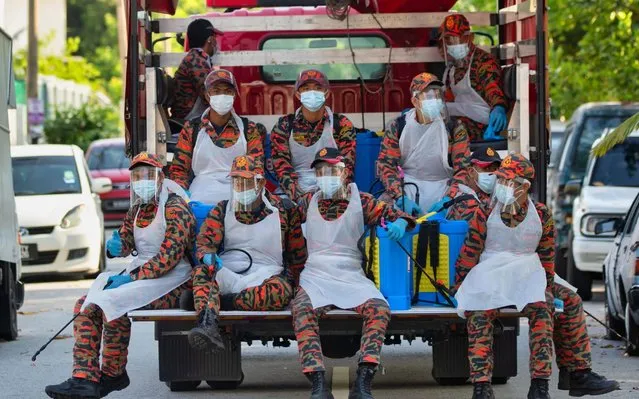
Malaysian firemen make their way to a designated area to spray disinfectant, in an effort to combat coronavirus and COVID-19, at the entrance to a school in Kuala Lumpur, Malaysia, 14 April 2020. According to media reports, Malaysia has confirmed over 4,000 cases of coronavirus and COVID-19. (Photo by Ahmad Yusni/EPA/EFE/Rex Features/Shutterstock)

Malaysian firemen make their way to a designated area to spray disinfectant, in an effort to combat coronavirus and COVID-19, at the entrance to a school in Kuala Lumpur, Malaysia, 14 April 2020. According to media reports, Malaysia has confirmed over 4,000 cases of coronavirus and COVID-19. (Photo by Ahmad Yusni/EPA/EFE/Rex Features/Shutterstock)
Details
16 Apr 2020 00:07:00
Gabriel Berendo, a businessman and car enthusiast, drives a casket converted into a car on Sunday May 31, 2020 in Cebu city, central Philippines as he goes around streets to remind residents to stay at home as lockdown measures to prevent the spread of the new coronavirus eases next week. (Photo by AP Photo/Stringer)

Gabriel Berendo, a businessman and car enthusiast, drives a casket converted into a car on Sunday May 31, 2020 in Cebu city, central Philippines as he goes around streets to remind residents to stay at home as lockdown measures to prevent the spread of the new coronavirus eases next week. (Photo by AP Photo/Stringer)
Details
02 Jun 2020 00:07:00
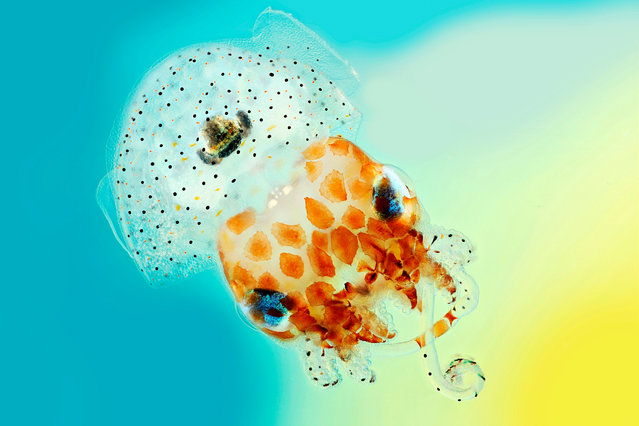
With its huge eyes, comical name and diminutive size, Mark R. Smith’s image of a baby Hawaiian bobtail squid can’t help but raise a smile. A curiously endearing creature, the cephalopod is just 1.5cm across, its mantle cavity bearing more than a passing resemblance to a rather natty shower cap. But it is also a beautiful example of symbiosis – nature’s version of “I’ll scratch your back if you scratch mine” – for on the underside of the squid is a light organ which houses bioluminescent bacteria. The squid offers the bacteria protection and food, while the bacteria emit a glow – a handy trait that the squid uses to offset its silhouette, helping it to evade predators in the depths below. Mark R. Smith’s entry combines several images of a Hawaiian bobtail squid with different focus lengths to create a final picture with greater depth of field than normal. (Photo by Mark R. Smith/Wellcome Images/Macroscopic Solutions)

With its huge eyes, comical name and diminutive size, Mark R. Smith’s image of a baby Hawaiian bobtail squid can’t help but raise a smile. A curiously endearing creature, the cephalopod is just 1.5cm across, its mantle cavity bearing more than a passing resemblance to a rather natty shower cap. But it is also a beautiful example of symbiosis – nature’s version of “I’ll scratch your back if you scratch mine” – for on the underside of the squid is a light organ which houses bioluminescent bacteria. The squid offers the bacteria protection and food, while the bacteria emit a glow – a handy trait that the squid uses to offset its silhouette, helping it to evade predators in the depths below. Mark R. Smith’s entry combines several images of a Hawaiian bobtail squid with different focus lengths to create a final picture with greater depth of field than normal. (Photo by Mark R. Smith/Wellcome Images/Macroscopic Solutions)
Details
08 Mar 2017 00:05:00