Loading...
Done
Rooftops of solar powered houses are pictured in Ota, 80 km northwest of Tokyo in this October 28, 2008 file photo. One by one, Japan is turning off the lights at the giant oil-fired power plants that propelled it to the ranks of the world's top industrialised nations. With nuclear power in the doldrums after the Fukushima disaster, it's solar energy that is becoming the alternative. (Photo by Yuriko Nakao/Reuters)

Rooftops of solar powered houses are pictured in Ota, 80 km northwest of Tokyo in this October 28, 2008 file photo. One by one, Japan is turning off the lights at the giant oil-fired power plants that propelled it to the ranks of the world's top industrialised nations. With nuclear power in the doldrums after the Fukushima disaster, it's solar energy that is becoming the alternative. Solar power is set to become profitable in Japan as early as this quarter, according to the Japan Renewable Energy Foundation (JREF), freeing it from the need for government subsidies and making it the last of the G7 economies where the technology has become economically viable. (Photo by Yuriko Nakao/Reuters)
Details
24 Nov 2015 08:04:00
Wild weather drenches tourists, Sydney, Australia on March 7, 2017. A series of photographs as tourists take a soaking on Sydney's iconic Manly Ferry sailing big swells near Sydney's North Head. The Weather Bureau warns of large and powerful surf conditions expected to be hazardous for coastal activities such as rock fishing, swimming and surfing. (Photo by Hugh Peterswald/Pacific Press via ZUMA Wire/Rex Features/Shutterstock)

Wild weather drenches tourists, Sydney, Australia on March 7, 2017. A series of photographs as tourists take a soaking on Sydney's iconic Manly Ferry sailing big swells near Sydney's North Head. The Weather Bureau warns of large and powerful surf conditions expected to be hazardous for coastal activities such as rock fishing, swimming and surfing. (Photo by Hugh Peterswald/Pacific Press via ZUMA Wire/Rex Features/Shutterstock)
Details
08 Mar 2017 09:47:00
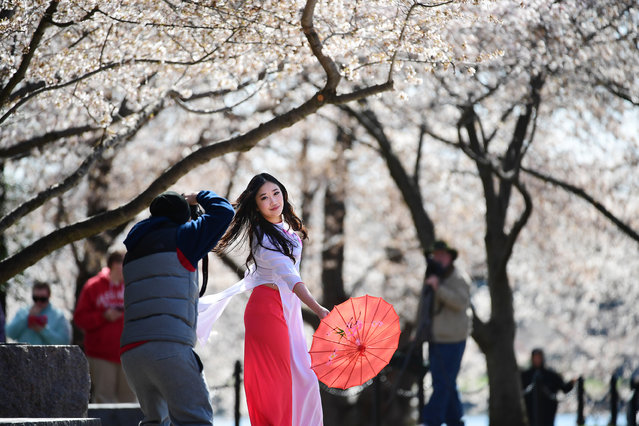
Sarah Bui poses for photographer, Brian Le around blossoming cherry trees, near the Tidal Basin on Thursday March 23, 2017 in Washington, DC. (Photo by Matt McClain/The Washington Post)

Sarah Bui poses for photographer, Brian Le around blossoming cherry trees, near the Tidal Basin on Thursday March 23, 2017 in Washington, DC. (Photo by Matt McClain/The Washington Post)
Details
25 Mar 2017 08:17:00
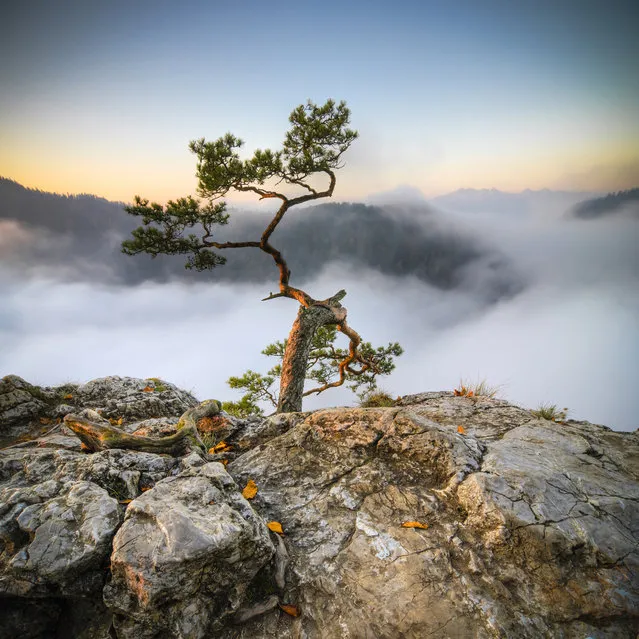
“Sokolica”. Sokolica, Poland. (Photo and caption by Marcin Kęsek/National Geographic Traveler Photo Contest)

“Sokolica”. Sokolica, Poland. (Photo and caption by Marcin Kęsek/National Geographic Traveler Photo Contest)

ATTENTION! All pictures are presented in high resolution. To see Hi-Res images – just TWICE click on any picture. In other words, click small picture – opens the BIG picture. Click BIG picture – opens VERY BIG picture.
Details
25 Jun 2013 09:13:00


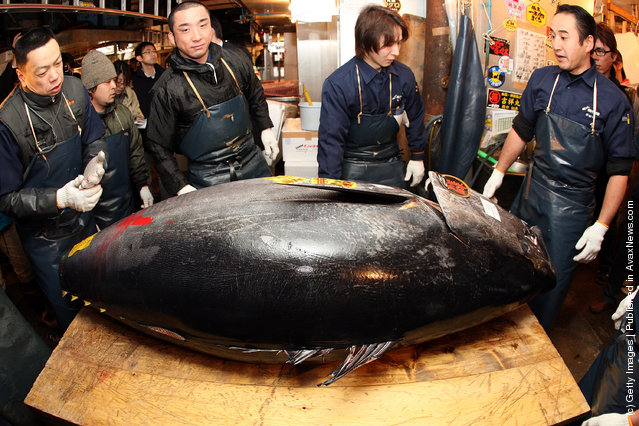
“The Tokyo Metropolitan Central Wholesale Market, commonly known as the Tsukiji Market, is the biggest wholesale fish and seafood market in the world and also one of the largest wholesale food markets of any kind. The market is located in Tsukiji in central Tokyo, and is a major attraction for foreign visitors”. – Wikipedia

Photo: A 232kg blue-fin tuna is displayed during the new year's first auction at the Tsukiji fish market on January 5, 2010 in Tokyo, Japan. (Photo by Koichi Kamoshida/Getty Images)
Details
19 Jul 2011 12:29:00
Dancers from the “Legend Lin Dance Theatre” perform the artistic director and choreographer Li-chen Lin's classic works “Hymne aux Fleurs qui Passent, Anthem to the Fading Flowers” during a rehearsal at the National Theater Concert Hall in Taipei, Taiwan, Tuesday, August 18, 2015. “Hymne aux Fleurs Qui Passent” pays tribute to the cycle of the year and the complementary principles of Yin and Yang whose eternal struggle provides the driving force behind the changing of the seasons. (Photo by Chiang Ying-ying/AP Photo)

Dancers from the “Legend Lin Dance Theatre” perform the artistic director and choreographer Li-chen Lin's classic works “Hymne aux Fleurs qui Passent, Anthem to the Fading Flowers” during a rehearsal at the National Theater Concert Hall in Taipei, Taiwan, Tuesday, August 18, 2015. “Hymne aux Fleurs Qui Passent” pays tribute to the cycle of the year and the complementary principles of Yin and Yang whose eternal struggle provides the driving force behind the changing of the seasons. (Photo by Chiang Ying-ying/AP Photo)
Details
19 Aug 2015 12:59:00
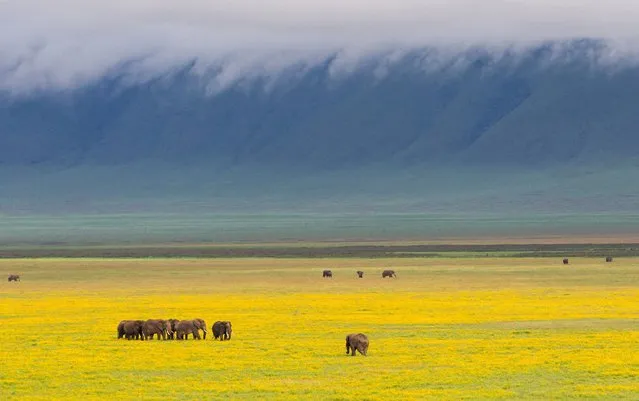
Ngorongoro Crater (Tanzania). At 610m deep and 260 sq km, this is the largest unflooded caldera in the world. A blue-green vision from above it's a haven for engangered wildlife and Maasai livestock. The crater was formed three million years ago when a giant volcano, which could have been as high as Kilimanjaro, exploded and collapsed. The caldera formed the concentric fractures in the crust cracked down to a magma reservoir deep underground. (Photo by John Bryant/Getty Images)

Ngorongoro Crater (Tanzania). At 610m deep and 260 sq km, this is the largest unflooded caldera in the world. A blue-green vision from above it's a haven for engangered wildlife and Maasai livestock. The crater was formed three million years ago when a giant volcano, which could have been as high as Kilimanjaro, exploded and collapsed. The caldera formed the concentric fractures in the crust cracked down to a magma reservoir deep underground. (Photo by John Bryant/Getty Images)
Details
28 Mar 2014 08:08:00
Sarah Gibbons grades a new batch of Maple Syrup at Gibbons Family Farm in Frankville, Ontario, Canada, 31 March 2014. The annual maple syrup season marks the end of the often brutal central Canadian winters and heralds the beginning of spring. The maple tree, whose leaf dominates the Canada's flag, plays both a symbolic and practical role in the identity of Canadians who produce around 95 percent of the world's supply of maple syrup. (Photo by Stephen Morrison/EPA)

Sarah Gibbons grades a new batch of Maple Syrup at Gibbons Family Farm in Frankville, Ontario, Canada, 31 March 2014. The annual maple syrup season marks the end of the often brutal central Canadian winters and heralds the beginning of spring. The maple tree, whose leaf dominates the Canada's flag, plays both a symbolic and practical role in the identity of Canadians who produce around 95 percent of the world's supply of maple syrup. (Photo by Stephen Morrison/EPA)
Details
08 May 2014 07:24:00