Loading...
Done
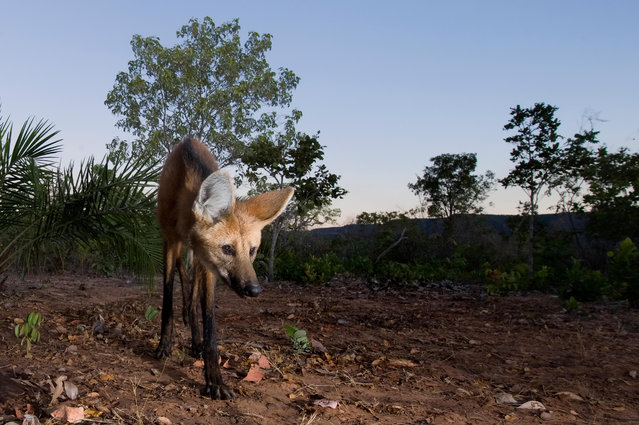
The maned wolf is among the large mammals in the Brazilian Cerrado that are threatened by the increasing conversion of grasslands into farmland for grazing and growing crops. (Photo by Ben Cranke/Nature Picture Library/Alamy Stock Photo)

Global wildlife populations will decline by 67% by 2020 unless urgent action is taken to reduce human impact on species and ecosystems, warns the biennial Living Planet Index report from WWF (World Wide Fund for Nature) and ZSL (Zoological Society of London). From elephants to eels, here are some of the wildlife populations most affected by human activity. Here: The maned wolf is among the large mammals in the Brazilian Cerrado that are threatened by the increasing conversion of grasslands into farmland for grazing and growing crops. (Photo by Ben Cranke/Nature Picture Library/Alamy Stock Photo)
Details
28 Oct 2016 10:47:00
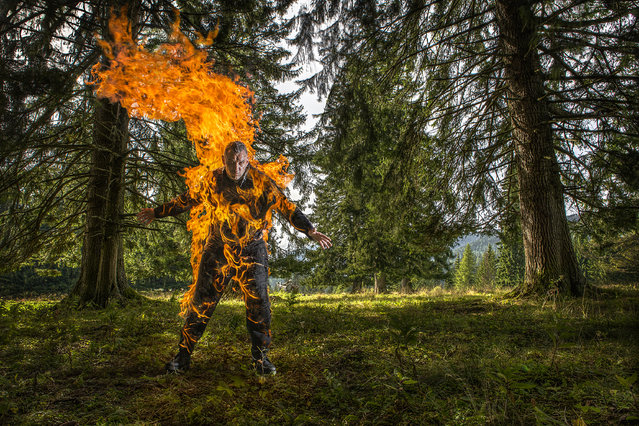
Josef Tödtling – Longest duration full-body burn (without oxygen) Guinness World Records 2016. Location: Styria, Austria. (Photo by Richard Bradbury/Guinness World Records)

Josef Tödtling – Longest duration full-body burn (without oxygen) Guinness World Records 2016. Location: Styria, Austria. (Photo by Richard Bradbury/Guinness World Records)
Details
15 Sep 2016 09:38:00
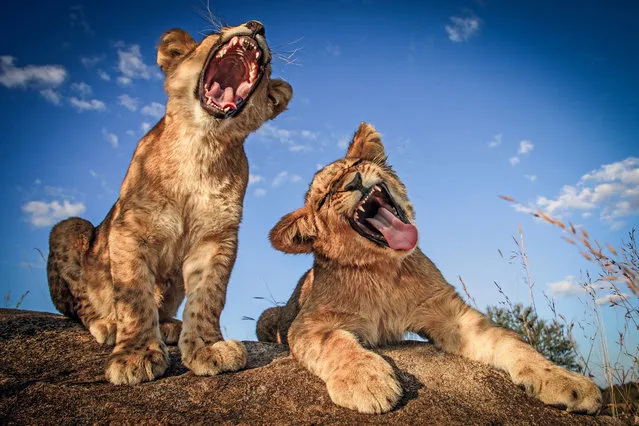
The two lion cubs singing their hearts out  at Antelope park in Zimbabwe. (Photo by David Jenkins/Caters News Agency)

They say a picture is worth a thousand words, and these striking images of 2017 are no exception. The photo highlights include incredible snapshots of the natural world as well as some awesome animal and human encounters. The vibrant gallery also shows thrill-seekers pushing themselves to the limit with breathtaking stunts captured in perfect clarity. The pictures have been taken by a host of photographers from around the world. Here: The two lion cubs singing their hearts out at Antelope park in Zimbabwe. (Photo by David Jenkins/Caters News Agency)
Details
03 Jan 2018 07:27:00
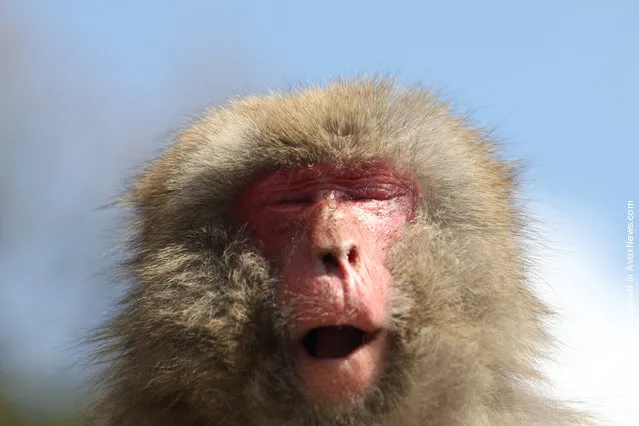
A 19-year-old Japanese macaque monkey named Monday sneezes while suffering an allergy to pollen from the cedar tree, at Awajishima Monkey Center

A 19-year-old Japanese macaque monkey named Monday sneezes while suffering an allergy to pollen from the cedar tree, at Awajishima Monkey Center on March 26, 2012 in Sumoto, Hyogo, Japan. Some twenty monkeys are suffering the effects of hay fever at this time of the year, with the typical symptoms being the same as with humans. (Photo by Buddhika Weerasinghe/Getty Images)
Details
27 Mar 2012 10:01:00
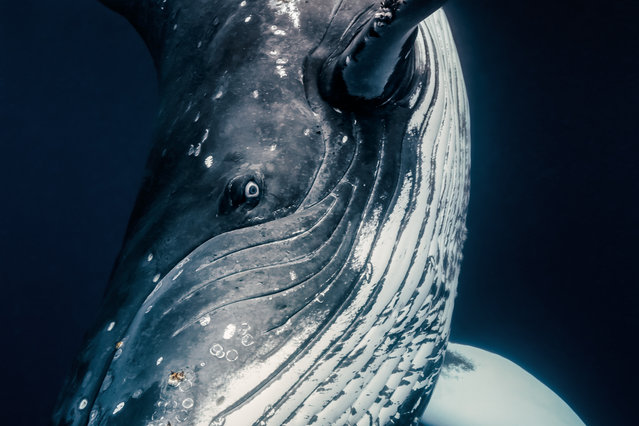
“To look into a whale’s eye is life-changing and humbling. Well, it’s the same with dolphins but they are mostly very fast in the water. A whale’s eye is unexpectedly looking, just like a human eye, kinda checking you out”. (Photo by Rita Kluge/The Guardian)

With the humpback calving season drawing to a close, here’s a look at some of Rita Kluge’s distinctive marine photos from the south Pacific. The Sydney-based photographer fell in love with whales after witnessing southern rights from the New South Wales coastline as they travelled to and from their feeding grounds in the Antarctic. She has since been to Tonga, where humpbacks breed and calf in winter months, to photograph them in the water. (Photo by Rita Kluge/The Guardian)
Details
26 Oct 2016 11:09:00
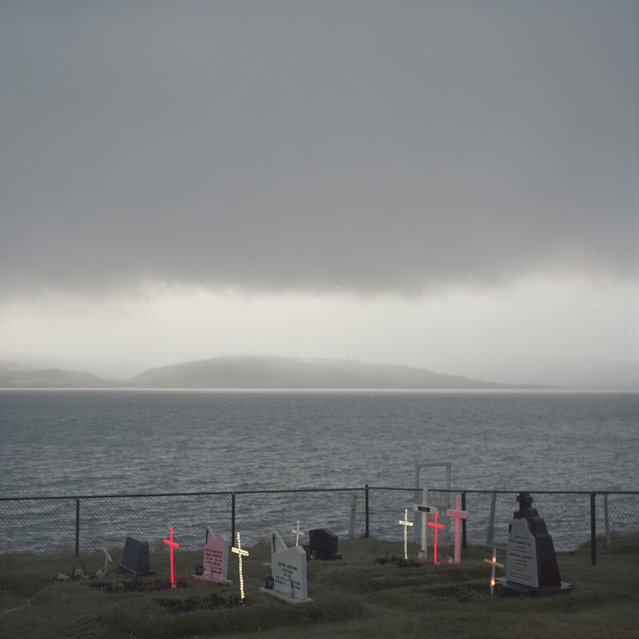
Iceland By Tom Kondrat

As you look at the set of pictures created by Tom Kondrat during his travels in Iceland, the first thing that comes to mind is the word “loneliness.” These pictures lead you to believe that Iceland is a desolate expanse of icy wasteland. You can almost imagine the strong wind howling in your ears, as it chills you straight to the bone. And as you’re walking down so beaten path, you’re all alone, with not a human soul for miles in any direction. This may prove unbearable for some, yet others find comfort in such places. With no one there to bother them and distract them from their thoughts, they can finally be at peace. (Photo by Tom Kondrat)
Details
25 Nov 2014 11:17:00
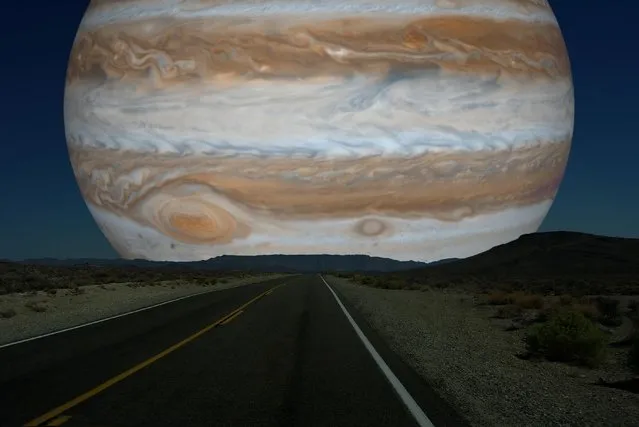
If The Moon Were Replaced With Some Of Our Planets

Our moon is a pretty big object. It's big enough to be a respectable planet in its own right, if it were orbiting the sun instead of the Earth. (Actually, it is orbiting the sun in a nearly perfectly circular orbit, that the Earth only slightly perturbs... but that's a topic for another day.) The Moon is a quarter the diameter of the Earth. Only Pluto has a satellite that is larger, in proportion to the size of the planet it orbits.

Details
29 Mar 2013 10:12:00
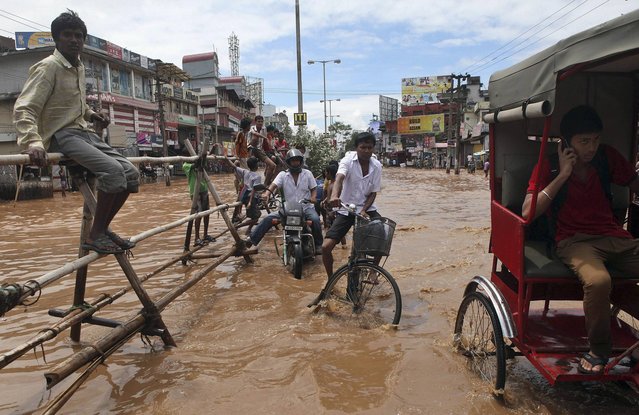
People move through a waterlogged street in Gauhati, India, Tuesday, July 16, 2013.  Heavy showers flooded some areas in the city on Tuesday. (Photo by Anupam Nath/AP Photo)

People move through a waterlogged street in Gauhati, India, Tuesday, July 16, 2013. Heavy showers flooded some areas in the city on Tuesday. (Photo by Anupam Nath/AP Photo)
Details
17 Jul 2013 10:16:00