Loading...
Done
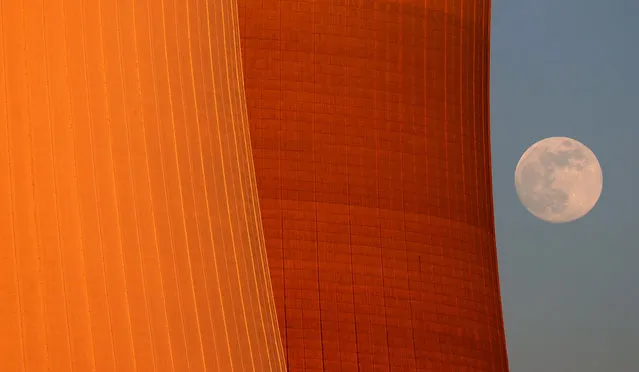
The full moon rises behind the cooling towers of the nuclear power station in Philippsburg, Germany, 06 May 2020. The nuclear power plant in Philippsburg was completely shut down by 31 December 2019. According to the operator EnBW, the two cooling towers are expected to be demolished by blasting on 14-15 May 2020. (Photo by Ronald Wittek/EPA/EFE)

The full moon rises behind the cooling towers of the nuclear power station in Philippsburg, Germany, 06 May 2020. The nuclear power plant in Philippsburg was completely shut down by 31 December 2019. According to the operator EnBW, the two cooling towers are expected to be demolished by blasting on 14-15 May 2020. (Photo by Ronald Wittek/EPA/EFE)
Details
29 Jun 2020 00:03:00
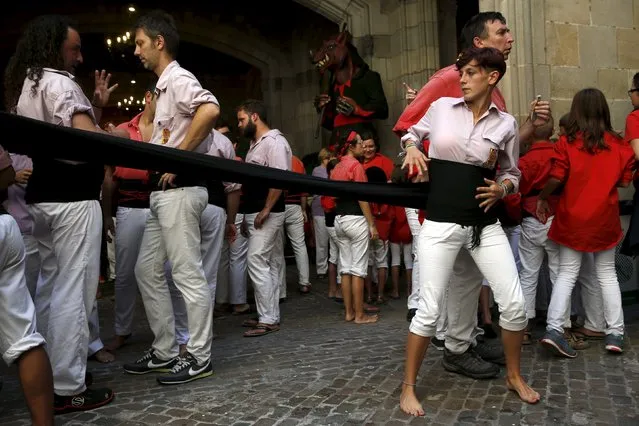
A member of the “Castellers Minyons de Terrassa” adjusts her belt before forming a human tower or ÒcastellÓ during the festival of the patron saint of Barcelona “The Virgin of Mercy” at Sant Jaume square in Barcelona, Spain, September 20, 2015. The formation of human towers is a tradition in Catalonia dating back to the 18th century. (Photo by Susana Vera/Reuters)

A member of the “Castellers Minyons de Terrassa” adjusts her belt before forming a human tower or ÒcastellÓ during the festival of the patron saint of Barcelona “The Virgin of Mercy” at Sant Jaume square in Barcelona, Spain, September 20, 2015. The formation of human towers is a tradition in Catalonia dating back to the 18th century. (Photo by Susana Vera/Reuters)
Details
21 Sep 2015 12:35:00
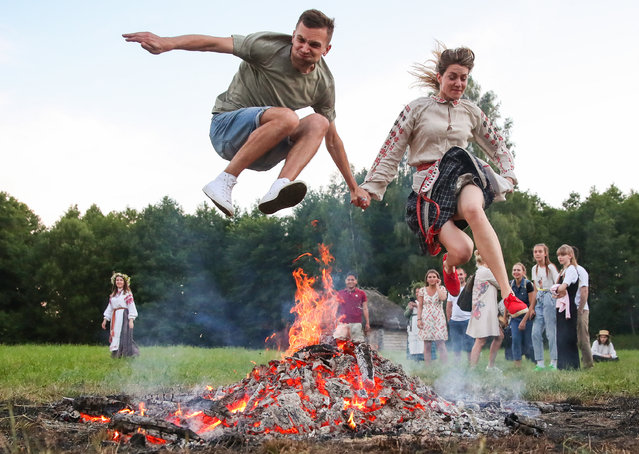
A man and a woman jump over a bonfire during Ivan Kupala Day celebrations held by the Belarusian State Museum of Folk Architecture and Rural Lifestyle in the village of Ozertso near Minsk, Belarus on July 4, 2020. Ivan Kupala Day, also known as Ivana-Kupala or Kupala Night, is a traditional pagan holiday celebrated in eastern Slavic cultures. Various rituals are traditionally performed on Kupala Night, including making flower wreaths, fortune-telling, jumping over bonfires, and burning a wheel-like effigy symbolizing the sun. (Photo by Natalia Fedosenko/TASS)

A man and a woman jump over a bonfire during Ivan Kupala Day celebrations held by the Belarusian State Museum of Folk Architecture and Rural Lifestyle in the village of Ozertso near Minsk, Belarus on July 4, 2020. Ivan Kupala Day, also known as Ivana-Kupala or Kupala Night, is a traditional pagan holiday celebrated in eastern Slavic cultures. Various rituals are traditionally performed on Kupala Night, including making flower wreaths, fortune-telling, jumping over bonfires, and burning a wheel-like effigy symbolizing the sun. (Photo by Natalia Fedosenko/TASS)
Details
23 Jan 2021 09:53:00
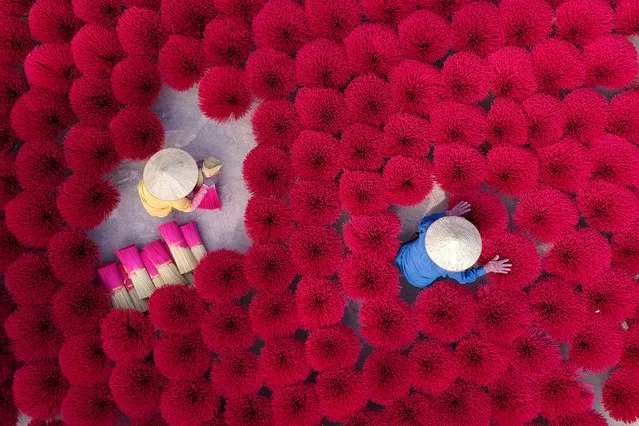
A Vietnamese woman collects dried incense sticks at a courtyard in Quang Phu Cau village on the outskirts of Hanoi on January 9, 2020 ahead of the upcoming Lunar New Year celebrations, referred to in Vietnam as Tet. (Photo by Manan Vatsyayana/AFP Photo)

A Vietnamese woman collects dried incense sticks at a courtyard in Quang Phu Cau village on the outskirts of Hanoi on January 9, 2020 ahead of the upcoming Lunar New Year celebrations, referred to in Vietnam as Tet. (Photo by Manan Vatsyayana/AFP Photo)
Details
12 Feb 2020 00:03:00
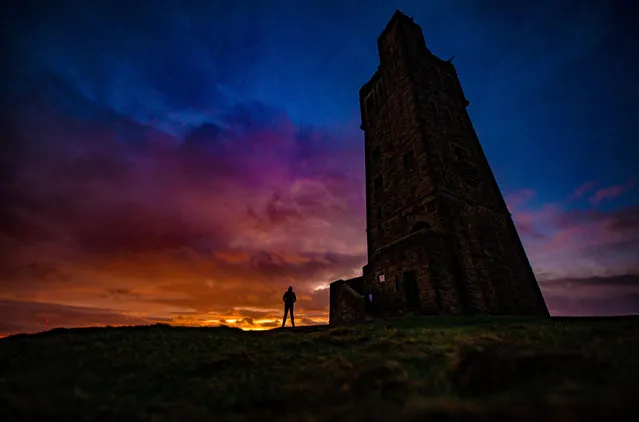
A colourful morning sunrise on Christmas Eve at Victoria Tower on Castle Hill, West Yorkshire, England on December 24, 2017. The history of human activity on the Castle Hill goes back over 4000 years. The site was developed as an iron age hill fort, surrounded by defensive ditches and ramparts. In the Middle Ages there was a castle on the hill, of which the well remains. The present tower was built to commemorate Queen Victoria's Diamond Jubilee of 1897. (Photo by Charlotte Graham/ZUMA Wire/Rex Features/Shutterstock)

A colourful morning sunrise on Christmas Eve at Victoria Tower on Castle Hill, West Yorkshire, England on December 24, 2017. The history of human activity on the Castle Hill goes back over 4000 years. The site was developed as an iron age hill fort, surrounded by defensive ditches and ramparts. In the Middle Ages there was a castle on the hill, of which the well remains. The present tower was built to commemorate Queen Victoria's Diamond Jubilee of 1897. (Photo by Charlotte Graham/ZUMA Wire/Rex Features/Shutterstock)
Details
31 Mar 2018 00:03:00


“The Daleks are a fictional extraterrestrial race of genetically manipulated mutants from the British science fiction television series Doctor Who. Various storylines portray them as having had every emotion removed except hate, leaving them with a desire to purge the Universe of all non-Dalek life. Collectively they are the greatest enemies of the series' protagonist, the Time Lord known as the Doctor. Their famous catchphrase is “Exterminate!”, with each syllable individually synthesised in a frantic electronic voice” – Wikipedia

Photo: Max Hardy, aged 6, stands by a street sign from the Doctor Who Experience as Dalek, from the cult television show Doctor Who watches him on April 16, 2011 in London, England. The Doctor Who Experience Exhibition is currently running at Kensington Olympia Two, celebrating the science fiction programme that was originally screened in 1963. (Photo by Matthew Lloyd/Getty Images for BBC Worldwide)

Details
04 May 2011 10:47:00
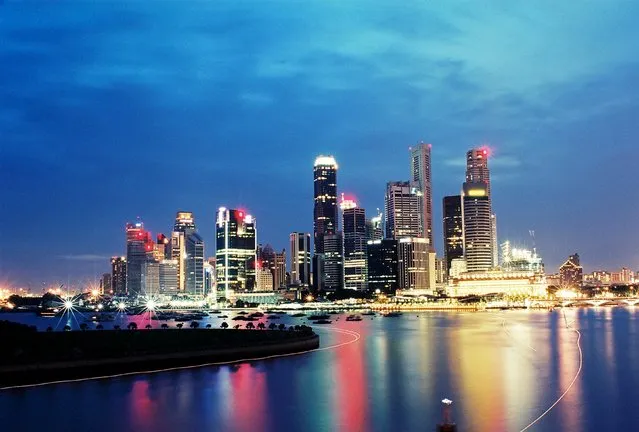
Small transportation boats, known as bumboats, leave trails of light as they travel across Marina Bay past the skyline of Singapore in this photo taken in 2004. Singapore holds a Jubilee weekend from 7 to 10 August to celebrate the 50th anniversary of its independence. (Photo by Edgar Su/Reuters)

Small transportation boats, known as bumboats, leave trails of light as they travel across Marina Bay past the skyline of Singapore in this photo taken in 2004. Singapore holds a Jubilee weekend from 7 to 10 August to celebrate the 50th anniversary of its independence. Fifty years ago, hundreds of small boats lined the Singapore river in the city centre. Today, most small boats are gone, except a handful of neon-lit tourist ferries. Maritime trade is still the backbone of the city-state but after decades of rapid growth Singapore, which at less than half the size of London is among the world’s most densely populated nations, is also a popular tourist destination and a thriving global financial hub. (Photo by Edgar Su/Reuters)
Details
01 Aug 2015 12:26:00
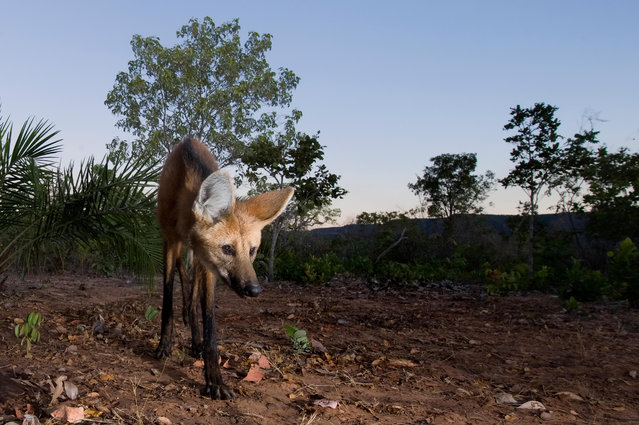
The maned wolf is among the large mammals in the Brazilian Cerrado that are threatened by the increasing conversion of grasslands into farmland for grazing and growing crops. (Photo by Ben Cranke/Nature Picture Library/Alamy Stock Photo)

Global wildlife populations will decline by 67% by 2020 unless urgent action is taken to reduce human impact on species and ecosystems, warns the biennial Living Planet Index report from WWF (World Wide Fund for Nature) and ZSL (Zoological Society of London). From elephants to eels, here are some of the wildlife populations most affected by human activity. Here: The maned wolf is among the large mammals in the Brazilian Cerrado that are threatened by the increasing conversion of grasslands into farmland for grazing and growing crops. (Photo by Ben Cranke/Nature Picture Library/Alamy Stock Photo)
Details
28 Oct 2016 10:47:00