Loading...
Done
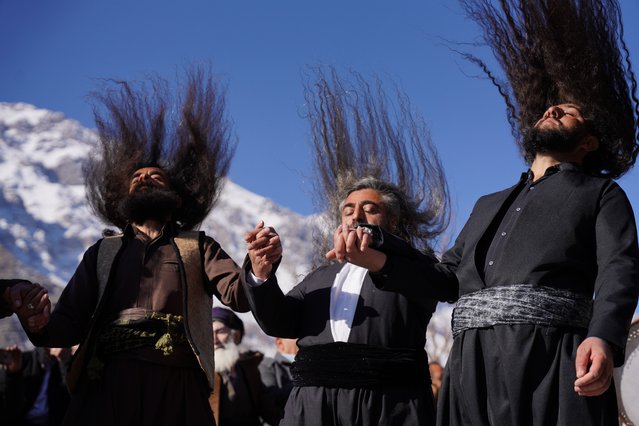
Men, wearing traditional clothes, are seen as “Pir Shaliar” event, which is celebrated twice a year, continues in the Hawraman, Iran on January 30, 2025. At the event, def teams consisting of men and women formed dhikr rings by playing the def on the slopes of the mountain accompanied by hymns. (Photo by Fariq Faraj Mahmood/Anadolu via Getty Images)

Men, wearing traditional clothes, are seen as “Pir Shaliar” event, which is celebrated twice a year, continues in the Hawraman, Iran on January 30, 2025. At the event, def teams consisting of men and women formed dhikr rings by playing the def on the slopes of the mountain accompanied by hymns. (Photo by Fariq Faraj Mahmood/Anadolu via Getty Images)
Details
15 Feb 2025 03:38:00
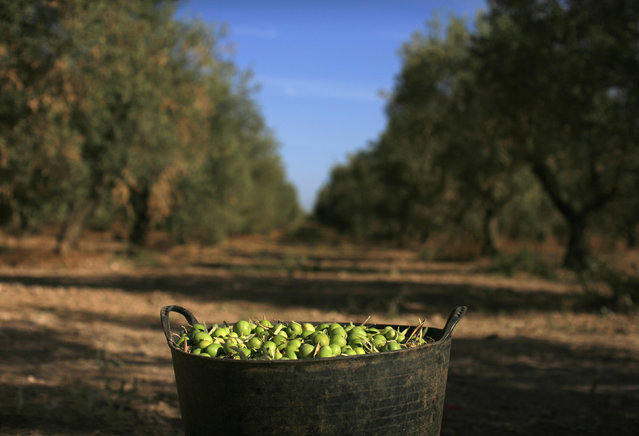
A basket of olives sits in an olive tree field in La Rinconada, near the Andalusian capital of Seville September 24, 2012. (Photo by Marcelo del Pozo/Reuters)

A basket of olives sits in an olive tree field in La Rinconada, near the Andalusian capital of Seville September 24, 2012. (Photo by Marcelo del Pozo/Reuters)
Details
22 Oct 2014 13:48:00
Islamic female students practice the ancient Thai art of Krabi Krabong taught as a sport at the Darunsat Wittaya school

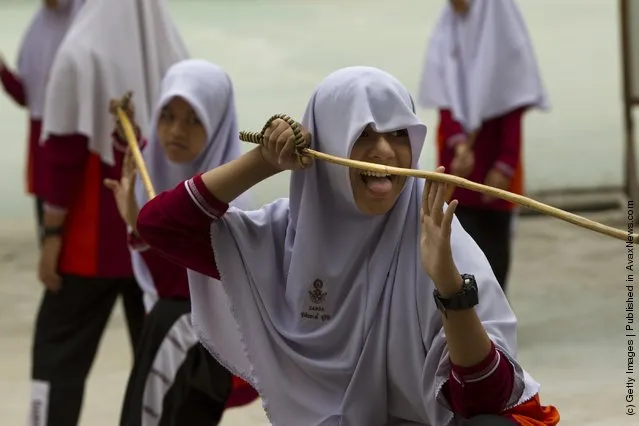
Islamic female students practice the ancient Thai art of “Krabi Krabong” taught as a sport at the Darunsat Wittaya school on August 16, 2011 in Saraburi, Thailand. (Photo by Paula Bronstein/Getty Images)
Details
17 Aug 2011 11:46:00
Women in yukatas, or casual summer kimonos, take their selfie in front of paper lanterns during the annual Mitama Festival at the Yasukuni Shrine, where more than 2.4 million war dead are enshrined, in Tokyo, Japan July 13, 2017. (Photo by Kim Kyung-Hoon/Reuters)

Women in yukatas, or casual summer kimonos, take their selfie in front of paper lanterns during the annual Mitama Festival at the Yasukuni Shrine, where more than 2.4 million war dead are enshrined, in Tokyo, Japan July 13, 2017. (Photo by Kim Kyung-Hoon/Reuters)
Details
18 Aug 2017 08:39:00
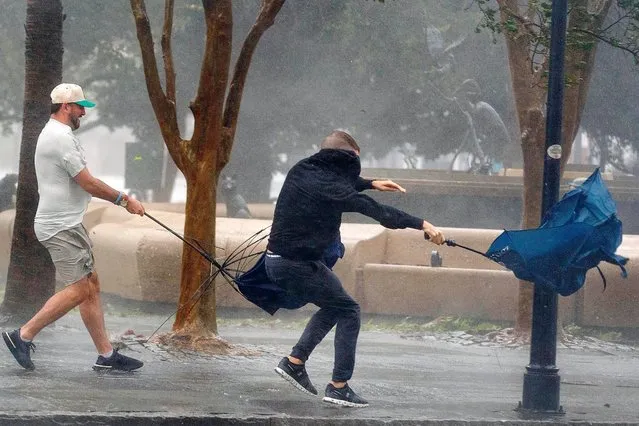
Wind gusts, blowing down King Street, twist umbrellas during Hurricane Ian in Charleston, S.C., on Friday, September 30, 2022. (Photo by Grace Beahm Alford/The Post and Courier via AP Photo)

Wind gusts, blowing down King Street, twist umbrellas during Hurricane Ian in Charleston, S.C., on Friday, September 30, 2022. (Photo by Grace Beahm Alford/The Post and Courier via AP Photo)
Details
15 Oct 2022 03:57:00
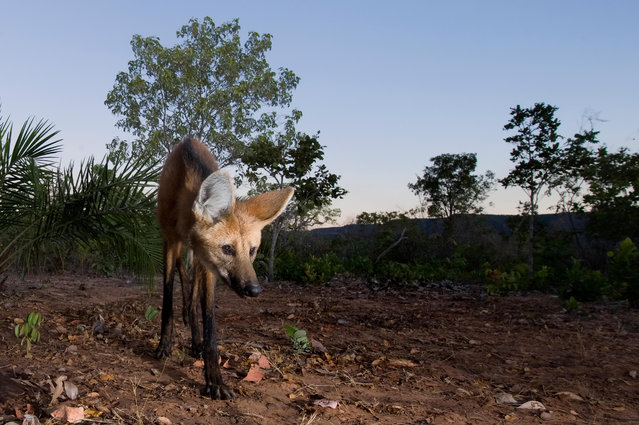
The maned wolf is among the large mammals in the Brazilian Cerrado that are threatened by the increasing conversion of grasslands into farmland for grazing and growing crops. (Photo by Ben Cranke/Nature Picture Library/Alamy Stock Photo)

Global wildlife populations will decline by 67% by 2020 unless urgent action is taken to reduce human impact on species and ecosystems, warns the biennial Living Planet Index report from WWF (World Wide Fund for Nature) and ZSL (Zoological Society of London). From elephants to eels, here are some of the wildlife populations most affected by human activity. Here: The maned wolf is among the large mammals in the Brazilian Cerrado that are threatened by the increasing conversion of grasslands into farmland for grazing and growing crops. (Photo by Ben Cranke/Nature Picture Library/Alamy Stock Photo)
Details
28 Oct 2016 10:47:00
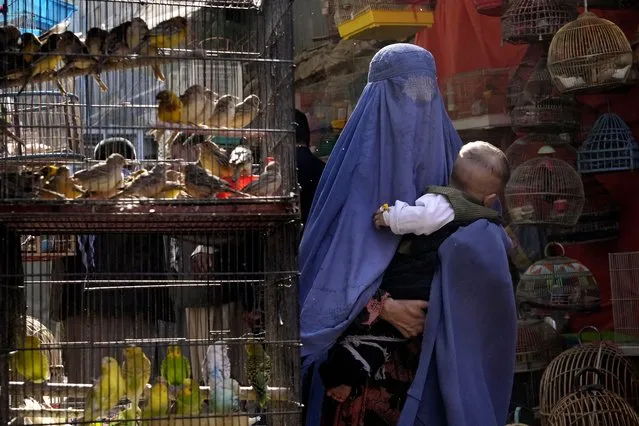
A woman wearing a burka walks through a bird market as she holds her child, in downtown Kabul, Afghanistan, Sunday, May 8, 2022. Afghanistan’s Taliban rulers on Saturday ordered all Afghan women to wear head-to-toe clothing in public – a sharp, hard-line pivot that confirmed the worst fears of rights activists and was bound to further complicate Taliban dealings with an already distrustful international community. (Photo by Ebrahim Noroozi/AP Photo)

A woman wearing a burka walks through a bird market as she holds her child, in downtown Kabul, Afghanistan, Sunday, May 8, 2022. Afghanistan’s Taliban rulers on Saturday ordered all Afghan women to wear head-to-toe clothing in public – a sharp, hard-line pivot that confirmed the worst fears of rights activists and was bound to further complicate Taliban dealings with an already distrustful international community. (Photo by Ebrahim Noroozi/AP Photo)
Details
20 Aug 2022 05:23:00
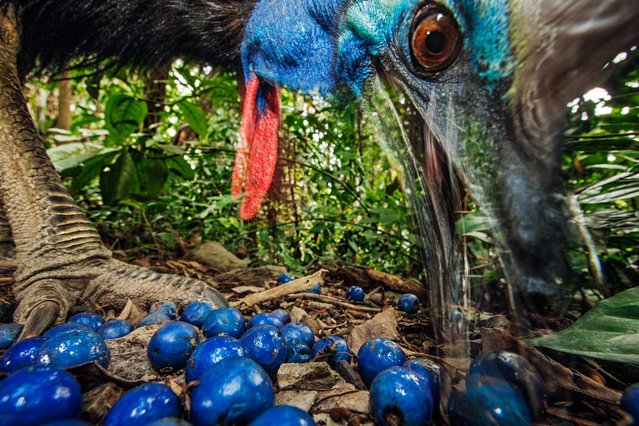
“Cassowaries are large, flightless birds related to emus and (more distantly) to ostriches, rheas, and kiwis”, writes Olivia Judson in the September issue of National Geographic magazine. (Photo by Christian Ziegler/National Geographic)

“Cassowaries are large, flightless birds related to emus and (more distantly) to ostriches, rheas, and kiwis”, writes Olivia Judson in the September issue of National Geographic magazine. How large? People-size: Adult males stand well over five foot five and top 110 pounds. Females are even taller, and can weigh more than 160 pounds. Dangerous when roused, they’re shy and peaceable when left alone. But even birds this big and tough are prey to habitat loss. The dense New Guinea and Australia rain forests where they live have dwindled. Today cassowaries might number 1,500 to 2,000. And because they help shape those same forests – by moving seeds from one place to another – “if they vanish”, Judson writes, “the structure of the forest would gradually change” too. (Photo by Christian Ziegler/National Geographic)

Details
06 Jan 2014 12:21:00