Loading...
Done
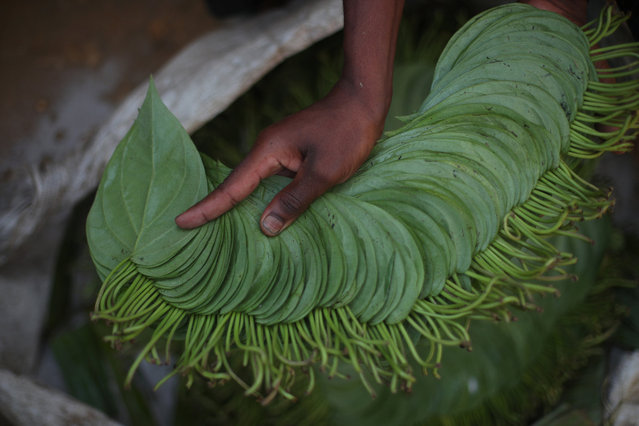
Faruk, 17, a Rohingya refugee trader holds betel leaves which are on sale at a stall in Palong Khali refugee camp near Cox's Bazar, Bangladesh, November 3, 2017. He left his village in Myanmar when the military opened fire towards the Rohingya. “I buy this betel leaf from Palong Khali market, in one bundle there are 160 pieces, I buy it for 80 taka and I sell it for 100 taka. Bangladeshi's and I sell for the same rate in the camp. Outside in the local market it is 80 taka per bundle. My problem is that I don't have money so I can't buy anything to eat, I can't buy fish to eat”, he said. (Photo by Hannah McKay/Reuters)

Faruk, 17, a Rohingya refugee trader holds betel leaves which are on sale at a stall in Palong Khali refugee camp near Cox's Bazar, Bangladesh, November 3, 2017. He left his village in Myanmar when the military opened fire towards the Rohingya. “I buy this betel leaf from Palong Khali market, in one bundle there are 160 pieces, I buy it for 80 taka and I sell it for 100 taka (1 Bangladeshi Taka = 0.012 US Dollar). Bangladeshi's and I sell for the same rate in the camp. Outside in the local market it is 80 taka per bundle. My problem is that I don't have money so I can't buy anything to eat, I can't buy fish to eat”, he said. (Photo by Hannah McKay/Reuters)
Details
27 Nov 2017 08:54:00
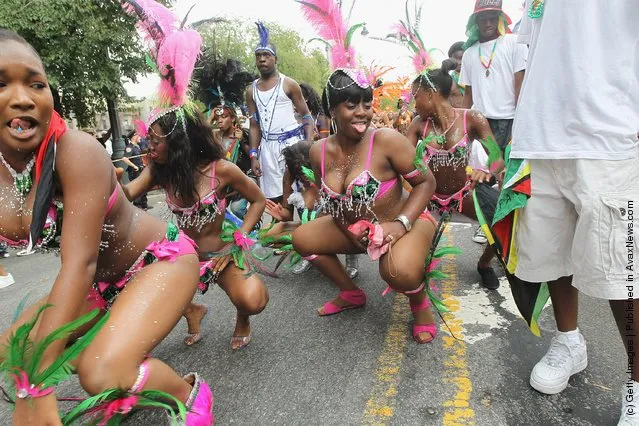
New Yorkers Celebrate At West Indian Day Parade

“The Labor Day Parade (or West Indian Carnival), is an annual celebration held on American Labor Day (the first Monday in September), in Crown Heights, Brooklyn, New York. Ms. Jessie Waddell and some of her West Indian friends started the Carnival in Harlem in the 1920s by staging costume parties in large enclosed places like the Savoy, Renaissance and Audubon Ballrooms due to the cold wintry weather of February. This is the usual time for the pre-Lenten celebrations held in most countries around the world. However, because of the very nature of Carnival, and the need to parade in costume to music, indoor confinement did not work well. The earliest known Carnival street parade was held on September 1, 1947. The Trinidad Carnival Pageant Committee was the founding force behind the parade, which was held in Harlem. The parade route was along Seventh Avenue, starting at 110th St.” – Wikipedia

Photo: A reveler looks on during the West Indian-American Day Parade September 5, 2011 in the Brooklyn borough of New York City. More than 2 million spectators were expected to attend the celebration of Caribbean culture. (Photo by Mario Tama/Getty Images)
Details
06 Sep 2011 11:18:00
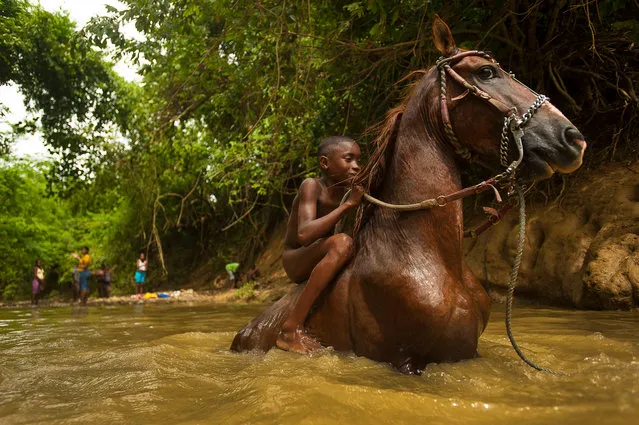
This image of a young bareback rider was taken in the village of Palenque de San Basilio, in Colombia’s Bolívar department. Founded by freed slaves in the 17th century, it became the first free town in the Americas, following a decree by the Spanish crown. Most of today’s inhabitants are direct descendants of those slaves and have preserved many of their customs, including their own language, Palenquero. (Photo by Sebastián Suki Beláustegui/The Guardian)

This image of a young bareback rider was taken in the village of Palenque de San Basilio, in Colombia’s Bolívar department. Founded by freed slaves in the 17th century, it became the first free town in the Americas, following a decree by the Spanish crown. Most of today’s inhabitants are direct descendants of those slaves and have preserved many of their customs, including their own language, Palenquero. (Photo by Sebastián Suki Beláustegui/The Guardian)
Details
07 Sep 2017 09:13:00
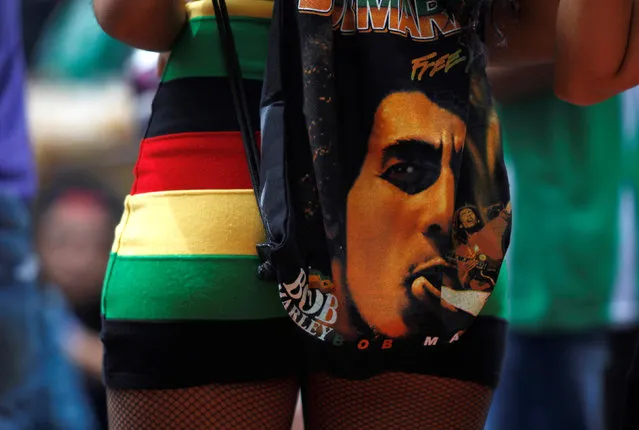
A woman takes part in a global March for marijuana in Medellin, Colombia, May 7, 2016. The Global Marijuana March (GMM) is an annual rally held at different locations across the planet. It refers to cannabis-related events that occur on the first Saturday in May, or thereabouts, and may include marches, meetings, rallies, raves, concerts, festivals and information tables. The Global Marijuana March also goes by the name of the Million Marijuana March (MMM). It began in 1999. (Photo by Fredy Builes/Reuters)

A woman takes part in a global March for marijuana in Medellin, Colombia, May 7, 2016. The Global Marijuana March (GMM) is an annual rally held at different locations across the planet. It refers to cannabis-related events that occur on the first Saturday in May, or thereabouts, and may include marches, meetings, rallies, raves, concerts, festivals and information tables. (Photo by Fredy Builes/Reuters)
Details
09 May 2016 09:05:00
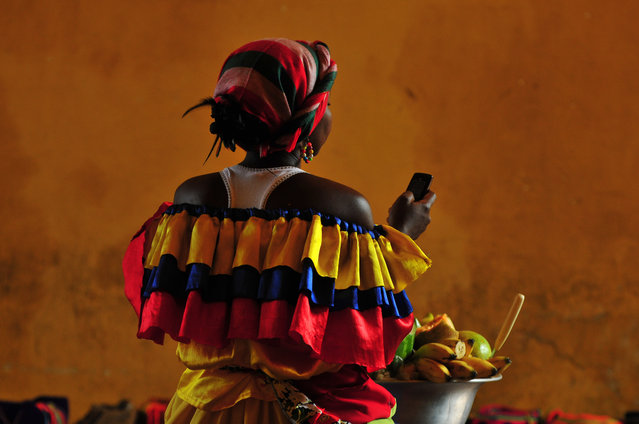
Winner. “I took this picture of a woman in traditional clothing in Cartagena, Colombia”. PAUL GOLDSTEIN, JUDGE: “The blaze of colour from every angle, the boldness of the picture, taken from behind, which gives it so much more allure and frankly a superb get up. Did I mention the colours? Oh, and that looks suspiciously like a Nokia”. (Photo by Stanislav Shmelev/The Guardian)

Winner. “I took this picture of a woman in traditional clothing in Cartagena, Colombia”. PAUL GOLDSTEIN, JUDGE: “The blaze of colour from every angle, the boldness of the picture, taken from behind, which gives it so much more allure and frankly a superb get up. Did I mention the colours? Oh, and that looks suspiciously like a Nokia”. (Photo by Stanislav Shmelev/The Guardian)
Details
30 Mar 2017 11:05:00
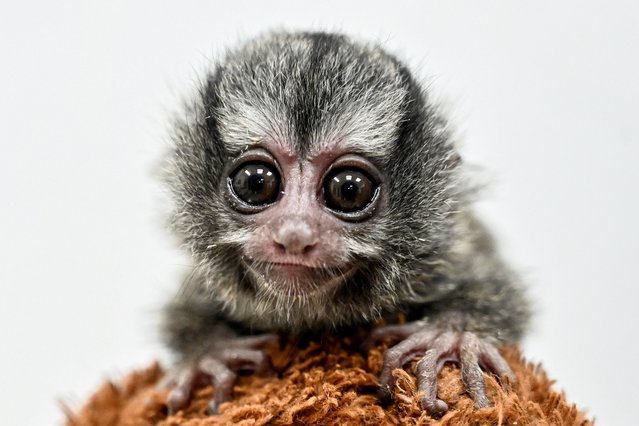
A grey-bellied Night Monkey (Aotus Lemurinus) plays with a teddy bear at the veterinary clinic of the Cali Zoo in Cali, Colombia on January 27, 2020. They monkey is being raised by personnel of the Cali Zoo after a worker found it near the complex. Apparently it fall from a tree with his father who had health problems. (Photo by Luis Robayo/AFP Photo)

A grey-bellied Night Monkey (Aotus Lemurinus) plays with a teddy bear at the veterinary clinic of the Cali Zoo in Cali, Colombia on January 27, 2020. They monkey is being raised by personnel of the Cali Zoo after a worker found it near the complex. Apparently it fall from a tree with his father who had health problems. (Photo by Luis Robayo/AFP Photo)
Details
02 Feb 2020 00:03:00
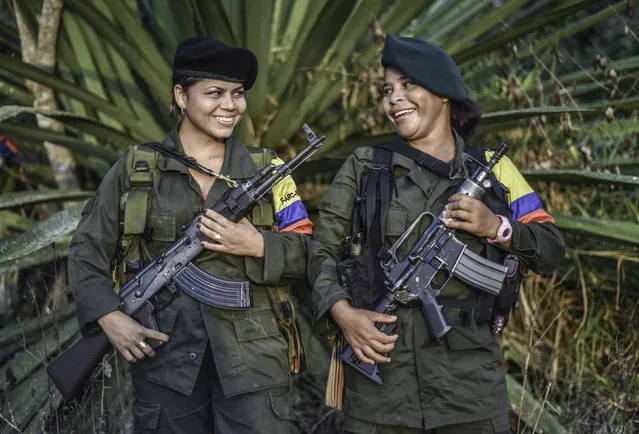
Manuela (L) and Marta, members of the Revolutionary Armed Forces of Colombia (FARC), pose for a picture at a camp in the Colombian mountains on February 18, 2016. Many of these women are willing to be reunited with the children they gave birth and then left under protection of relatives or farmers, whenever the peace agreement will put an end to the country's internal conflict. (Photo by Luis Acosta/AFP Photo)

Manuela (L) and Marta, members of the Revolutionary Armed Forces of Colombia (FARC), pose for a picture at a camp in the Colombian mountains on February 18, 2016. Many of these women are willing to be reunited with the children they gave birth and then left under protection of relatives or farmers, whenever the peace agreement will put an end to the country's internal conflict. (Photo by Luis Acosta/AFP Photo)
Details
27 Feb 2016 10:40:00
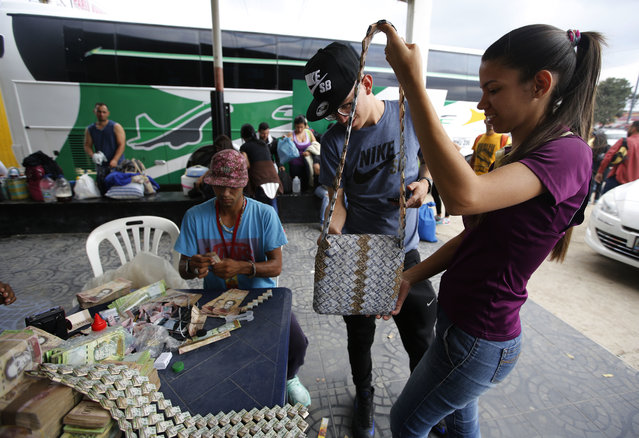
In this February 22, 2018 photo, a couple looks at a bag made out of Venezuelan Bolivars in La Parada, Colombia, on the border with Venezuela. Each collector item produced by Richard Segovia, sitting at the table, fetches between $10 and $15 – a huge markup from the pennies that bolivars retrieve on Venezuela's black market. (Photo by Fernando Vergara/AP Photo)

In this February 22, 2018 photo, a couple looks at a bag made out of Venezuelan Bolivars in La Parada, Colombia, on the border with Venezuela. Each collector item produced by Richard Segovia, sitting at the table, fetches between $10 and $15 – a huge markup from the pennies that bolivars retrieve on Venezuela's black market. (Photo by Fernando Vergara/AP Photo)
Details
27 Feb 2018 00:02:00