Loading...
Done
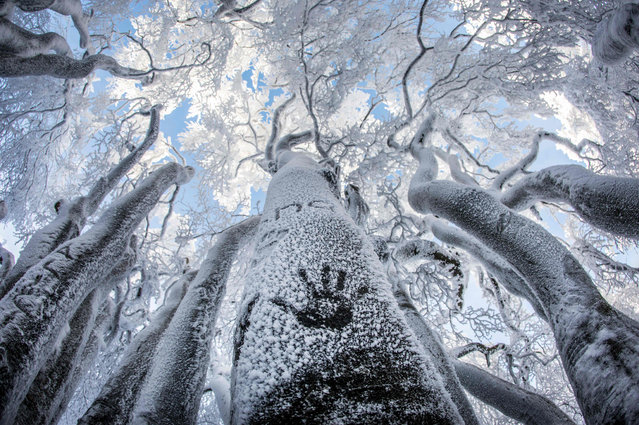
A walker has left a handprint on a snow- covered tree trunk on Grosser Feldberg mountain in the Taunus mountain range, Germany, 16 January 2017. (Photo by Frank Rumpenhorst/DPA)

A walker has left a handprint on a snow- covered tree trunk on Grosser Feldberg mountain in the Taunus mountain range, Germany, 16 January 2017. (Photo by Frank Rumpenhorst/DPA)
Details
18 Jan 2017 07:39:00
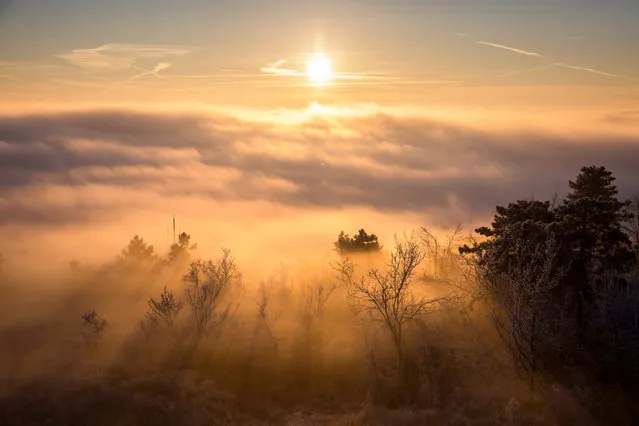
Rays from the rising sun shine through the foliage of trees as fog covers the ground near the Guckler Karoly Observatory in Budapest, Hungary, 02 January 2017. (Photo by Balazs Mohai/EPA)

Rays from the rising sun shine through the foliage of trees as fog covers the ground near the Guckler Karoly Observatory in Budapest, Hungary, 02 January 2017. (Photo by Balazs Mohai/EPA)
Details
04 Jan 2017 08:15:00
A performer competes during the “Battle of the Legends” vogueing competition outside the Met (Metropolitan Museum of Art) on June 11, 2019 in New York City. In celebration of Pride month in New York the Museum hosted a vogueing competition, a highly stylized modern house dance. (Photo by Johannes Eisele/AFP Photo)

A performer competes during the “Battle of the Legends” vogueing competition outside the Met (Metropolitan Museum of Art) on June 11, 2019 in New York City. In celebration of Pride month in New York the Museum hosted a vogueing competition, a highly stylized modern house dance. (Photo by Johannes Eisele/AFP Photo)
Details
14 Jun 2019 00:03:00
In this undated handout photo taken by mrwed54, a woman poses for a photo by a lake in the Siberian city of Novosibirsk, about 2,800 kilometers (1,750 miles) east of Moscow, Russia. Thousands of Novosibirsk residents, from scantily clad women to newlyweds have been instagramming selfies near the lake nicknamed the “Siberian Malvides” after the far-flung tropical islands in the Indian Ocean. This is in fact is a man-made dumb of coal from a nearby power station that provides for most of Novosibirsk’s energy needs. Environmentalists are warning people against coming into contact with the water. (Photo by mrwed54 via AP Photo)

In this undated handout photo taken by mrwed54, a woman poses for a photo by a lake in the Siberian city of Novosibirsk, about 2,800 kilometers (1,750 miles) east of Moscow, Russia. Thousands of Novosibirsk residents, from scantily clad women to newlyweds have been instagramming selfies near the lake nicknamed the “Siberian Malvides” after the far-flung tropical islands in the Indian Ocean. This is in fact is a man-made dumb of coal from a nearby power station that provides for most of Novosibirsk’s energy needs. Environmentalists are warning people against coming into contact with the water. (Photo by mrwed54 via AP Photo)
Details
15 Jul 2019 00:07:00
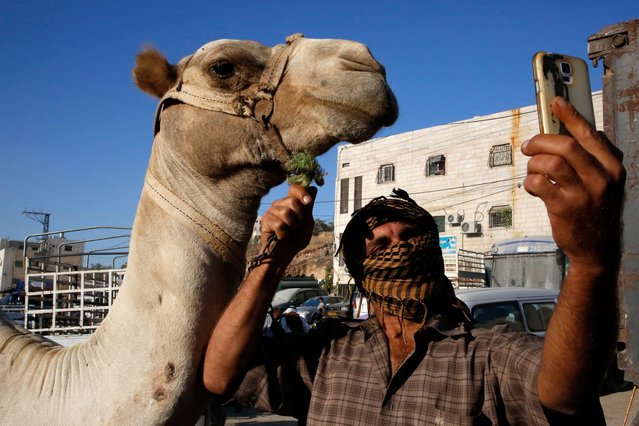
A Palestinian man takes a selfie picture next to a camel at a livestock market in the West Bank city of Hebron on August 9, 2019, as muslims prepare for the Eid al-Adha celebrations. Known as the “big” festival, Eid Al-Adha is celebrated each year by Muslims sacrificing various animals according to religious traditions, including cows, camels, goats and sheep. (Photo by Hazem Bader/AFP Photo)

A Palestinian man takes a selfie picture next to a camel at a livestock market in the West Bank city of Hebron on August 9, 2019, as muslims prepare for the Eid al-Adha celebrations. Known as the “big” festival, Eid Al-Adha is celebrated each year by Muslims sacrificing various animals according to religious traditions, including cows, camels, goats and sheep. (Photo by Hazem Bader/AFP Photo)
Details
11 Aug 2019 00:07:00
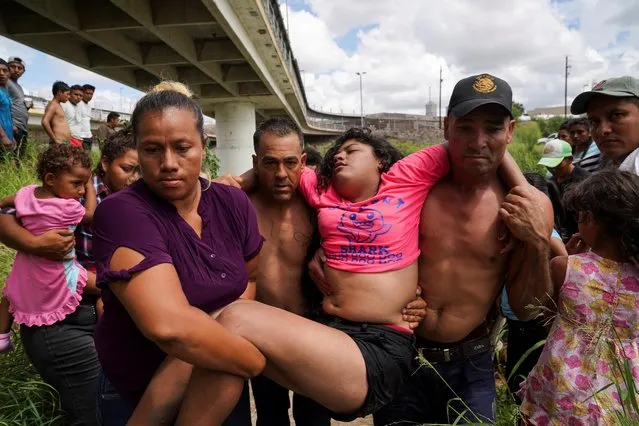
Brenda, a Honduran girl who is seeking asylum in the U.S., is carried from the Rio Grande in distress, where she had been bathing across the river from a Brownsville, Texas U.S. Customs and Border Protection tent facility as immigration hearings were being held by video teleconference, in Matamoros, Mexico September 12, 2019. Most of the people living in an encampment near the Gateway International Bridge have been sent back under the “Remain in Mexico” program, officially named Migrant Protection Protocols (MPP). (Photo by Veronica G. Cardenas/Reuters)

Brenda, a Honduran girl who is seeking asylum in the U.S., is carried from the Rio Grande in distress, where she had been bathing across the river from a Brownsville, Texas U.S. Customs and Border Protection tent facility as immigration hearings were being held by video teleconference, in Matamoros, Mexico September 12, 2019. Most of the people living in an encampment near the Gateway International Bridge have been sent back under the “Remain in Mexico” program, officially named Migrant Protection Protocols (MPP). (Photo by Veronica G. Cardenas/Reuters)
Details
15 Sep 2019 00:07:00
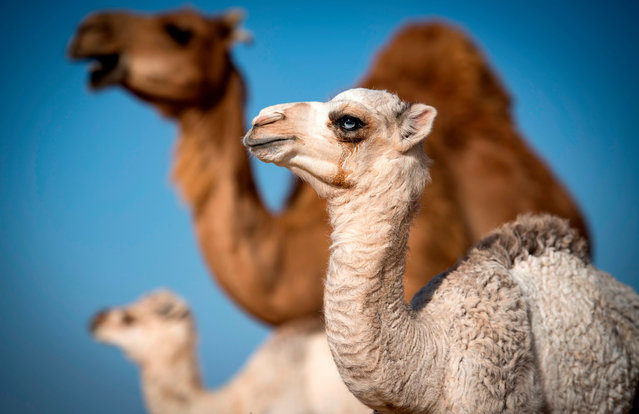
A camel calf is seen among a herd in the desert near Dakhla in Morocco-administered Western Sahara, on October 13, 2019. In the Oued Eddahab desert in Western Sahara, Habiboullah Dlimi raises dairy and racing camels just like his ancestors used to, but with a little help from modern technology. While his animals roam free and are milked traditionally, by hand, at dawn and dusk, they are watched over by hired herders and Dlimi follows GPS coordinates across the desert in a 4X4 vehicle to reach them. (Photo by Fadel Senna/AFP Photo)

A camel calf is seen among a herd in the desert near Dakhla in Morocco-administered Western Sahara, on October 13, 2019. In the Oued Eddahab desert in Western Sahara, Habiboullah Dlimi raises dairy and racing camels just like his ancestors used to, but with a little help from modern technology. While his animals roam free and are milked traditionally, by hand, at dawn and dusk, they are watched over by hired herders and Dlimi follows GPS coordinates across the desert in a 4X4 vehicle to reach them. (Photo by Fadel Senna/AFP Photo)
Details
24 Nov 2019 00:03:00
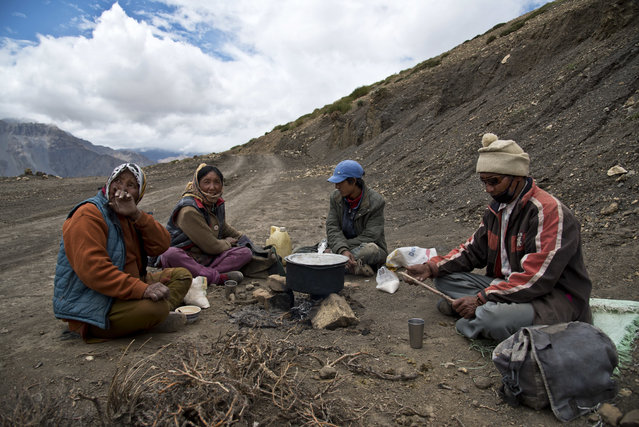
In this August 17, 2016, photo, from left to right, Chhering Chodom, 60, Tashi Yangzom, 50, Lobsang Chhering, 27, and Dorje Tandup, 58, drink milk tea on the side of the road. For centuries, the sleepy valley nestled in the Indian Himalayas remained a hidden Buddhist enclave forbidden to outsiders. Enduring the harsh year-round conditions of the high mountain desert, the people of Spiti Valley lived by a simple communal code – share the Earth's bounty, be hospitable to neighbors, and eschew greed and temptation at all turns. That's all starting to change, for better or worse. Since India began allowing its own citizens as well as outsiders to visit the valley in the early 1990s, tourism and trade have boomed. And the marks of modernization, such as solar panels, asphalt roads and concrete buildings, have begun to appear around some of the villages that dot the remote landscape at altitudes above 4,000 meters (13,000 feet). (Photo by Thomas Cytrynowicz/AP Photo)

In this August 17, 2016, photo, from left to right, Chhering Chodom, 60, Tashi Yangzom, 50, Lobsang Chhering, 27, and Dorje Tandup, 58, drink milk tea on the side of the road. For centuries, the sleepy valley nestled in the Indian Himalayas remained a hidden Buddhist enclave forbidden to outsiders. Enduring the harsh year-round conditions of the high mountain desert, the people of Spiti Valley lived by a simple communal code – share the Earth's bounty, be hospitable to neighbors, and eschew greed and temptation at all turns. That's all starting to change, for better or worse. (Photo by Thomas Cytrynowicz/AP Photo)
Details
15 Sep 2016 09:22:00