Loading...
Done
A Thai traffic security guard wears a Santa Claus costume as he directs the traffic on a street during Christmas celebrations outside a shopping mall in Bangkok, Thailand, 22 December 2011. The campaign of a shopping mall is held to celebrate the upcoming Christmas season and to attract shoppers. (Photo by Narong Sangnak/EPA)

A Thai traffic security guard wears a Santa Claus costume as he directs the traffic on a street during Christmas celebrations outside a shopping mall in Bangkok, Thailand, 22 December 2015. The campaign of a shopping mall is held to celebrate the upcoming Christmas season and to attract shoppers. (Photo by Narong Sangnak/EPA)
Details
25 Dec 2015 08:01:00
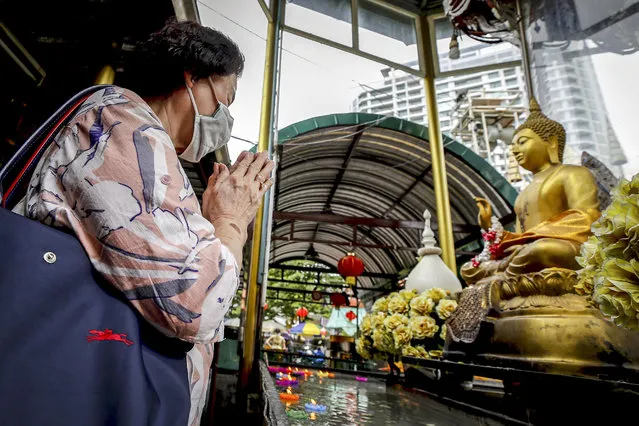
Devotees wearing protective masks pray at a temple in Bangkok, Thailand, 19 June 2020. Thailand opened most businesses to enter the fourth phase of easing coronavirus restrictions after the number of coronavirus cases remains low. (Photo by Diego Azubel/EPA/EFE/Rex Features/Shutterstock)

Devotees wearing protective masks pray at a temple in Bangkok, Thailand, 19 June 2020. Thailand opened most businesses to enter the fourth phase of easing coronavirus restrictions after the number of coronavirus cases remains low. (Photo by Diego Azubel/EPA/EFE/Rex Features/Shutterstock)
Details
28 Jun 2020 00:05:00
Kritchaya “Lolita” Boonhor (R) curls her eyelashes in ladyboy Candy's (L) room while she chats her about her boyfriend, in Bangkok, Thailand, 27 November 2017. (Photo by Lola Levan/EPA/EFE)

Kritchaya “Lolita” Boonhor (R) curls her eyelashes in ladyboy Candy's (L) room while she chats her about her boyfriend, in Bangkok, Thailand, 27 November 2017. Most things in life are a question of negotiation. Lolita is a woman, that was not to be negotiated. What needed to be negotiated was how she was perceived by those around her. And that negotiation was one that took time and effort. (Photo by Lola Levan/EPA/EFE)
Details
19 Jan 2018 07:39:00
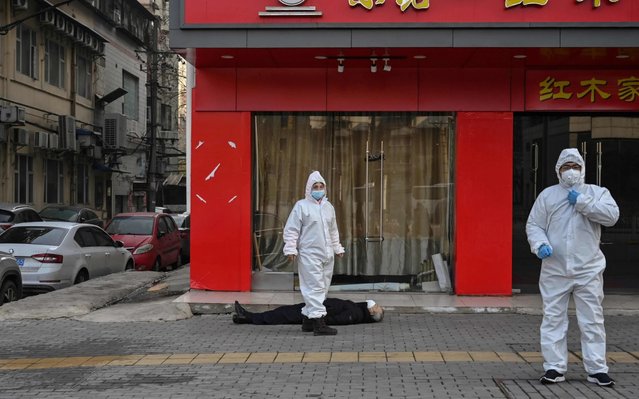
This photo taken on January 30, 2020 shows officials in protective suits checking on an elderly man wearing a facemask who collapsed and died on a street near a hospital in Wuhan. AFP journalists saw the body on January 30, not long before an emergency vehicle arrived carrying police and medical staff in full-body protective suits. The World Health Organization declared a global emergency over the new coronavirus, as China reported on January 31 the death toll had climbed to 213 with nearly 10,000 infections. (Photo by Hector Retamal/AFP Photo)

This photo taken on January 30, 2020 shows officials in protective suits checking on an elderly man wearing a facemask who collapsed and died on a street near a hospital in Wuhan. AFP journalists saw the body on January 30, not long before an emergency vehicle arrived carrying police and medical staff in full-body protective suits. The World Health Organization declared a global emergency over the new coronavirus, as China reported on January 31 the death toll had climbed to 213 with nearly 10,000 infections. (Photo by Hector Retamal/AFP Photo)
Details
02 Feb 2020 00:07:00
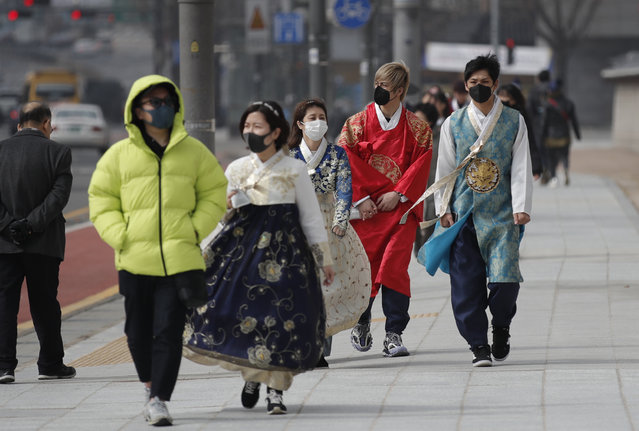
Visitors wearing face masks walk near the Gwanghwamun, the main gate of the 14th-century Gyeongbok Palace, and one of South Korea's well-known landmarks, in Seoul, South Korea, Saturday, February 22, 2020. South Korea on Saturday reported a six-fold jump in viral infections in four days to 346, most of them linked to a church and a hospital in and around the fourth-largest city where schools were closed and worshipers and others told to avoid mass gatherings. (Photo by Lee Jin-man/AP Photo)

Visitors wearing face masks walk near the Gwanghwamun, the main gate of the 14th-century Gyeongbok Palace, and one of South Korea's well-known landmarks, in Seoul, South Korea, Saturday, February 22, 2020. South Korea on Saturday reported a six-fold jump in viral infections in four days to 346, most of them linked to a church and a hospital in and around the fourth-largest city where schools were closed and worshipers and others told to avoid mass gatherings. (Photo by Lee Jin-man/AP Photo)
Details
13 Mar 2020 00:05:00
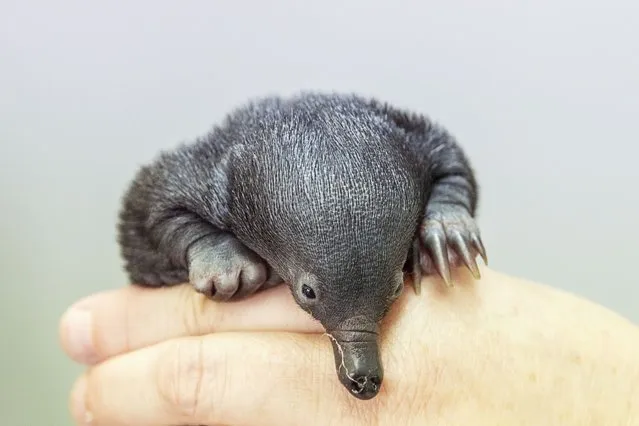
“Smudge” an orphaned echidna puggle is held by Veterinary nurse Sarah Male ahead of its feeding on November 07, 2022 in Sydney, Australia. Echidnas, sometimes known as spiny anteaters, are native to Australia. A baby echidna was found orphaned by the side of the road and is being cared for at Sydney's Taronga Zoo hospital. The care is intensive with several feedings per day, and the echidna is housed in temperature-controlled environment to aid its recovery and growth. (Photo by Jenny Evans/Getty Images)

“Smudge” an orphaned echidna puggle is held by Veterinary nurse Sarah Male ahead of its feeding on November 07, 2022 in Sydney, Australia. Echidnas, sometimes known as spiny anteaters, are native to Australia. A baby echidna was found orphaned by the side of the road and is being cared for at Sydney's Taronga Zoo hospital. The care is intensive with several feedings per day, and the echidna is housed in temperature-controlled environment to aid its recovery and growth. (Photo by Jenny Evans/Getty Images)
Details
04 Jan 2024 19:37:00
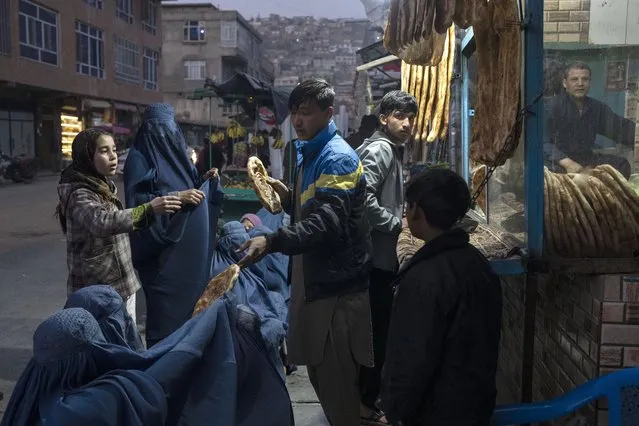
A man distributes bread to Burka-wearing Afghan women outside a bakery in Kabul, Afghanistan, Thursday, December 2, 2021. According to U.N. figures from early November, almost 24 million people in Afghanistan, around 60% percent of the population, suffer from acute hunger, including 8.7 million living in near famine. Increasing numbers of malnourished children have filled hospital wards. (Photo by Petros Giannakouris/AP Photo)

A man distributes bread to Burka-wearing Afghan women outside a bakery in Kabul, Afghanistan, Thursday, December 2, 2021. According to U.N. figures from early November, almost 24 million people in Afghanistan, around 60% percent of the population, suffer from acute hunger, including 8.7 million living in near famine. Increasing numbers of malnourished children have filled hospital wards. (Photo by Petros Giannakouris/AP Photo)
Details
17 Dec 2021 10:10:00
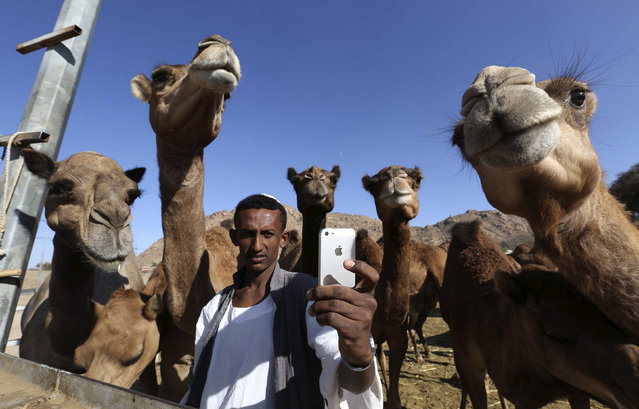
A man takes a “selfie” with camels at a farm in Taif November 1, 2014. Saudi Arabia said late on Wednesday it had detected six new cases of the deadly Middle East Respiratory Syndrome (MERS) in 24 hours, the biggest daily jump for months with officials blaming lax hospital procedures. (Photo by Mohamed Alhwaity/Reuters)

A man takes a “selfie” with camels at a farm in Taif November 1, 2014. Saudi Arabia said late on Wednesday it had detected six new cases of the deadly Middle East Respiratory Syndrome (MERS) in 24 hours, the biggest daily jump for months with officials blaming lax hospital procedures. Scientists are not sure of the origin of the virus, but several studies have linked it to camels and some experts think it is being passed to humans through close physical contact or through the consumption of camel meat or camel milk. (Photo by Mohamed Alhwaity/Reuters)
Details
08 Nov 2014 12:33:00