Loading...
Done
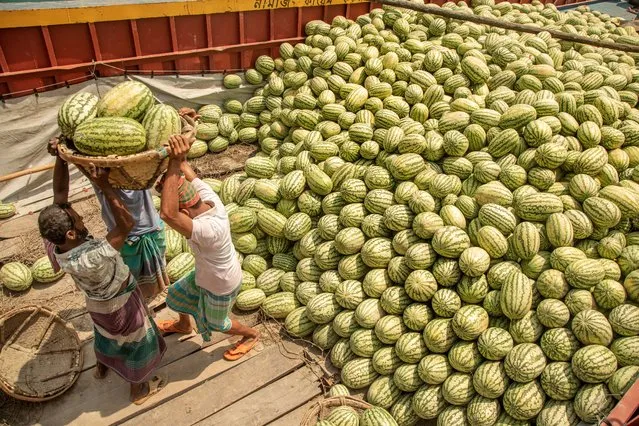
Bangladeshi laborers unload watermelons from a boat at the Buriganga River in Dhaka, Bangladesh, 03 April 2024. Watermelon is in harvesting season and is filling the city markets as it arrives from the southern part of Bangladesh. According to the Department of Agriculture Extension (DAE), Barishal has set an ambitious goal to expand watermelon cultivation to 54,002 hectares across six high-yielding districts in the division, which is 14 percent higher than last year. (Photo by Monirul Alam/EPA/EFE)

Bangladeshi laborers unload watermelons from a boat at the Buriganga River in Dhaka, Bangladesh, 03 April 2024. Watermelon is in harvesting season and is filling the city markets as it arrives from the southern part of Bangladesh. According to the Department of Agriculture Extension (DAE), Barishal has set an ambitious goal to expand watermelon cultivation to 54,002 hectares across six high-yielding districts in the division, which is 14 percent higher than last year. (Photo by Monirul Alam/EPA/EFE)
Details
19 Apr 2024 00:22:00
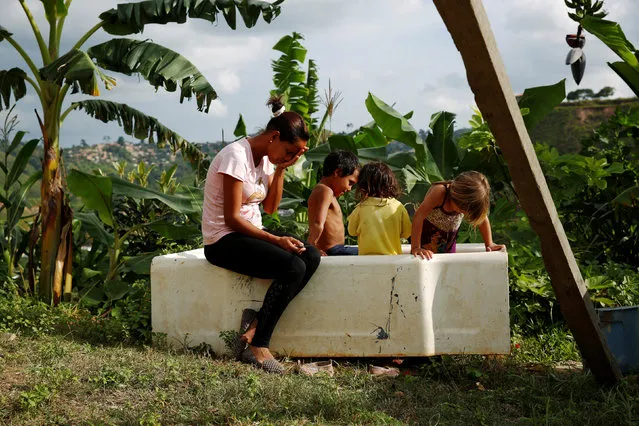
Lisibeht Martinez (L), 30, who was sterilized one year ago, sits next to her children while they play in a bathtub in the backyard of their house in Los Teques, Venezuela July 19, 2016. (Photo by Carlos Garcia Rawlins/Reuters)

Venezuela's food shortages, inflation and crumbling medical sector have become such a source of anguish that a growing number of young women are reluctantly opting for sterilizations rather than face the hardship of pregnancy and child-rearing. Traditional contraceptives like condoms or birth control pills have virtually vanished from store shelves, pushing women towards the hard-to-reverse surgery. While no recent national statistics on sterilizations are available, doctors and health workers say demand for the procedure is growing. (Photo by Carlos Garcia Rawlins/Reuters)
Details
04 Aug 2016 12:22:00
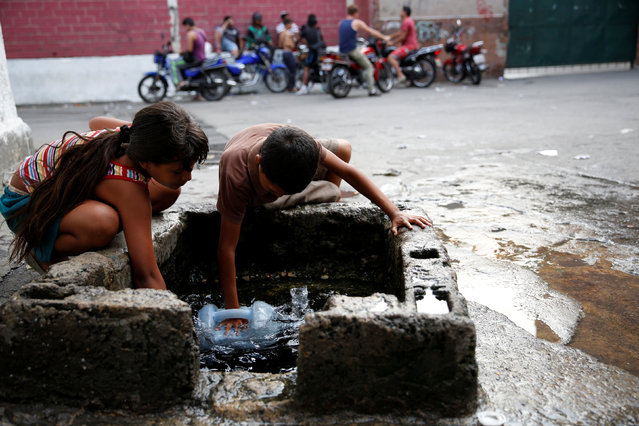
Children fill plastic containers with water from a well on a street, close to a neighbourhood called “The Tank” in the slum of Petare in Caracas, Venezuela, March 17, 2016. (Photo by Carlos Garcia Rawlins/Reuters)

Children fill plastic containers with water from a well on a street, close to a neighbourhood called “The Tank” in the slum of Petare in Caracas, Venezuela, March 17, 2016. Although their nation has one of the world's biggest hydroelectric dams and vast rivers like the fabled Orinoco, Venezuelans are still suffering water and power cuts most days. The problems with stuttering services have escalated in the last few weeks: yet another headache for the OPEC nation's 30 million people already reeling from recession, the world's highest inflation rate, and scarcities of basic goods. President Nicolas Maduro blames a drought, while the opposition blames government incompetence. (Photo by Carlos Garcia Rawlins/Reuters)
Details
08 May 2016 11:15:00
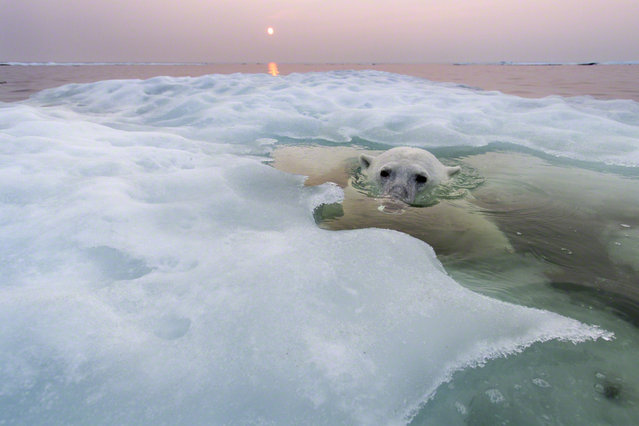
Photographing Polar Bears By Paul Souders

American nature and wildlife photographer Paul Souders is very well-travelled around the globe. In one of his exploits, we have his series of images shot in the ice capped shores of Churchill, Canada. Souders took his Zodiac boat to Hudson Bay in midsummer and waited there for three days before he finally saw a bear, a young female while on sea ice around 30 miles offshore.
Details
29 Aug 2014 13:52:00
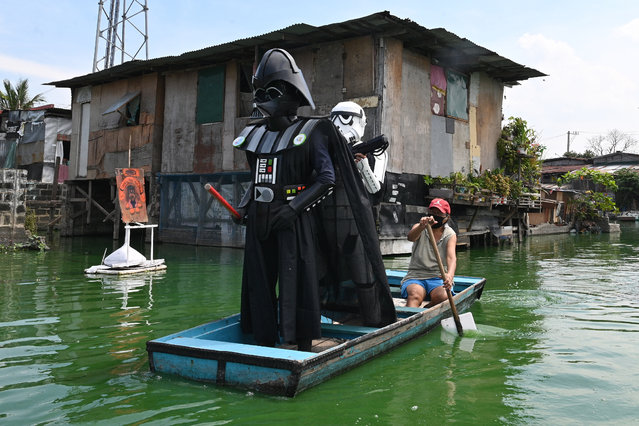
Local youth representatives dressed a Stormtrooper and Darth Vader (L-in black) from the Star Wars film franchise patrol in a wooden boat around a submerged village to remind residents to stay at home during the enhanced community quarantine in suburban Manila on May 6, 2020, as part of government's efforts to combat the spread of the COVID-19 coronavirus. (Photo by Ted Aljibe/AFP Photo)

Local youth representatives dressed a Stormtrooper and Darth Vader (L-in black) from the Star Wars film franchise patrol in a wooden boat around a submerged village to remind residents to stay at home during the enhanced community quarantine in suburban Manila on May 6, 2020, as part of government's efforts to combat the spread of the COVID-19 coronavirus. (Photo by Ted Aljibe/AFP Photo)
Details
07 May 2020 00:07:00
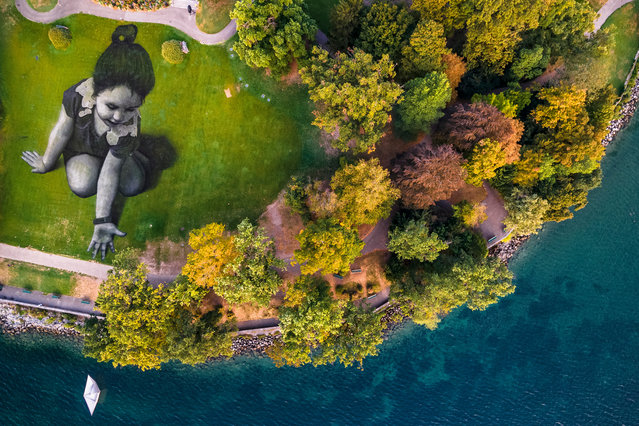
A picture taken with a drone shows the giant landart painting entitled “Message From Future” by French artist Saype in the park “La Perle du Lac” in Geneva, Switzerland, 16 September 2018 (issued 17 September). The artwork covering 5,000 square meters was produced with biodegradable paints made from natural pigments. The artist called the little girl “Future” as a symbol of the generations from the future and the small origami boats that she drops into Lake Geneva aims to represent a message of hope sent to the world. (Photo by Valentin Flauraud/EPA/EFE)

A picture taken with a drone shows the giant landart painting entitled “Message From Future” by French artist Saype in the park “La Perle du Lac” in Geneva, Switzerland, 16 September 2018 (issued 17 September). The artwork covering 5,000 square meters was produced with biodegradable paints made from natural pigments. The artist called the little girl “Future” as a symbol of the generations from the future and the small origami boats that she drops into Lake Geneva aims to represent a message of hope sent to the world. (Photo by Valentin Flauraud/EPA/EFE)
Details
19 Oct 2018 00:01:00
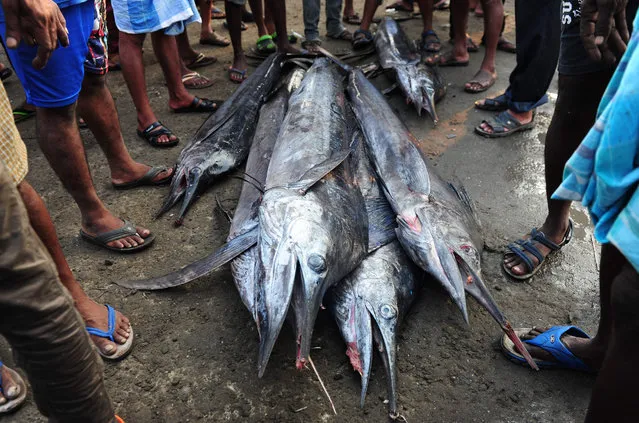
Indian men stand around sword fish for sale at a harbour a harbour in Chennai on June 5, 2016, as fishermen return with their catch after a 45-day fishing ban on the east coast of India. Authorities in the southern Indian state of Tamil Nadu had imposed a 45-day ban on fishing by mechanised vessels to protect marine life, with only “country boats” operating within five nautical miles off the coast. (Photo by Arun Sankar/AFP Photo)

Indian men stand around sword fish for sale at a harbour a harbour in Chennai on June 5, 2016, as fishermen return with their catch after a 45-day fishing ban on the east coast of India. Authorities in the southern Indian state of Tamil Nadu had imposed a 45-day ban on fishing by mechanised vessels to protect marine life, with only “country boats” operating within five nautical miles off the coast. (Photo by Arun Sankar/AFP Photo)
Details
06 Jun 2016 11:24:00
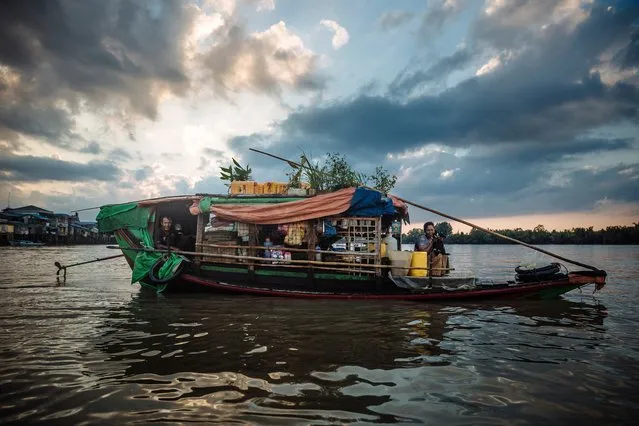
Tin and Naing win live on a small boat which they sail throughout the Delta region in Myanmar. The former gardeners once had a home on land but it was destroyed when a powerful cyclone ravaged the area in 2008. Since then, the couple have not been able to afford to rebuild their home, so they live on the boat from which they sell fish paste to make a living. (Photo by Muse Mohammed/IOM)

The ferocity of crises worldwide is forcing a record number of people to flee their homes, seeking some form of safety within their own country or across international borders. There are 65.3 million displaced people worldwide, including 21.3 million refugees. Most have lost their homes to armed conflict or natural disasters but other factors, such as extreme poverty and climate change, also drive displacement. The International Organisation for Migration commissioned photojournalist Muse Mohammed to document the plight of the displaced. (Photo by Muse Mohammed/IOM)
Details
02 Jan 2017 12:04:00