Loading...
Done
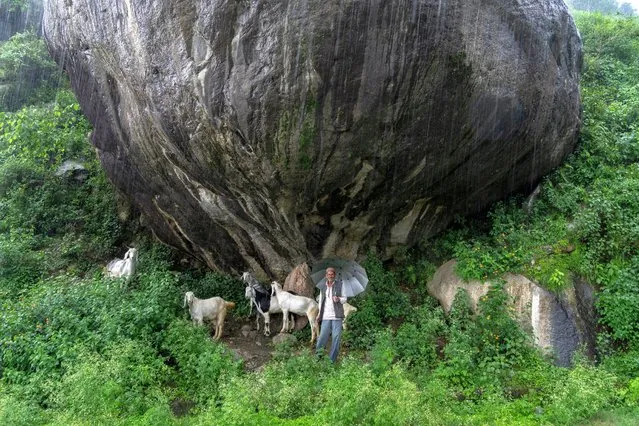
A shepherd with his flock shelters from the rain under a huge boulder in Dharmsala, India, Monday, August 8, 2022. (Photo by Ashwini Bhatia/AP Photo)

A shepherd with his flock shelters from the rain under a huge boulder in Dharmsala, India, Monday, August 8, 2022. (Photo by Ashwini Bhatia/AP Photo)
Details
16 Aug 2022 05:29:00
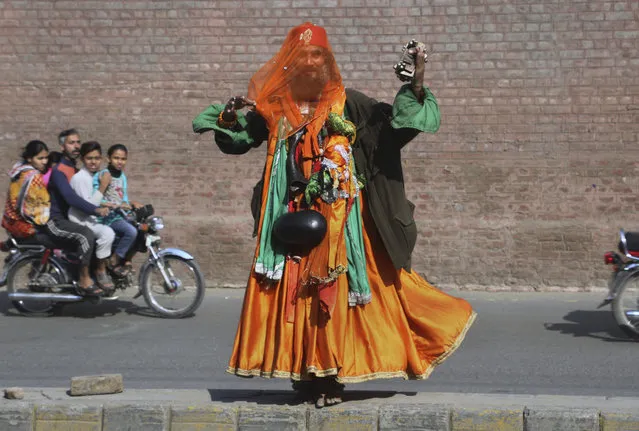
A Muslim dervish sings a traditional Sufi song near a rally for the Mawlid al-Nabi holiday, marking the birthday of Islam's prophet, Muhammad, in Lahore, Pakistan, Sunday, November 10, 2019. To mark the holiday, thousands take part in religious processions, ceremonies and distribute free meals to the poor. (Photo by K.M. Chaudary/AP Photo)

A Muslim dervish sings a traditional Sufi song near a rally for the Mawlid al-Nabi holiday, marking the birthday of Islam's prophet, Muhammad, in Lahore, Pakistan, Sunday, November 10, 2019. To mark the holiday, thousands take part in religious processions, ceremonies and distribute free meals to the poor. (Photo by K.M. Chaudary/AP Photo)
Details
13 Dec 2019 00:01:00
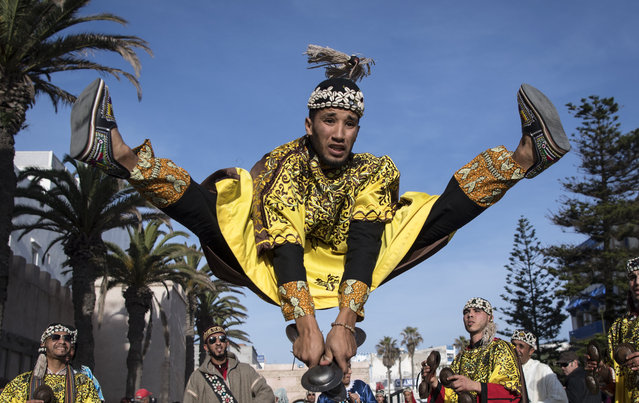
A Gnawa traditional group performs in the city of Essaouira on December 14, 2019, to celebrate the decision of adding the Gnawa culture to UNESCO's list of Intangible Cultural Heritage of Humanity. Gnawa culture, a centuries-old Moroccan practice rooted in music, African rituals and Sufi traditions, was added to UNESCO's list of Intangible Cultural Heritage of Humanity earlier in the week. Gnawa refers to a “set of musical productions, fraternal practices and therapeutic rituals where the secular mixes with the sacred”, according to the nomination submitted by Morocco. Often dressed in colourful outfits, Gnawa musicians play the guenbri, a type of lute with three strings, accompanied by steel castanets called krakebs. (Photo by Fadel Senna/AFP Photo)

A Gnawa traditional group performs in the city of Essaouira on December 14, 2019, to celebrate the decision of adding the Gnawa culture to UNESCO's list of Intangible Cultural Heritage of Humanity. Gnawa culture, a centuries-old Moroccan practice rooted in music, African rituals and Sufi traditions, was added to UNESCO's list of Intangible Cultural Heritage of Humanity earlier in the week. Gnawa refers to a “set of musical productions, fraternal practices and therapeutic rituals where the secular mixes with the sacred”, according to the nomination submitted by Morocco. Often dressed in colourful outfits, Gnawa musicians play the guenbri, a type of lute with three strings, accompanied by steel castanets called krakebs. (Photo by Fadel Senna/AFP Photo)
Details
18 Dec 2019 00:05:00
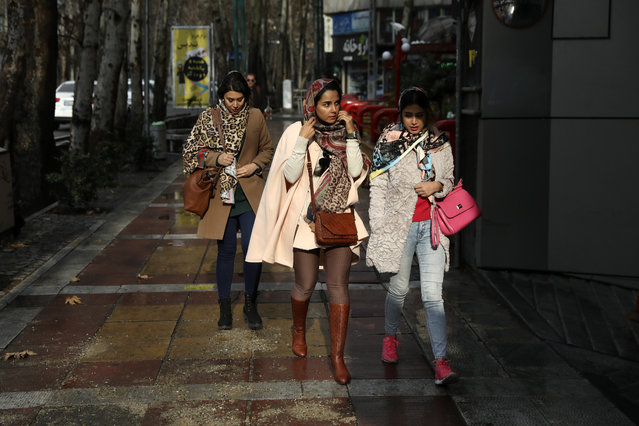
Women walk on a sidewalk in northern Tehran, Iran, Thursday, January 9, 2020. (Photo by Vahid Salemi/AP Photo)

Women walk on a sidewalk in northern Tehran, Iran, Thursday, January 9, 2020. (Photo by Vahid Salemi/AP Photo)
Details
25 Feb 2020 00:05:00
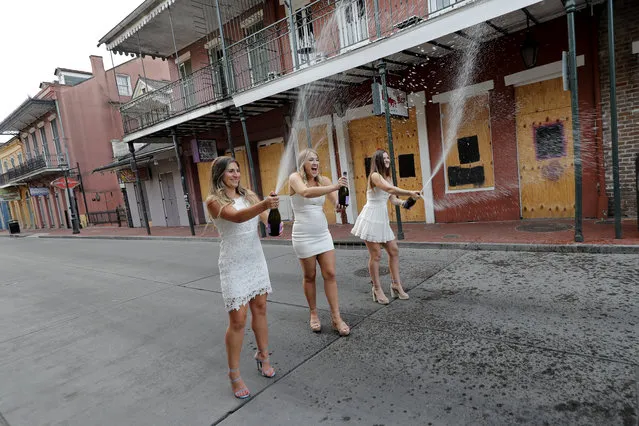
Tulane University graduates pop prosecco as they pose for graduation photos on a largely empty Bourbon Street, due to the coronavirus pandemic, in the French Quarter of New Orleans, Tuesday, May 12, 2020. (Photo by Gerald Herbert/AP Photo)

Tulane University graduates pop prosecco as they pose for graduation photos on a largely empty Bourbon Street, due to the coronavirus pandemic, in the French Quarter of New Orleans, Tuesday, May 12, 2020. (Photo by Gerald Herbert/AP Photo)
Details
18 May 2020 00:05:00
Ballerina Kira Hilli of the Netherlands National Ballet dances in a tutu with a diameter of 3 meters for a video made for the 1.5 meter society, on the Prinsengracht in Amsterdam, The Netherlands, 04 June 2020 (issued on 12 June 2020). The so-called social distance tutu is made of denim fabric, specially made for the Safe Distance Ballet. (Photo by Remko de Waal/EPA/EFE)

Ballerina Kira Hilli of the Netherlands National Ballet dances in a tutu with a diameter of 3 meters for a video made for the 1.5 meter society, on the Prinsengracht in Amsterdam, The Netherlands, 04 June 2020 (issued on 12 June 2020). The so-called social distance tutu is made of denim fabric, specially made for the Safe Distance Ballet. (Photo by Remko de Waal/EPA/EFE)
Details
15 Jun 2020 00:07:00
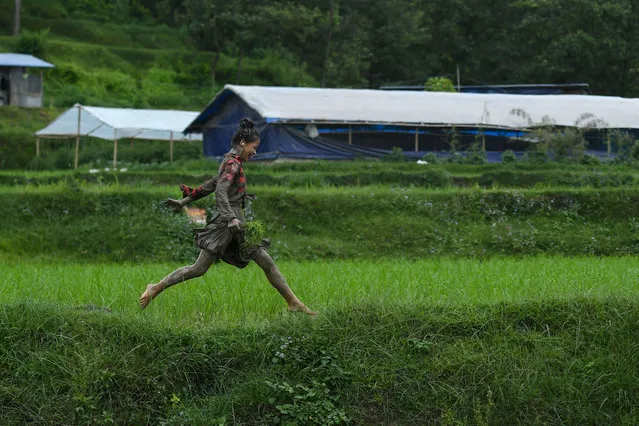
A girl walks along rice paddy fields during “National Paddy Day”, which marks the start of the annual rice planting season, in Tokha village on the outskirts of Kathmandu on June 29, 2020. Splashing mud and drinking local rice beer, Nepali farmers this week celebrated National Paddy Day to mark the beginning of the rice-planting season, despite some coronavirus lockdown measures still in place. Traditional farming songs and laughter echoed in the air as farmers waded into waterlogged fields to sow green paddy. (Photo by Prakash Mathema/AFP Photo)

A girl walks along rice paddy fields during “National Paddy Day”, which marks the start of the annual rice planting season, in Tokha village on the outskirts of Kathmandu on June 29, 2020. Splashing mud and drinking local rice beer, Nepali farmers this week celebrated National Paddy Day to mark the beginning of the rice-planting season, despite some coronavirus lockdown measures still in place. Traditional farming songs and laughter echoed in the air as farmers waded into waterlogged fields to sow green paddy. (Photo by Prakash Mathema/AFP Photo)
Details
02 Aug 2020 00:01:00
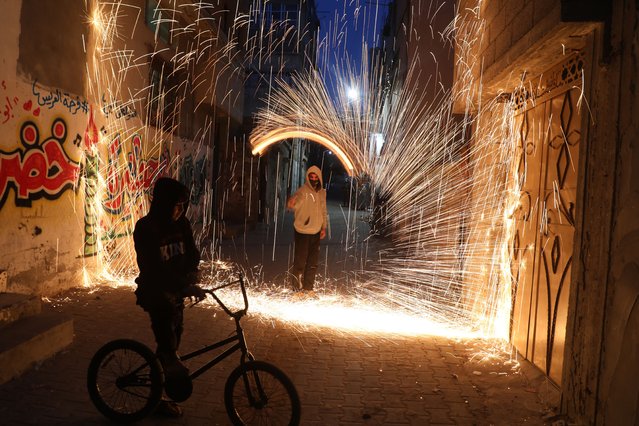
A Palestinian youth swings a homemade fireworks sparkler, as people celebrate on the night ahead of the Muslim holy fasting month of Ramadan, in Gaza City on April 11, 2021. (Photo by Majdi Fathi/NurPhoto/Rex Features/Shutterstock)

A Palestinian youth swings a homemade fireworks sparkler, as people celebrate on the night ahead of the Muslim holy fasting month of Ramadan, in Gaza City on April 11, 2021. (Photo by Majdi Fathi/NurPhoto/Rex Features/Shutterstock)
Details
07 May 2021 08:39:00