Loading...
Done
In this photograph taken on October 4, 2016, an Afghan baker prepares bread at his shop as he waits for customers in Lashkar Gah, the capital city of Helmand province For years Helmand was the centerpiece of the Western military intervention in Afghanistan only for it to slip deeper into a quagmire of instability, with almost the entire southern province teetering on the verge of collapse. Intensified fighting has killed hundreds and forced thousands to flee to besieged capital Lashkar Gah, sparking a humanitarian crisis as the city – one of the last government- held enclaves – risks falling to the Taliban' s repeated ferocious assaults. (Photo by Wakil Kohsar/AFP Photo)

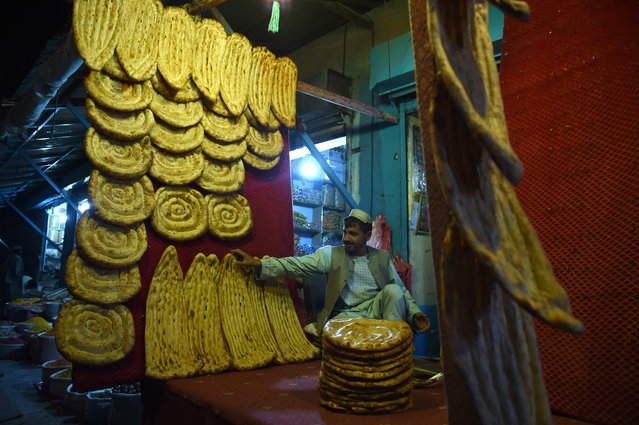
In this photograph taken on October 4, 2016, an Afghan baker prepares bread at his shop as he waits for customers in Lashkar Gah, the capital city of Helmand province. For years Helmand was the centerpiece of the Western military intervention in Afghanistan only for it to slip deeper into a quagmire of instability, with almost the entire southern province teetering on the verge of collapse. Intensified fighting has killed hundreds and forced thousands to flee to besieged capital Lashkar Gah, sparking a humanitarian crisis as the city – one of the last government- held enclaves – risks falling to the Taliban' s repeated ferocious assaults. (Photo by Wakil Kohsar/AFP Photo)
Details
08 Dec 2016 12:41:00
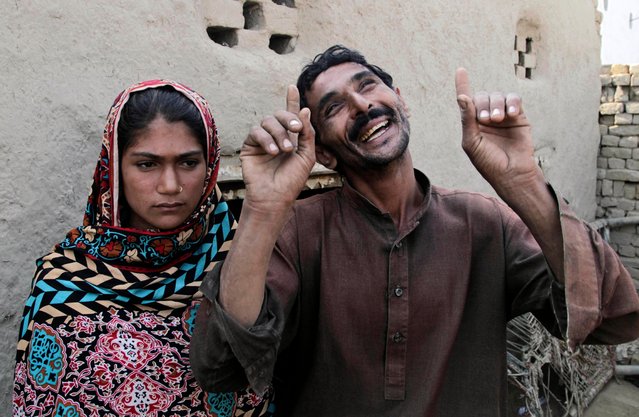
In this Tuesday, December 20, 2016 photo, Mohammad Ramzan, right, reacts while talking to The Associated Press with his young bride Saima in Jampur, Pakistan. Saima was given as a bride to the older man by her father so he could marry the groom’s sister, a practice of exchanging girls that is entrenched in conservative regions of Pakistan. It even has its own name in Urdu: Watta Satta, “give and take”. A mix of interests – family obligations, desire for sons, a wish to hand off a girl to a husband – can lead to a young teen in an a marriage she never sought. (Photo by K.M. Chaudhry/AP Photo)

In this Tuesday, December 20, 2016 photo, Mohammad Ramzan, right, reacts while talking to The Associated Press with his young bride Saima in Jampur, Pakistan. Saima was given as a bride to the older man by her father so he could marry the groom’s sister, a practice of exchanging girls that is entrenched in conservative regions of Pakistan. It even has its own name in Urdu: Watta Satta, “give and take”. A mix of interests – family obligations, desire for sons, a wish to hand off a girl to a husband – can lead to a young teen in an a marriage she never sought. (Photo by K.M. Chaudhry/AP Photo)
Details
31 Dec 2016 10:08:00
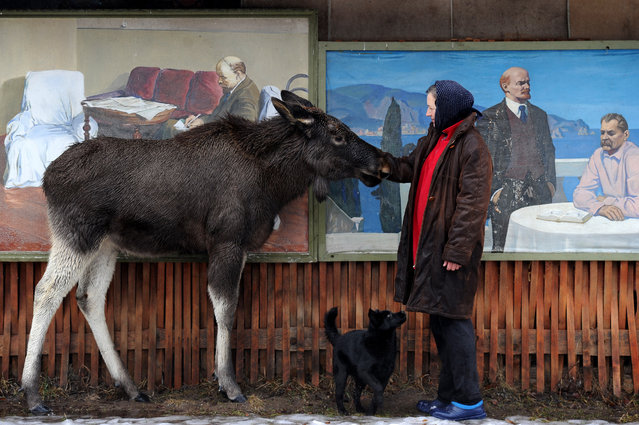
Svetlana Tseyko feeds a 10-month-old moose named Grisha in the courtyard in the village of Abramy, some 160 km northwest of Minsk, on February 21, 2017. (Photo by Sergei Gapon/AFP Photo)

Svetlana Tseyko feeds a 10-month-old moose named Grisha in the courtyard in the village of Abramy, some 160 km northwest of Minsk, on February 21, 2017. (Photo by Sergei Gapon/AFP Photo)
Details
23 Oct 2017 07:00:00
People take photos with the skyline of the central business district in Singapore September 10, 2015. (Photo by Edgar Su/Reuters)

People take photos with the skyline of the central business district in Singapore on September 10, 2015. (Photo by Edgar Su/Reuters)
Details
18 May 2019 00:01:00
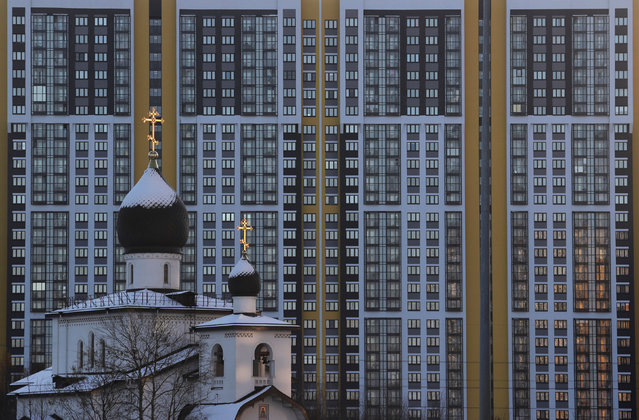
A view shows a church in front of a high-rise apartment building in Saint Petersburg, Russia on October 30, 2019. (Photo by Anton Vaganov/Reuters)

A view shows a church in front of a high-rise apartment building in Saint Petersburg, Russia on October 30, 2019. (Photo by Anton Vaganov/Reuters)
Details
29 Jan 2020 00:03:00
The Bridge “Rakotzbrücke” is pictured against trees in autumn colours in the the eastern German town of Kromlau November 4, 2014. (Photo by Hannibal Hanschke/Reuters)

The Bridge “Rakotzbrücke” is pictured against trees in autumn colours in the the eastern German town of Kromlau November 4, 2014. (Photo by Hannibal Hanschke/Reuters)
Details
10 Nov 2016 12:25:00
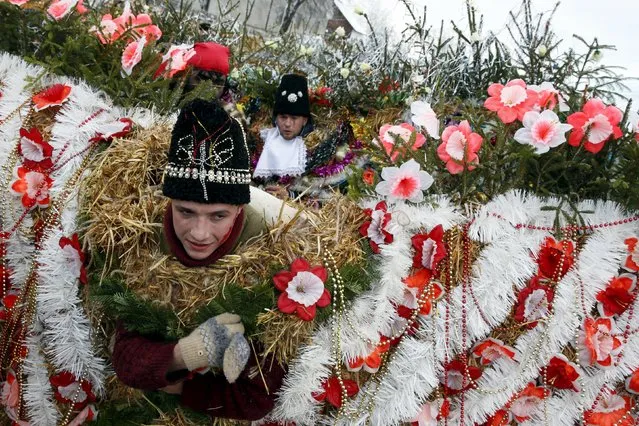
Local residents dressed in costumes perform during celebrations for the Malanka holiday in the village of Krasnoilsk in the Chernivtsi region of Ukraine, January 14, 2016. The Malanka traditional holiday is more popular in the western regions of the country and is also known as the Old New Year celebrated on January 13 and 14 - St. Basil's and St. Melania's Day, according to the old Julian calendar. During the celebrations, youngsters and adults wear traditional carnival costumes and masks, and visit local houses while singing carols, playing pranks or performing short plays. (Photo by Valentyn Ogirenko/Reuters)

Local residents dressed in costumes perform during celebrations for the Malanka holiday in the village of Krasnoilsk in the Chernivtsi region of Ukraine, January 14, 2016. The Malanka traditional holiday is more popular in the western regions of the country and is also known as the Old New Year celebrated on January 13 and 14 – St. Basil's and St. Melania's Day, according to the old Julian calendar. During the celebrations, youngsters and adults wear traditional carnival costumes and masks, and visit local houses while singing carols, playing pranks or performing short plays. (Photo by Valentyn Ogirenko/Reuters)
Details
16 Jan 2016 08:04:00
People throw turnips at the Jarramplas as he comes out from the church beating his drum during the Jarramplas Festival on January 20, 2016 in Piornal, Caceres province, Spain. The centuries old Jarramplas festival takes place annually every January 19-20 on Saint Sebastian Day and this year they expect to use more than 20 thousand kilogrames of turnips. Even though the exact origins of the festival are not known, various theories exist including the mythological punishment of Caco by Hercules. (Photo by Pablo Blazquez Dominguez/Getty Images)

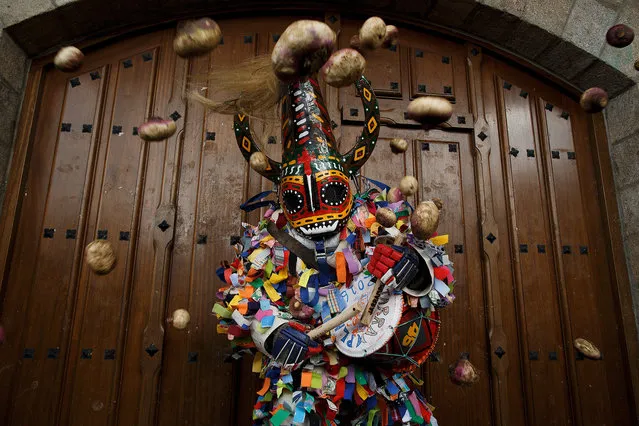
People throw turnips at the Jarramplas as he comes out from the church beating his drum during the Jarramplas Festival on January 20, 2016 in Piornal, Caceres province, Spain. The centuries old Jarramplas festival takes place annually every January 19-20 on Saint Sebastian Day and this year they expect to use more than 20 thousand kilogrames of turnips. Even though the exact origins of the festival are not known, various theories exist including the mythological punishment of Caco by Hercules, a relation to ceremonies celebrated by the American Indians that were seen by the first conquerors, to a cattle thief ridiculed and expelled by his village neighbours. It is generally believed to symbolize the expulsion of everything bad. (Photo by Pablo Blazquez Dominguez/Getty Images)
Details
21 Jan 2016 13:21:00