Loading...
Done
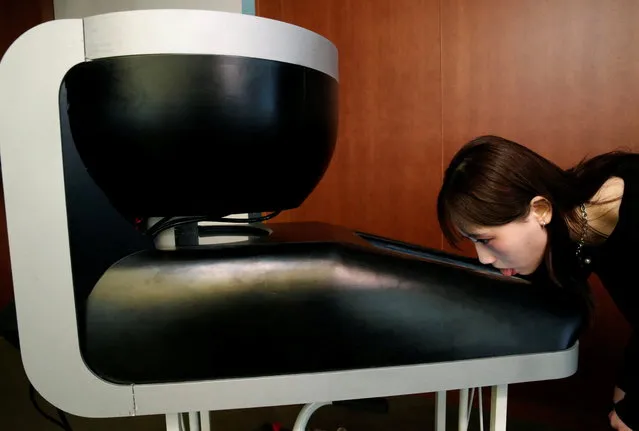
Student of Meiji University Yuki Hou licks a screen of Taste the TV (TTTV), a prototype lickable TV screen that can imitate the flavours of various foods, during its demonstration at the university in Tokyo, Japan, December 22, 2021. (Photo by Kim Kyung-Hoon/Reuters)

Student of Meiji University Yuki Hou licks a screen of Taste the TV (TTTV), a prototype lickable TV screen that can imitate the flavours of various foods, during its demonstration at the university in Tokyo, Japan, December 22, 2021. (Photo by Kim Kyung-Hoon/Reuters)
Details
25 Sep 2022 04:29:00
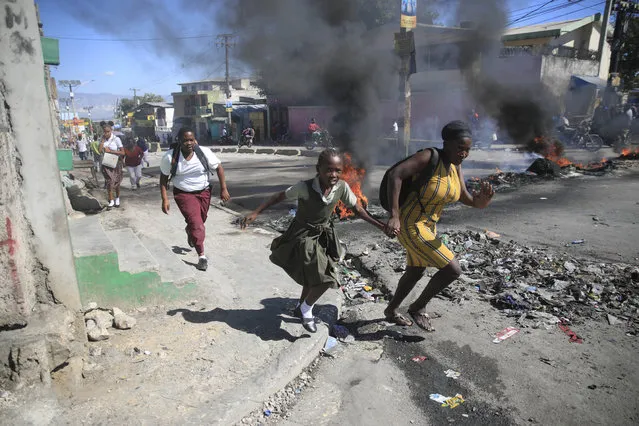
A woman with her daughter walks past a barricade that was set up by members of the police as they protest bad police governance, in Port-au-Prince, Haiti, Thursday, January 26, 2023. (Photo by Joseph Odelyn/AP Photo)

A woman with her daughter walks past a barricade that was set up by members of the police as they protest bad police governance, in Port-au-Prince, Haiti, Thursday, January 26, 2023. (Photo by Joseph Odelyn/AP Photo)
Details
09 Feb 2023 04:54:00
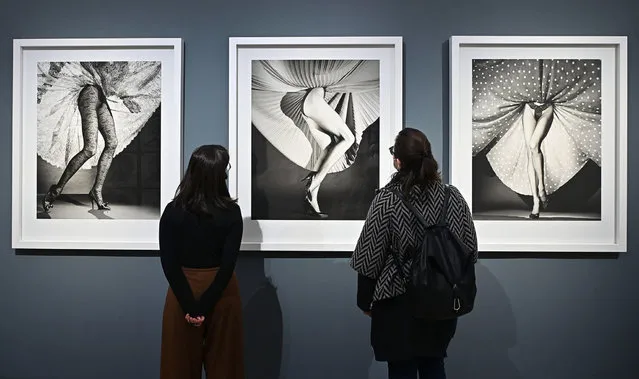
Visitors look at photographs in the exhibition “Lisette Model Street Life e Horst P. Horst Syle and Glamour” at the art gallery “Camera – Centro Italiano per la fotografia” in Turin, Italy, 27 April 2021. Culture venues reopened to the public as several Italian region are back to COVID-19 yellow zone in the country's tier system. (Photo by Alessandro di Marco/EPA/EFE)

Visitors look at photographs in the exhibition “Lisette Model Street Life e Horst P. Horst Syle and Glamour” at the art gallery “Camera – Centro Italiano per la fotografia” in Turin, Italy, 27 April 2021. Culture venues reopened to the public as several Italian region are back to COVID-19 yellow zone in the country's tier system. (Photo by Alessandro di Marco/EPA/EFE)
Details
28 Apr 2021 09:11:00
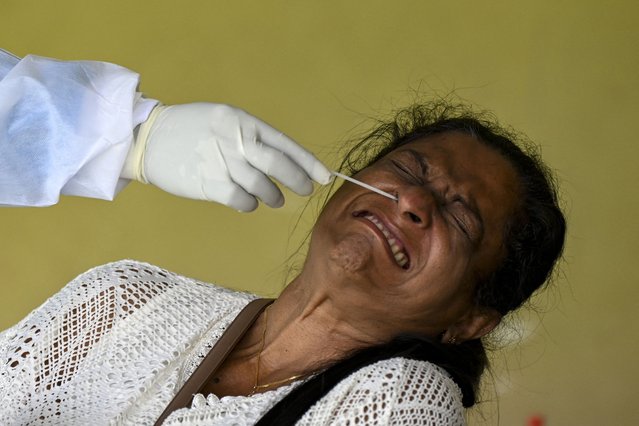
A resident reacts as a health worker collects a swab sample to test for the Covid-19 coronavirus in Colombo on July 27, 2021. (Photo by Ishara S.  Kodikara/AFP Photo)

A resident reacts as a health worker collects a swab sample to test for the Covid-19 coronavirus in Colombo on July 27, 2021. (Photo by Ishara S. Kodikara/AFP Photo)
Details
28 Jul 2021 10:12:00
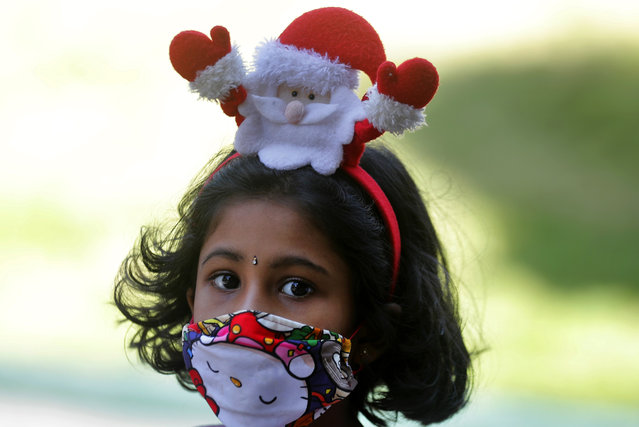
A Sri Lankan Christian girl wears a Santa hair band and a face mask as a precaution against the coronavirus as she arrives at a church to attend the Christmas mass in Colombo, Sri Lanka, Friday, December 25, 2020. (Photo by Eranga Jayawardena/AP Photo)

A Sri Lankan Christian girl wears a Santa hair band and a face mask as a precaution against the coronavirus as she arrives at a church to attend the Christmas mass in Colombo, Sri Lanka, Friday, December 25, 2020. (Photo by Eranga Jayawardena/AP Photo)
Details
15 Jan 2021 00:01:00
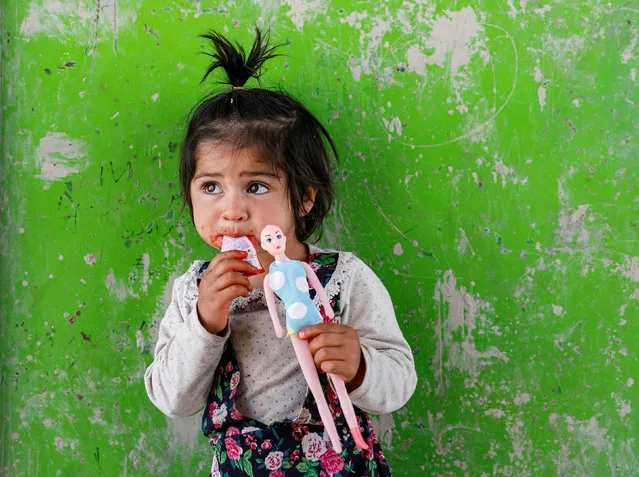
An internally displaced Afghan girl plays outside her shelter, amid the spread of the coronavirus disease (COVID-19), in Kabul, Afghanistan on May 7, 2020. (Photo by Mohammad Ismail/Reuters)

An internally displaced Afghan girl plays outside her shelter, amid the spread of the coronavirus disease (COVID-19), in Kabul, Afghanistan on May 7, 2020. (Photo by Mohammad Ismail/Reuters)
Details
11 May 2020 00:05:00
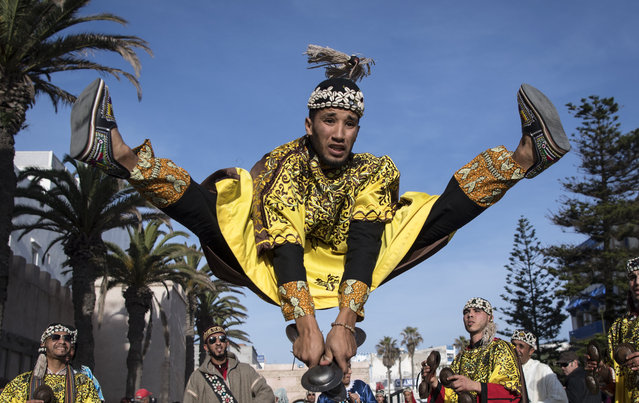
A Gnawa traditional group performs in the city of Essaouira on December 14, 2019, to celebrate the decision of adding the Gnawa culture to UNESCO's list of Intangible Cultural Heritage of Humanity. Gnawa culture, a centuries-old Moroccan practice rooted in music, African rituals and Sufi traditions, was added to UNESCO's list of Intangible Cultural Heritage of Humanity earlier in the week. Gnawa refers to a “set of musical productions, fraternal practices and therapeutic rituals where the secular mixes with the sacred”, according to the nomination submitted by Morocco. Often dressed in colourful outfits, Gnawa musicians play the guenbri, a type of lute with three strings, accompanied by steel castanets called krakebs. (Photo by Fadel Senna/AFP Photo)

A Gnawa traditional group performs in the city of Essaouira on December 14, 2019, to celebrate the decision of adding the Gnawa culture to UNESCO's list of Intangible Cultural Heritage of Humanity. Gnawa culture, a centuries-old Moroccan practice rooted in music, African rituals and Sufi traditions, was added to UNESCO's list of Intangible Cultural Heritage of Humanity earlier in the week. Gnawa refers to a “set of musical productions, fraternal practices and therapeutic rituals where the secular mixes with the sacred”, according to the nomination submitted by Morocco. Often dressed in colourful outfits, Gnawa musicians play the guenbri, a type of lute with three strings, accompanied by steel castanets called krakebs. (Photo by Fadel Senna/AFP Photo)
Details
18 Dec 2019 00:05:00
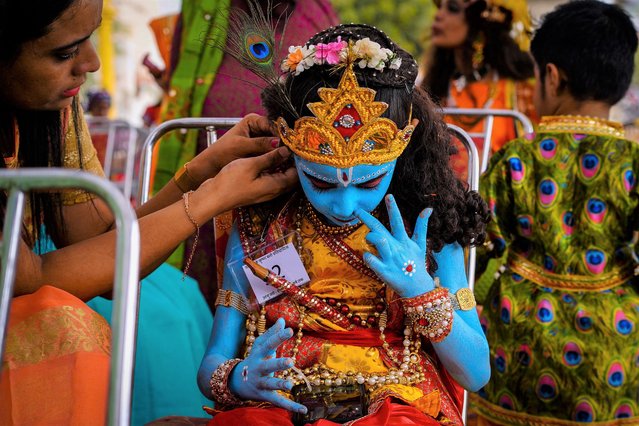
A child dressed as Hindu god Krishna watches a mobile phone as a woman gives finishing touches to his costume on the occasion of “Janmashtami” festival marking the birth of Krishna in Ajmer on August 30, 2021. (Photo by Himanshu Sharma/AFP Photo)

A child dressed as Hindu god Krishna watches a mobile phone as a woman gives finishing touches to his costume on the occasion of “Janmashtami” festival marking the birth of Krishna in Ajmer on August 30, 2021. (Photo by Himanshu Sharma/AFP Photo)
Details
07 Sep 2021 08:31:00