Loading...
Done
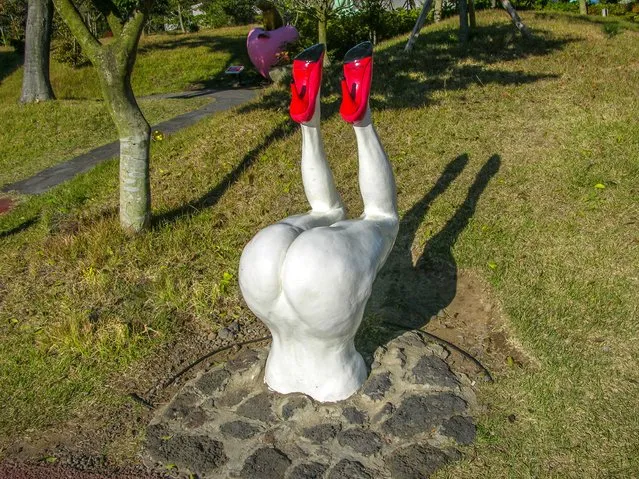
A statue is seen at the theme park “Love Land” on October 19, 2011 in Jeju, South Korea. Love Land is an outdoor sеx-themed sculpture park which opened in 2004 on Jeju Island. The park runs sеx education films and features 140 sculptures representing humans in various sеxual positions. It also has other elements such as large phallus statues, stone labia, and hands-on exhibits such as a “masturbation-cycle”. (Photo by James Jiao/Rex Features/Shutterstock)

A statue is seen at the theme park “Love Land” on October 19, 2011 in Jeju, South Korea. Love Land is an outdoor sеx-themed sculpture park which opened in 2004 on Jeju Island. The park runs sеx education films and features 140 sculptures representing humans in various sеxual positions. It also has other elements such as large phallus statues, stone labia, and hands-on exhibits such as a “masturbation-cycle”. (Photo by James Jiao/Rex Features/Shutterstock)
Details
27 Aug 2022 04:26:00
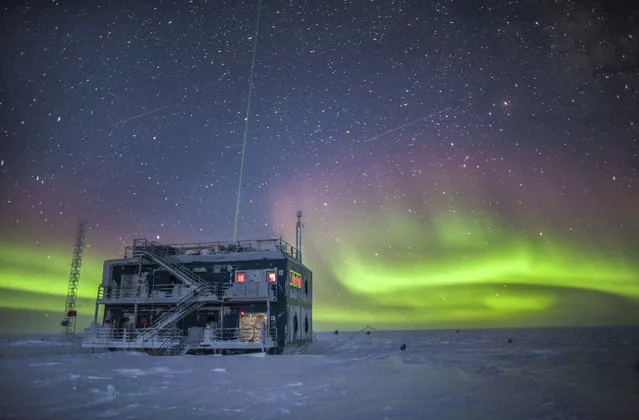
This undated photo provided by NOAA in May 2018 shows aurora australis near the South Pole Atmospheric Research Observatory in Antarctica. When a hole in the ozone formed over Antarctica, countries around the world in 1987 agreed to phase out several types of ozone-depleting chemicals called chlorofluorocarbons (CFCs). Production was banned, emissions fell and the hole shriveled. But according to a study released on Wednesday, May 16, 2018, scientists say since 2013, there’s more of a banned CFC going into the atmosphere. (Photo by Patrick Cullis/NOAA via AP Photo)

This undated photo provided by NOAA in May 2018 shows aurora australis near the South Pole Atmospheric Research Observatory in Antarctica. When a hole in the ozone formed over Antarctica, countries around the world in 1987 agreed to phase out several types of ozone-depleting chemicals called chlorofluorocarbons (CFCs). Production was banned, emissions fell and the hole shriveled. But according to a study released on Wednesday, May 16, 2018, scientists say since 2013, there’s more of a banned CFC going into the atmosphere. (Photo by Patrick Cullis/NOAA via AP Photo)
Details
15 Aug 2018 00:05:00
A woman shows her inked finger after casting her ballot to vote in the first phase of India's general election at a polling station in Kalamati village, Dinhata district of Cooch Behar in the country's West Bengal state on April 19, 2024. (Photo by Dibyangshu Sarkar/AFP Photo)

A woman shows her inked finger after casting her ballot to vote in the first phase of India's general election at a polling station in Kalamati village, Dinhata district of Cooch Behar in the country's West Bengal state on April 19, 2024. (Photo by Dibyangshu Sarkar/AFP Photo)
Details
05 May 2024 04:21:00
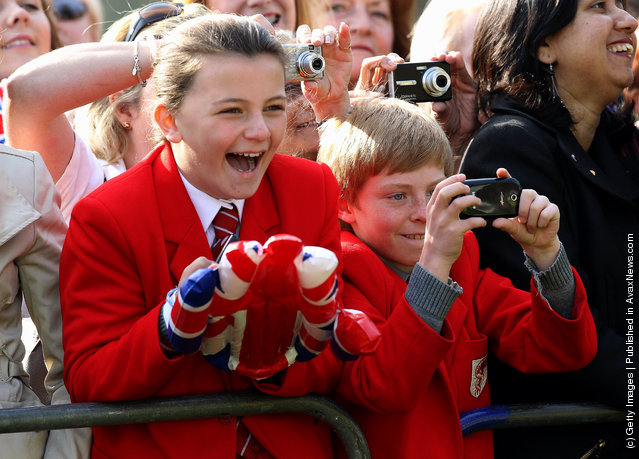
School children take photographs as Queen Elizabeth II arrives in Valentine's Park Redbridge as part of her Diamond Jubilee tour of the UK

School children take photographs as Queen Elizabeth II arrives in Valentine's Park Redbridge as part of her Diamond Jubilee tour of the UK on March 29, 2012 in London, England. (Photo by Chris Jackson/Getty Images)
Details
31 Mar 2012 09:38:00
Passengers wait at the departure hall of the Beijing Railway Station in central Beijing, China January 27, 2017 as China gears up for Lunar New Year, when hundreds of millions of people head home. (Photo by Damir Sagolj/Reuters)

Passengers wait at the departure hall of the Beijing Railway Station in central Beijing, China January 27, 2017 as China gears up for Lunar New Year, when hundreds of millions of people head home. (Photo by Damir Sagolj/Reuters)
Details
30 Jan 2017 09:06:00
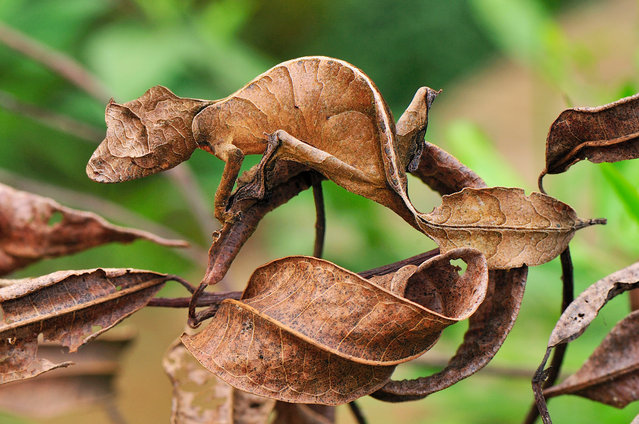
Is it a leaf? Is it tree bark? No, it’s the Satanic leaf-tailed gecko. Cleverly disguised as a rotting leaf, Madagascar’s camouflage king has red eyes, pointy horns and a taste for night hunting: it’s nature’s most devilish deceiver. (Photo by Thomas Marent/ARDEA)

Is it a leaf? Is it tree bark? No, it’s the Satanic leaf-tailed gecko. Cleverly disguised as a rotting leaf, Madagascar’s camouflage king has red eyes, pointy horns and a taste for night hunting: it’s nature’s most devilish deceiver. The twisted body and veiny skin echo the detail of a dry leaf, which ensures the gecko blends in with its forest home. The mottled tail appears to have sections missing, as though it has withered over time. This mini-monster epitomises survival of the fittest, having adapted gradually to become today’s extraordinary leaf impersonator. (Photo by Thomas Marent/ARDEA)
Details
20 Nov 2015 08:03:00
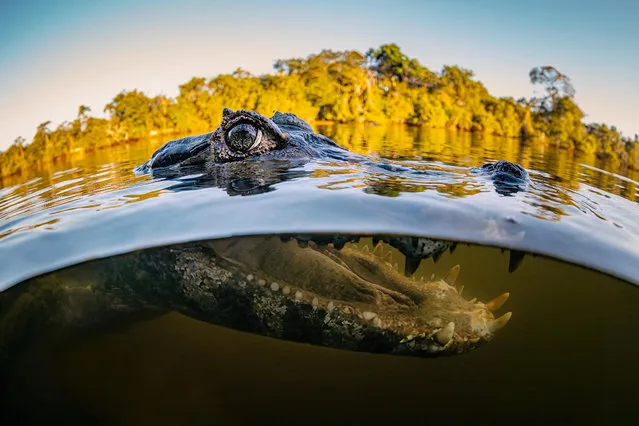
A caiman in the Pantanal region of Brazil in 2021. They are used to seeing humans, allowing the photographer, Leighton Lum, a close-up shot. (Photo by Leighton Lum/Caters News Agency)

A caiman in the Pantanal region of Brazil in 2021. They are used to seeing humans, allowing the photographer, Leighton Lum, a close-up shot. (Photo by Leighton Lum/Caters News Agency)
Details
02 Sep 2021 02:14:00
A man walks near a artwork of Italian artist Dario Agrimi entitled “ascesa” during a press preview of the first edition of “Roma Arte in Nuvola”, the international fair of modern and contemporary art in Rome on November 18, 2021 at the Roma Convention Center “La Nuvola”. (Photo by Tiziana Fabi/AFP Photo)

A man walks near a artwork of Italian artist Dario Agrimi entitled “ascesa” during a press preview of the first edition of “Roma Arte in Nuvola”, the international fair of modern and contemporary art in Rome on November 18, 2021 at the Roma Convention Center “La Nuvola”. (Photo by Tiziana Fabi/AFP Photo)
Details
04 Dec 2021 07:51:00