A woman on her hen day reacts as members of the public enjoy a drink in the Grassmarket as lockdown measures are eased on April 26, 2021 in Edinburgh, United Kingdom. Cafes, beer gardens, non-essential shops and museums are reopening in Scotland today as lockdown easing continues. (Photo by Jeff J. Mitchell/Getty Images)
Ukrainians pour water on each other on a street in Lviv, Ukraine, 02 May 2016. The tradition of pouring water was an ancient spring ritual of cleansing on first Monday after Orthodox Easter. (Photo by Mykola Tys/EPA)
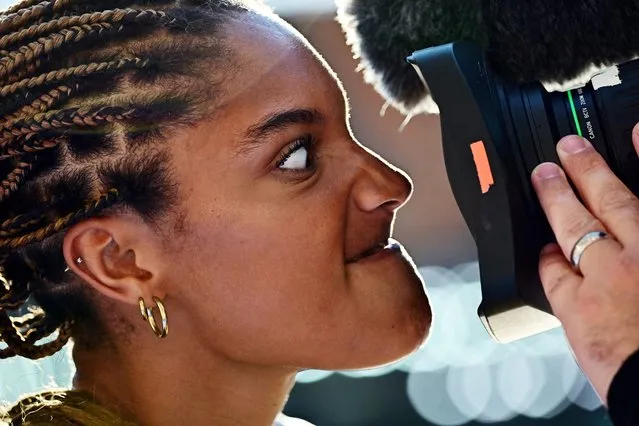
USA's Tara Davis-Woodhall reacts as she competes in the women's long jump final during the World Athletics Championships at the National Athletics Centre in Budapest on August 20, 2023.. (Photo by Marton Monus/Reuters)
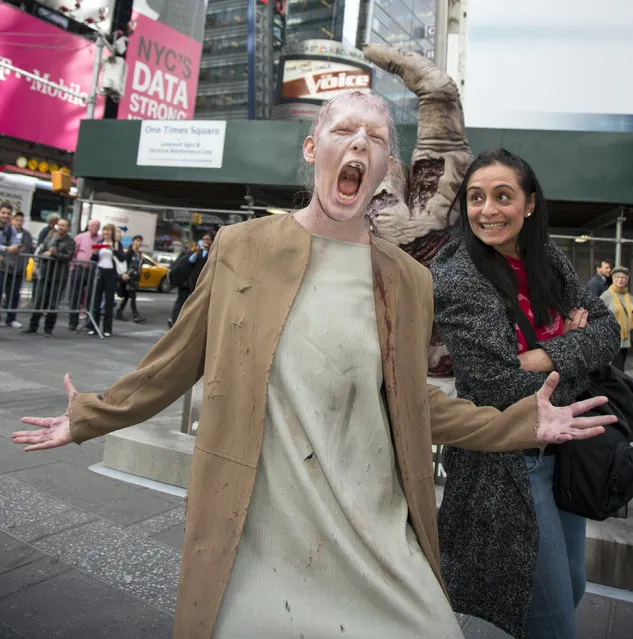
Actors dressed up as zombies walk around while posing for photos with passers-by in New York's Times Square on Friday, October 10, 2014 as a promotion for the season premiere of AMC's “The Walking Dead” this Sunday, October 12, 2014. (Photo by Gordon Donovan)
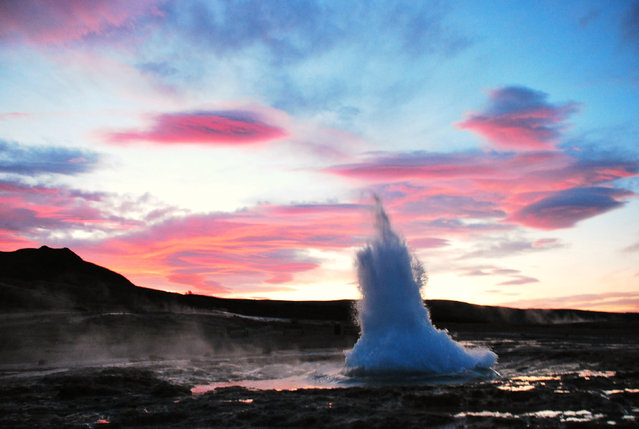
Strokkur geyser against cloudy sky at sunset. Strokkur is a fountain geyser located in a geothermal area beside the Hvítá River in Iceland in the southwest part of the country, east of Reykjavík. It is one of Iceland's most famous geysers, erupting once every 6–10 minutes. Its usual height is 15–20 m, although it can sometimes erupt up to 40 m high. (Photo by Teatsche Dijkhuis/Getty Images/EyeEm)
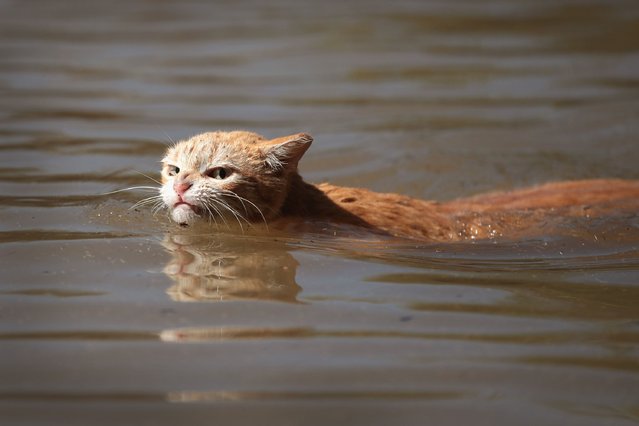
A cat tries to find dry ground around an apartment complex in Houston after Hurricane Harvey hit on Aug. 30. Harvey made landfall in South Texas on August 25, leading to days of downpours that dumped more than 50 inches of rain. Harvey damaged or destroyed about 200,000 homes as the storm system flooded much of Houston and smaller coastal communities. (Photo by Scott Olson/Getty Images)
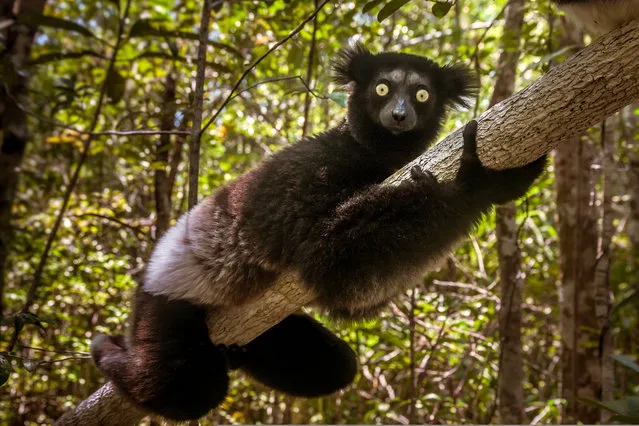
The secretive indri (Indri indri) of Madagascar, the largest living lemur. It is also critically endangered and highly evolutionarily distinct with no close relatives, which makes its branch one of most precarious on the mammal evolutionary tree. In the likely event that the indri goes extinct, we will lose 19m years of unique evolutionary history from the mammal tree of life. (Photo by Pierre-Yves Babelon/Aarhus University)