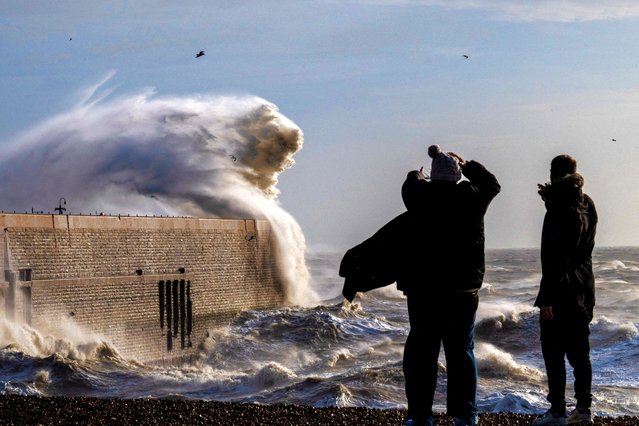
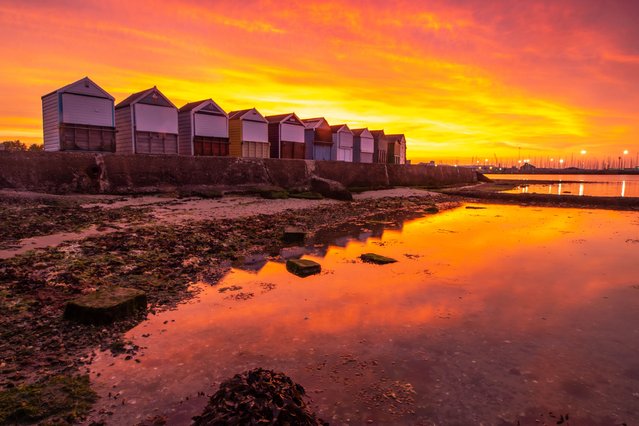
Locals look on as high winds from Storm Bert cause waves to crash over the harbour arm in Folkestone, Britain, on November 24, 2024. (Photo by Chris J. Ratcliffe/Reuters)
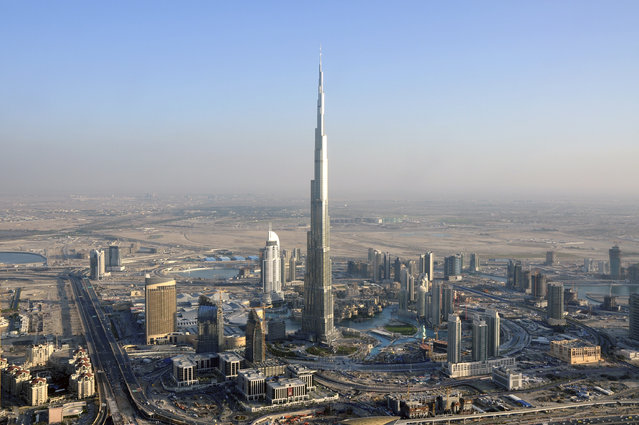
1: Dubai's Burj Khalifa is the tallest building in the world, but perhaps not for long. Saudi Arabia has announced plans to build a 1 kilometer (3,280 foot) tower into the sky, to be named the Jeddah Tower, scheduled for completion in 2020. The Burj Khallifa currently stands at 2,716 ft. (Photo by Matthias Seifert/Reuters)
A person wearing a face mask holds a cat on Swanston Street after cases of the coronavirus were confirmed in Melbourne, Victoria, Australia, January 29, 2020. (Photo by Andrew Kelly/Reuters)
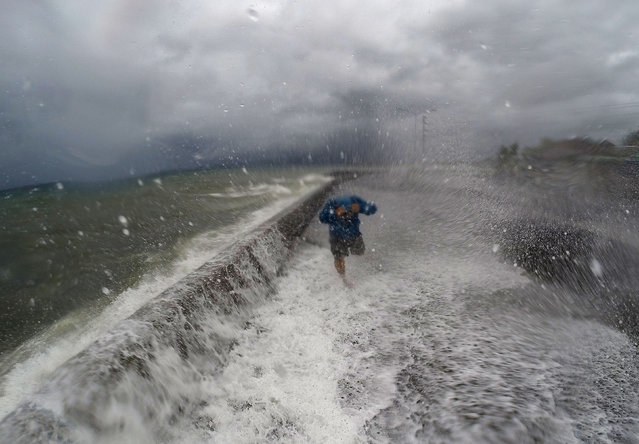
A resident walks past big waves spilling over a wall onto a coastal road in the city of Legaspi in Albay province, south of Manila on December 14, 2015, as typhoon Melor approaches the city. More than 700,000 people fled the central Philippines amid threats of giant waves, floods and landslides as powerful Typhoon Melor approached the archipelago nation, officials said December 14. (Photo by Charism Sayat/AFP Photo)
Models present creations by Colombian designer Guio Di Colombia during the Inclusion catwalk and Expomujer in Cali, Colombia, November 3, 2016. The catwalk includes models of all sizes, races, sexuality and physical ability. (Photo by Jaime Saldarriaga/Reuters)
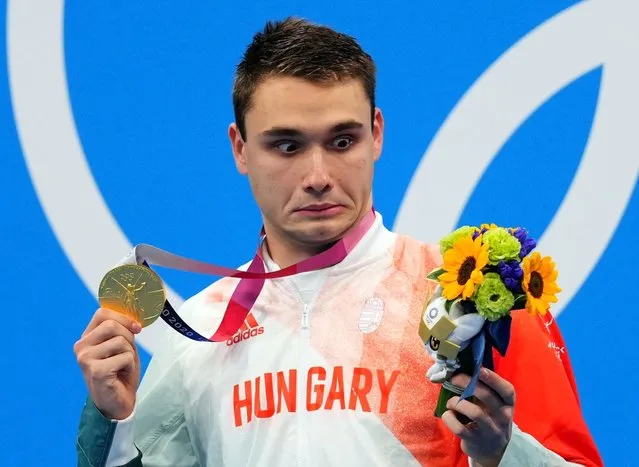
Gold Medalist Kristof Milak of Hungary during the medals ceremony of the 200m Butterfly final on day five of the swimming competition of the Tokyo 2020 Olympic Games at Tokyo Aquatics Centre on July 28, 2021 in Tokyo, Japan. (Photo by Aleksandra Szmigiel/Reuters)
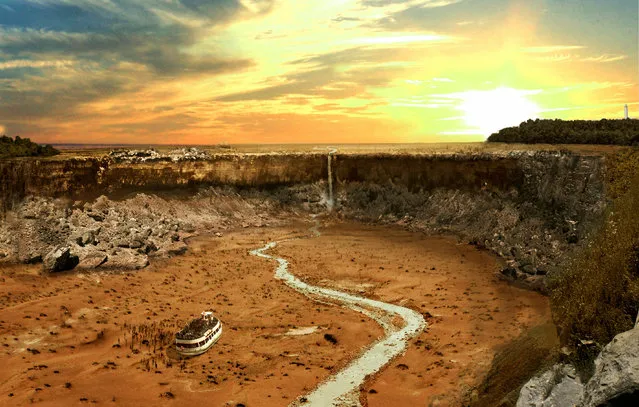
A graphic designer has produced a haunting look at what the world’s most famous landmarks would look like if they were hit by a severe drought. Joel Krebs has intricately dried up hot spots such as the Tower Bridge in London, the Capitol in Washington, D.C., Niagara Falls and Machu Picchu. Here: Niagara Falls, Canada, after severe drought. (Photo by Joel Krebs/Caters News)