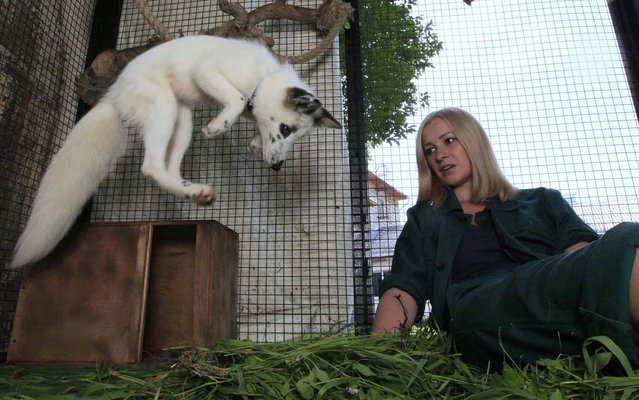
A four-month-old snow fox cub named “Vesna” (“Spring”) leaps next to a Zoo employee at the Royev Ruchey Zoo in Krasnoyarsk, Russia, on August 6, 2013. (Photo by Ilya Naymushin/Reuters)
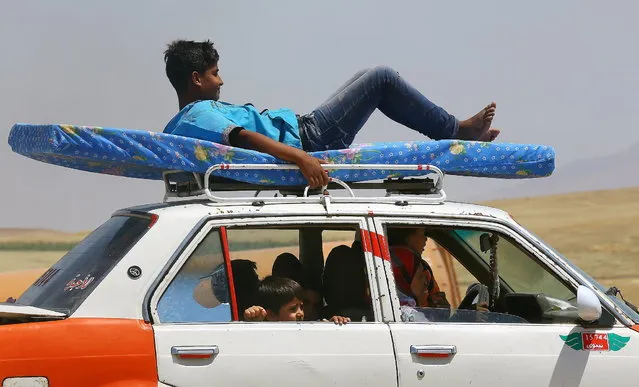
Iraqis who have fled fighting between security forces and al-Qaida inspired militants in their hometown of Tal Afar arrive in a car at Germawa camp for displaced Iraqis, in a hot dusty plain in the largely-autonomous Kurdish area of Dahuk, 260 miles (430 kilometers) northwest of Baghdad Tuesday, June 17, 2014. (Photo by AP Photo)
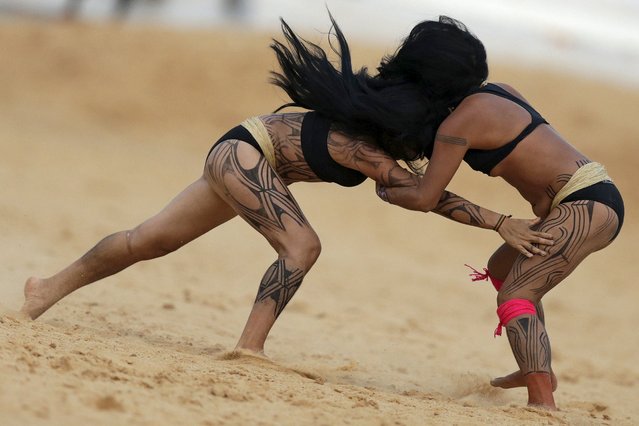
Indigenous women from the Kamayura tribe take part in a demonstration of Huka Huka fight at the first World Games for Indigenous Peoples in Palmas, Brazil, October 29, 2015. (Photo by Ueslei Marcelino/Reuters)
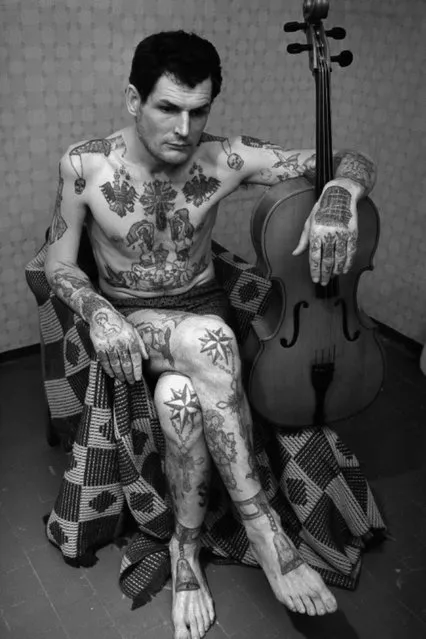
Tattoos are commonly used among criminals to show gang membership and record the wearer's personal history—such as his or her skills, specialties, accomplishments and convictions. They are also used as a means of personal expression. Certain designs have developed recognized coded meanings. The code systems can be quite complex and because of the nature of what they encode, the tattoo designs are not widely recognized.
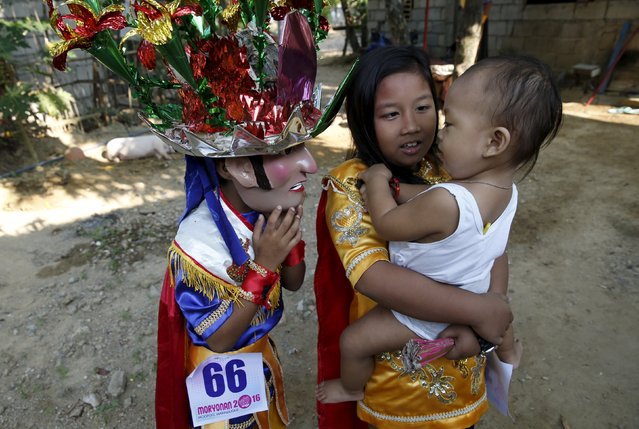
Penitent Jerry Mazon, 9, wears his “Morions” mask while playing with his baby brother during Holy Week celebrations in Mogpog, Marinduque in central Philippines March 22, 2016. (Photo by Erik De Castro/Reuters)
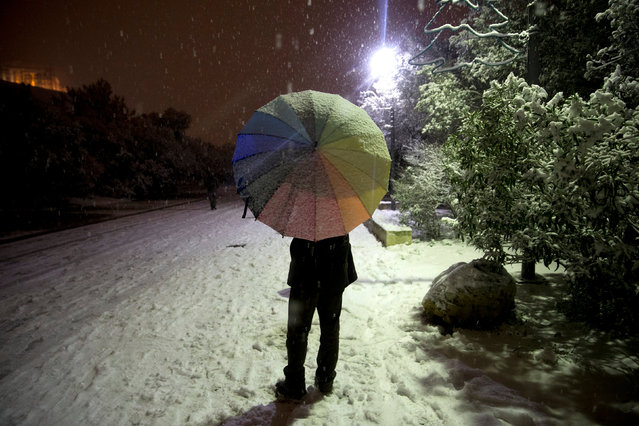
A man holds his umbrella during snowfall on the Areopagitou pedestrian street beneath the Acropolis hill during snowfall in Athens, Greece, January 10, 2017. (Photo by Alkis Konstantinidis/Reuters)
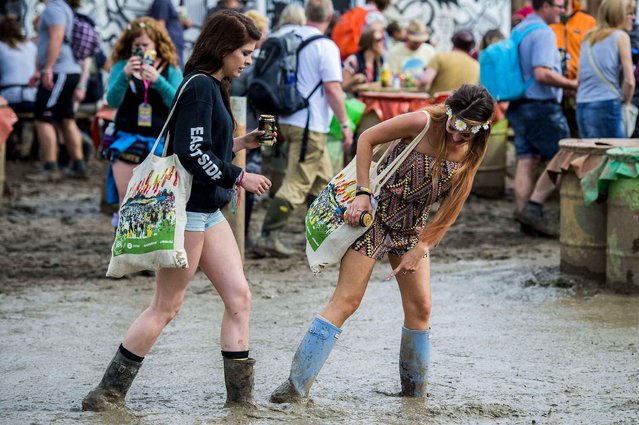
Festival goers arrive for the Glastonbury festival at Worthy Farm, in Somerset, England, Thursday, June 23, 2016. (Photo by Guy Bell/Rex Features/Shutterstock)